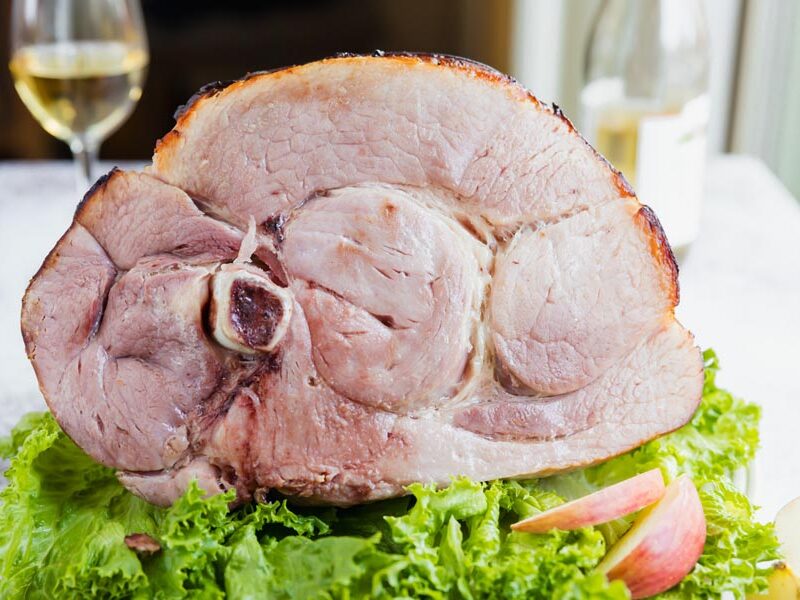
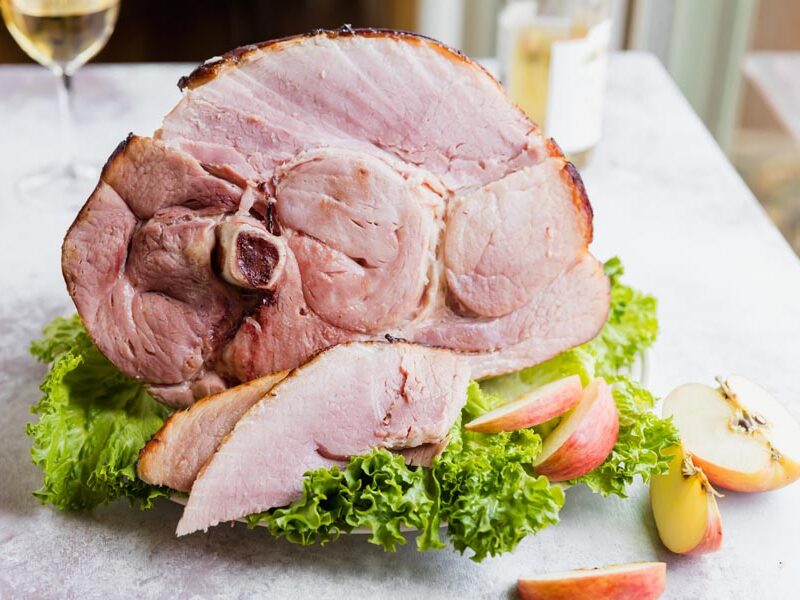
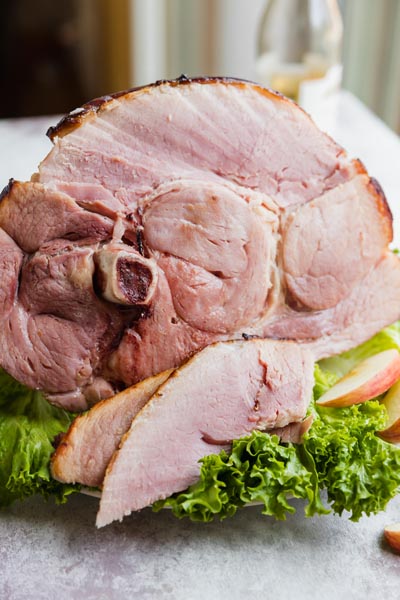
Fall-apart tender ham with a subtle tang, from one surprise ingredient: a bottle of apple cider vinegar poured over before it bakes. I cover the pan tightly with foil, then I let it go at 325°F for about 3 hours, until the ham hits 140°F inside and turns tender, then it rests before carving. 4g net carbs and 22g protein per serving.
I make this ham every Easter, and it's become the one thing my family would riot over if I skipped it. One bottle of apple cider vinegar. No glaze, no rub, no extra seasoning. Just pour it over the ham, cover tightly with foil, and walk away. The first time I served this, my sister-in-law looked at me like I was joking when I told her there was nothing else on it. She didn't believe me until she tasted it.
Here's how it works. You place the ham in a roasting pan, pour an entire bottle of apple cider vinegar over it, cover it tightly, and let it bake low and slow at 325 degrees. As it cooks, the vinegar creates steam that soaks into the meat and delivers a deep, tangy flavor that balances the natural saltiness. The result is juicy, fall-apart tender meat with a subtle zing that keeps everyone reaching for more.
I've made this probably 20 times over the years, and without fail, someone always asks for the recipe. My husband, who usually doesn't care for ham, looks forward to this one. One thing I learned after a few rounds: pour the vinegar around the sides of the ham, not just the bottom of the pan. The steam needs to reach the whole surface, and when I started doing this, the top half came out just as tender as the bottom.
No measuring, no mixing, no stress. I love this recipe because I can get it in the oven and then focus on everything else on the table. If you're eating keto or low carb, ham is already a great protein pick since it's naturally high in fat with barely any carbs (the 4 g per serving here comes from the sugar used in the cure). I usually round out the holiday spread with something like braised short ribs or bacon wrapped pork chops when I want a second protein option. And despite how hands-off this is, the flavor is anything but boring. Sometimes the simplest approach really does win.
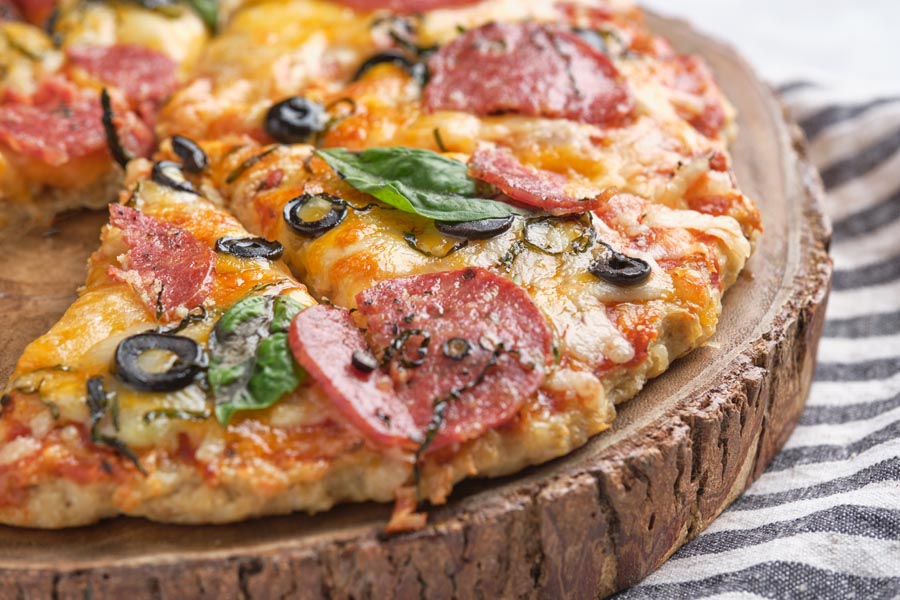
The leftovers are almost better than the main event. Slice whatever's left, refrigerate it promptly, and use it within 3–4 days. Freeze extra portions for meals later in the week. Cold slices straight out of the fridge, chopped into eggs in the morning, folded into a breakfast scramble, piled onto crustless pizza, or stuffed into cheese taco shells. I've gotten five dinners out of a single 10-pounder. If you're meal prepping for the week, one ham covers a lot of ground.
What type of ham should I buy?
When you head to the store, the options can be overwhelming: spiral cut, shank, butt portion, pork shoulder, picnic ham, smoked, glazed, cured. I’ve tried most of them over the years, so here’s what I’ve learned.
For this recipe, grab a fully cooked, smoked and cured shank or butt portion. Both come from the back leg of the pig. The shank is from the lower leg and is usually leaner with a single bone running through it, which makes carving easier. The butt portion comes from the upper leg and tends to be meatier and a little juicier. I usually go with the shank because that one straight bone means I get clean, even slices every time.
Then there’s what my mom always used: a picnic ham (also called a picnic shoulder). Despite the name, it’s not technically ham. It’s from the pig’s shoulder, not the hind leg, but it’s often sold cured and smoked just like ham and is usually more affordable. Picnic hams run higher in fat, which can make them especially flavorful and tender.
The most important thing, no matter which cut you choose, is that it’s fully cooked as well as cured and smoked. Look for ‘fully cooked’ or ‘ready to eat’ on the label. Curing and smoking give ham its familiar salty-sweet flavor, but those words alone do not tell you whether it is fully cooked.
Funny backstory for you: The first time I made this on my own, I didn’t know that. I couldn’t find a picnic ham at my store, so I grabbed a plain pork shoulder, not realizing it was raw and unseasoned. The result was more like a giant, flavorless pork chop, and my husband still jokes about that Easter dinner.
So take it from me: whether you use a shank, a butt portion, or a picnic shoulder, make sure it’s labeled ‘fully cooked’ or ‘ready to eat,’ as well as cured and smoked. These cuts are already seasoned and can stand on their own, but when you add apple cider vinegar, the flavor goes somewhere entirely different. I love that this is naturally keto and low carb with zero added sugar. It pairs well alongside other protein mains like slow cooker pork ribs or air fryer pork chops, and the leftovers stretch for days.
How to store and reheat leftover ham
Storage
Wrap leftover ham tightly or use shallow, airtight containers. Refrigerate within 2 hours of cooking, or within 1 hour if the room is above 90°F. Keep the refrigerator at 40°F or below and use the leftovers within 3–4 days.
Freezing
For longer storage, I double-wrap leftovers in plastic wrap and freezer paper (or use a freezer-safe bag with the air squeezed out). Freeze ham for 1–2 months for best quality. Thaw in the refrigerator. I slice it before freezing so I can grab exactly what I need for quick keto meals.
Reheating
To reheat, I preheat the oven to 325 degrees and arrange sliced ham in a single layer on a foil-lined baking sheet. I loosely cover it with another sheet of foil to keep the moisture in and start checking it after 8–10 minutes. Continue heating until the ham reaches 165°F in the center. The key is that loose foil tent so it doesn’t dry out.
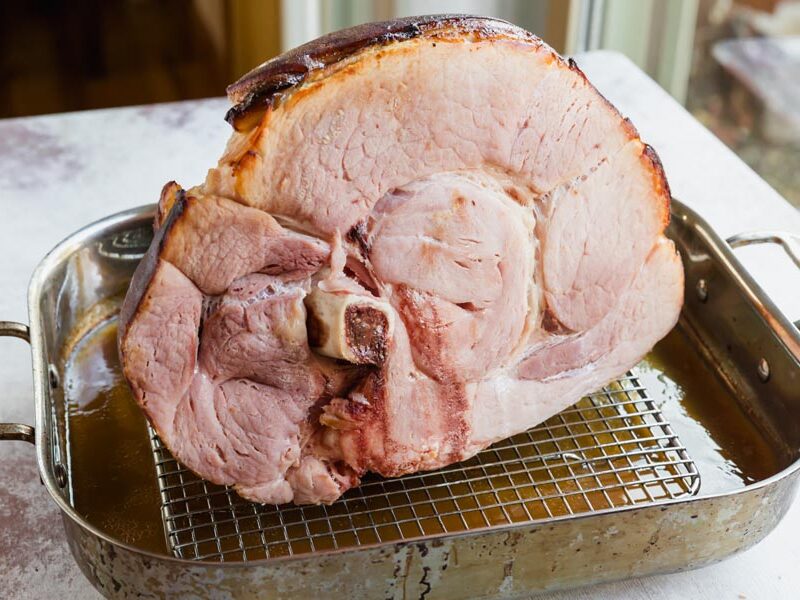
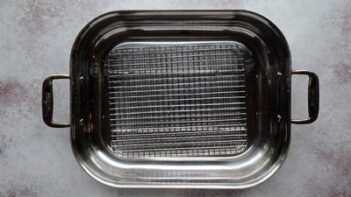
Preheat oven to 325 °F. Place a rack inside a large roasting pan.
2
Add the secret ingredient
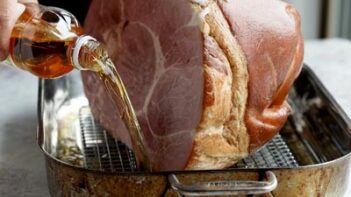
Remove ham from packaging, discard any fluids and place on the rack. Pour in apple cider vinegar.
For this step
10 lb fully cooked ham shank
16 oz apple cider vinegar
3
Cover and bake
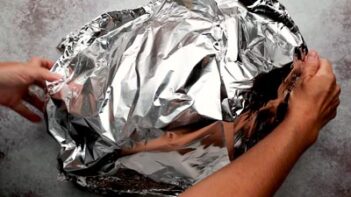
Cover the ham roast and pan tightly with aluminum foil. Place in the oven to bake at 325 °F for 15-20 minutes per pound (about 3 hours) or until the internal temperature of the ham is 140 °F and it is tender. The 140 °F temperature applies to fully cooked ham in its original packaging from a USDA-inspected plant; reheat ham repackaged elsewhere to 165 °F. Let rest for 10-15 minutes before carving.
Nutrition
Per serving: about 4 oz
Calories
300
Fat
22g
Protein
22g
Total carbs
4g
Net carbs
4g
Nutrition is an estimate calculated from the ingredients listed. Brands vary, so check labels if you track closely.
Frequently Asked Questions
What is a shank ham?
It's the lower portion of the pig's hind leg, below the butt end. I reach for this cut because it has one straight bone running right through it, so carving comes out in clean, even slices. It also runs a touch leaner than the butt portion, which sits higher on the leg and turns out a little meatier. Both work for this recipe, but I go with the shank almost every time for those tidy slices. Just make sure whatever you grab is labeled fully cooked, cured and smoked, so it comes already seasoned and ready for the apple cider vinegar to do its job.
How do you know when ham is done cooking?
I go by internal temperature. For a fully cooked ham shank in its original packaging from a USDA-inspected plant, you're really just warming it through and letting the vinegar do its thing, so I pull it when my thermometer reads about 140 degrees in the thickest part. For ham repackaged elsewhere, reheat to 165 degrees instead. You'll also notice the meat pulling away from the bone slightly and it'll feel tender when you press on it. I usually check around the 2.5 hour mark and go from there.
Will the ham taste too vinegary?
Not at all. I was worried about this the first time too, but the vinegar mellows completely as it cooks. What you end up with is the slightest tang that offsets the salty, smoky flavor from the cured ham. My husband, who is suspicious of anything 'different,' couldn't even identify what made it taste so good. The vinegar just brightens everything without taking over.
Can I use a different type of vinegar?
I recommend sticking with apple cider vinegar for this recipe. Its mild fruitiness pairs well with the salty, smoky ham. Other vinegars can change that balance, so use the 16 ounces of apple cider vinegar listed in the recipe.
Can I add a glaze with the vinegar method?
You could, but I don't. The whole point of this recipe is that the apple cider vinegar handles the flavor on its own. If you want a little extra something, I'd brush on a thin layer of sugar-free mustard during the last 30 minutes of baking. But every time I've served this without a glaze, nobody has missed it.
Can I use this method for spiral-cut ham?
I'd stick with a whole shank or butt portion. Spiral-cut hams are pre-sliced, so the vinegar steam can't penetrate the same way. They also tend to dry out faster since all those cuts let moisture escape. With a whole ham, the outside stays sealed while the vinegar works its way in during those three hours. That's where the juiciness comes from.
Can I make this in a slow cooker or crockpot?
I've done this in the slow cooker and it works. Pour in all 16 oz of apple cider vinegar, set it to low, and let it go for about 8 hours. The fall-apart texture is there, but you won't get any browning on the outside. No foil needed since the slow cooker traps the steam the same way the covered roasting pan does. I still prefer the oven because I like that slightly caramelized exterior, but if oven space is tight on a holiday, the slow cooker gets you most of the way there.
How do I reduce the saltiness of cured ham?
I soak it. If I get a ham that runs particularly salty, I submerge it in cold water in the refrigerator for 12 to 24 hours before baking, changing the water every 4 to 6 hours. I've done this once with a picnic ham that was almost inedibly salty straight out of the package, and the soak pulled out enough salt to balance everything. Just pat it completely dry before it goes in the pan so the apple cider vinegar can do its job properly.
Is a ham shank fully cooked?
Check the label. If it says 'fully cooked' or 'ready to eat,' it's precooked and just needs to be warmed through. That's what you want for this recipe. If the label says 'cook before eating' or 'fresh,' it's raw and needs to reach an internal temperature of at least 145 degrees followed by a 3-minute rest. Follow the package cooking directions for those hams instead of this reheating method. I learned this the hard way when I accidentally bought a raw pork shoulder thinking it was ham. The texture and flavor were completely wrong. The words 'smoked' or 'cured' alone do not confirm that a ham is fully cooked. When in doubt, ask the butcher.
Where can I buy ham shanks?
Around the holidays, almost every grocery store stocks bone-in ham shanks in the refrigerated meat case, usually labeled shank portion or shank half. The rest of the year they can be hit or miss, so I ask at the butcher counter, and they can usually order one within a few days. Warehouse stores and larger supermarkets are the most reliable year round. Whatever the source, check the label for cured and smoked, and fully cooked, since that is what this recipe is built around.
Keeping the ham up on the rack instead of letting it sit in the vinegar is what puts this one ahead of the others I’ve made. The outside doesn’t go soft. Thanks!
Cooking for 8 this time, so going with a 5 lb shank instead of the full 10. Does the apple cider vinegar scale down too, or does the full 16 oz still work? Bake time at 325 — half, or is it less linear?
I’m hosting a dinner on Saturday and want to get ahead of the cooking as much as possible. If I bake the ham shank on Friday and refrigerate it overnight, what’s the best way to reheat it without losing that fall-apart tenderness? My plan was to cover it tightly with foil again and add a splash more apple cider vinegar before putting it back in the oven, but I’m not sure whether to keep it at 325 or go lower and slower.
Luz, yep. I’d drop it to 275 instead of 325, slower is better when it’s already done and you’re just warming it through. Tight foil and a splash of ACV keeps the moisture in. Pull it when you hit 140 in the thickest part, coming straight from the fridge figure 60-90 minutes.
Threw in a few whole peppercorns and two bay leaves with the ACV before sealing the foil. The steam picks up a little depth that way, nothing dramatic, more like a base note underneath the tang. On a 10-pound shank at 325, I didn’t notice any timing difference. Worth doing if you’re the type who adds a parmesan rind to a long braise, it’s that kind of move. The ACV does most of the work regardless, that’s not in question. Four stars because I nicked the foil seal once rushing and ended up with drier meat on the outside, so don’t skip that part.
Peppercorns and bay leaves in the steam makes sense, same idea as a parmesan rind, you’re just giving the steam something to pick up. I’m doing this next batch. The foil thing is real, once it goes the outside dries out before the center’s done.
No rub, no glaze, no scoring the skin. I kept reading the ingredient list waiting for the part where it said to add something else. Made it anyway because I figured vinegar at least would do something, and I was right about that, just wrong about needing more. Pulled back the foil at the 4-hour mark and the bone was already separating on its own. The liquid pooled in the bottom of the pan smelled really good. Saved it and used it to baste the slices when I reheated them the next day. Worth doing.
My grandmother made a ham every Easter that I thought about for years after she passed. Different recipe entirely, but something about this one coming out of the oven stopped me cold. That smell. I couldn’t place it at first, then realized it’s what the apple cider vinegar does as the fat renders, that deep tangy-savory thing that fills the whole kitchen. I’ve been keto for going on three years and I had honestly written off holiday ham as something that would never feel right again. I was wrong. Grateful for this one.
I almost didn’t make this because I couldn’t figure out what apple cider vinegar was supposed to do to a ham that’s already smoked and cured. Seemed like a weird move. But I’d tried three different Easter ham recipes in the last two years and none of them had that falling-apart tender thing I was after, so I figured fine, one more shot. The foil tent with the vinegar underneath is doing something I cannot fully explain, but when I peeled back the corner at two hours the smell that came out stopped me cold, like a real holiday dinner, not just meat sitting in an oven. Went to carve it and the whole thing just gave way. I’ve had hams that are technically done but still fight you at the carving board, this was not that. The apple cider vinegar is doing something to the texture I still can’t put into words. This is my Easter ham from here on out, I’m done auditioning other recipes.
Done auditioning is right, Taylor. The foil trap turns the pan into a little steam oven, ACV braises it from below. I’ve never had a ham from this method fight me at the carving board.
My 9-year-old pulled the bone clean at the table and announced this is ‘the only ham that counts now.’ The apple cider vinegar does something to the meat I can’t explain. It was falling apart before I even touched it with a fork.
‘The only ham that counts now.’ I’m putting that on the recipe page. The ACV breaks down the collagen as it steams inside the foil, which is why the bone pulls clean before you ever try to touch it.
Made this for Easter and I was nervous the whole time (I almost skipped the apple cider vinegar because it seemed strange for a ham). Pulled the foil back and it was falling apart tender in a way I’ve never managed before. Do you think this works the same way with a smaller bone-in ham?
I was very careful about crimping the foil around the pan, and the top of my ham was extremely dry. We had to eat it with BBQ sauce to give it some moisture to swallow. It was fall apart tender. It was a 12.9 lb shank. The lower 2/3 of the ham was great! What’s left of the dry meat will be used for ham salad and for scrambled eggs.
One thing that helped: pour the apple cider vinegar around the sides of the ham, not just the bottom. First time I made this most of it pooled underneath and the top half didn’t get nearly as tender. Second time I tilted the pan to distribute it before sealing the foil and the difference in how it pulled apart was noticeable. Easter dinner sorted.
That tilt is smart. I swirl the vinegar around before sealing without really thinking about it, just never put it in the recipe. Good thing to know going in.
I have never made a ham before in my life and I picked this one for Easter because I liked that the ingredient list was basically nothing. The apple cider vinegar had me nervous the whole time it was baking (I kept checking the oven, half convinced I had somehow messed it up), but when I pulled the foil back the meat was just falling away from the bone. I literally did not know ham could do that. Making this again for a church potluck in a few weeks because I need something big enough to feed a crowd and I actually trust this one now.
We’re doing Easter at our house this year for the first time, 30 people (send help). If I do two 10 lb shanks at once, do I double the apple cider vinegar straight across or does liquid not scale the same way?
We don’t own a roasting pan (I know, I know) and I’ve been wanting to try this for weeks. Could I do it in the slow cooker with apple cider vinegar and still get that fall-apart texture, or does it really need the oven?
Slow cooker works for this. Pour in all 16 oz of ACV, then I’d go low for 8 hours. Fall-apart texture is there, just no browning on the outside. No foil needed either, the slow cooker holds the steam the same way.
Making this for Easter next month. I’ve always done spiral hams because they’re easy to carve, but this looks way better. How does carving a shank work compared to a spiral cut? Do I need a specific knife or technique?
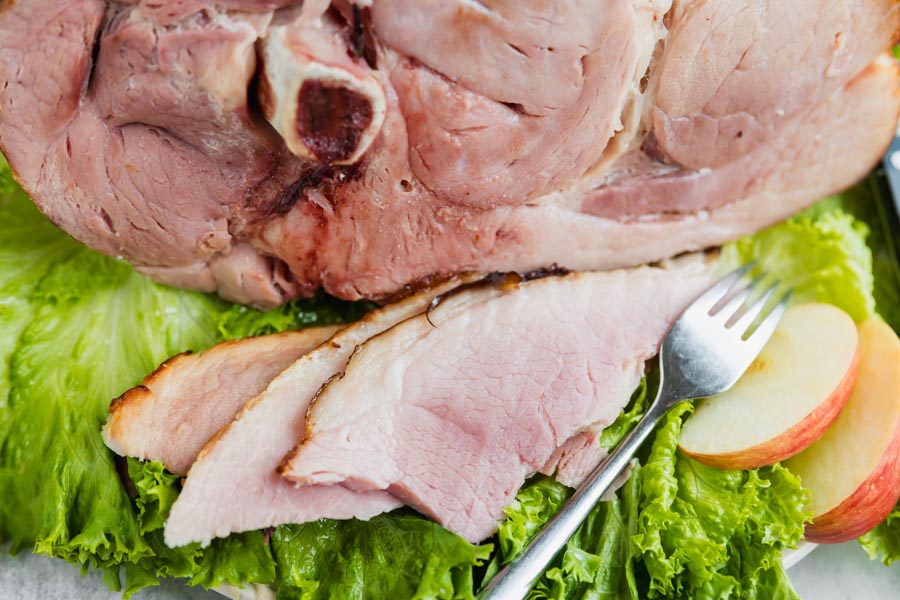
Carving’s easier than spiral. Let it rest 15 minutes, then slice perpendicular to the bone in quarter-inch slices. A regular sharp carving knife works fine. The shank bone runs straight through so you just cut down until you hit it, then slide the knife along to release. Way more control than trying to follow pre-cut lines.
Made this as a test for my Christmas Dinner and it turned out so good. I love the flavor the apple cider vinegars brings. I might try to add some cloves when I make it for Christmas dinner.