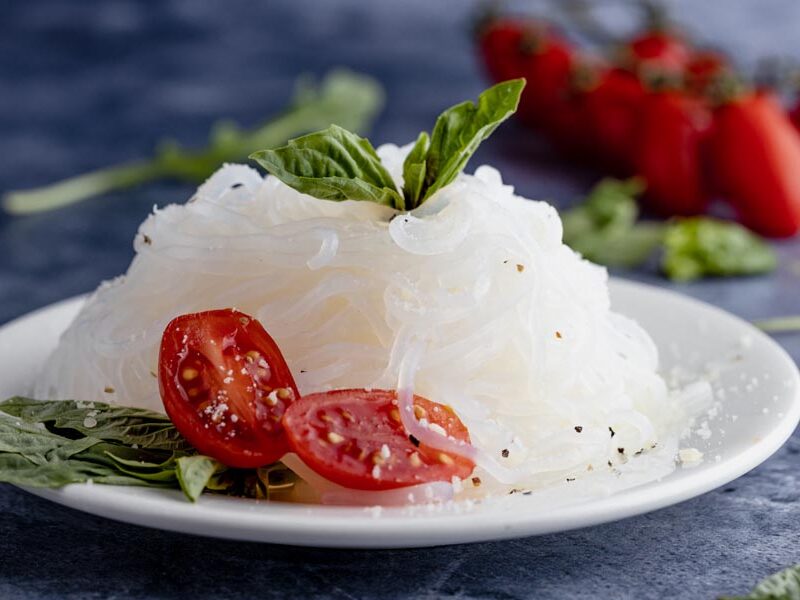
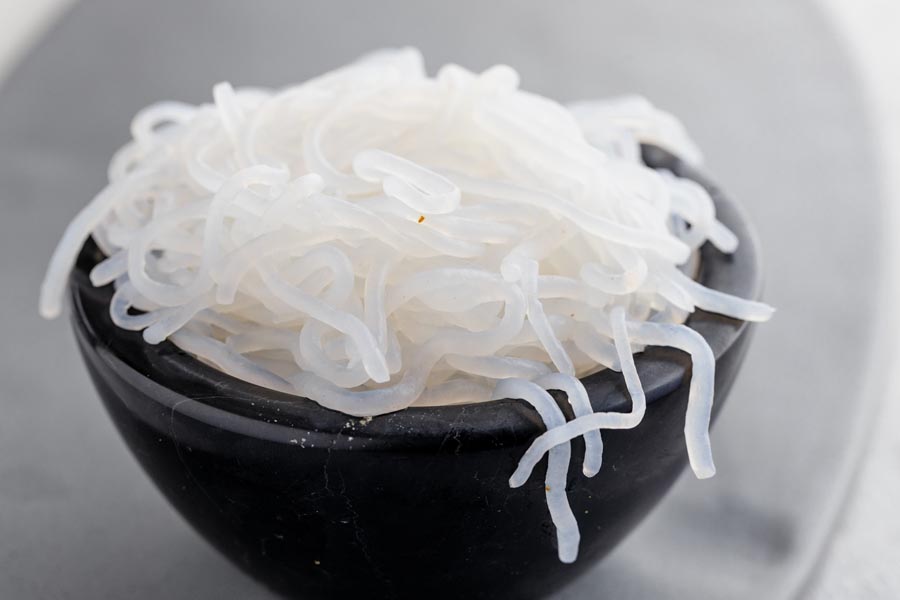
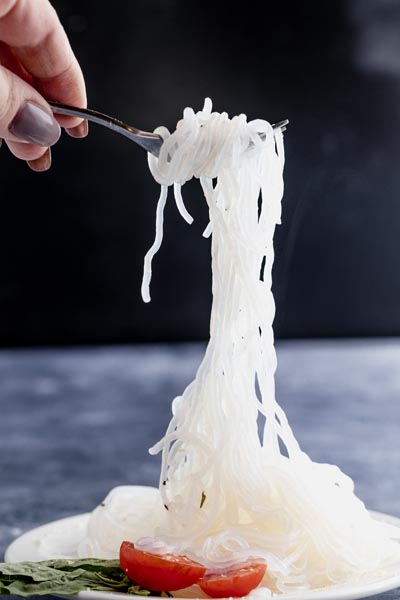
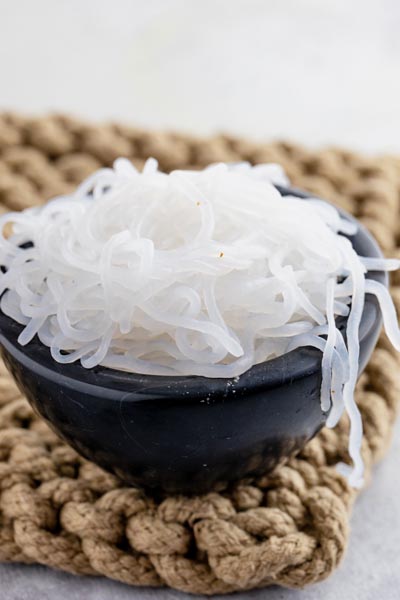
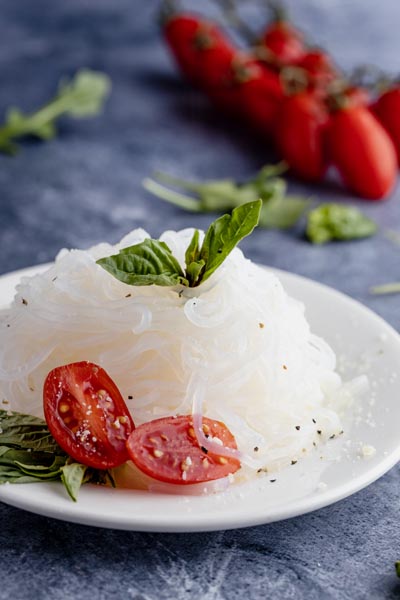
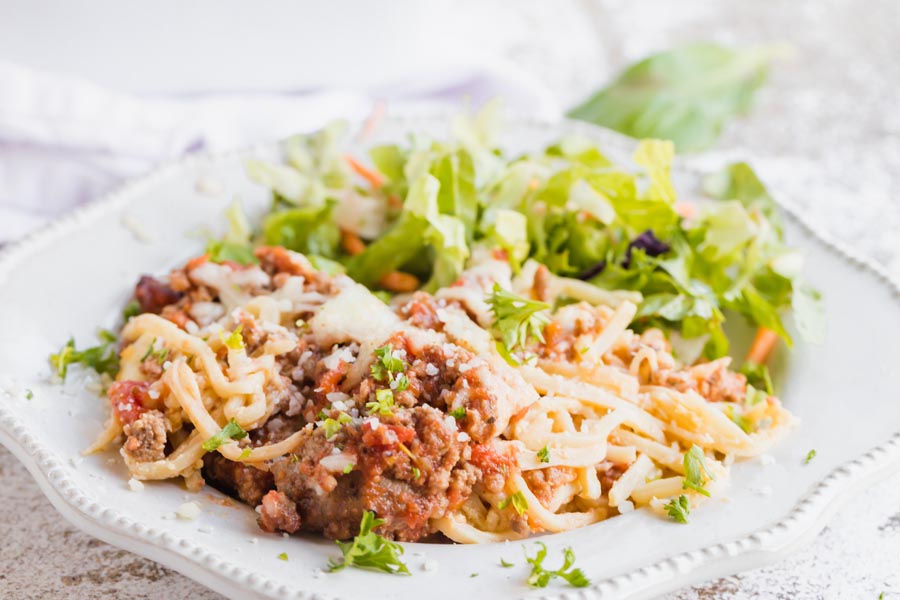
Chewy in the right way, slurpable, and 0g net carbs, shirataki noodles hold up like real pasta once you prep them right. I rinse them under cool water for 1 to 3 minutes until the smell goes away, then I let them cook in a dry pan until the moisture is gone, the step that finalizes the texture. From there they take on any sauce I pour over them.
I was eating these before most food blogs even knew they existed. Back in 2012 when I started keto, this was it. The only pasta option. A rubbery, strange-smelling noodle in a bag of liquid that made most people gag on sight. I kept making them anyway because I missed pasta that much, and somewhere around batch 50 I figured out exactly how to make them work.
These are konjac noodles, made from glucomannan fiber pulled from the root of the konjac plant. About 97% water and 3% fiber, which is why they clock in at zero net carbs. The fiber is soluble and non-digestible, so your body doesn't absorb the carbs. I've paired them with every sauce in my rotation over the past decade: stir fry sauce, cheese sauce, marinara, alfredo, ramen broth. They take on whatever flavor you give them, which is the whole point.
What are shirataki noodles?
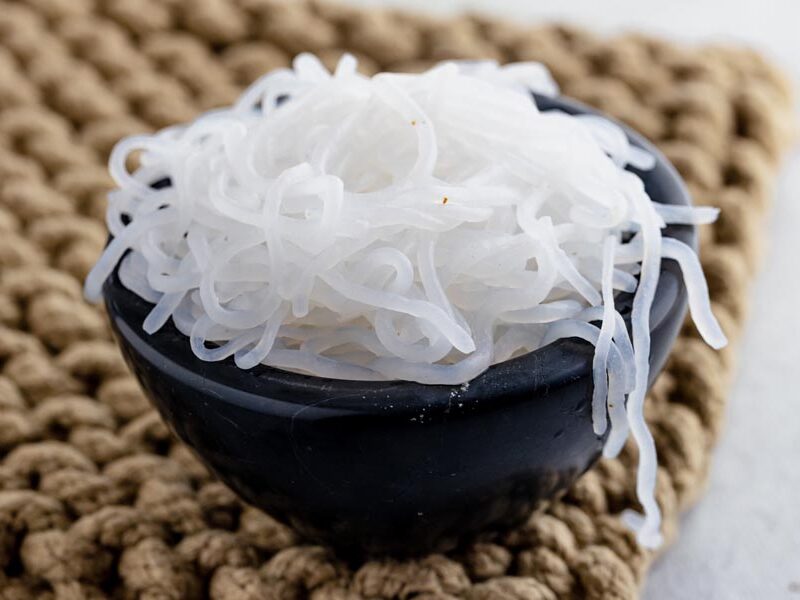
The word "shirataki" means "white waterfall" in Japanese, which is exactly what these translucent noodles look like when you hold them up. They're made from the konjac plant, common in Japan, China, and other parts of Southeast Asia. The same plant is used to make raindrop cake, which is a fun connection I didn't make until years after I'd been eating both.
Glucomannan is a soluble fiber that absorbs water, and that's essentially all these noodles are. The carbs from the glucomannan are not digestible, which is why most brands land at zero net carbs per serving. If you're looking for another low-carb pasta swap, I also rotate in hearts of palm pasta when I want something with a bit more bite.
" These are my go-to keto noodles when I need them to be zero carbs. As long as you make them correctly and follow directions, they work just fine."
➥ from Instagram follower @ketogirl_330
Why the fiber in these noodles matters
The entire noodle is basically glucomannan, a highly viscous soluble fiber from the konjac root. When it absorbs water, it forms the gel-like substance that gets shaped into pasta. I find it interesting that a noodle made almost entirely of fiber can feel this substantial on a plate.
Because glucomannan is non-digestible, the net carb count lands at zero for most brands. The fiber also acts as a prebiotic, feeding the beneficial bacteria in your gut. Research backs this up, and I can say from personal experience that adding these to my weekly rotation hasn’t caused me any of the digestive issues some people worry about. Start with a smaller portion your first time and work up from there.
Benefits beyond zero carbs
I keep coming back to these noodles for reasons beyond just the carb count. After a decade of eating them regularly, here’s what I’ve noticed.
They keep me full. The glucomannan fiber slows digestion, so I’m not reaching for snacks an hour after dinner. I make a bowl with cauliflower fried rice on the side and I’m set for the evening.
Steady blood sugar. The fiber slows gastric emptying, which means blood sugar and insulin levels rise more gradually. I’ve tracked this on my keto journey and the difference is real.
Better digestion. If you’re eating high-fat and struggling with regularity, the soluble fiber in these noodles helps. I noticed the difference within the first two weeks of adding them consistently.
What they actually taste and feel like (honest take)
I’m not going to pretend the first impression is great. The smell out of the bag is off-putting, and if you skip the prep work, the texture stays rubbery and slippery. I understand why people try them once and never come back.
But here’s what I figured out after years of testing: prep is everything. Rinse them thoroughly, boil in vinegar water if you have time, and dry them in a hot cast iron pan until they squeak. When I do it right, the texture lands somewhere between al dente pasta and a chewy rice noodle. They’re flavorless on their own, which is actually the point. They become whatever sauce you put on them.
Shapes, sauces, and how I actually use them
These noodles come in more shapes than most people realize: spaghetti, fettuccine, angel hair, ziti, and even rice. I’ve tried all of them over the years, and here’s what I’ve learned. Thin varieties like angel hair and spaghetti respond best to the dry-pan method and pick up sauce evenly. Fettuccine is thicker and holds onto its chewiness no matter what you do, so I save that shape for heavier sauces where the texture works in its favor.
My go-to weeknight move is olive oil, parmesan, salt, pepper, done. But they work in almost anything:
Breakfast scramble tossed with eggs and whatever is in the fridge, or wrapped in egg white wraps
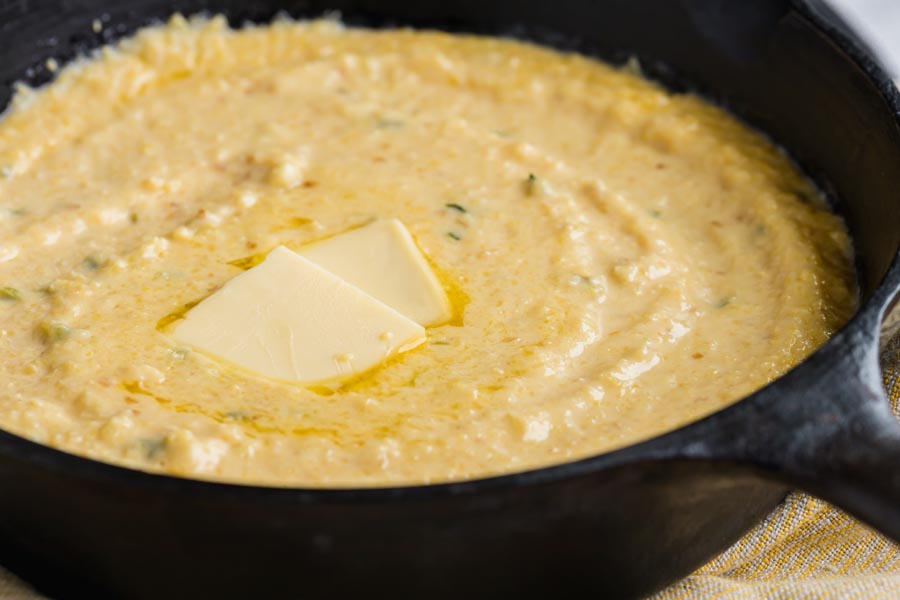
Southern-style side as a swap in place of keto grits when I want something noodle-forward
Where to buy them
I find them at most Asian grocery stores and some regular grocery chains now. Kroger carries the Simple Truth Organic brand, and I’ve seen Bare Naked Noodles at several stores near me. For online, these are the two brands I keep reordering:
It’s Skinny (slightly less liquid in the bag, which I appreciate)
I’ve tested at least six brands over the years and the differences are minimal. They’re all konjac and water. Pick whichever shape you want and focus on the prep.
How to cook shirataki noodles so they don't smell or taste rubbery
Drain and rinse for the full 3 minutes. I used to do a quick 30-second rinse and wondered why they still smelled. The full rinse time is non-negotiable. Run cold water over them until you can't detect any odor at all.
Try the vinegar water boil. For an even deeper clean, I boil them in water with a splash of white vinegar for 2-3 minutes before draining. This neutralizes the smell at a level rinsing alone can't reach. I started doing this after my third year of making them, and it was a noticeable jump in quality.
Dry them in cast iron, not nonstick. I've done this in nonstick and it's not close. Cast iron runs hot enough to dry them out instead of letting them steam. Keep them moving in the dry pan (no oil) until you hear them squeak against the surface. That squeak is your signal.
Microwave shortcut when you're in a hurry. Place the rinsed noodles in a bowl, microwave for 2 minutes, then pat dry with paper towels. I use this method on weeknights when I don't want to pull out the cast iron. The texture isn't quite as good, but it works.
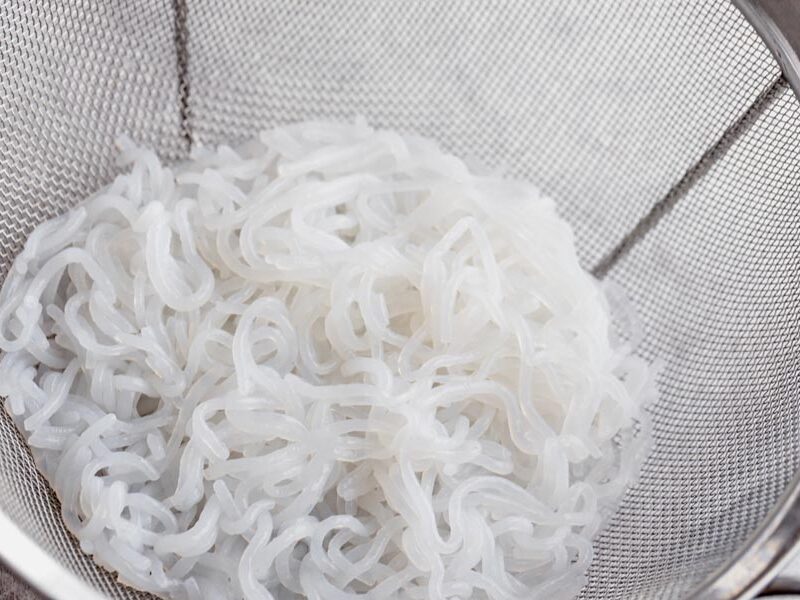
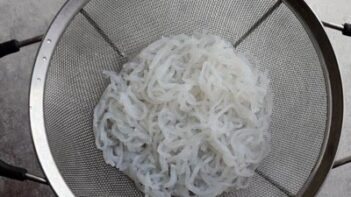
Open the contents of the shirataki noodle bag into a colander and drain the liquid.
2
Rinse
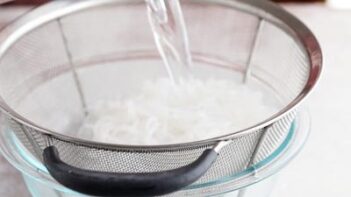
Rinse noodles under cool water for 1-3 minutes or until the smell goes away.
3
Cook off excess moisture
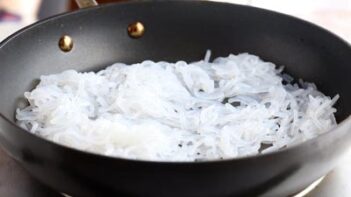
To finalize noodle texture, add noodles to a saucepan or skillet and cook over medium heat until noodles are dry and moisture has evaporated off. Add remaining ingredients if using or add in your favorite sauce.
Nutrition
Per serving: 3 oz
Calories
0
Fat
0g
Protein
0g
Total carbs
3g
Fiber
3g
Net carbs
0g
Nutrition is an estimate calculated from the ingredients listed. Brands vary, so check labels if you track closely.
Frequently Asked Questions
What's the difference between angel hair, spaghetti, fettuccine, and rice shirataki?
I've cooked all four shapes extensively. Angel hair and spaghetti are thin and dry out fastest in the pan, so they get the best texture. Fettuccine is thicker and stays chewier no matter how long you cook it, which I actually prefer for cream sauces. The rice shape works well in soups or as a side where I'd normally use cauliflower rice. My go-to for weeknight pasta is spaghetti shape.
Can shirataki noodles interfere with medications?
This is something I learned from my research over the years. Glucomannan can reduce the absorption of oral medications because it slows gastric emptying. I take my supplements and any medications at least 1 hour before or 4 hours after eating these noodles to be safe. If you're on prescription medication, check with your doctor.
How long do cooked shirataki noodles last in the fridge?
I store my cooked leftovers in an airtight container and they keep for up to a week in the fridge. I've meal-prepped batches on Sunday and eaten them through Thursday with no texture change. Just reheat in a dry pan for a minute to bring back the firmness. I wouldn't freeze them though, as the texture goes off.
Can I microwave shirataki noodles instead of dry-frying?
I use the microwave method when I'm short on time. Rinse the noodles, put them in a microwave-safe bowl, and microwave for 2 minutes. Pat dry with paper towels. The texture isn't quite as good as the cast iron method, but it gets you 80% of the way there. I do this on busy weeknights and it works fine.
What dairy-free substitute works for the parmesan finish?
I've tested nutritional yeast as a swap and it works well. Start with 2 teaspoons instead of a full tablespoon because it's more concentrated than parmesan. Salt and pepper alone is solid too. The olive oil carries most of the flavor anyway, so you're not missing much without the cheese.
Do these noodles have any protein?
No, shirataki has zero protein because it's basically just glucomannan fiber and water. I always pair mine with something substantial to turn it into a real meal. Ground turkey, a soft-boiled egg, or a handful of shrimp tossed in at the end all work. I treat the noodle as the base and let the protein come from what I add on top.
Is shirataki gluten free?
Yes. These are made entirely from konjac root, so there's no wheat and no gluten anywhere in them. I've served them to friends with celiac without any issue. If you're buying a flavored or pre-sauced variety I still check the label, but the plain konjac noodles I keep in my pantry are naturally gluten free.
Can these noodles cause bloating or digestive issues?
They can if you jump straight to a full serving, since the glucomannan fiber is a lot for your gut to take on at once. My advice after years of eating these: start with a half portion your first time and drink plenty of water with them. I worked up slowly and never had a problem, but going all in on day one is what trips people up.
Are shirataki noodles actually healthy?
Yes. One 3 oz serving has 0 calories, 0 net carbs, and 3 g total carbs, all of it glucomannan fiber from konjac root. That soluble fiber feeds good gut bacteria and keeps me full between meals. I've eaten these weekly for over 12 years on keto and they've earned a permanent spot in my rotation.
Is it safe to eat shirataki noodles every day?
Yes, I eat them several times a week and have for over 12 years. Start with a half portion your first time and drink plenty of water, since the glucomannan fiber is a lot for your gut at once. If you take oral medication, eat these at least 1 hour before or 4 hours after your dose.
Couldn’t tell from the recipe whether to dry-pan these ahead of time or right before eating. Tested it for two weeks. Answer: dry-pan ahead, store plain, sauce when you reheat. The texture still holds after four days, but sauce left on overnight gets absorbed and they go slippery. Now I rinse and dry two bags on Sunday, split into portions, and keep the parmesan off till I’m heating.
Same system. I also press them with a paper towel right before the pan and get a better chew out of it. The sauce-overnight thing is real, ruined a whole batch before I figured that out.
Two bags at once gets me through a full work week of lunches. Worth batching the rinse and dry-pan step. Four stars on texture, takes some getting used to, but zero net carbs and I’ve stopped looking for something better.
Squeeze the noodles over the sink before you start rinsing, most of the packing liquid comes out and then the smell clears in under two minutes instead of the full three, worth the thirty extra seconds. I used to get lo mein from this little Chinese place every Friday and figured that texture was just gone on keto, but these sauce the same way and I don’t know, sometimes I make them just for that.
Priya, I do this exact prep on Sundays. Rinsed and pan-dried keep up to a week in an airtight container, and the texture holds fine. Reheat in a dry pan for a minute before adding sauce.
Figured I could shortcut past the dry-pan step since I’ve prepped enough cauliflower rice to know when a step is there for texture vs. just filler. I was wrong. My first batch (pan-skipped) came out slippery in a way that even heavy sauce couldn’t fix, but when I followed the method the second time the parmesan coating actually held. Do these hold up cold, like in a pasta salad situation, or does the texture get weird once they’re out of the sauce?
Alicia, cold is where they fall apart. The parmesan coating needs heat to set, so without it they just go slippery. I’ve tried cold pasta salad with them a couple times and it just doesn’t work, better to warm them right before serving.
Kept seeing shirataki in keto groups and skipping past them because a water-and-fiber noodle holding up under real sauce seemed like wishful thinking, not a texture sub. Finally bought a bag that sat in my pantry for two months before I cracked it open. Did the full routine. Dry skillet is where something changed. You can hear it go from slippery to actually having resistance. Figured it might hold. Tossed with Rao’s and let it reduce a few minutes. They held. Four stars because I’m still not over the fact that this registered zero on the nutrition label and I ate a full bowl.
That sound is the tell. Rao’s was the right call, it clings instead of pooling. The zero carb thing still catches me off guard sometimes and I’ve been eating them for 12 years.
Doing a big Sunday meal prep and want to work these into my lunches all week. If I rinse and pan-dry a batch Sunday morning, will they hold up through Friday? Most keto noodle alternatives I’ve tried turn to mush by Tuesday, so hoping these are different.
Yep, easily. I’ve made them Sunday and eaten through Thursday with no texture change at all. Keep them in an airtight container, then just reheat in a dry pan for a minute or two.
Most shirataki prep guides I’ve followed skip the dry-toast step and the smell lingers no matter how long you rinse. Cooking off the moisture in a dry pan first is the fix. After that the noodles actually absorb sauce instead of shedding it, which is the whole point.
The sauce shedding is what finally got me to take the dry pan step seriously. Before that I just thought shirataki noodles were supposed to be watery. Cast iron on medium-high gets the moisture out fastest.
I’d been nervous about the smell everyone warns about, but rinsing them for a full three minutes made it completely disappear. Tossed them in a pan with olive oil and couldn’t believe how well they picked up the sauce.
My husband has been side-eyeing every keto swap I bring into the house for two years, so when he finished a bowl of these and asked what kind of noodles I’d used, I actually had to laugh. The rinsing actually works. No weird smell by the time they hit the pan, and once I tossed them in olive oil and parmesan they looked and felt like real pasta. He asked me to make them again Thursday night. That’s the win.
I’ve made shirataki noodles more times than I can count. The dry-cooking step is the one most people skip, which is why they end up with that rubbery, waterlogged texture. A few months ago I started finishing them in Kerrygold butter instead of olive oil, and the difference in sauce absorption is real. Made a batch last week with Rao’s marinara and the noodles actually tasted like they’d been simmering in the sauce, not just tossed in at the end. The edges went slightly golden too, which I wasn’t expecting. If you’ve tried shirataki before and written them off, the butter swap and a longer dry-cook time are worth another shot.
The dry-fry step is what finally made these click for me. Rinse, then let them sit in a dry skillet over medium heat and they actually absorb sauce instead of watering it down. Mine needed closer to 5 minutes to lose that spongy bite, not the 2-3 I expected.
After rinsing, I throw them in a dry skillet on medium-high and just listen for the squeaking to stop. That’s when they’re ready for sauce. Cut my gummy noodle problem in half.
Tried maybe four different prep methods before landing on this one. The dry pan step to cook off moisture is what every other guide skips, and that’s exactly why nothing ever stuck to sauce. It actually works.
Made a big pasta dish with these for my sister’s birthday dinner (she’s not keto, most of the table wasn’t either) and nobody said a word until I brought it up after dessert. The rinsing step is non-negotiable though, learned that the hard way the first time I tried to rush it.
Fourth time making these. Finally figured out that an extra minute in the dry pan matters when you’re going with a heavier sauce. Went with Rao’s marinara and they held up way better than my earlier batches. Still hate the prep. But that texture keeps pulling me back.
The sauce moisture thing is real. I noticed it first with a creamy vodka sauce, needed almost two extra minutes in the pan before it would hold up. The prep is what it is.
I’ve probably made these eight or nine times now, and what I’ve slowly figured out is that the skillet step matters more than I originally thought. The first several times I pulled them off the heat too early and the texture was slippery in a way that felt wrong. Once I started cooking them until they squeak when you drag them across the pan, something clicked. Last week I did mine with Rao’s marinara and some ground beef and it genuinely felt like pasta night, not a workaround. The smell when you open the bag still catches me off guard every single time (I don’t know why I’m always surprised after all these tries), but the two-minute rinse really does take care of it. Four stars mostly because I feel like I’m still learning the method, but I keep circling back to this.
Rao’s and beef is my lazy weeknight version too. Eight or nine tries and still adjusting is normal for these – I’ve had them in rotation for 12 years and still change the rinse time depending on the bag.