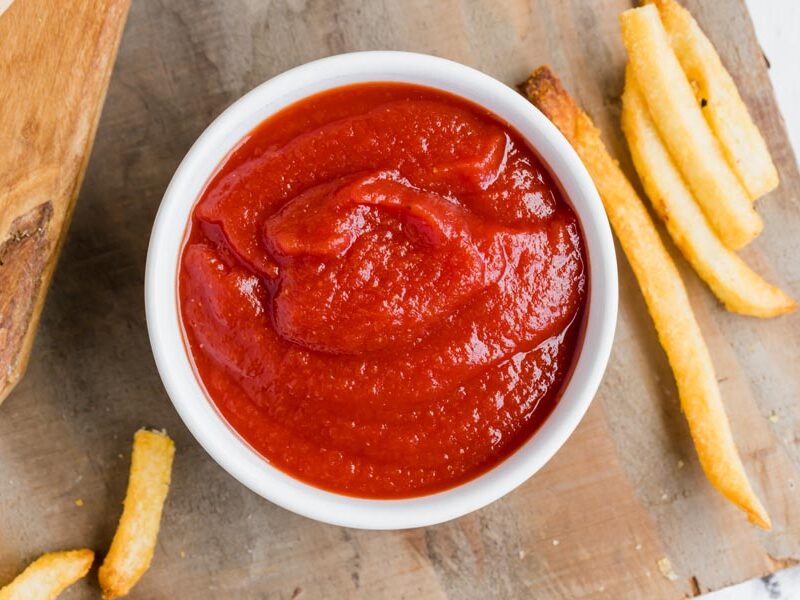
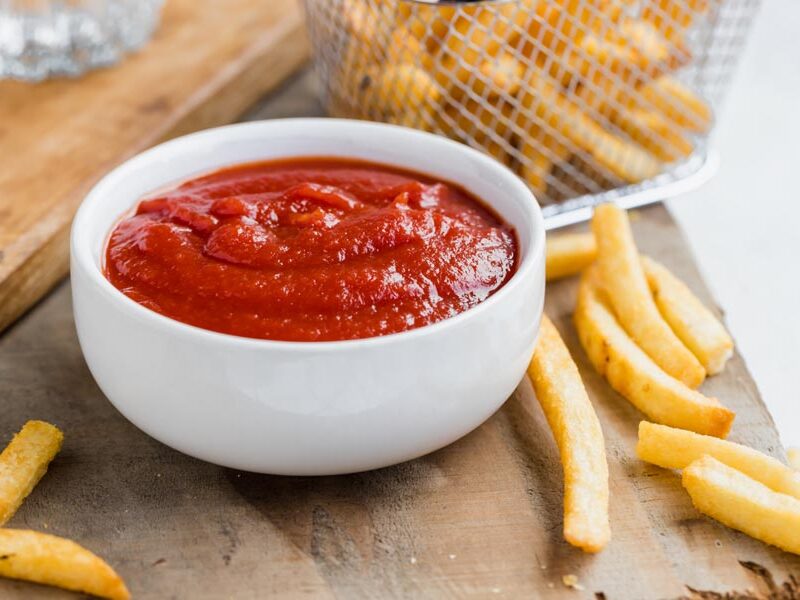
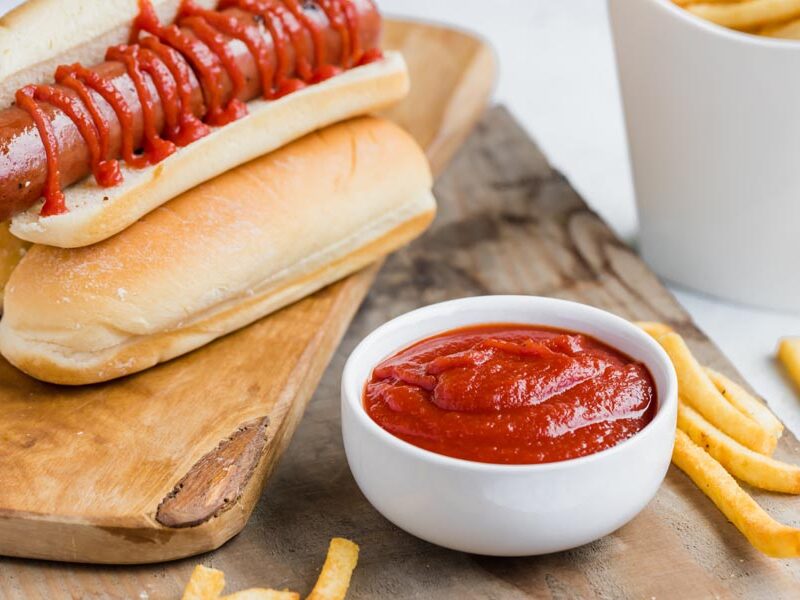
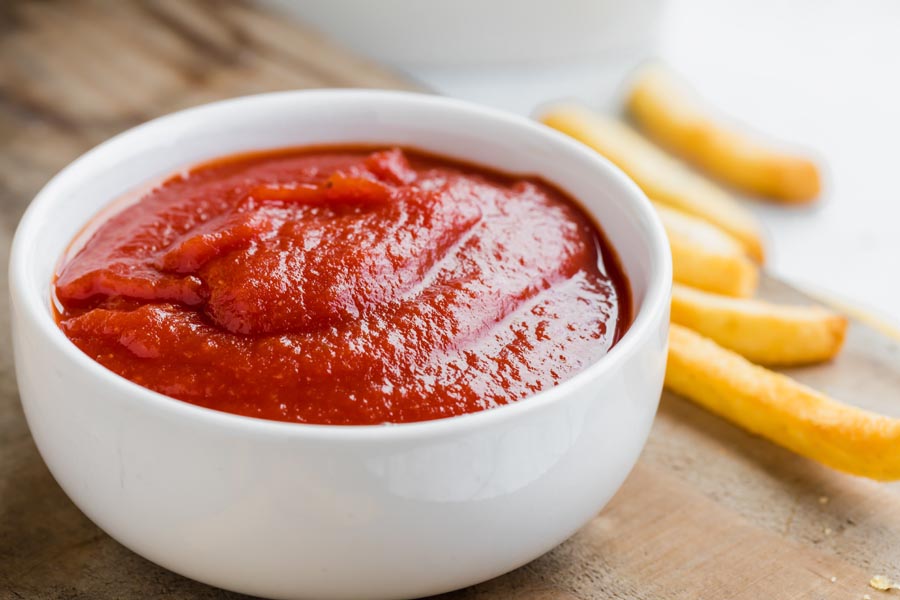
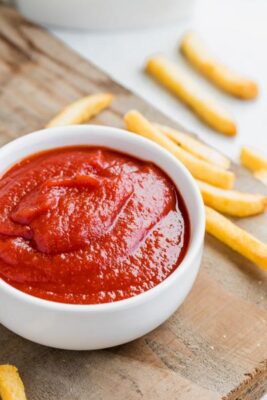
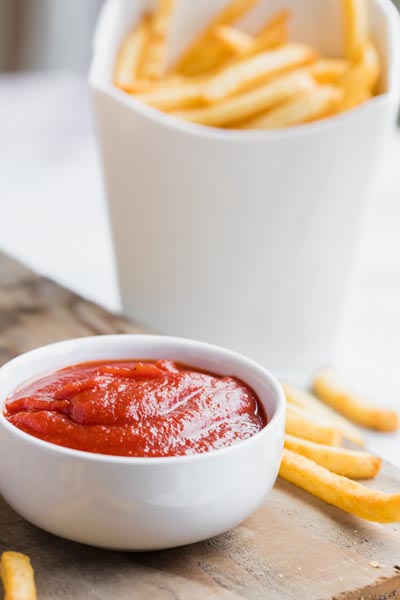
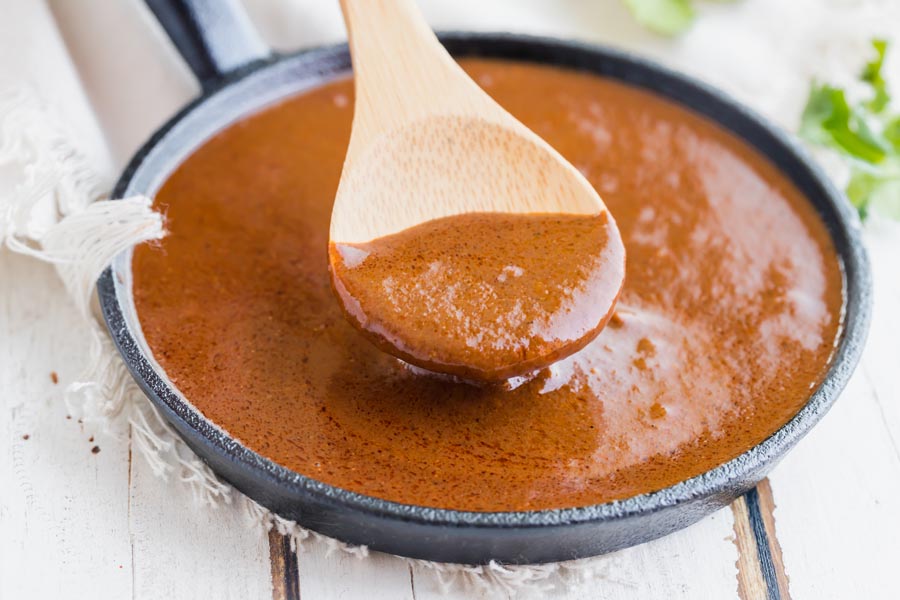
Nobody should give up ketchup — my sugar-free ketchup has rich, tangy tomato flavor from whole ingredients at 1.5g net carbs and 10 calories, while most bottled versions are loaded with sugar. After years of making it, mine beats store-bought.
I started making my own ketchup in 2018 when I realized I was spending $8 a bottle on the sugar-free versions at the store. The homemade version takes 15 minutes, costs under $3 in ingredients, and tastes fresher than anything that comes in a bottle.
The biggest reason I make it at home is ingredient control. I know exactly what goes in: tomato paste, vinegar, a little sweetener, and basic spices. No preservatives, no mystery "flavors," no high fructose corn syrup. Even some homemade recipes online call for brown sugar or honey, which defeats the purpose if you're watching carbs.
The flavor is tangy, slightly sweet, and has more depth than bottled. I think it's the vinegar and the tomato paste working together without all the fillers getting in the way. Once you make a batch, the store-bought versions start tasting flat by comparison.
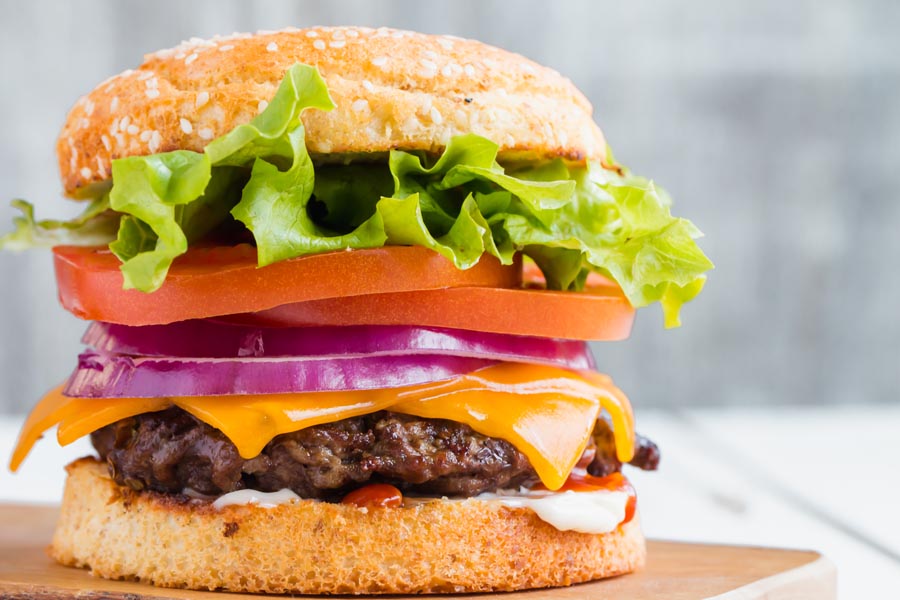
What surprised me most is how many ways I use this beyond fries. I brush it on meatloaf before the last 10 minutes in the oven, mix it into burger sauce, squeeze it over chicken katsu, and set it out as a dipping sauce alongside bacon wrapped chicken tenders. It also works on eggs, which I didn't expect but now do most mornings.
If you're building out your keto condiment shelf, I also keep my teriyaki sauce and nacho cheese sauce on rotation. Having three or four homemade sauces ready means I never reach for the bottled stuff during the week.
One of my readers, VJ, made this with a Dijon mustard swap and topped off the sweetener with a bit of maple syrup. She said it turned out great, and when I tested her version, I agreed. The Dijon adds a tangier bite that I actually prefer on burgers. That kind of real kitchen feedback is what makes this recipe better over time.
The recipe makes about a cup and a half. My kids go through a batch in about two weeks, so I usually double it and freeze half. If you've been buying keto ketchup at $6-8 per bottle, making your own just makes sense.
How many carbs are in ketchup
Regular bottled ketchup has around 4 grams of sugar per tablespoon. That adds up fast if you’re generous with it (and I am).
My homemade version has 1.4g net carbs per tablespoon. That’s less than half of what you get from regular Heinz, with no sugar added at all. I use it on blackened chicken, with cocktail weenies, or as a straight-up dipping sauce without the carb count creeping up.
For anyone tracking macros on a low-carb diet, this is one of those small swaps that makes a real difference over time.
Store-bought options compared
I’ve tried most of the sugar-free options out there. If you don’t want to make your own, here are the brands I’ve looked at and their net carbs per tablespoon.
Yo Mama’s: 1g net carb, made with non-GMO tomatoes
Most of these run $6-8 per bottle. I still think homemade tastes better and costs less, but Yo Mama’s and Heinz No Sugar Added are decent if you’re in a pinch.
How to store homemade ketchup
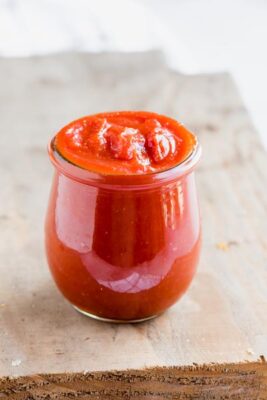
Refrigerator: I keep mine in a glass jar with a tight lid. It lasts about three weeks, though it never makes it that long at my house.
Freezing: I pour the extra into ice cube trays, freeze them solid, then transfer the cubes to a freezer bag. Each cube is roughly a tablespoon, which makes it easy to grab exactly what I need. Frozen ketchup keeps for up to 6 months.
This is how I handle batch cooking in general. I do the same thing when I prep bacon wrapped pork chops or sauces for the week. Make more than you need, freeze the rest, and future you will be grateful.
To thaw, pull a cube or two out and let them sit at room temperature for about 20 minutes. Stir once it melts and it’s ready.
How to make sugar-free ketchup
This takes about 15 minutes from start to finish. Everything goes into one saucepan.
Whisk together all the ingredients in a saucepan until smooth.
Bring to a simmer over low-medium heat and cook for about 10 minutes, stirring occasionally and scraping the bottom so nothing sticks. The mixture thickens as it cools too, so pull it off the heat when it's still slightly thinner than you want.
Strain if needed. I rarely need to strain mine, but if you see any solids, run it through a fine mesh strainer. For an even silkier texture, blend it in a high-speed blender for 30 seconds after cooling.
Key ingredients
Tomato paste: This is the base. I use a 6 oz can with no added sugar. Tomato paste is concentrated and rich, which is why this recipe doesn't need tomato sauce or crushed tomatoes.
White vinegar: I specifically use white vinegar for a clean, neutral tang. Apple cider vinegar works but adds a slightly fruity flavor that changes the profile. Both are fine, just different.
Sugar-free sweetener: Erythritol, allulose, or monk fruit blends all work here. Use powdered rather than granular if you can. Granular sweetener can leave a slight grittiness even after simmering. I learned that after my first few batches.
Water: A quarter cup thins the paste to the right consistency for dipping and spreading.
Salt: Kosher salt. It enhances the tomato flavor without making it taste salty.
Dry mustard powder: This adds depth and helps bind everything so the ingredients don't separate in the fridge.
Onion powder and garlic powder: Small amounts, but they round out the flavor. I've tried adding a quarter teaspoon of smoked paprika and a tiny pinch of ground cloves too. Both give it a deeper, more complex taste if you want to experiment.
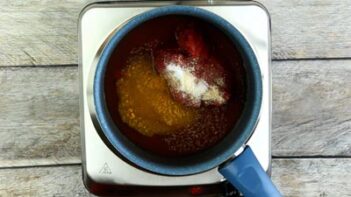
Add tomato paste, white vinegar, sweetener, water, salt, mustard powder, onion powder and garlic powder to a small saucepan. Whisk until combined.
2
Simmer until thickened
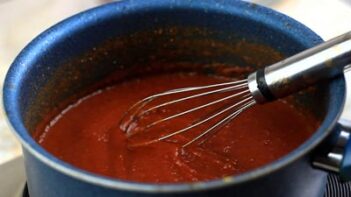
Heat over low medium heat and bring to a simmer. Let it cook until thickened (about 10 minutes), stirring occasionally to prevent sticking to the bottom and sides of the pan. Remove from heat and let cool.
Nutrition
Per serving: 1 tablespoon
Calories
10
Fat
0g
Protein
0.4g
Total carbs
2.3g
Fiber
0.8g
Net carbs
1.5g
Nutrition is an estimate calculated from the ingredients listed. Brands vary, so check labels if you track closely.
Frequently Asked Questions
Is this ketchup keto-friendly?
I designed this recipe specifically for my keto lifestyle. At 1.4g net carbs per tablespoon, I use it freely without worrying about my daily carb count.
Can I make this without cooking?
I've done a no-cook version where I just whisk everything together cold. It works, but the flavor isn't as rounded because the spices don't bloom the way they do with heat. My preference is the simmered version (10 minutes is all it takes), but the no-cook version is fine when I'm short on time.
Apple cider vinegar or white vinegar, does it matter?
I specifically use white vinegar because it gives a clean, neutral tang. I've tried apple cider vinegar and it adds a slightly fruity note that changes the flavor profile. It's not bad, just different. If you like a little more depth, go with ACV.
Does granular sweetener make it grainy?
It can. I noticed graininess in my first few batches when I used granular erythritol. Switching to powdered sweetener fixed it completely. If all you have is granular, I'd suggest blending it in a spice grinder first before adding it to the saucepan.
Can I use Dijon mustard instead of dry mustard powder?
Yes. One of my readers, VJ, used Dijon and said it turned out great. I tried it after her comment and it works, but it's noticeably tangier than the dry mustard version. I use about a teaspoon of Dijon to replace the 1/4 teaspoon of dry mustard.
Can I add paprika or other spices for more flavor?
I've experimented with a quarter teaspoon of smoked paprika and a tiny pinch of ground cloves. Both give it a deeper, more complex taste. I like the paprika version especially. It adds a slightly smoky note that works well on burgers and meatloaf.
How long does homemade ketchup last in the fridge?
Mine lasts about three weeks in an airtight container, though my family usually finishes a batch well before that. The vinegar acts as a natural preservative, which is why it keeps as long as it does. I've never had a batch go bad on me.
I’m usually the person hauling homemade stuff to cookouts and watching it get politely ignored. Not this time. People kept asking what was in it, not which brand. Fair warning though: it’s sharper and way less sweet than bottled, and a couple guests just couldn’t get past the tartness.
That ‘not which brand’ comment is all I need to hear. The vinegar is doing its job, it’s just not pretending to be Heinz. I nudge the sweetener up a tablespoon when I know it’s a mixed crowd.
Regular ketchup at restaurants has started tasting flat to me, and I traced it back to the chipotle powder I’ve been adding to this. Just a quarter teaspoon with the dry spices, nothing dramatic, but it goes a little smoky and I honestly didn’t see that coming. Annie, the base is so solid it takes whatever you throw at it.
Once this hits the simmer point it starts popping (I have the orange shirt to prove it). Splatter guard or constant stirring those last few minutes, that’s the part nobody tells you. Squeeze bottle instead of a jar, by the way. It thickens up a lot in the fridge and getting it out of a jar is more of a project than it needs to be. Pour it in warm, let it set, it comes out like the real thing. My sweetener ratio still isn’t quite right but I keep making it anyway, which says something.
That much vinegar against a small can of tomato paste looked like it was going to be sharp and unpleasant. The simmer rounds it out though, and after the first jar I completely get the ratio. Would push the sweetener up just a touch, but it’s my go-to now.
Jessica, that ratio threw me off too the first time. The acid cooks down into something you’d never guess. Started with half a cup of vinegar. I’ve gone up to 1/3 cup when I want it closer to Heinz.
There’s a window in the simmer where it goes from sharp and bright to something rounder, almost jammy, and I missed it every time in the first few batches because I kept pulling it too early. Six or seven rounds in now and I basically stand there watching because that last few minutes matter more than you’d think. Vinegar-forward early, then something shifts around the 12-minute mark. Only thing I haven’t nailed is the sweetener, still experimenting, but the base of this is freaking untouchable.
Powdered sweetener is the fix. Granular erythritol was giving mine a gritty texture no matter how much I adjusted the amount. Same base, totally different finish.
It’s been so hot I’ve basically abandoned the stovetop. Would this work in a slow cooker on low? Not sure if the simmering is what actually thickens it, or if low heat for longer would do the same thing.
Growing up, ketchup was on everything at our house. When I went keto I just quietly stopped using it and didn’t realize how much I missed it until I made this. That vinegar-to-tomato paste ratio is exactly the tangy balance I remember from the Heinz bottle my mom kept in the fridge door. I’ve been putting it on eggs, burger bowls, whatever’s in front of me. Something small I thought I’d just quietly given up.
I’ve made probably four or five versions of sugar-free ketchup over the years and the issue is always the same, that flat, watery sweetness that doesn’t actually taste like ketchup. The dry mustard powder here is what changed it for me. Small amount but it adds that sharp edge the store-bought version has, the thing I couldn’t figure out how to replicate. Third batch now and I’ve stopped looking for other recipes.
I make this every few weeks and keep a jar in the fridge. Last weekend it proved itself. My brother-in-law was over for dinner, and he’s the kind of guy who travels with a bottle of Heinz and would laugh you out of the room if you called ketchup a ‘recipe.’ He grabbed the jar without asking, used it on his burger, then his fries, then poured a little extra on the side. When I told him it was homemade and sugar-free, he looked at the jar like I’d handed him a counterfeit twenty. The mustard powder and onion powder are doing something real in there, because this doesn’t taste like a compromise version of anything. I’ve made other sugar-free ketchups that taste like someone gave up halfway through, and this is not that. This one I actually seek out excuses to use.
My son is the ketchup police in our house, so I just quietly put this in an old Heinz bottle and didn’t say a word. He dumped half of it on his eggs the next morning, came back to ask if we got a different brand because it ‘tastes way better.’ I had to leave the room. The vinegar is spot on, not too sharp, and it actually clings to food instead of running everywhere like the watery store stuff.
Brought this to a barbecue last weekend and set it out next to the Heinz without saying a word. Mine was gone, Heinz was barely touched. The dry mustard is what does it.
Swapped white vinegar for ACV and it got way closer to that Heinz tang I’d been missing. Skeptical about the dry mustard powder at first, but it really does tie everything together. One thing: let it cool completely before tasting for sweetness, because it runs about 20% sweeter warm. First batch I tasted off the stove and left it as-is. Still decent, just a little cloying. Second batch with both changes is what I keep in the fridge now.
Tastes genuinely close to the real thing, which I did not expect from four pantry spices and tomato paste. My only tweak is to add an extra splash of water before pulling it off the heat, mine set up thicker than I wanted. The dry mustard powder is the one that really lands, that faint tang underneath. Better than any store-bought keto ketchup I have tried.
Mine sets thick if I push past 10 minutes, so that splash of water at the end is smart. And you’re right about the mustard powder. What most people skip, then can’t figure out why theirs tastes off.
Love this recipe! I didn’t have enough honey so I had to top the 1/4 c off with a bit of organic maple syrup; and also had to sub Dijon for the dry mustard. Delicious!