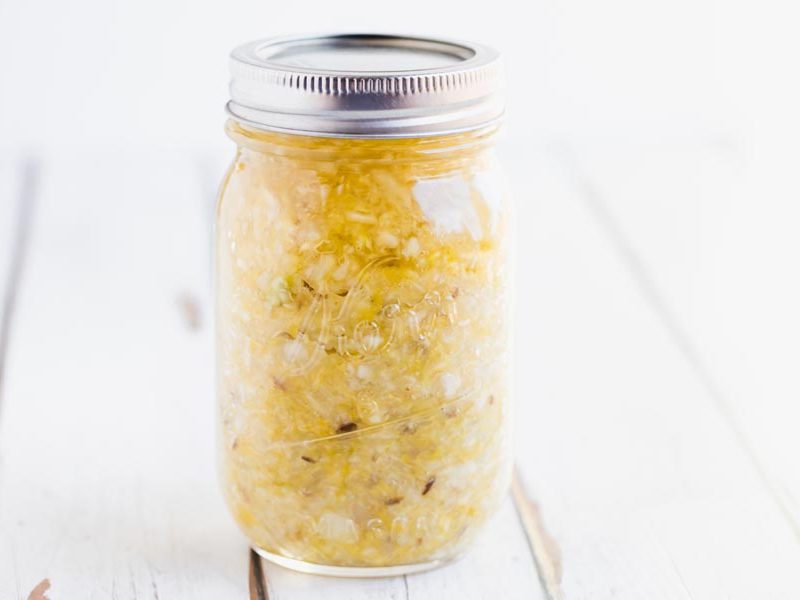
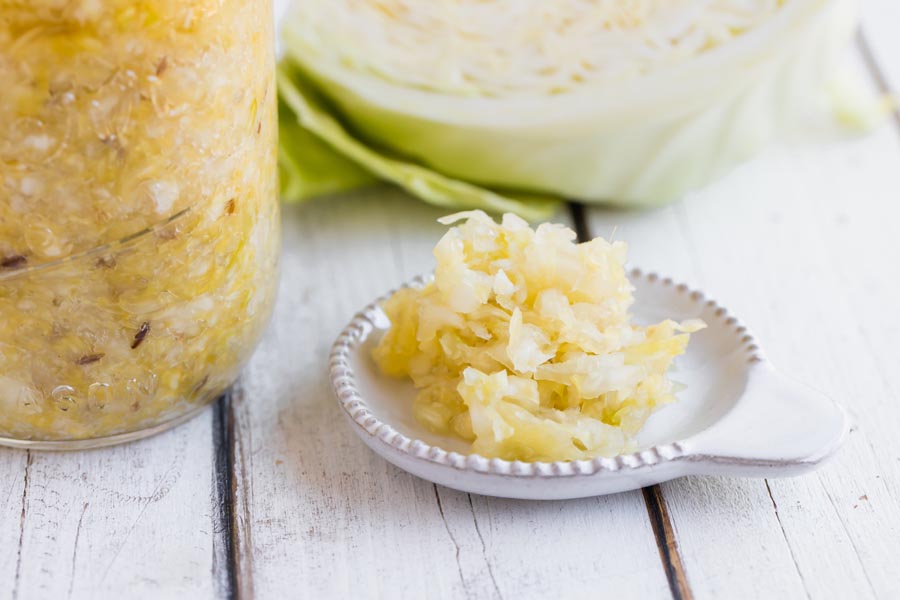
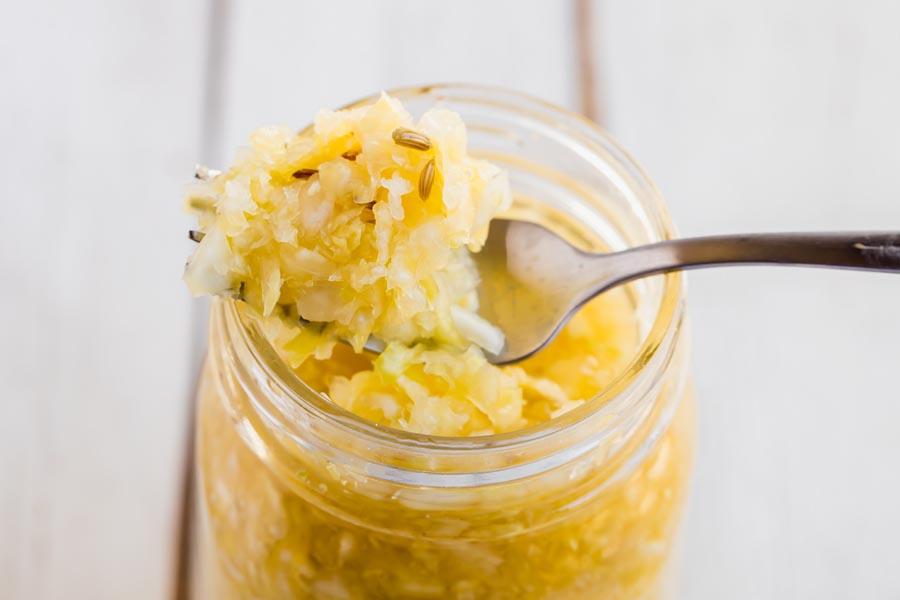
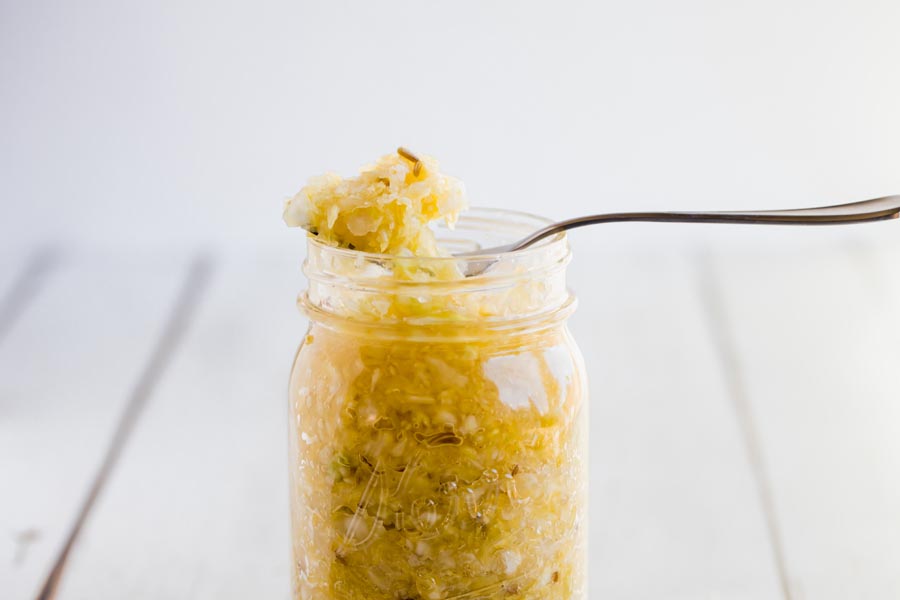
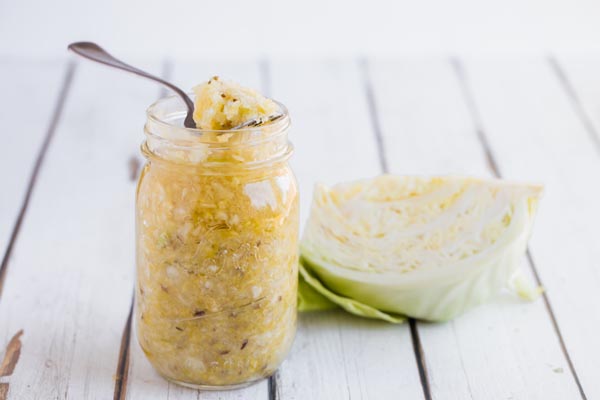
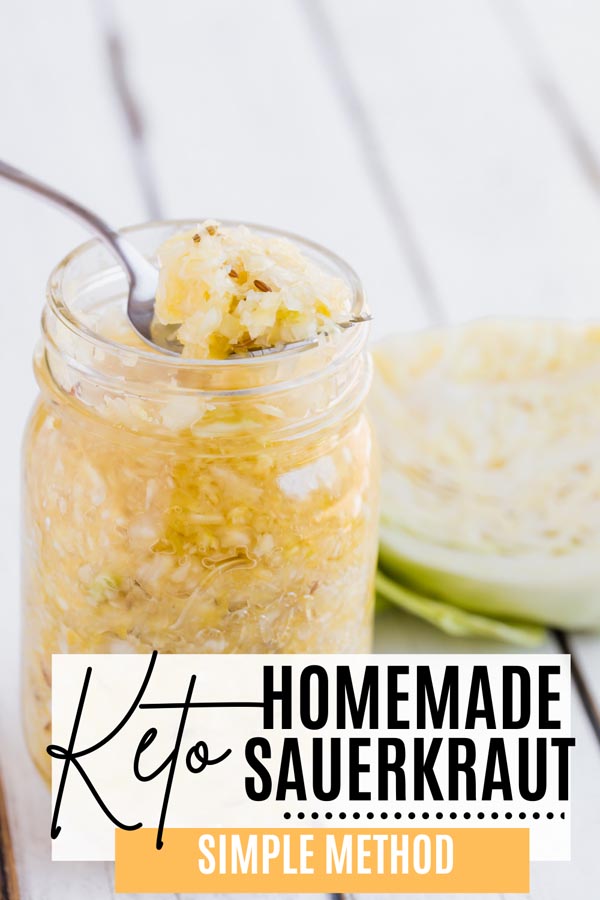
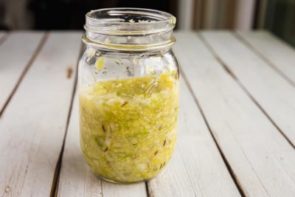
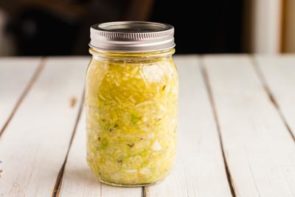
Tangy, crunchy keto sauerkraut from just cabbage and salt, with fennel and coriander seeds for a complex bite, at 0.2g net carbs. I press the shredded cabbage until it releases its brine, pack it into a mason jar under its own liquid, and I let it ferment on the counter at least 3 days before the first taste.
I started making my own sauerkraut years ago because the jarred stuff from the store never had enough tang. Most of those versions are pasteurized, which kills off the beneficial bacteria and flattens the flavor. What comes out of my kitchen after a week on the counter is a completely different thing.
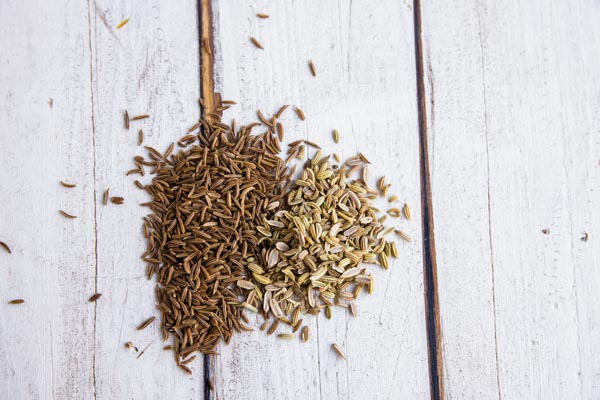
The difference is the spice trio. Most homemade recipes call for nothing but salt, but I add fennel and coriander seeds to every batch. A reader named Fatima tipped me off to adding caraway alongside them, and now I add caraway too. The fennel can go sharp on its own, but caraway rounds it out. By day five the spices bloom into the fermentation, and by day seven the flavor is complex enough that readers compare it to what you’d find at an actual deli counter.
What surprised me when I first started fermenting is how forgiving the process is. You don’t need special equipment, fancy starters, or precise temperatures. Cabbage, salt, a clean jar, and time. That’s it. The lactobacillus bacteria already living on the cabbage surface handle the fermentation on their own. No starter cultures, no temperature controllers. I walk you through every detail below, including the salt ratio mistake I see people make most often and how to fix it if it happens to you.
If you’ve been buying sauerkraut at the grocery store, I get it. It’s convenient. But once you taste homemade, you’ll understand why I don’t go back. Store-bought pasteurized kraut has zero live probiotics and a fraction of the flavor. Mine has both, plus I control exactly what goes in.
The whole process from start to finish is about 15 minutes of active work, then you wait. I check my jar daily, push any floating cabbage back under the brine, and taste every couple of days. When it hits the tanginess I want, into the fridge it goes. It stays good for months, and since fermentation actually lowers the carb count below raw cabbage, this is one of the most keto-friendly condiments you can make at home.
Homemade Low Carb Sauerkraut
I love how simple this is. Three ingredients, a jar, and patience. I add fennel and coriander seeds for extra flavor (and lately caraway too, which keeps the fennel from going too sharp), but the base recipe is just salt and cabbage. That tangy crunch goes on everything in my kitchen, from burgers and Reubens to cocktail weenies, chicken katsu, or a plate of bacon wrapped brussels sprouts.
What Is Sauerkraut?
Sauerkraut is shredded cabbage and salt, left to ferment anywhere from a few days to a few weeks. I keep a jar going almost constantly because it works as both a side dish and a condiment. The flavor gets more complex the longer it sits. At three days it’s mild and crisp. By day seven the tang deepens and the spices fully bloom into the brine.
Is Sauerkraut Keto?
Fermented cabbage is one of the most keto-friendly foods in my fridge. One cup has about 2 grams of net carbs. Here’s something most recipes don’t mention: lacto-fermentation actually reduces the carb count below raw cabbage. The beneficial bacteria consume sugars as they work, so you end up eating fewer carbs than what you started with. I eat this almost daily and it barely registers in my macros.
What Are the Health Benefits of Sauerkraut?
I got into fermented foods originally for the probiotic benefits, and sauerkraut delivers. Like sour pickles, kefir, and yogurt, fermented cabbage is packed with beneficial bacteria. Research links these probiotics to better digestion, stronger immune function, and improved nutrient absorption.
What I find most interesting is the cardiovascular angle. Studies connect fermented cabbage to better blood sugar regulation and improved heart health. The phytonutrients released during fermentation are showing promise in cancer research too. I eat this for the flavor, but the health benefits are a serious bonus.
How To Make Sauerkraut Safely?
I get asked about safety a lot, and the short answer is: clean equipment and fresh cabbage are all you need. I sterilize my utensils, make sure my mason jar is bone dry before I start, and use cabbage that’s firm and fresh. I’ve never had a contaminated batch doing it this way.
What Tools Do You Need To Make Sauerkraut?
No fancy tools. Cabbage, salt, and a jar. I use a wide-mouth mason jar because I can press the cabbage down easily and keep it fully submerged in the brine. That last part matters. If cabbage floats above the brine, oxygen gets in and causes problems. I check my jar every day and push any floaters back under. Some people use a Fido-style jar with a rubber gasket, which eliminates the need for a separate weight, but a standard mason jar has worked for me for years.
Is Sauerkraut Fermented?
Fermentation is one of the oldest methods for preserving vegetables, and I think it’s also one of the simplest. The process creates that signature tang while boosting the nutritional profile of the cabbage. I’ve tried pickling, canning, and dehydrating, but fermentation gives me the best combination of flavor and health benefits with the least effort.
How Long Does It Take to Ferment Sauerkraut?
Cabbage has natural bacteria on its surface that do all the work. Salt draws out water and creates an environment where spoilage bacteria can’t survive, leaving the beneficial lactobacillus to take over. Expect 3 days to 3 weeks depending on the season. My summer batches sour noticeably faster than winter ones. Smaller batches ferment quicker too.
I taste mine every couple of days until it hits the tanginess I want, then I move it to the fridge to stop the process. For me, seven days is the sweet spot. The coriander really comes through by then, and if you’ve added caraway, it rounds out the whole flavor profile into something that tastes like it came from a deli.
Tips and Mistakes To Avoid
Here are a few things I’ve learned from making batch after batch.
Shredding Cabbage
Shred the cabbage thinly and evenly. I prefer a mandoline slicer over a food processor because the processor can chop some pieces too coarse while pulverizing others. Even shreds mean even fermentation.
Salt Type
Use non-iodized salt. I use sea salt or kosher salt. Iodine kills the beneficial bacteria you need for fermentation, so table salt is the one thing that can ruin a batch before it starts. Pink Himalayan salt works too. Whatever you pick, check the label and skip anything that lists iodine or anticaking agents.
Flavors
I use coriander and fennel seeds in every batch, and I’ve started adding caraway too. A reader named Christine toasts the fennel and coriander in a dry pan for about two minutes before adding them, and I tried it. She’s right. The spices bloom into the fermentation differently when toasted (day five was noticeably different from day three in her batch). You can also experiment with garlic, ginger, and turmeric for an earthier version, or shredded beets for color.
Fermentation Troubleshooting
The biggest mistake I see is letting oxygen in. Use an airtight jar or fermentation crock so carbon dioxide can escape but oxygen stays out. If your cabbage isn’t producing enough brine after pressing, dissolve a teaspoon of salt in a cup of filtered water and pour it over the cabbage until everything is submerged.
Too Much Salt
If your sauerkraut tastes too salty, soak it in cold water for about 30 minutes. I learned the hard way that cabbage head size is the real variable. A small head with 2 tablespoons of salt will be overpowering. For smaller heads, I use 1.5 tablespoons instead.
Surface Film and Bubbles
If you see a white film on the surface, that’s likely kahm yeast. It’s harmless. Scoop it off and continue fermenting. Bubbles, foam, and white scum are all normal signs that fermentation is working. The only red flags are putrid smells, sliminess, or colored mold (green, black, pink). If you spot any of those, toss the batch.
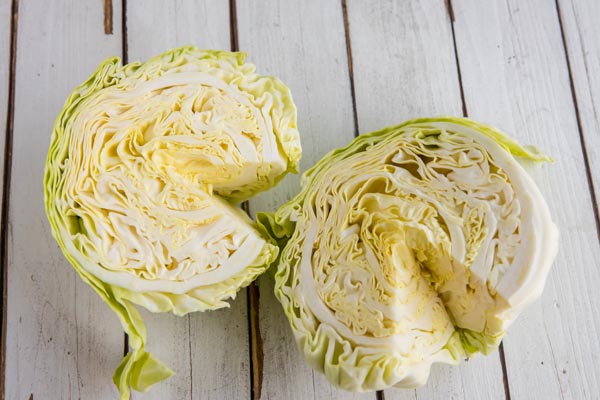
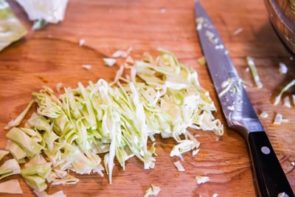
Shred the cabbage into thin strips using a knife, mandoline slicer or food processor.
2
Add salt & seasoning
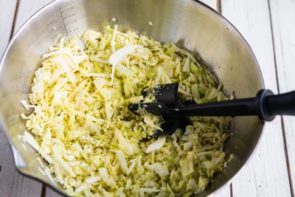
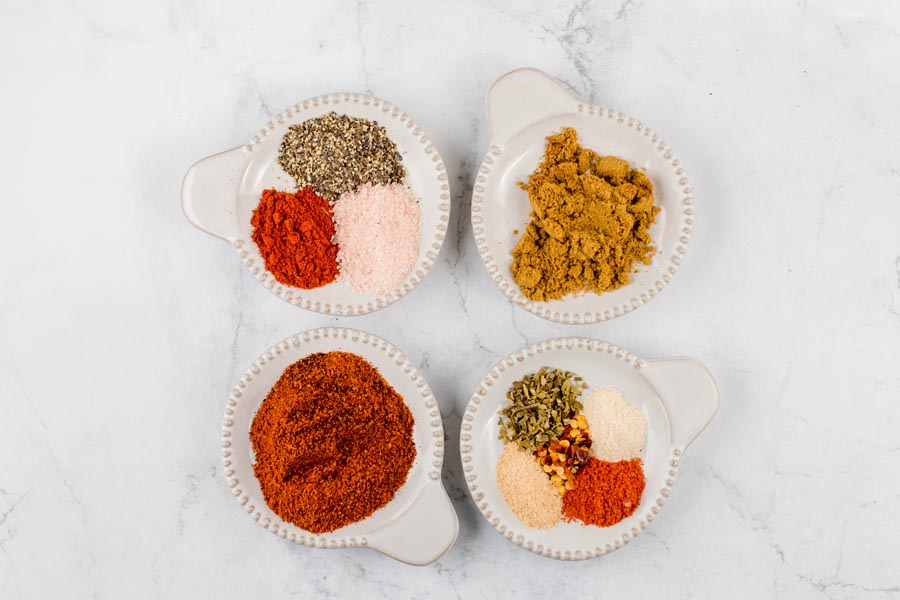
Place the cabbage shreds in a large bowl along with salt, fennel and coriander.
3
Press the cabbage
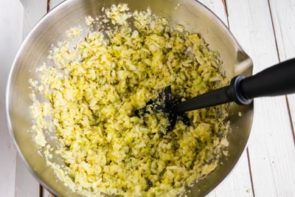
Press the liquid out of the cabbage by smashing it using a spoon or meat hammer. The combination of the pressing action and salt will help release the fluid from the cabbage. This will take about ten minutes.
4
Add to the mason jar
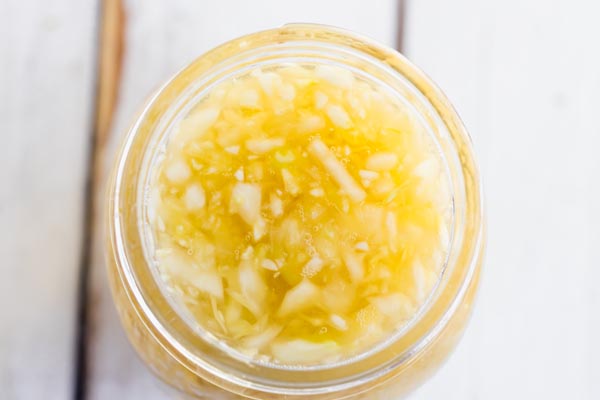
Add a few spoonfuls to a clean, dry mason jar. Press down the cabbage as you add it with each spoonful. Keep adding cabbage and pressing it down until the liquid rises above the cabbage and the liquid is about an inch from the top of the jar. This will allow room for expansion during fermentation.
5
Ferment
Screw on the lid and let sit at room temperature on the counter for at least 3 days. After 3 days, taste it. If it’s perfect, then place in the refrigerator to pause the fermenting process. If you want it tangier, let sit for a few more days.
Nutrition
Per serving: 1/10 of recipe
Calories
2
Fat
0.1g
Protein
0.1g
Total carbs
0.4g
Net carbs
0.2g
Nutrition is an estimate calculated from the ingredients listed. Brands vary, so check labels if you track closely.
Frequently Asked Questions
How long does homemade sauerkraut keep, and can I freeze it?
I keep mine in the fridge, fully submerged in the brine, and it lasts 2-3 months. Freezing is the one thing I skip. I tried it once and the texture went soft and mushy after thawing, and freezing kills a lot of the beneficial bacteria, so you lose most of the probiotic benefit.
Can I use red cabbage instead of green?
I've made it with red cabbage and it works great. The flavor is slightly sweeter and earthier than green, and the color is beautiful (deep purple brine, vibrant kraut). My process stays exactly the same. The only difference I've noticed is that red cabbage is a bit firmer, so I press it a little longer to get the brine flowing.
My husband keeps asking me to make sauerkraut at home instead of buying the jarred stuff, so this is happening this weekend. I have never used fennel seeds in a ferment before
If you’re making this in summer, fermentation moves faster than the recipe says. Mine hit the right tang mid-day two last week, not three. Anything above 75 in the kitchen, taste-check at 36 hours. Pulling it before peak tang and finishing in the fridge keeps the cabbage crunchier than a full counter ferment, fennel seeds hold up better that way too. Started it Thursday specifically to have it ready Sunday. That’s just my method now, whatever the season.
New to fermentation here and second-guessed myself constantly, but watching the brine appear during the pressing step is what made the salt ratio finally click. By day three it was bubbling steadily, which was just a relief honestly. The coriander has this faint citrusy note I wasn’t expecting. How long does it keep in the fridge once you move it over?
It does matter. Iodine kills the lactobacillus bacteria, so you’d just end up with salted cabbage sitting in a jar. Kosher or sea salt before you start.
2g net carbs per cup. The bacteria eat the sugars during fermentation, so it ends up lower carb than raw cabbage. Worth eating even if you weren’t keto.
Two bad batches in and I almost gave up on this before figuring out iodized salt kills the ferment. Brine was thin and flat every time, no matter how long I waited. Switched to Diamond Crystal and batch three hit on day three the way it’s supposed to.
So I’m making this for a Fourth of July cookout and want to do a spicy version since everyone in my house is completely hooked on heat right now. I was going to throw a sliced jalapeño in the jar along with the fennel and coriander seeds, but got nervous. I’ve read that fresh peppers can sometimes introduce unwanted bacteria and tank the whole batch, and I’ve been down that road with fresh herbs before. Been fermenting a few years now, so I know the salt handles most of the protecting, but I’m not sure it’s enough to counter a fresh pepper. Have you ever added fresh vegetables or chiles while it’s fermenting, or do you stick to dried spices only? I want to start this weekend so it has the full 3 days before the party.
Fresh jalapeño works. I haven’t done that exact add with my recipe, but peppers ferment differently than herbs, they’re heartier and don’t go slimy the way fresh dill or basil would. At 2 tablespoons salt per head you’ve got plenty of protection. Slice it thin, keep everything submerged, and three days is enough for the heat to come through.
I’ve been making sauerkraut at home for years and went through a whole phase of testing every approach – plain salt, caraway, juniper berries, different fermentation temps, different shred thicknesses. This is the first recipe where I stopped mid-jar and thought, okay, I get it now. The fennel and coriander do something the caraway versions never pulled off – this warm, almost floral background note that makes you want another forkful even straight out of the jar while dinner’s cooking. I pressed mine for 12 minutes, which felt excessive, but the brine level by day four was exactly right and it had that clean, sharp tang most homemade batches take forever to develop. Three jars since March and I cannot open the fridge without grabbing a forkful. Store-bought is over for me.
12 minutes isn’t excessive. That’s exactly why your day four brine was right. Most people stop at six and wonder where the liquid went. Three jars since March.
Made a batch last week mostly for myself, since my wife has never been a sauerkraut person. Found her eating it straight out of the jar on day four, which tells you more than I can. The fennel and coriander give it this almost deli-counter smell while it’s fermenting, and I think that’s what pulled her in. She asked if I could do a bigger batch next time so she’d have enough to put on her eggs in the morning.
Straight from the jar on day four, that’s when you know it hit right. The fennel kind of peaks around there. That’s most of why I keep a jar going, eggs in the morning.
Added half a teaspoon of juniper berries alongside the fennel and coriander and I’ve been thinking about this batch all week. Takes the whole thing in this piney, almost gin-adjacent direction that pairs insanely well with rich meat (tried it on thick-cut pork belly last weekend and the contrast was kind of unfair in the best way). For anyone struggling to get enough brine: pack the cabbage down hard with the back of a spoon every 12 hours for the first two days. Fermentation kicks off way faster. I was getting real tang by day four where I used to wait closer to seven. I always just packed it and left it before, but the active pressing makes a difference you can actually see, bubbles by day two, firm crunch locked in by day four. Best jars I’ve made in a few years of this. Crunchier than anything from the refrigerated section, way more interesting once the coriander really comes through. Next batch going in with red cabbage, curious what the brine looks like after a full week at room temperature.
Juniper berries in a ferment, I hadn’t gone there. The pork belly pairing makes complete sense and now I can’t stop thinking about it. Red cabbage brine goes this deep purple that’s almost unsettling by day three, FYI.
My grandmother used to keep a crock of sauerkraut going in her basement every fall. I hadn’t made it since going keto a few years back, figured it was too much effort without the right setup. When I was pressing the cabbage into the mason jar and caught the smell of the fennel seeds, I was back in her kitchen. Three days on the counter and it tastes exactly like hers. I didn’t expect this one to land that way.
Toasted the fennel and coriander in a dry pan before adding them, maybe two minutes until fragrant, and the brine ended up tasting more complex than any kraut I’ve made before. The spices kind of bloom into the fermentation over time (day five was noticeably different from day three). Worth the extra minute if you have it.
Made three other sauerkraut recipes before this one and they were all basically the same, but something about the fennel and coriander here makes it taste like it came from an actual deli.
Added caraway seeds alongside the fennel and coriander and the flavor got so much more complex, like something from an actual deli counter. If you’re on the fence about the fennel seeds, the caraway rounds it out and keeps it from tasting too sharp.
Love the flavours but waaaay too salty. The real variable in the recipe is “a head of cabbage”. I guess the head of cabbage I used is much smaller than the recipe expects. Will try soaking it in cold water to make it palatable.
I think this was the best sourkraut I’ve ever had ..Mine took 7 days to be absolutely perfect .I love cooking and I always thought sourkraut was a hard long process never image it could be so easy lol. Well you do have to have patience 😁