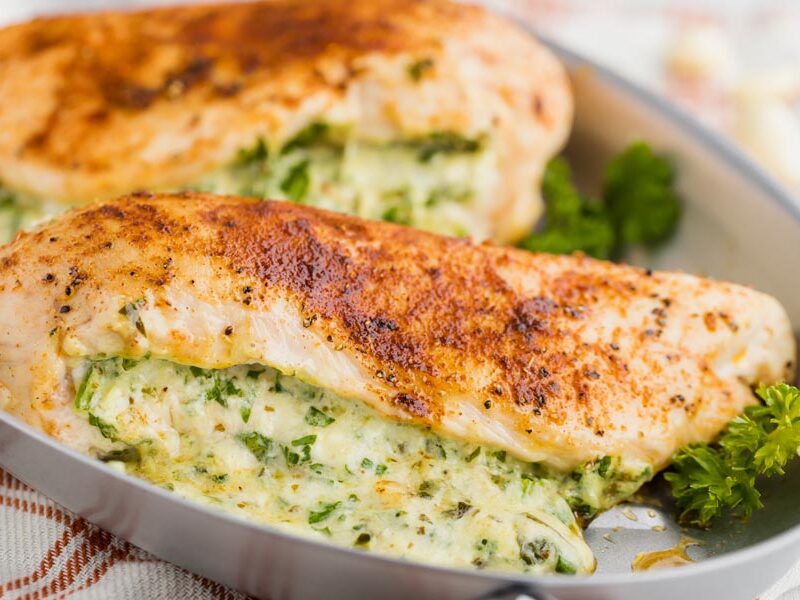
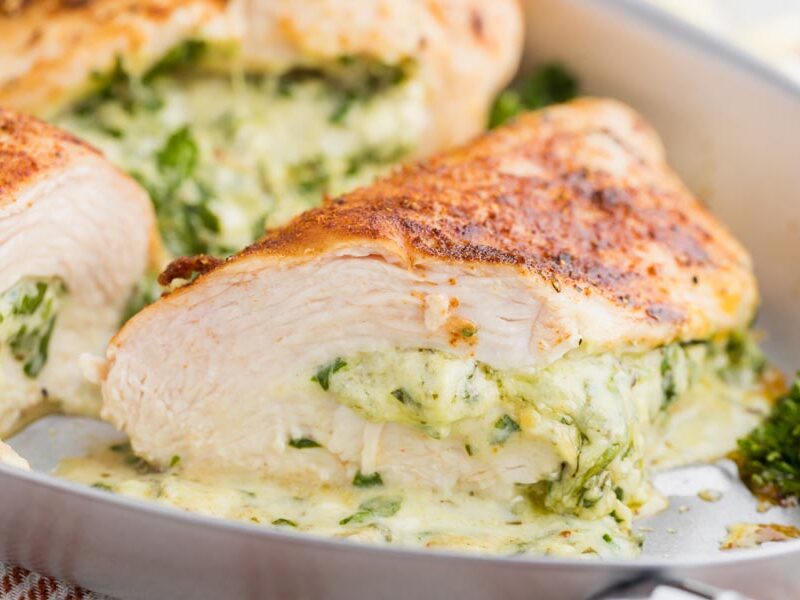
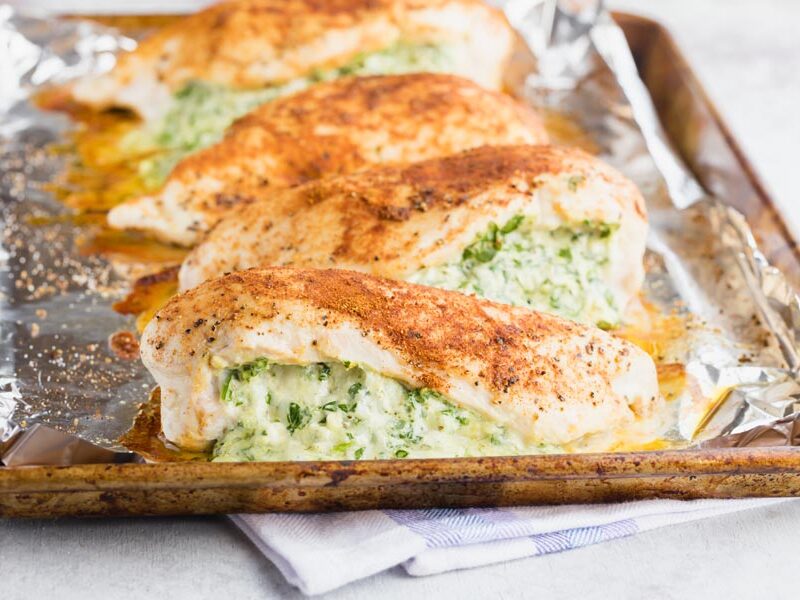
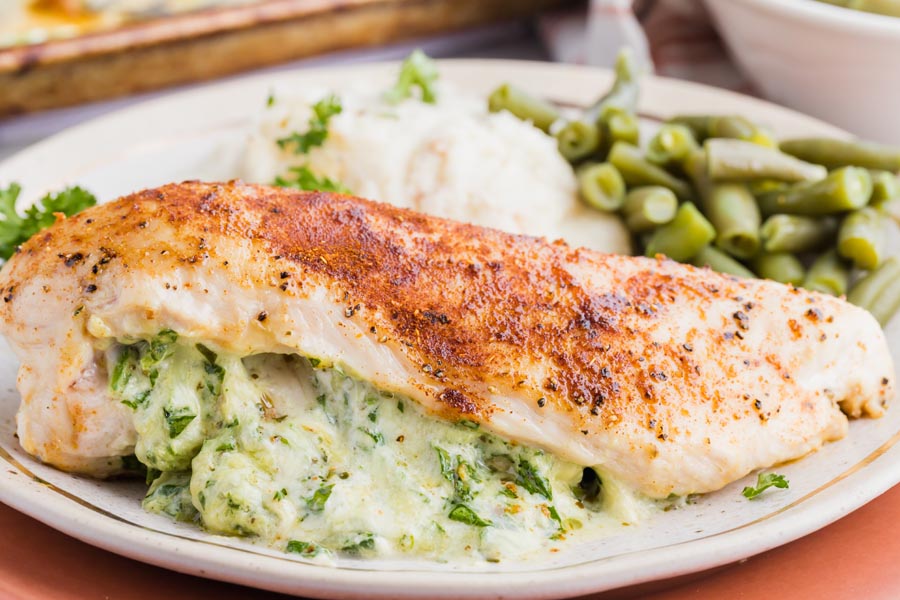
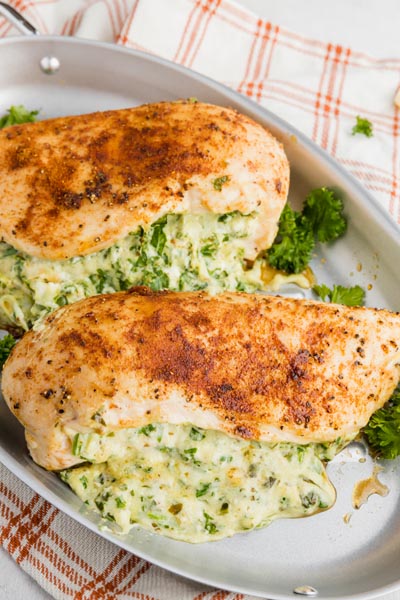
Creamy spinach, cream cheese, and pesto tucked inside juicy baked chicken, at 4.2g net carbs and 43.7g protein, with no searing and no toothpicks. The pocket cut is what I lean on: slice into the side of each breast and stop a half inch from the ends, then bake at 375°F until both the chicken and the filling reach 165°F.
I’ve made a lot of stuffed chicken recipes over the years, and most of them have the same problem: the filling leaks out, you need toothpicks to hold everything together, and you’re searing the outside in a hot pan before it even hits the oven. I got tired of all that. This version uses a pocket technique to hold the filling without toothpicks or searing. The result is a low carb dinner that looks impressive but takes about 30 minutes of actual work.
The filling is where this recipe earns its place in the rotation. I use cold block-style cream cheese (not softened, not whipped) mixed with spinach, mozzarella, parmesan, and garlic. The cold cream cheese is what makes it work. It stays pooled inside the pocket instead of just melting into the chicken the second it hits heat. I figured that out after a few batches where the filling ran everywhere, and switching to cold cream cheese helped the filling stay in the pocket.
The other thing I won’t skip is the pesto. I tried leaving it out once to save a step, and the filling tasted flat. Two tablespoons of pesto transforms the whole stuffing from basic creamed spinach into something with actual depth. If you like that flavor profile, my creamy pesto chicken uses a similar approach.
I don’t bother searing the chicken first. A lot of keto stuffed chicken recipes tell you to pan-sear before baking, but I’ve tested both ways and the pocket method keeps the meat juicy without that extra step. Pat the outside dry, rub in the seasoning, and the oven does the rest. If you’re looking for other chicken dinners that come together the same way, boursin chicken and keto crack chicken are two I rotate through the same week.
For meal prep, prepare the ingredients ahead and keep the chicken separate from the filling ingredients until you are ready to cook. Stuff the breasts just before baking. Cooked leftovers keep in the fridge for 3-4 days. For another dinner with a cheesy filling, try buffalo chicken stuffed spaghetti squash.
The pocket technique (and why I don't butterfly)
Butterflying opens the breast like a book, leaving one side attached as a hinge. For this recipe, I cut a pocket instead, keeping more of the breast intact around the filling.
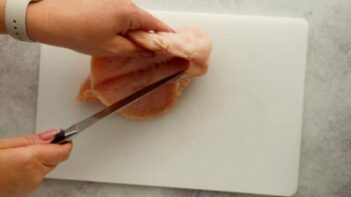
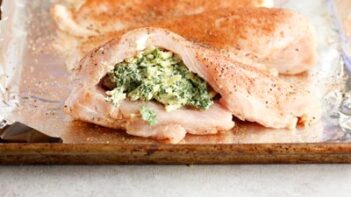
My method is different. I slice into the thick side of the breast but stop about half an inch from each end, creating a deep pocket instead of two separate pieces. The filling goes inside the pocket. Leave the edges intact and divide the filling evenly so the breasts can hold it without toothpicks. I feel for resistance near the far side and stop there.
If your chicken breasts came with the tender still attached, pull that piece off and save it for grilled chicken strips. The tender gets in the way of cutting a clean pocket.
Meal prep and storage
Prepare ahead: Chop the spinach, grate the cheese and measure the seasonings ahead of time. Keep perishable ingredients covered in the refrigerator and keep raw chicken separate. Use refrigerated raw chicken within 1-2 days of purchase. Mix the filling and stuff the breasts just before baking.
Cook before storing: Follow the oven method with chilled chicken. The chicken and the center of the filling must both reach 165°F. For meals to save for later, cook the breasts first rather than relying on a time estimate for a frozen stuffed breast.
Leftovers: Refrigerate in a covered container within 2 hours and use within 3-4 days, or freeze cooked portions for longer storage. Thaw frozen cooked portions in the refrigerator before reheating. Reheat in the oven at 350°F, starting with about 15 minutes, or in the microwave, starting with 1-2 minutes. Check that both the chicken and filling reach 165°F; larger portions need more time. I prefer the oven because it keeps the outside from getting rubbery. If you like batch cooking chicken dinners, cilantro lime chicken is another one I rotate through for meal prep.
How to make stuffed chicken breast with spinach
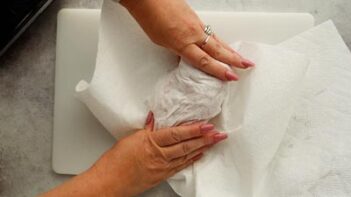
Pat the chicken dry with a paper towel. Using a knife, cut a slit into the center side of the breast and move your knife along to create a pocket. Stop cutting about half an inch from each end to avoid cutting all the way through. I cut a pocket rather than opening the breast like a book, which helps hold the filling without toothpicks.
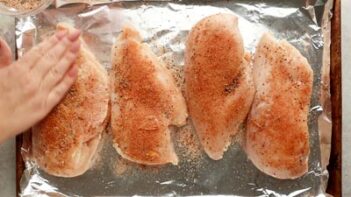
Brush the chicken on both sides with olive oil, then sprinkle both sides with the seasoning mixture of salt, garlic powder, black pepper, and paprika. Rub it in.
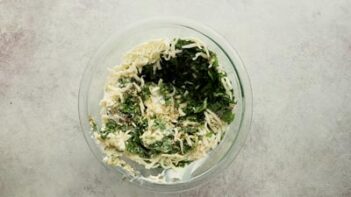
Mix the spinach cheese mixture together. Then stuff each chicken pocket with equal amounts of filling.
Bake right after stuffing. Check both the thickest part of the chicken and the center of the filling with a thermometer; both must reach 165°F.
PRO TIP: I always pat the chicken dry before seasoning. It makes the spice rub grip the surface instead of sliding off, and you get a more flavorful crust on the outside.
Key ingredients and substitutions
Chicken: I use boneless, skinless breasts because they have enough surface area to hold a generous pocket of filling. Thighs work in a pinch, but they’re smaller and harder to stuff cleanly.
Olive oil: I brush it on both sides of the chicken before the seasoning goes on. It helps the spice rub coat evenly and stick to the surface.
Spinach: Fresh or frozen both work. If you go frozen, thaw it first and squeeze out every drop of moisture. Too much liquid makes the cream cheese filling runny. I use about 2 cups fresh (which is fluffy), but only 3-4 tablespoons once frozen spinach is squeezed dry.
Cream cheese: I use cold block cream cheese to help the filling hold together. Keep it cold until you mix the filling.
Shredded cheese: Mozzarella and parmesan give you the creamiest, most flavorful stuffing. I’ve also tested goat cheese and pepper jack when I want to switch things up, and Monterey jack works too. The cream cheese is the base that holds everything together, so the shredded cheese stays flexible.
Pesto: This is my not-so-secret weapon in the filling. You can leave it out, but I tried that once and it was noticeably flat. A few tablespoons of fresh minced basil works as a backup.
Mayonnaise: Adds moisture to the filling. I include it, but you can skip it if you prefer.
Garlic: Fresh minced or pressed. Garlic powder works if fresh isn’t on hand.
Seasonings: Garlic powder, paprika, salt, and pepper. I like how blackened chicken uses a similar spice approach if you want to see how these same seasonings work on a simpler cut.
Pat chicken dry with a paper towel (this allows seasoning to stick better).
For this step
Chicken breast
2
Cut pockets
Using a knife cut a slit into the center side of the breast and move your knife along to create a pocket. Don’t cut all the way through. Stop about ½ inch from each end. Transfer the chicken to a foil lined baking tray.
3
Season chicken
In a small bowl, mix salt, pepper, garlic powder and paprika. Brush the chicken on both sides with olive oil then sprinkle both sides with the seasoning and rub it into the chicken.
For this step
Olive oil
Salt
Pepper
Garlic powder
Paprika
4
Creamed spinach mixture
In a medium bowl, combine chopped spinach, cream cheese, shredded mozzarella cheese, grated parmesan cheese, mayonnaise, pesto and minced garlic.
For this step
Spinach leaves (chopped)
Cream cheese (cold)
mozzarella cheese (shredded)
parmesan cheese (grated)
Mayonnaise
Pesto
Garlic (minced)
5
Stuff the chicken
Divide the spinach cheese filling evenly among the chicken breast pockets. Bake immediately after stuffing.
6
Bake
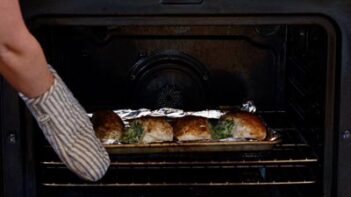
Bake at 375°F for about 20-25 minutes, until both the thickest part of the chicken and the center of the filling reach 165°F on a food thermometer. Check each breast; thicker pieces may take longer.
Nutrition
Per serving: 1/4 of recipe
Calories
477
Fat
32.2g
Protein
43.7g
Total carbs
5.5g
Net carbs
4.2g
Nutrition is an estimate calculated from the ingredients listed. Brands vary, so check labels if you track closely.
Frequently Asked Questions
Can I make this in an air fryer?
I've tested this in the air fryer at 375 degrees for about 18-20 minutes, and it works well. The outside gets a little crispier than the oven version, which I actually prefer. Just make sure you don't overcrowd the basket, and check that both the thickest part of the chicken and the center of the filling reach 165°F. I do two breasts at a time in my air fryer to give them enough space.
Should you cook spinach before stuffing chicken breast?
No. I mix raw chopped spinach straight into the cream cheese filling, and it wilts inside the pocket while the chicken bakes. There's no need to saute or steam it first.
What do you serve with stuffed chicken?
I usually keep the sides simple since the filling is rich. Roasted asparagus or steamed broccoli are my weeknight go-tos. For something heartier, I've paired it with Philly cheesesteak casserole when I'm feeding a bigger crowd, or keto chicken katsu style slaw on the side for crunch. A simple green salad with olive oil and lemon works too.
What internal temperature does the stuffing need to reach?
Both the chicken and the filling must reach 165°F. Check the thickest part of each breast and the center of its filling with a food thermometer. The filling has been in contact with raw chicken, so checking only the meat is not enough. Start checking around the recipe’s 20-25 minute bake time and continue cooking if either reading is below 165°F.
Cut the pocket deeper than you think you need to. First batch I was too careful and filling pushed out the sides. Went deeper the second time and it held.
Heather, it trips up almost everyone the first time. I go at least halfway through the breast, angled slightly back so the cavity is wider than the opening, and it stays put.
From the side. I hold the breast flat on the cutting board and cut in from the thickest edge, angling the blade slightly back. Don’t push all the way through to the other end.
Spent about a year and a half assuming stuffed chicken was just off the table. The restaurant version was a whole event pre-keto and I figured nothing keto was ever going to hold up to that. Wrong. The filling stayed exactly where it went, no toothpicks, no pooling in the pan. That paprika crust gives it a real color and makes the whole thing look harder than it was. 4.2 net carbs, 43 grams of protein, and it still tastes like something I would have ordered out. That’s the part I wasn’t ready for.
Making this tonight but only have ricotta, no cream cheese. Will that still hold the spinach filling or does it get too loose and slide out? The no-toothpick thing is what’s got me worried, not sure ricotta’s firm enough to pull it off.
I haven’t tested it with straight ricotta, so I can’t promise. Ricotta carries a lot more water than cold block cream cheese, and the cold cream cheese is what keeps that filling pooled in the pocket instead of running. Drain the ricotta in a strainer first and let the mozzarella and parmesan do the firming. I’d love to know how it holds up.
Doubled the recipe for a backyard dinner last Saturday. Eight chicken breasts, more cream cheese than I’d worked with before, and everything scaled without any timing adjustment. Sliced them in halves before serving so people could take what they wanted, which felt right for a hot evening.nnTwo guests who don’t eat keto asked about a grain side. The filling convinced them there had to be one. I explained it was just spinach and cream cheese and they didn’t believe me until I mentioned 43 grams of protein per serving.nnFour stars, not five. The outside seasoning stretched thin when I doubled and I should’ve scaled it up. If you’re still working out how to cook for other people, this one won’t let you down.
Seasoning’s the one thing that needs to scale exactly. Eight breasts with one round of the spice blend and you taste nothing. Go full 2x, even if it feels like overkill.
Threw some sun-dried tomatoes into the filling on a whim and now I genuinely cannot make it without them. The way they work against the cream cheese, you get these little pockets of concentrated flavor that completely change the bite.
First time I’ve ever stuffed chicken and I half expected the filling to spill out the second I cut into it. It stayed put through the whole bake and sliced clean. Going in the rotation for sure.
Made this Sunday when I needed something that looked put-together without a lot of effort. My husband took a bite, paused, and asked if I’d seared it first (I didn’t). The paprika and garlic powder get this color in the oven that looks like you did more work than you actually did. Going on the short list for company dinners.
Thought for sure the filling would spill without toothpicks. Almost stopped to find some. Didn’t bother. Cut into the chicken and the spinach and cream cheese were right where I left them.
I’ve made two other stuffed chicken recipes that just leaked filling everywhere and you end up eating a messy plate. This one actually holds together. Cut into it and got a clean cross-section with cream cheese filling still inside, which has never happened for me before.
Made a batch of four on Sunday and pulled the last one out on Wednesday night. The cream cheese and spinach filling actually holds together through three days in the fridge, doesn’t dry out or bleed when you reheat it. That almost never happens with stuffed proteins. 43.7g of protein per serving and it tastes like something you actually want to eat after a long day, not just something you’re forcing down because it fits macros. Locked into the weekly rotation.
Four on Sunday, done for the week. The filling not bleeding on reheat is the part that got me too. Most stuffed chicken you lose half of it to the pan by day two.
I have a big bag of frozen spinach in my freezer I’ve been wanting to use up and this recipe came up at just the right time (no way I’m going out tonight, it is absolutely freezing). Is it okay to use frozen instead of fresh for the filling? I know frozen spinach has way more moisture so do I need to thaw and squeeze it out before mixing with the cream cheese, or won’t it matter that much? I’ve never made anything with a cream cheese filling before so I’m a little nervous about the consistency. Oh and would the amount still be 2 cups, or does it measure differently once it’s thawed?
Yeah, frozen works. Just thaw it and squeeze really hard, a kitchen towel works great for this. Too much moisture makes the cream cheese filling runny. The 2 cups is for fresh raw spinach, which is really fluffy stuff. Once you squeeze out frozen, you’ll only need maybe 3-4 tablespoons.