Keto Chicken Parmesan

Published September 7, 2019 • Updated March 10, 2026
This post may contain affiliate links. See my disclosure policy.
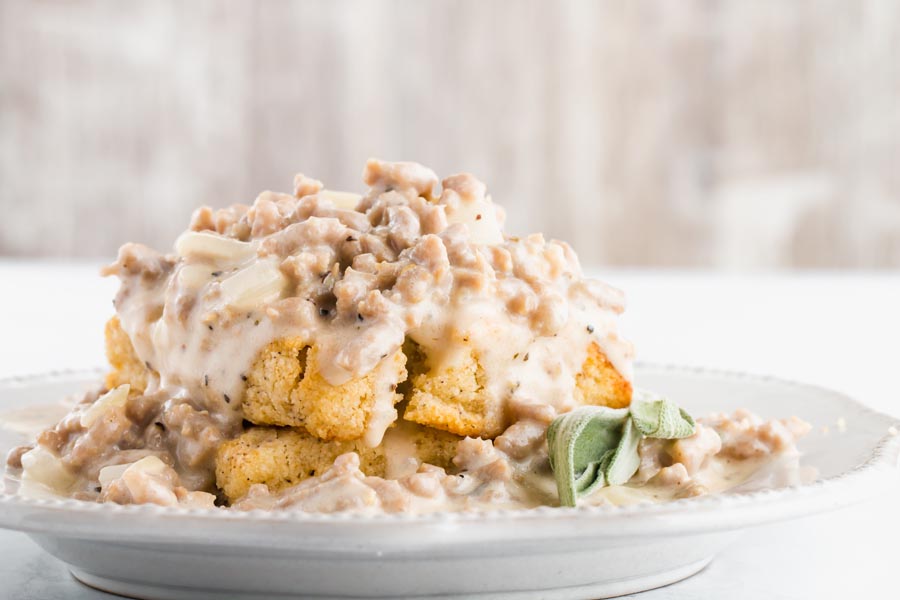
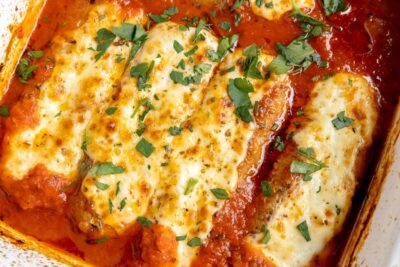
I've been making this keto chicken parmesan for six years and the pork rind breading still surprises people. It stays crunchy under layers of marinara and bubbling mozzarella, even after 40 minutes in the oven.
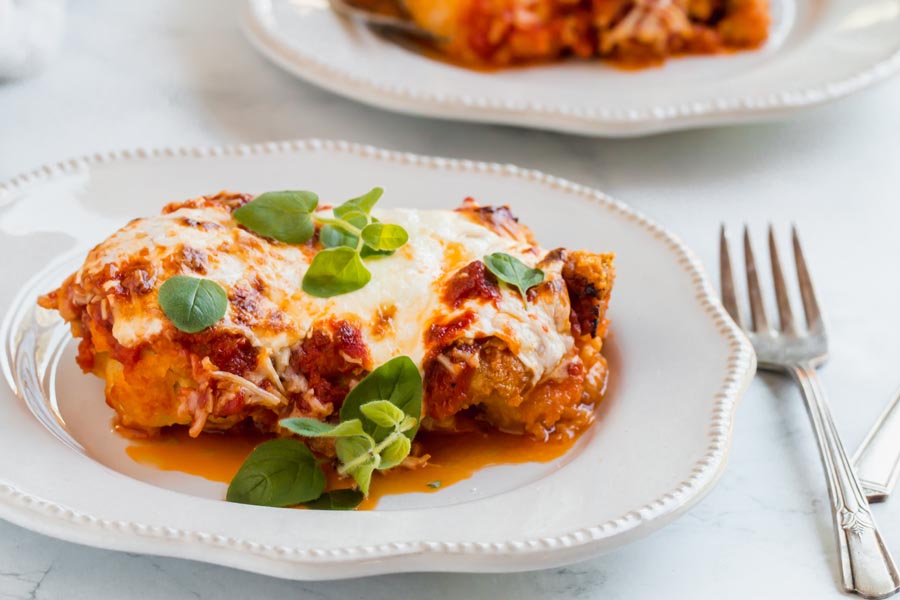
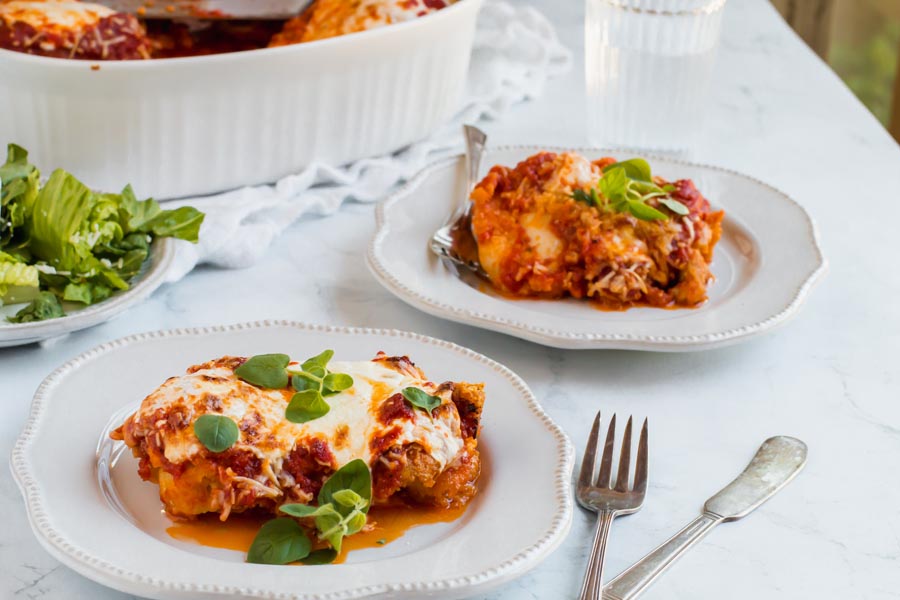
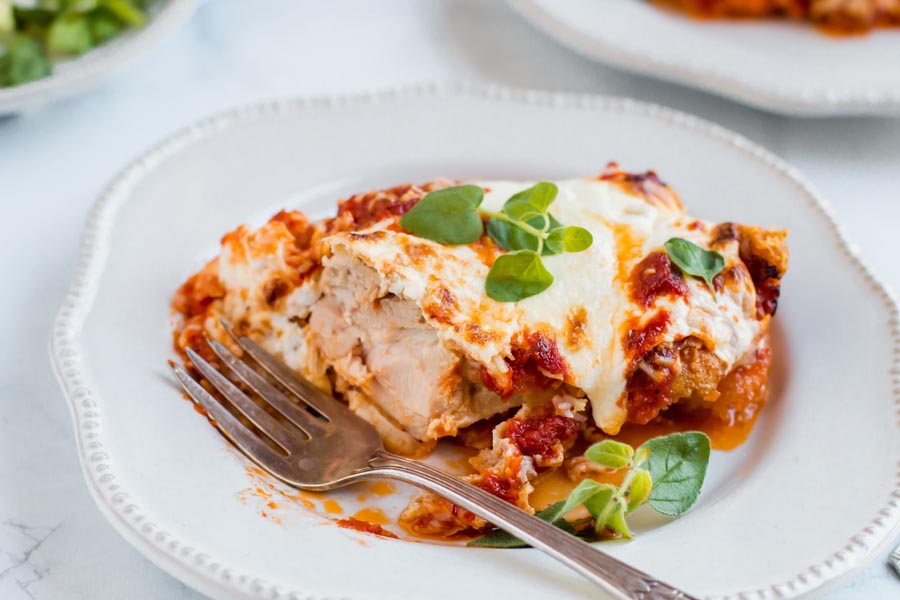
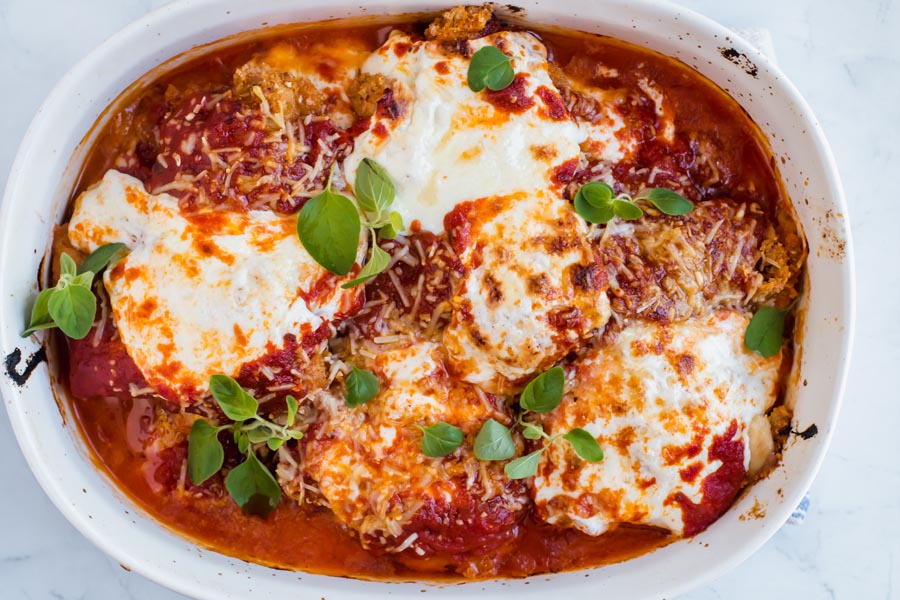
I’ve been making this chicken parmesan for over six years, and it’s still the dinner my kids actually cheer for. When I say “chicken parm tonight,” nobody asks what else is on the menu. After probably 50+ rounds of tweaking the breading ratio, the sauce amount, and the layering order, I’ve landed on a version where the crust stays crunchy even buried under marinara and melted mozzarella.
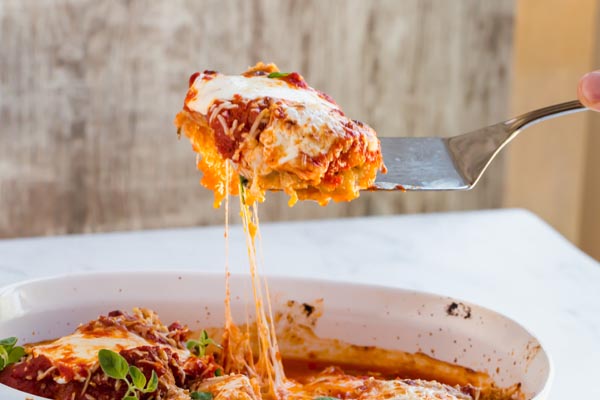
I originally built this recipe in 2019 because every low carb version I tried had the same problem: soggy breading. Most recipes use almond flour alone, which absorbs moisture from the sauce within minutes and turns soft. I went through probably six different coating combinations before landing on the answer. Ground pork rinds mixed with parmesan cheese. That combination crisps up beautifully when fried and holds its crunch through a full 40-minute bake under marinara and melted cheese. It’s the closest thing to that Italian restaurant crunch I missed when I first switched to keto in 2012.
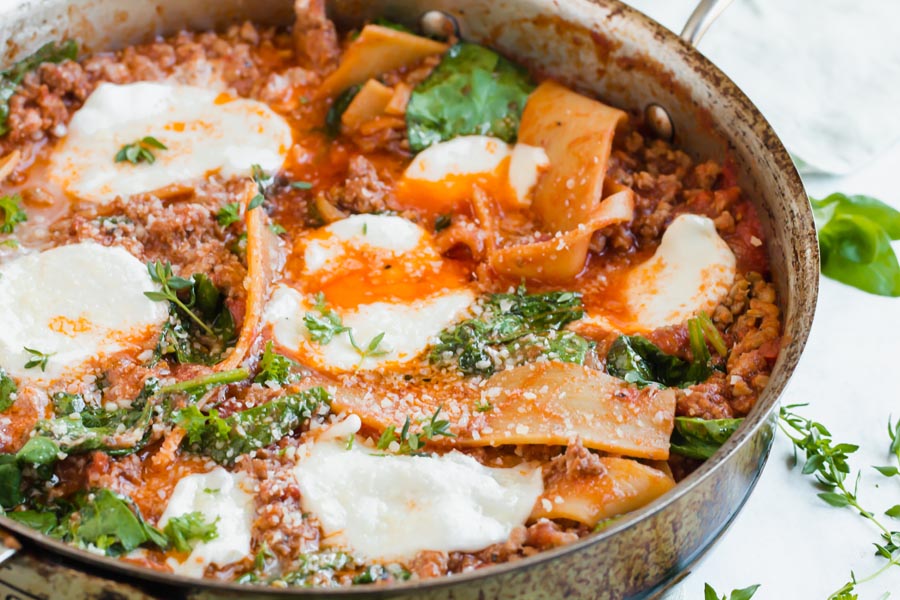
What sets this apart from a basic breaded chicken recipe is the layered casserole assembly. I pan-fry the chicken thighs first for a deep golden crust, then layer everything in a 9×13 dish: marinara on the bottom, parmesan, chicken, mozzarella, more sauce, repeat. It looks like a lot of steps, but once the chicken is fried, assembly takes maybe 5 minutes. The double cook (fry then bake) is what gives you both a crispy exterior and that gooey, bubbling cheese pull on top. If you like this layered approach, my keto lasagna and keto baked ziti use the same build-it-up-and-bake method.
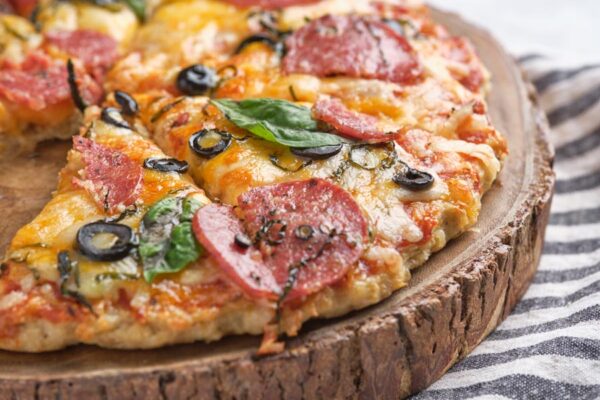
I use chicken thighs instead of breasts, and I’m not flexible on this one. Thighs have about 3x the fat content, which keeps them juicy through that double cook. Every time I’ve tested breasts, they dried out before the cheese had time to melt properly. Keto pizza chicken is a good alternative if you want the same flavor family without the breading. And when I’m feeding a crowd, I pair this with keto spaghetti on the side.
One thing I hear a lot: people are surprised the pork rind crust actually works. It does. Readers like Nate have made this four times, and Stephanie went in doubtful and came out saying the breading held through the full bake (“crispy underneath and golden where it peeked out from the mozzarella,” her words). That tracks with my experience. The parmesan in the coating is what locks it in place under all that sauce. Without it, the breading slides right off.
Why This Breading Actually Works
I’ve tested a lot of low carb breading methods over the years, and most of them fall apart under sauce. Here’s what I found makes the difference with this recipe:
Why pork rinds work better than almond flour alone:
- Pork rinds are dehydrated protein and fat. They crisp up when fried and stay crunchy even after 40 minutes in the oven.
- Almond flour by itself absorbs moisture from the marinara and turns soggy within minutes.
- The combination creates a sealed barrier that keeps the chicken juicy on the inside.
Why I use chicken thighs:
- Thighs have about 3x more fat than breasts, which keeps them moist during the long bake.
- In my testing, breasts dried out by the time the cheese was properly melted.
- The extra fat in thighs also helps the breading stick better.

Explore hundreds of keto recipe videos with step-by-step instructions, tips, and tricks to make keto easy.
Ingredients
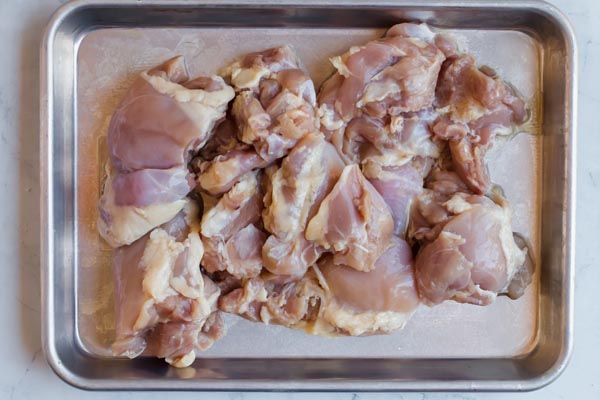
 2 pounds boneless, skinless chicken thighs
 -
½ cup almond flour or coconut flour
-
3 eggs
-
1 ½ cups ground pork rinds
-
½ cup grated parmesan cheese
-
avocado oil or ghee for frying
-
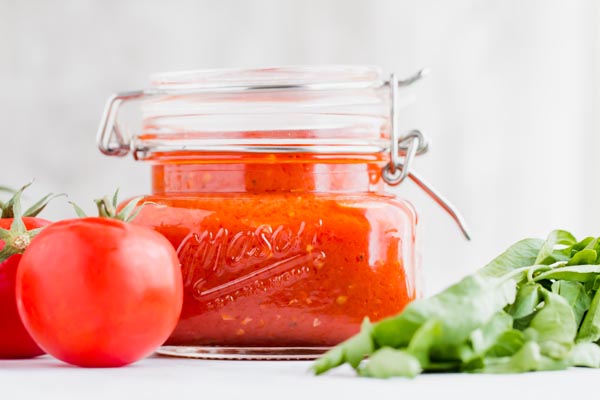
2 cups low sugar marinara sauce or keto pizza sauce
-
1 cup shredded parmesan cheese
-
½ pound fresh mozzarella cheese, sliced
Step by Step Instructions
Step by Step Instructions
Prep the Chicken (This Step Matters More Than You Think)
Preheat oven to 400 degrees. Place each thigh in a zip-lock bag (or between parchment paper) and pound with a mallet or rolling pin until about ¼ inch thick. This takes maybe 2 minutes total and makes a huge difference in even cooking.

- Chicken
Set Up Your Breading Station
I set up three shallow dishes in a row – assembly line style: Dish 1: Almond flour Dish 2: Beaten eggs Dish 3: Pork rind and parmesan mixture Season each chicken thigh with salt and pepper before you start. I usually do about ½ teaspoon of each for the whole batch.

- Almond flour
- Eggs
- Crushed pork rinds
- Parmesan cheese
Bread the Chicken
This is the messy part. I designate one hand as my “dry hand” and one as my “wet hand” to avoid getting clumpy egg-flour gloves.
- Dust the chicken lightly in almond flour (shake off excess)
- Dip in egg, letting excess drip off
- Press firmly into the pork rind mixture, coating both sides

- Salt
- Pepper
- Almond flour
Pan Fry Until Golden
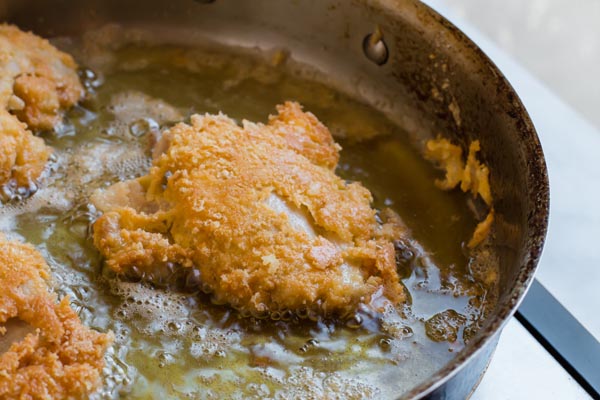
Heat about ½ inch of avocado oil in a large skillet over medium-high heat.
How to know when the oil is ready: Drop a small piece of the breading mixture into the oil. If it sizzles immediately, you’re good to go. If it just sits there, wait another minute.
Fry the chicken in batches – don’t crowd the pan! I usually do 2-3 pieces at a time, giving about ½ inch of space around each piece. Cook 3-4 minutes per side until golden brown.
Transfer to a paper towel-lined plate. Resist the urge to eat one now (I fail at this every time).

- Avocado oil or ghee
Assemble and Bake
This layering method took me a few tries to perfect. Here’s what works best:
Layer Order:
- Thin layer of marinara on the bottom of a 9×13 casserole dish
- ⅓ of the parmesan cheese
- Half of the chicken pieces
- Half of the mozzarella slices
- Half of the remaining marinara
- ⅓ of the parmesan
- Remaining chicken
- Remaining mozzarella
- Last of the marinara
- Final ⅓ of parmesan on top
Bake at 400°F for 35-40 minutes until the cheese is golden and bubbling around the edges.
Important: Let it rest for 5-10 minutes before serving. I know it’s hard, but the cheese needs to set slightly or it’ll be a molten mess when you try to serve it.

- Marinara sauce
- Parmesan cheese
- Mozzarella slices
Nutrition disclaimer
The nutrition information provided is an estimate and is for informational purposes only. I am a Doctor of Pharmacy (Pharm.D.); however, this content is not intended to be a substitute for professional medical advice, diagnosis, or treatment. Always consult your physician or other qualified health provider before making any lifestyle changes or beginning a new nutrition program.
Your Macros. Your Recipes. Calculated in 60 Seconds.
Get personalized keto macros and instantly see which recipes fit your targets. No more guessing what to eat.
Get My Macros + Recipes →Frequently Asked Questions
Can I make this in the air fryer?
I tested this in my air fryer and the breading holds up. Air fry the breaded chicken at 375°F for 10-12 minutes, flipping halfway through. Then assemble everything in an oven-safe dish that fits your air fryer and cook at 350°F for 15-20 minutes until the cheese is bubbling. The crust comes out slightly less golden than pan-frying, but still crunchy. I'd watch the cheese closely near the end since air fryers run hotter than standard ovens. My reader Elizabeth tested this method before I did and her timing was close to what I found.
Can I freeze keto chicken parmesan?
I've frozen the fully assembled (unbaked) casserole twice and it works. Wrap the dish tightly in foil, then freeze for up to 3 months. When you're ready, bake from frozen at 375°F for 50-60 minutes. Check the center with a thermometer to make sure it's heated through. The breading held up better from frozen than I expected.
What should I serve with this?
My family usually eats this on its own because it's filling enough. When I want a side, I make a simple green salad with Italian dressing or roasted broccoli. Some readers like zucchini noodles underneath to catch the extra marinara, which I think works well if you want more volume on the plate.
How many net carbs per serving?
Each serving (one breaded thigh with sauce and cheese) has about 5g net carbs. Most of the carbs come from the almond flour and marinara sauce. If you use Rao's (my go-to), you'll stay on the lower end. I've tested with different sauces and the carb count can swing 2-3g depending on the brand you pick.
Can I use chicken breasts instead of thighs?
You can, but I always come back to thighs. Breasts have about a third of the fat content, so they dry out faster during the double cook (fry then bake). If you go with breasts, pound them thinner (about 1/8 inch), reduce baking time to 25-30 minutes, and pull them at 160°F internal temp. Carryover cooking brings them to 165°F. My reader Amber tried breasts and found them a little dry, which matches my testing.
Why use avocado oil instead of olive oil?
Avocado oil has a smoke point around 520°F versus olive oil's 400°F. Since I'm frying at high heat, avocado oil doesn't break down and create off-flavors. I burned olive oil on my first few attempts before switching. That said, olive oil works in a pinch if you keep the heat lower and watch it carefully.
How do I store leftovers?
I store leftovers in an airtight container in the fridge for up to 4 days. The key is reheating: use a 350°F oven for 15-20 minutes, not the microwave. Microwave kills the breading and turns it soggy. I've also reheated individual portions in my air fryer at 350°F for 5-7 minutes, which works even better for getting the crust crispy again.
Is there a pork-free alternative for the breading?
Skip the pork rinds and double the parmesan cheese in the coating. I've tested this and the crust won't be quite as thick or crunchy, but it holds together and tastes good. You can also try crushed cheese crisps (like Whisps) as a pork rind replacement. I keep meaning to test that variation more thoroughly, but the double-parmesan method has worked well for the readers who've tried it.


batch four. cannot get over the fresh mozzarella.
If you're nervous about the pork rind coating sliding off during frying, press it in really firm and let the pieces rest a couple minutes before they hit the oil. Mine came out with this golden, almost caramelized crust and zero falloff, even under all that sauce and cheese. Did not expect it to work that well.
Yeah the resting is one of those steps that looks skippable and isn't. That caramelized crust you're describing is exactly what I'm going for.
The pork rind crust held up way better than I expected under all that marinara, no soggy bottom even after the full 40 minutes. My only note is that 2 cups of sauce felt heavy for 2 pounds of chicken, I pulled back to about 1.5 cups and got better crust coverage without losing any flavor. Still making this regularly.
1.5 cups is actually closer to what I do when I'm not following my own recipe. Two cups pools around the edges and the crust loses contact with the chicken. Your version sounds right.
Doubled the batch for meal prep and the pork rind crust is somehow still crispy on day three, reheating at 375 for eight minutes (not the microwave, never the microwave).
Oh that's faster than my method. I've been doing 350 for 15-20 but 8 minutes at 375 sounds way better for a weeknight. Microwave destroys it, full stop.
Pork rinds as a breading sounded like something I'd scroll past and never actually try. Made it anyway because every other version I've attempted ends up soggy under the sauce, and I can't believe that was the thing I was missing. The crust stayed crunchy the whole way through, even after sitting in a full pan of marinara and mozzarella. Not a subtle difference. Everything else I've made in this category doesn't come close.
The soggy sauce problem is exactly why I went with pork rinds. Six years and I still won't switch.
Made a double batch Sunday and the pork rind coating held up better than I expected after three days in the fridge. I've had breaded chicken turn soggy by day two before (almond flour coatings especially), so I was bracing for that, but reheated in the air fryer at 375 for five minutes it came back genuinely crispy. Six work lunches sorted in one session. Going into the permanent rotation.
Almond flour goes soft and stays soft. Pork rinds come back. That's why I went with them here.
Chicken parmesan was the dish I grieved most when I went keto, and that pork rind crust holding up under all that marinara and bubbling mozzarella gave me something I genuinely did not know I still needed.
Chicken parm was mine too for the first year or two on keto. The coating took the longest to nail, had to be thick enough to hold under 40 minutes of sauce.
I kept telling myself pork rinds as breading was a gimmick. Especially under all that marinara and mozzarella, what's the point? Made it anyway on a Sunday, mostly because I'd run out of excuses. Pulled it out at 40 minutes and the coating had actually held up. Still crunchy underneath everything, which I didn't expect from ground pork rinds sitting in sauce that long. I'm pretty new to keto and half my attempts don't work out, so this felt like a win. Already planning to make it for my sister next weekend.
That 40-minute hold is what got me too. I kept expecting it to dissolve under the sauce and it just doesn't. Your sister's going to be skeptical right up until she bites into it.
Chicken parmesan was the dish I grieved most when I went keto two years ago. Not bread, not pasta, specifically chicken parmesan. I tried the sad baked versions with no breading and they weren't even the same category of food. This one though, with the pork rind crust staying crispy under the marinara and bubbling mozzarella after 40 minutes in the oven, it delivers on the actual thing I was missing. I used Rao's and fresh mozzarella the first time, sat down not expecting much, and the first bite genuinely caught me off guard. The thighs give it a density and richness that chicken breast versions never have, and the crust holds in a way that almond flour alone doesn't manage. I've made it three times since January and I stopped measuring it against keto food. It's just food now.
That last line is the whole point. Three times since January means it made the rotation.
Prepped this for the week. Pork rind crust held up better than I expected in the fridge. Go lighter on the marinara if you want it crispy on reheat.
Good call on the marinara. I go about half the usual amount when I know it's hitting the fridge - sauce soaks in overnight and you lose the crust.
Had my doubts about the pork rind crust. Figured it would either fall apart or turn to mush under all that marinara. Made it anyway and the breading held through the full bake, crispy underneath and golden where it peeked out from the mozzarella. The three-dish assembly line felt like overkill going in, but it actually made a difference. Adding this to the Sunday dinner lineup.
Pork rind crust gets more skepticism than anything I've put on this site. The parmesan mixed into the coating is what locks it under all that sauce - without it the breading would slide right off.
Used chicken breasts instead of thighs and they came out a little dry. Sticking with thighs next time.
Yeah breasts dry out way faster. The extra fat in thighs keeps them juicy through that double cook (fry then bake).
Fourth time making this. The pounding step is key.
Fourth time! That's great to hear. And yeah, getting the chicken to an even thickness makes such a difference in how evenly it cooks. I usually aim for about 1/2 inch.
My husband had three helpings. He doesn't even know it's low carb.
Kim ha that's the best compliment. Three helpings and no idea. Love it.
Good but 580 calories per serving is a lot. I used chicken breast instead of thighs to bring it down a bit.
Breasts work but they lean out fast with that double cook. I stick with thighs because the extra fat keeps them from drying out when you fry then bake.