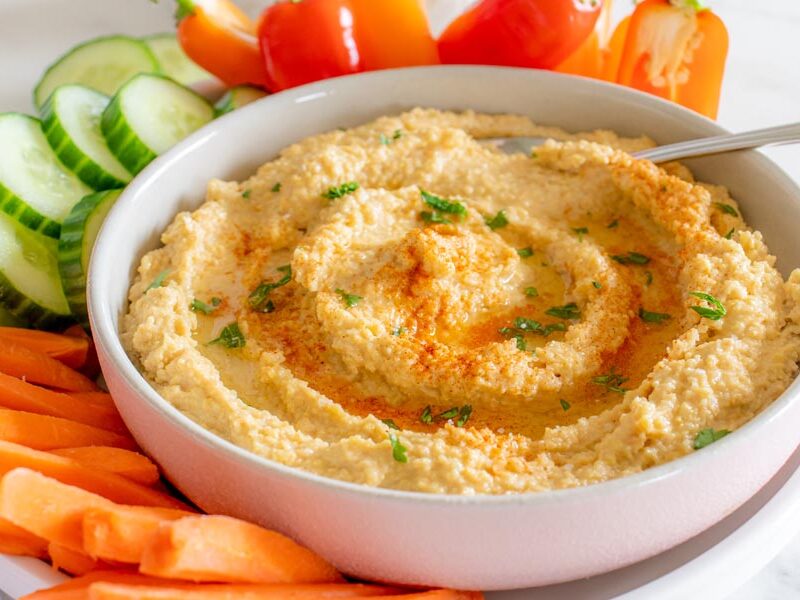
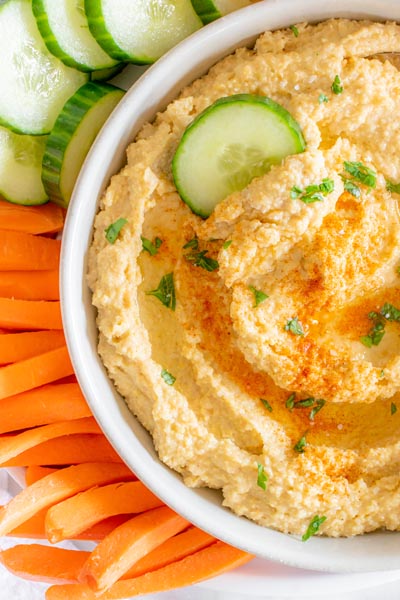
Creamy, nutty, and thick enough to scoop with a cracker, this keto hummus tastes like actual hummus because it starts with lupini beans instead of chickpeas. I tried cauliflower, zucchini, and artichoke hearts first, and none of them came close, then I found lupini beans, which sit in the same legume family as chickpeas and bring the same earthy flavor. Two minutes in the food processor and the texture is right. 1.2g net carbs per 2 tablespoons.
I've tried every "hummus" swap out there. Cauliflower, zucchini, artichoke hearts. None of them taste like the real thing. Then I found lupini beans, and everything changed. They're in the same legume family as chickpeas, so they replicate that nutty, earthy flavor and the thick consistency you scoop with a cracker. This lupin bean version is the closest I've gotten to authentic hummus, and I've been testing variations since 2012.
When I first made this, I expected another "close enough" swap. It wasn't. My kids dipped vegetables in it without being asked, and my husband went through half the batch in one sitting. That reaction told me more than any taste test I could run myself. I've made this for friends who had no idea it wasn't regular hummus until I mentioned it.
Reader Rosa tried it recently and said the lupini beans threw her off at first (she'd never heard of them), but once she blended them, she was surprised at how smooth the texture came out. That's the reaction I get from almost everyone who makes this.
Traditional hummus made with chickpeas doesn't work on keto because chickpeas are high in carbohydrates. One cup of cooked chickpeas has 45 grams of carbs and 32.5 grams of net carbs after subtracting fiber. That's enough to blow through most people's daily carb limit in one sitting.
I looked at this problem from every angle. Cauliflower was the first thing I tried (it's always the first thing people try), but it doesn't taste like chickpeas, and the texture stays grainy no matter how long you blend. Zucchini was worse. Artichoke hearts had promise but turned bitter.
Lupini beans solved every problem at once. Same legume family as chickpeas. Same scoopable texture. And the carb count is almost nothing: zero net carbs per serving once you subtract the fiber. I remember the first time I looked at the nutrition label and had to double-check it. That's what makes this version work where every other swap fell short.
One tip I picked up from a reader who knows the authentic Middle Eastern method: add 2-3 ice cubes to the food processor instead of plain water. I tried it on my next batch, and the texture came out noticeably smoother. The cold keeps the tahini from warming up and separating while the blade runs.
Are chickpeas keto?
Chickpeas are too high in carbs for most people tracking macros. One cup has 45 grams of carbs, and even a quarter-cup serving puts you at 11 grams. I’ve seen people try to fit tiny portions of regular hummus into their day, but that’s maybe two tablespoons before you’re over budget.
That’s why I started experimenting with swaps. Lupini beans turned out to be the best option I’ve found (same legume family, same flavor profile), but roasted cauliflower works as a backup if you can’t find them.
What are lupini beans?
Lupini beans are legumes in the same family as chickpeas, but with a completely different nutritional profile. The ones I use have 3 grams total carbs and 3 grams of fiber per serving, which means zero net carbs. They’re packed with protein too, so this hummus actually fills you up.
Where to get lupini beans
I’ve had a hard time finding these in regular grocery stores, so I order mine online. Here are the two brands I’ve actually used:
Brami: zero net carbs, comes in different flavors, great for snacking straight from the bag
Cento: ready to eat, unflavored, comes in a large jar (this is what I use for hummus)
What to eat with hummus on keto
Here are the ways I serve this most often:
Vegetables
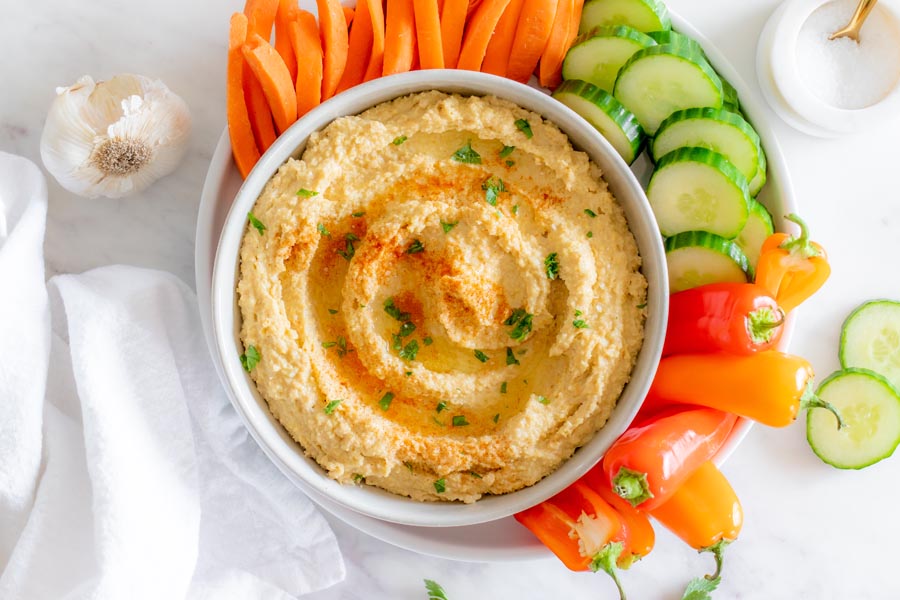
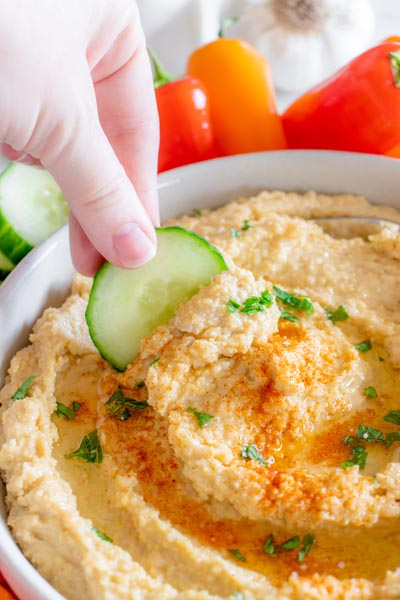
Sweet peppers, celery, cucumber slices, and broccoli florets. I keep a batch of this in the fridge and grab whatever I have on hand to scoop it up.
As a spread
I smear this on wraps, use it as a base for grilled chicken plates, or spread it anywhere I’d normally reach for mayo or ranch.
I keep leftovers in an airtight container in the fridge. Mine lasts 4-5 days before the texture starts to change, though I’ve seen other recipes claim up to 7. I’d rather give you the honest window.
You can freeze this for up to 2 months. Thaw overnight in the fridge before serving. The texture gets slightly less creamy after freezing, but I stir in a drizzle of olive oil or an extra spoonful of tahini and it comes right back.
How to make lupini bean hummus
Traditional hummus is simple: a few ingredients blended smooth. The challenge with making this version is that lupini beans behave differently than chickpeas in a food processor. Once you know the technique, it comes together in about 10 minutes.
Getting it smooth
Lupini beans have thicker skins than canned chickpeas, so plan on running the food processor for 2-3 minutes (longer than you’d expect). Scrape down the sides at least twice. I start with 2 tablespoons of cold water and add more only if the blade is struggling.
A reader who grew up making hummus the traditional way tipped me off to using ice cubes instead of water. I tried 2-3 cubes on my next batch, and the cold keeps the tahini from separating while the blade runs. Noticeably smoother texture, and I’ve been doing it this way since.
Roasted garlic variation
If you want a sweeter, mellower flavor, roast a whole head of garlic (cut the top off, drizzle with olive oil, wrap in foil, 400F for 35-40 minutes) and squeeze most of it into the food processor instead of using raw. I tested both side by side, and roasted garlic removes that sharp bite completely. It’s a different hummus, but I actually prefer it for spreading.
Adjusting flavor
I always taste after the first blend and adjust from there. More lime if it’s flat, more cumin if it needs warmth, more salt to bring everything together. The tahini and olive oil amounts in my recipe are dialed in, but the seasoning is where you make it yours.
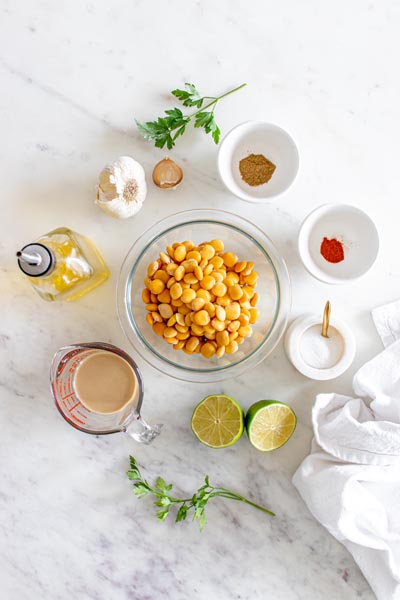
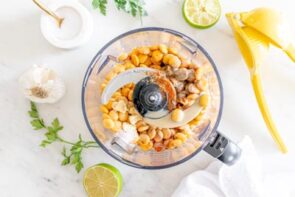
To a food processor, add lupini beans, garlic, tahini, 1 tablespoon olive oil, ground cumin, salt, lime juice and 2 tablespoons of water.
2
Puree until smooth
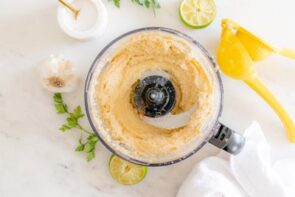
Process the ingredients until smooth. Add additional 1-3 tablespoons water if needed to thin out hummus. Taste and adjust seasoning if needed adding more salt, lime or cumin to taste.
3
How to serve
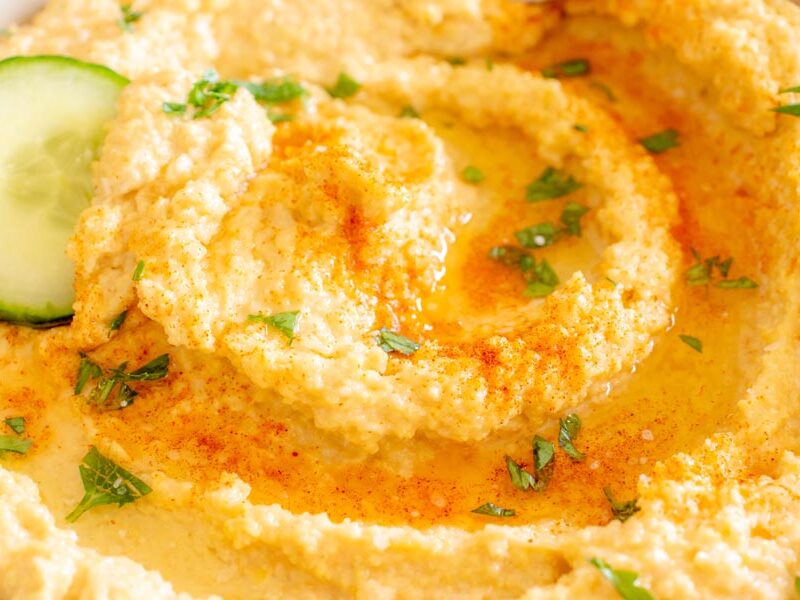
Transfer the hummus to a serving bowl or platter. Drizzle with the remaining tablespoon of olive oil and garnish with chopped parsley and paprika. Serve with your favorite vegetables or low-carb breads.
Nutrition
Per serving: 2 tablespoons
Calories
123
Fat
10g
Protein
5.2g
Total carbs
3.4g
Net carbs
1.2g
Nutrition is an estimate calculated from the ingredients listed. Brands vary, so check labels if you track closely.
Frequently Asked Questions
How many carbs are in 2 tablespoons of this hummus?
My version comes out to 1.2 grams of net carbs per 2 tablespoon serving, which is 3.4 grams of total carbs minus 2.2 grams of fiber. The lupini beans I use (Brami or Cento) have 3 grams of total carbs and 3 grams of fiber, so the beans themselves contribute zero net carbs. The small amount comes from the tahini, garlic, and lime juice.
Can I use jarred lupini beans or do I need to start from dried?
I use jarred every time. Rinse off the brine and they go straight into the food processor. Dried lupini beans need days of soaking and multiple water changes to remove the natural bitterness, so jarred saves all that work. Cento and Brami are the two brands I keep stocked.
Can I make this hummus without a food processor?
I've tried it in a blender and it works, but you need to blend longer and stop to scrape down the sides more often. Lupini beans have thicker skins than canned chickpeas, so a food processor gives you the smoothest result with less effort.
Is tahini necessary or can I skip it?
I wouldn't skip it. Tahini gives hummus that rich, nutty depth that you can't replicate with olive oil alone. I've tried making a batch without it, and the flavor falls flat. If you have a sesame allergy, sunflower seed butter is the closest swap I've found.
Can I make hummus with cauliflower instead of lupini beans?
I've done it, and it works as a backup. Roast about 4 cups of cauliflower florets with olive oil and salt at 400F for 30-45 minutes, then blend. The texture gets close, but the flavor is noticeably different. It tastes like roasted cauliflower, not hummus. Lupini beans are the only swap I've found that actually replicates the real thing.
Hey Annie, your site is the one I keep open in my kitchen. Hummus was the thing I figured was gone for good on keto, and the lupini beans get it close enough that I quit looking.
Lupini beans are what make this work. I tested cauliflower a few times and it always tasted like the healthy option. Nobody ever says that about this one.
Lupini beans as a chickpea swap always seemed like wishful thinking to me. They’re not. Two minutes in the food processor and the texture is actually right, closer to real hummus than any cauliflower version gets. The tahini and lime are what pull it into hummus territory – without them it’s just bean paste. Four stars because I want another batch before fully committing, but 1.2g net carbs makes that an easy argument.
Lindsey, the skins are thicker than they look and they do fight the blade. I slip them off before blending when I want it really smooth, the extra couple minutes is worth it. Also try a full 2-3 minutes in the food processor, much longer than feels necessary.
Nobody mentions lupini bean quality with this recipe. The softer brine-packed ones blend smooth; the firmer kind fights the food processor and you feel it in the end. Get the beans right and the tahini-to-lime balance does the rest. Holds up next to traditional hummus in a way no cauliflower version ever has.
The brand makes a difference here. Brami runs wetter than Cento so 2 tablespoons works fine for me, but if you haven’t used that bean before, starting at 1 and adding is the smarter move.
Roasted the garlic instead of using it raw and you can really tell. The tahini and lime are already a strong base, but roasting kills that sharp bite and adds this deeper, almost nutty sweetness underneath. Also went heavy on cumin and finished with Brightland olive oil. This is my spring entertaining staple.
The cumin is hard to overdo in this one. I’ve gone heavy too, never thought it was too much. Brightland on top is a good call when you’re bringing it out for people.
I’ve made this five times in the last two months and I’m not stopping. The lupini bean thing freaked me out at first because I’d never even heard of them, but they blend so smooth it’s kind of shocking. Third batch I went heavy on the tahini and it got too thick and almost paste-like, so the 1/3 cup measurement is there for a reason. The cold water is not optional. I tried skipping it once and it came out chalky and gummy. Two tablespoons in and it goes silky. The lime makes everything sharpen up at the end. I’m still in disbelief that this has 1.2g net carbs because it tastes so freaking good I keep eating it straight off the spoon.
If you’re buying jarred lupini beans, rinse them really well before blending. I skipped that the first time and got this faint briny taste through the whole thing that kind of masked the cumin and lime. Second batch I rinsed until the water ran clear. Totally different. Now I get why the recipe works.
Yeah, the brine is sneaky. It doesn’t taste strong on its own but it shifts the whole salt balance once everything blends together. Running clear is the right call.
First time using lupini beans and I wasn’t sure the food processor would get them smooth enough. Came out cleaner than most store-bought versions I’ve tried.
The longer run time is what gets people. Full 2 minutes minimum, sometimes more. Try dropping in ice cubes instead of cold water next time – it gets even silkier.
Used to make hummus every week before keto, and it was one of those things I really missed. Tried probably four different versions over the last two years, all cauliflower-based, none of them close. This one is different. The lupini beans do something with the texture that actually holds up, and the tahini-to-lime ratio is already dialed in. Needed a little more salt on my end, but I’ll be making this on repeat.
My son won’t touch a cauliflower substitute for anything, but he dipped his second cucumber without asking what was in it. That’s how I know the lupini beans actually work here.
I’ve never worked with lupini beans before and want to make sure I buy the right kind. At my grocery store I found them in jars in brine, but also saw dried ones in the bulk section. Are the jarred ones okay to use here, or do I need to start from dried?
Jarred are fine, that’s what I use. Rinse off the brine and they go straight into the food processor. Dried lupini need days of soaking to get the bitterness out before they’re even edible, so the jar version saves you a lot of trouble.
Bringing this to a party next weekend for ~20 people, so I need to triple the recipe. Can I just scale everything straight across, or is there anything weird about multiplying the lupini beans and tahini that much?
Tripling works fine. Tahini is one of those things that scales exactly, no weird ratios. The lupini beans are the same. Only thing I’d watch is the water, start with less than triple and add as you go since you want control over the consistency.
Cottage cheese base is so much easier honestly. I went with lupini beans here because the texture gets closer to the real thing, but yours sounds way less fussy.
For a much smoother Humus, it is advised to add 3-5 ice cubes to the food processor. (depending on the amount you are making) that’s the authentic way to make Humus.
Mine calls for cold water but ice cubes would keep the temp down longer in the processor. Makes sense. Lupini beans already blend smoother than chickpeas so I’m curious how much difference it makes – trying it with 2 or 3 next batch.