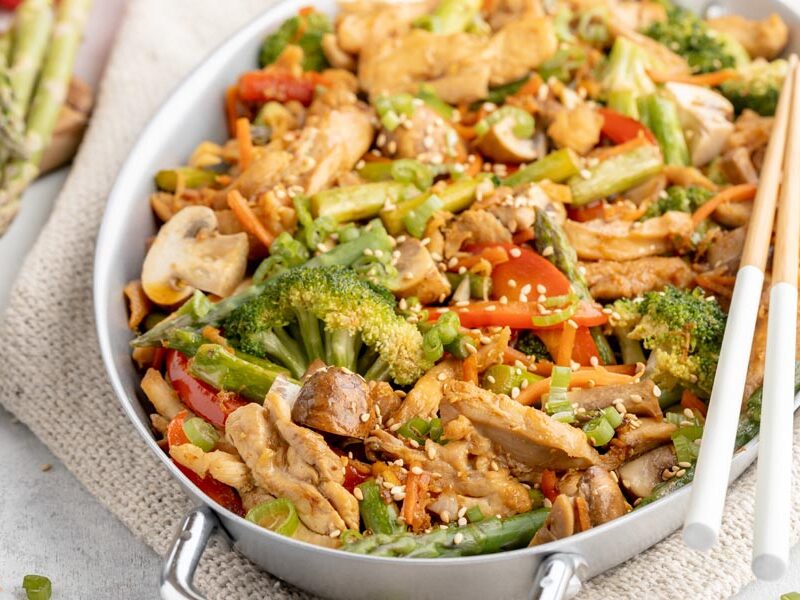
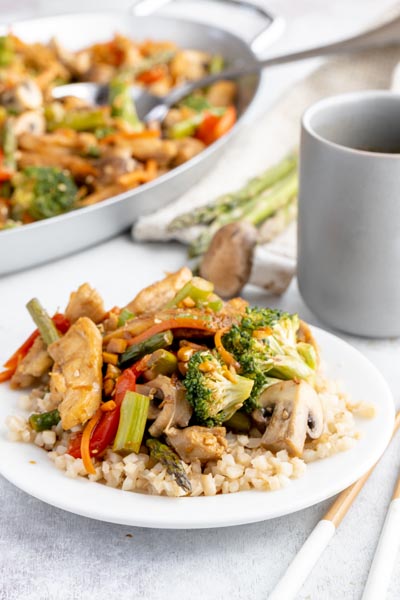
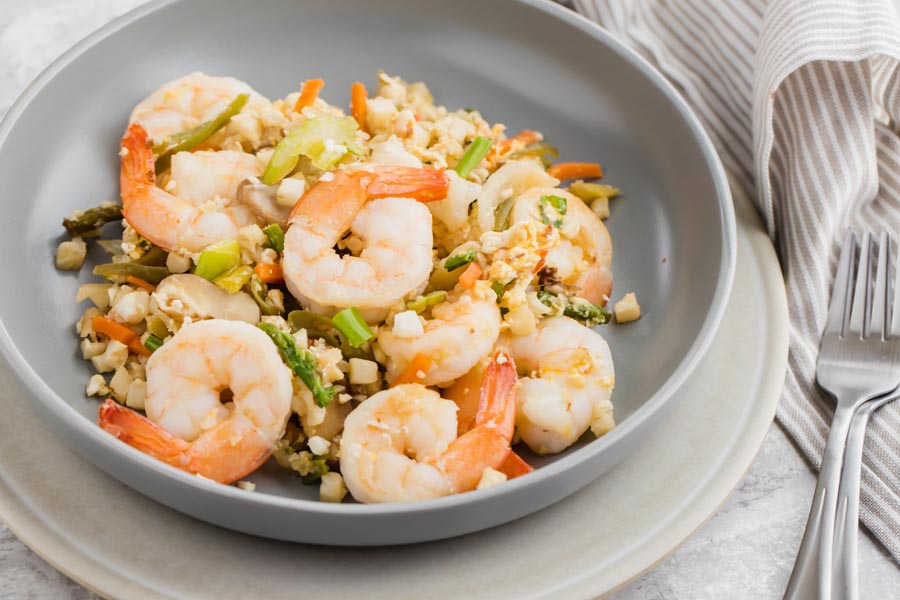
I make this chicken stir fry when I have a few vegetables to use up and no dinner plan. Chicken thighs, garlic, ginger, and a savory soy-vinegar sauce come together in one skillet in 15 minutes, with 3.7g net carbs per serving.
I don't need a full meal plan to make this. A half-used bell pepper, the asparagus left from another dinner, and a handful of mushrooms give me somewhere to start. I build dinner around what I already have, then use the same garlic-ginger sauce to bring it together.
I keep the sauce simple: soy sauce, vinegar, garlic, and ginger. The soy sauce gives it a savory base, the vinegar adds tang, and the garlic and ginger bring the flavor I want in a stir fry. Sesame oil and arrowroot powder are optional. I use the oil for its nutty flavor and the arrowroot when I want a thicker sauce.
Chicken first, vegetables next, sauce last. I cook the thighs through in a large skillet over medium-high heat before adding the vegetables. After 1-2 minutes, I stir in the sauce ingredients, lower the heat to medium, and let the vegetables soften. I don't need to juggle a separate pan for each part of dinner.
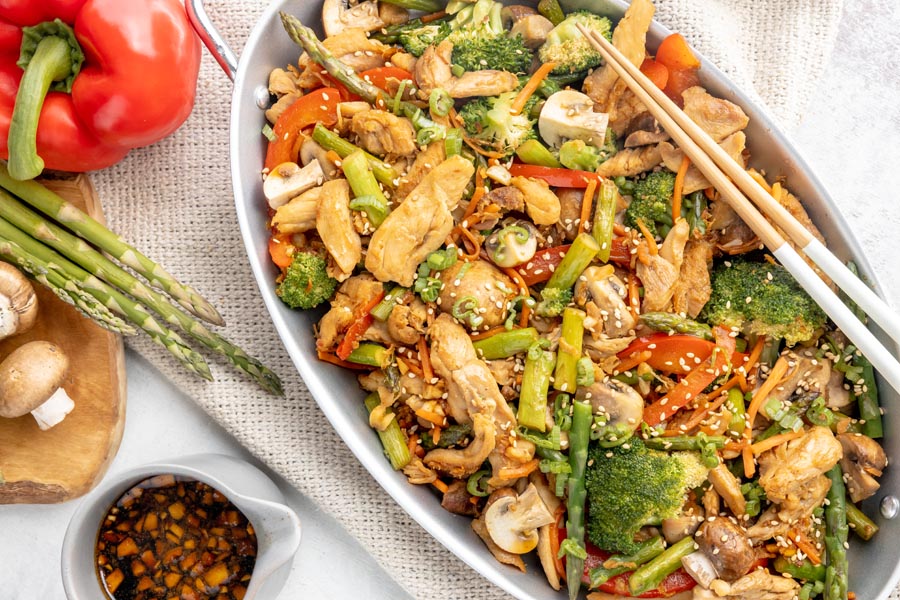
The cuts in the recipe matter more than having a perfectly stocked fridge. I quarter the mushrooms, cut the asparagus into 1-inch pieces, and julienne the carrot. That gives me a mix I can cook together in the same skillet. My vegetable prep notes below show how I handle each one.
I keep the method the same and change the protein, sauce, or toppings when I want a different dinner.
Protein: I default to chicken thighs, but I’ve also made this with chicken breast, ground chicken, ground pork, and ground turkey. For a beef version, I use sliced flank steak. They all work with the same sauce.
Vegetables: I’ve also used cabbage, bok choy, zucchini, and broccoli slaw. I treat these as variations; changing the mix can change the texture, cooking time, and carb count.
Sauces: The base sauce below is my standard, but I swap in a keto teriyaki glaze when I want something sweeter. You can also add sesame seeds, fish sauce, peanut butter, red pepper flakes, or a keto brown sugar replacement.
Toppings: Chopped peanuts or cashews, scallions, sesame seeds, or fresh cilantro. I almost always finish mine with a handful of sesame seeds and sliced green onion.
How I prep the vegetables
I use five vegetables in the recipe below. Here’s how I cut them before they go into the skillet:
Bell pepper: I dice or slice it.
Broccoli: I cut it into florets.
Asparagus: I cut the spears into 1-inch pieces.
Mushrooms: I quarter them.
Carrot: I julienne it into thin matchsticks.
I can use other vegetables, as the recipe tip suggests, but I don’t assume every swap will cook in exactly the same time or have the same carbs.
How I store, meal prep, and freeze this
I meal prep the protein 1-2 days ahead when I know busy nights are coming. Cook the chicken according to the directions, let it cool, then store in an airtight container in the fridge for up to 2 days. When dinner rolls around, I just reheat the chicken and toss in fresh vegetables.
Storing leftovers: Let the mixture cool completely, then transfer to an airtight container. It keeps in the fridge for 3-5 days. The veggies lose some crispness the longer they sit, but reheating on the stovetop brings back a lot of that texture.
Freezing: I freeze portions in airtight containers for up to 3 months. The sauce holds up well, but the vegetables soften after thawing. My workaround is to freeze just the chicken in sauce and add fresh vegetables when I reheat. That way you get the convenience of a freezer meal without mushy veggies.
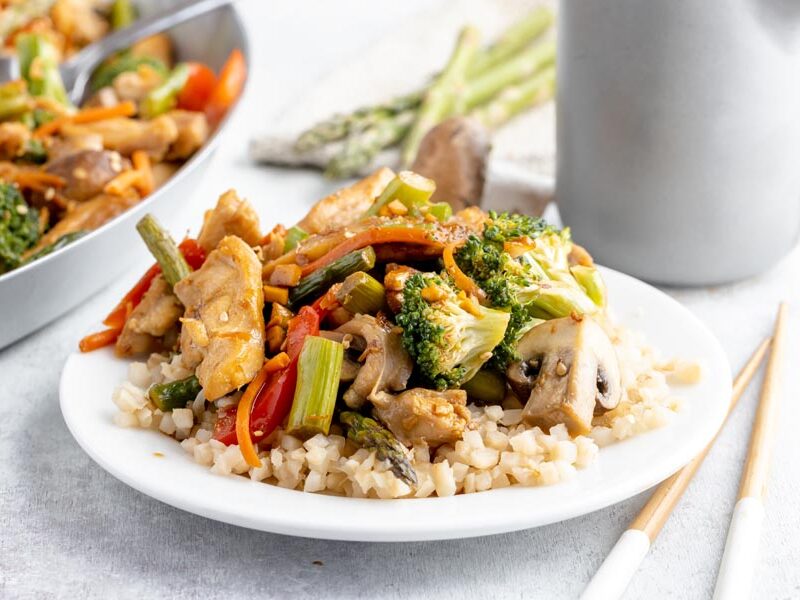
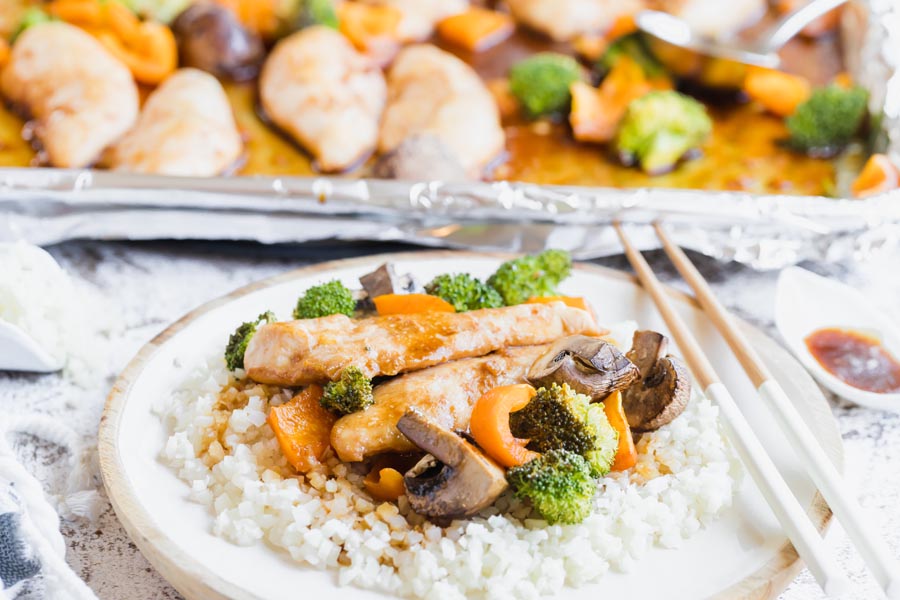
Reheating: Stovetop is my preference. Add everything to a skillet over medium-high heat for 3-4 minutes until heated through. The microwave works too (30-90 seconds), but you lose the crisp edges. Serve over cauliflower rice if you want a full meal. For another dinner that preps just as well, try my Keto Chicken Casserole or Sheet Pan Chicken and Veggies.
How to make this in 15 minutes
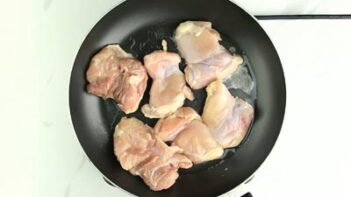
Add avocado oil to a large skillet over medium-high heat. Get the pan hot before anything goes in.
Dice or slice the chicken thighs (I keep mine under 1/2 inch thick so everything cooks evenly within the 10 minute cook time). Cook until the internal temp hits 165 degrees.
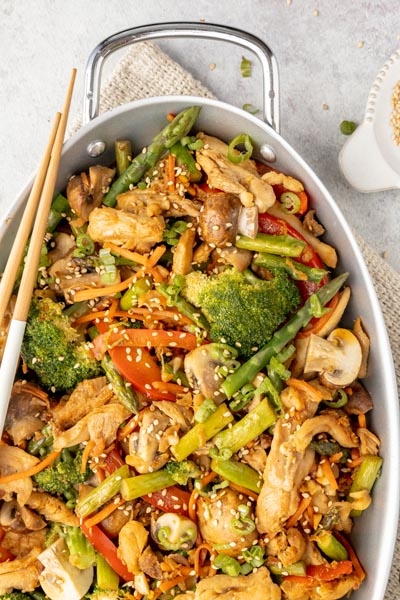
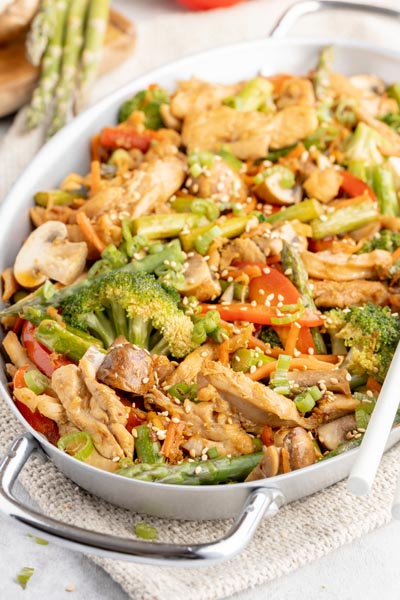
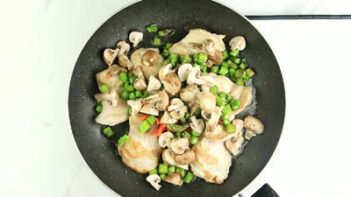
Add your vegetables to the pan. I used bell pepper, broccoli, asparagus, mushrooms, and carrot, but use whatever you have. Cook for 1-2 minutes.
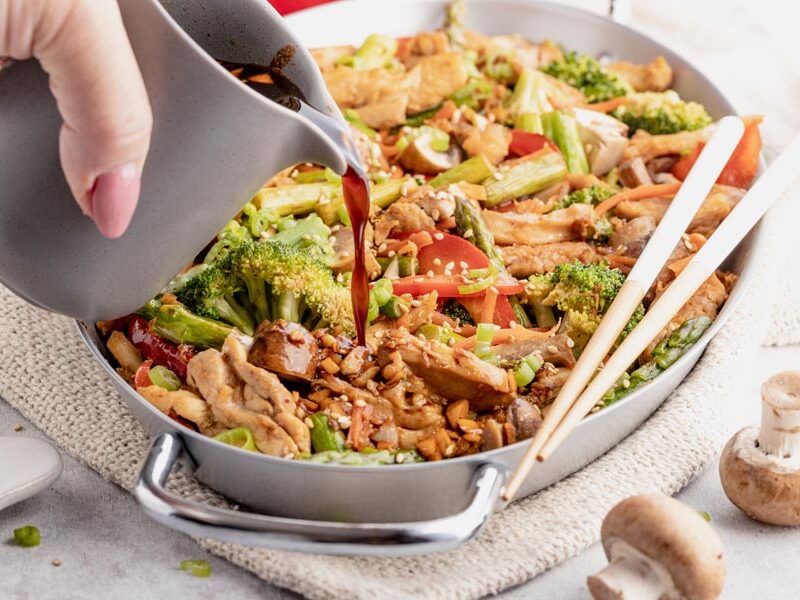
Stir in soy sauce, vinegar, garlic, and ginger. I leave sesame oil and arrowroot powder as optional additions at the end.
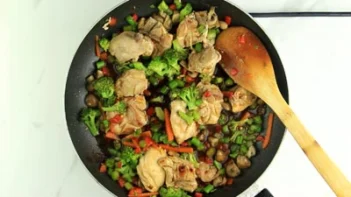
I lower the heat to medium and cook until the vegetables are soft, then add sesame oil or arrowroot powder if desired.
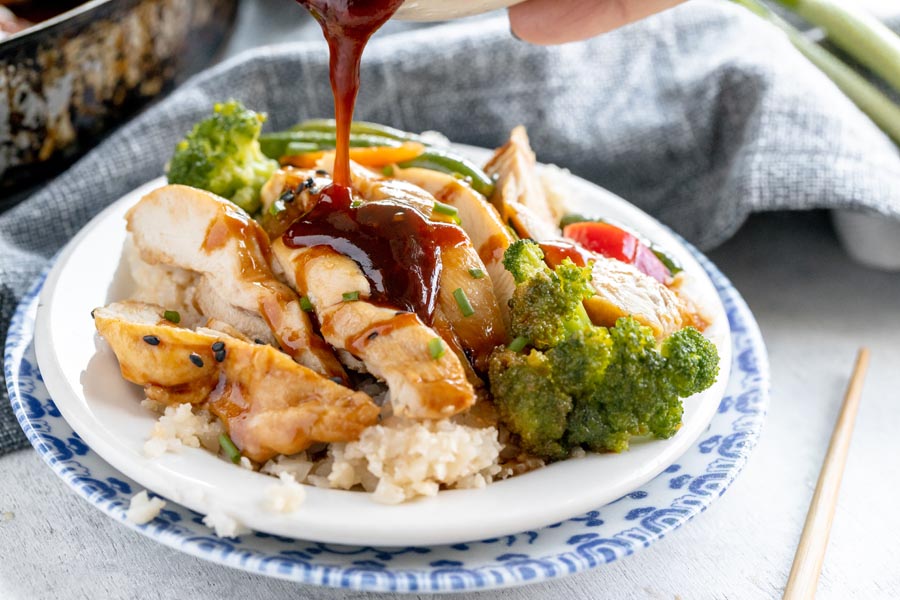
Serve over cauliflower rice or eat it straight from the pan (my usual move).
Key ingredients
Boneless skinless chicken thighs: My go-to because they stay juicy at high heat. Chicken breast works if you slice it thin, and I’ve also used ground turkey and ground pork with good results.
Vegetables: I use bell pepper, broccoli, asparagus, mushrooms, and carrot for the recipe as written. I keep the published nutrition tied to that mix and those amounts.
Soy sauce: My savory base. For a soy-free variation, I use coconut aminos and check the label. Regular liquid aminos can contain soy; Bragg's are made from soybeans. For a gluten-free version, I choose tamari labeled gluten-free.
Vinegar: Adds tang and cuts through the richness of the soy sauce. I rotate between white vinegar, apple cider vinegar, and rice vinegar depending on my mood.
Arrowroot powder: Thickens the sauce into a glossy glaze. Totally optional. Cornstarch, xanthan gum, or even an egg yolk work as substitutes.
Add avocado oil to a large skillet and heat medium high heat. Add chicken and sauté until cooked through. Check the thickest piece with a food thermometer; the chicken must reach 165°F.
For this step
Avocado oil
Chicken (sliced or diced)
2
Add vegetables
To the chicken, add sliced bell pepper, broccoli, asparagus, mushrooms and carrot. Continue to cook for 1-2 minutes.
For this step
Bell pepper (sliced or diced)
Broccoli (florets)
Asparagus (cut into 1" piece)
Mushrooms (quartered)
Carrots (julienned)
3
Stir fry sauce
Stir in soy sauce, vinegar, garlic and ginger. Lower heat to medium and let cook until veggies are soft. Add in sesame oil and thickener (arrowroot powder) if desired.
For this step
Soy sauce, tamari or liquid aminos
Minced garlic
Ginger (ground or fresh ginger)
Sesame oil (optional)
Arrowroot powder (optional)
Nutrition
Per serving: 1/6 of recipe
Calories
197
Fat
9.3g
Protein
24.2g
Total carbs
5.1g
Net carbs
3.7g
Nutrition is an estimate calculated from the ingredients listed. Brands vary, so check labels if you track closely.
Frequently Asked Questions
How do you keep chicken tender in a skillet?
I slice my chicken thighs under 1/2 inch thick and make sure the pan is screaming hot before anything goes in. The thin slices cook fast (the full cook is 10 minutes) so the meat stays juicy instead of drying out. I've also tried velveting, where you toss the chicken in a quick cornstarch and egg white marinade for 15 minutes before cooking. The texture is noticeably more tender, almost silky. It's an extra step, but worth it if you have the time.
Can I freeze this?
I freeze this all the time. My method: freeze just the chicken in sauce without the vegetables, in airtight containers for up to 3 months. When I reheat, I add fresh veggies to the pan. The sauce holds up perfectly after thawing, but frozen vegetables turn mushy. Separating them solves that problem completely.
How do I prevent soggy vegetables?
I use a large skillet over medium-high heat and cook the chicken through before adding the vegetables. When I'm making a larger batch, I work in batches so I don't crowd the pan. After the sauce goes in, I lower the heat to medium and cook until the vegetables are soft, as the recipe directs.
Can I make the sauce ahead of time?
Yes. I mix the soy sauce, vinegar, garlic, and ginger before I start cooking so it's ready to stir in after the vegetables. I leave the sesame oil and arrowroot until the end, since both are optional.
How many net carbs per serving?
My recipe has 3.7g net carbs per serving, based on six servings. Swapping vegetables or sauce brands changes that estimate, so I use the listed amounts when I want to match the published nutrition.
Can I use a wok instead of a skillet?
I've used both. A wok gets hotter at the center and lets you push cooked food up the sides while the next batch sears, which speeds things up. My skillet works fine though, especially a 12-inch cast iron that holds heat well. The biggest difference I've noticed is char. A wok gives you those slightly blackened edges faster because of the concentrated heat at the bottom. If you have one, use it. If you don't, a large skillet does the job. For an even easier route, my Sheet Pan Fajitas skip the skillet entirely and let the oven do the work.
Should I marinate the chicken first?
I don't, and here's why. The sauce is strong enough that everything picks up flavor in the pan. But when I have 30 extra minutes, I'll toss the sliced chicken in soy sauce and ginger and let it sit in the fridge. The flavor penetration is noticeably deeper, especially with chicken breast, which is leaner and absorbs more. For thighs, I skip the marinade because the natural fat keeps them flavorful without the extra step.
What can I add for extra flavor?
My base sauce is soy sauce, vinegar, garlic, and ginger. From there, I add sesame oil when I want its nutty flavor. When I want heat, I add red pepper flakes or a spoonful of chili garlic sauce. Fish sauce adds umami depth (a little goes a long way). Peanut butter makes it richer and almost satay-like. I also love finishing with a squeeze of fresh lime for brightness.
Can you have soy sauce on keto?
I use 1/3 cup soy sauce across the six-serving recipe, which has 3.7g net carbs per serving as written. If I'm making a soy-free variation, I use coconut aminos and check the label; regular liquid aminos can contain soy. Bragg's Liquid Aminos, for example, are made from soybeans. For a gluten-free version, I choose tamari labeled gluten-free. Coconut aminos taste sweeter, and the nutrition can differ by brand.
What is the secret to good stir fry chicken?
A hot pan and thin slices. I slice boneless chicken thighs under 1/2 inch thick, get the oil shimmering before the chicken goes in, and cook until the internal temp hits 165 degrees. Thighs stay juicy where breast dries out. When I make a big batch, I cook in two rounds so the pan stays hot and the meat sears instead of steams.
What to put in a stir fry for chicken?
I use sliced or diced chicken thighs with bell pepper, broccoli, asparagus, mushrooms, and carrot. My sauce is soy sauce, vinegar, garlic, and ginger, with sesame oil and arrowroot powder as optional additions. The recipe card has the amounts for six servings.
This stir fry works so much better when you get the pan ripping hot before the chicken goes in. I cook the thighs in two batches instead of crowding them, and you get actual browning instead of steamed chicken. Also swapped the rice vinegar for apple cider and it holds up fine, maybe a touch mellower. Under 4 net carbs and it’s on the table faster than takeout arrives. Thanks!
Jeff, cooking the thighs in two batches is the right call. I get gray steamed chicken every time I rush and crowd the pan. Apple cider is right there in the ingredient list too, so that swap is fair game.
The garlic and ginger hit the pan together and honestly you can smell it from two rooms away. Made a double batch for movie night last month and by the time I set it out, two people were already in the kitchen asking if I’d ordered in. That soy-vinegar ratio is sharper than most takeout. Nobody believed it was fifteen minutes.
The 3-ingredient sauce is the thing I keep turning over. Something about the garlic and vinegar together tastes exactly like the takeout my dad used to bring home on Friday nights, I wasn’t expecting a homemade stir fry to do that to me. That place has been closed for years.
White cuts cleaner against thigh meat. I’ve been rotating through all three options but the acid needs some bite when you’re working with something fattier.
I’ve been putting off stir fry at home forever, and this recipe is what finally pushed me to try it. My main concern is the carrots. They seem like they need longer to soften than the other vegetables, but the recipe has everything going in at once. Will they actually get tender if julienned thin and cooked at medium-high heat with everything else, or should I give them a minute head start? I also don’t own a wok. Does a large skillet work just as well? Making this Sunday.
Julienned that thin, the carrots don’t need a head start. Mine come out tender every time as long as the pan is screaming hot before anything goes in. Cast iron if you have it. Holds the heat.
Threw in a tiny drizzle of sesame oil at the very end, off the heat so it doesn’t burn off, and the sauce completely shifted. It went from good to something I was scraping the pan for. Home cook brain said save the leftovers, the other part said just finish it. Three weeks straight now.
Probably my seventh or eighth time making this. I still reach for it on nights when I have random vegetables to use up. The soy sauce and vinegar combo surprised me, honestly. Simpler than I expected but it works. I add extra broccoli now because it soaks up all the sauce, which is the best part.
I am not a confident cook and this actually worked, which felt like a minor miracle. The sauce came together so fast I was sure I was missing something, but the chicken thighs absorb it really well and it tastes like it took much longer than 15 minutes. One thing I’d change: the asparagus was done before the broccoli, so next time I’m adding it toward the end. Already have chicken thawing for round two.
Fourth or fifth time making this (I’ve lost count at this point), and it works no matter what vegetables are left at the end of the week. The 3-ingredient sauce is the constant that holds everything together. Would give it 5 stars but I always end up wanting more sauce by the end.
Double the sauce. I keep a jar in the fridge and just splash more in at the end. It’s only soy sauce, vinegar, and garlic so a big batch takes 2 minutes.
Hi Jennifer, how thick were your slices? I cut my thighs under 1/2 inch and they’re cooked through in about 10 minutes. Thicker pieces run longer no matter how hot the pan gets.