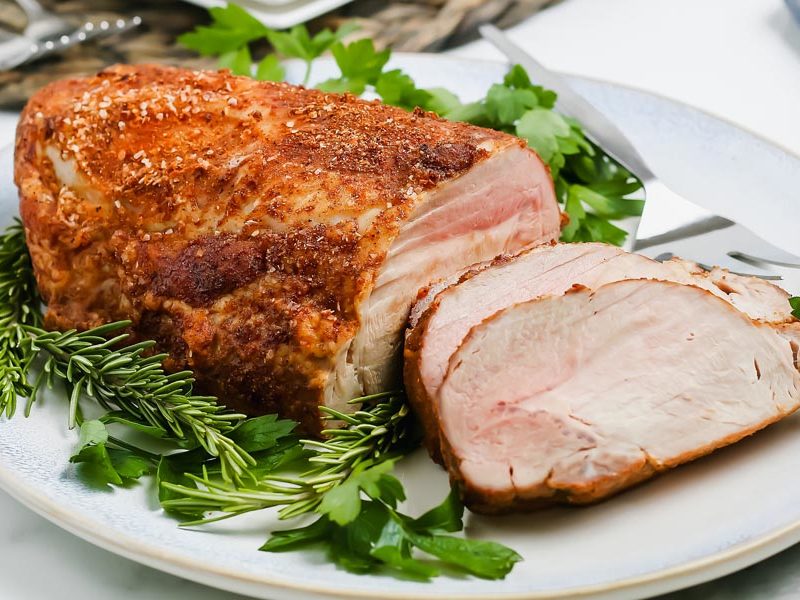
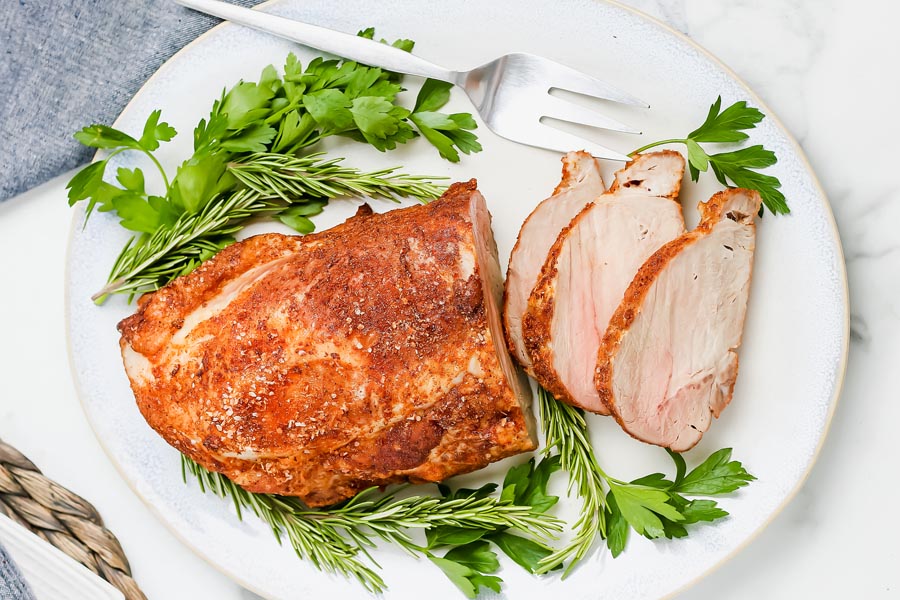
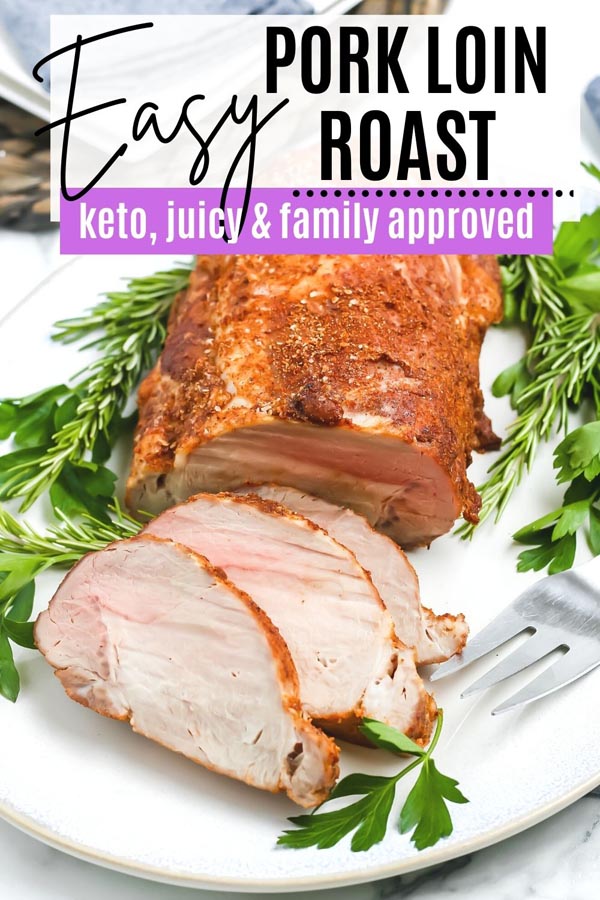
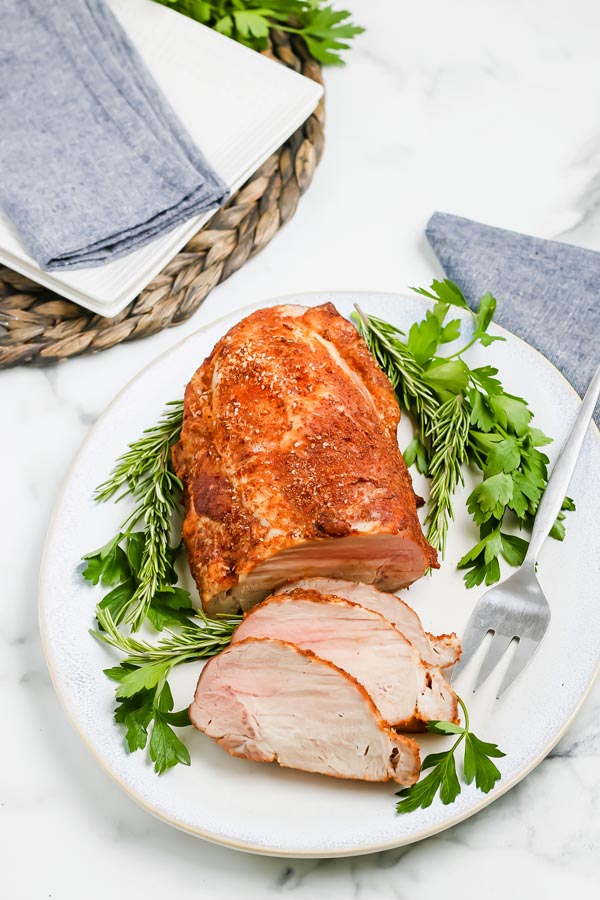
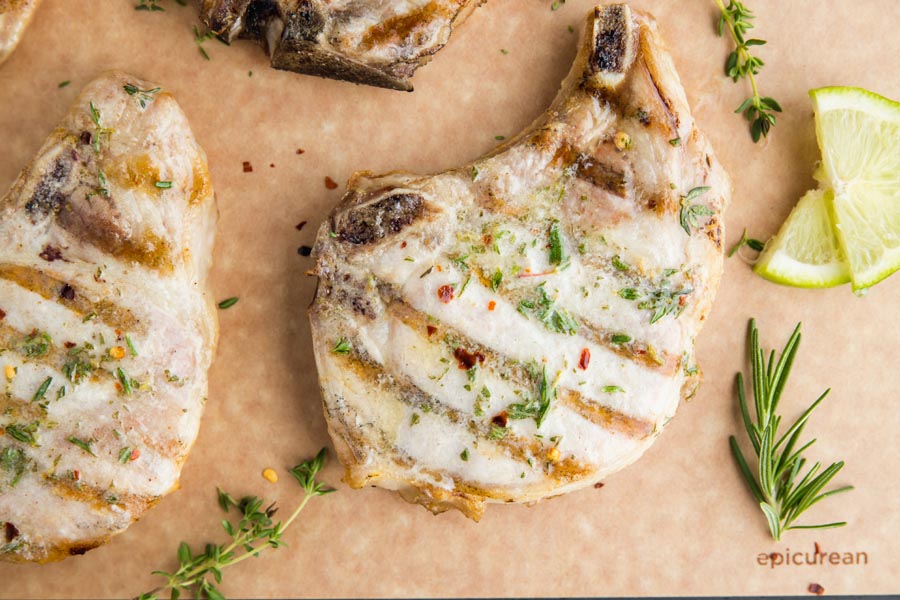
A boneless pork loin roast with a simple garlic, paprika and mustard rub. Roast fat-side up at 375°F until the center reaches 145°F, then rest for 15 minutes before slicing. Plan on about 85 minutes including prep and rest, with the thermometer deciding when the pork is ready.
A pork loin roast is a useful centerpiece for a busy week: season one larger cut, roast it, and use the leftovers in another meal. I included this roast in a weekly meal plan for my family of four, with leftover pork going into a pork-and-rice stir fry later in the week.
The rub is straightforward: garlic powder, paprika, ground mustard, salt and pepper. Pat the pork dry so the seasoning sticks, place the fat cap facing up and let the oven do most of the work. You do not need a separate marinade or a searing step for this recipe.
Use a thermometer in the thickest part and cook to 145°F before removing the roast. Allow a 15-minute rest before slicing. About 60 minutes of roasting is a guide for a 3-pound boneless loin, not a promise for every shape or oven.
The full schedule is about 10 minutes of prep, 60 minutes of roasting and 15 minutes of resting. The card includes that rest in its 75-minute cook/rest allowance, for about 85 minutes total. Slice crossways and divide into 6 portions, with pan drippings spooned over the top.
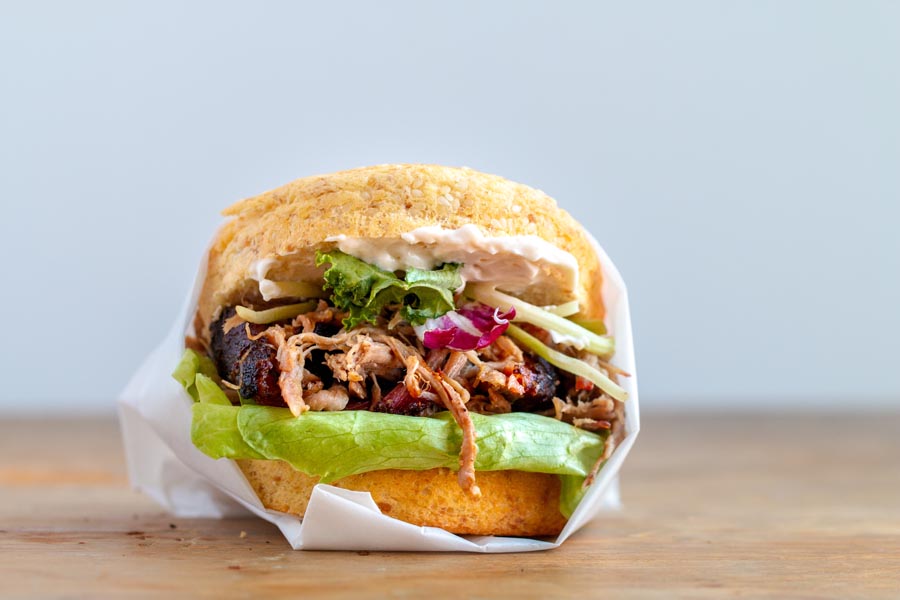
For another way to use a larger pork cut, try Instant Pot pulled pork. For this loin, keep the cooking focused on its lean texture and use the remaining slices within the storage window below.
A simple roast for dinner and leftovers
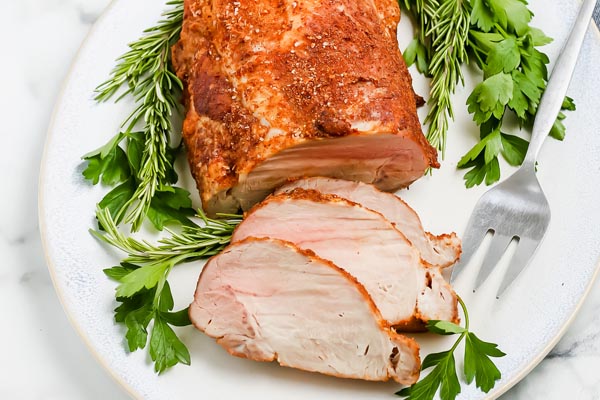
The dry rub gives the outside a savory garlic-and-spice coating without a long ingredient list. Roast a 3-pound boneless loin, rest it and slice it into 6 portions.
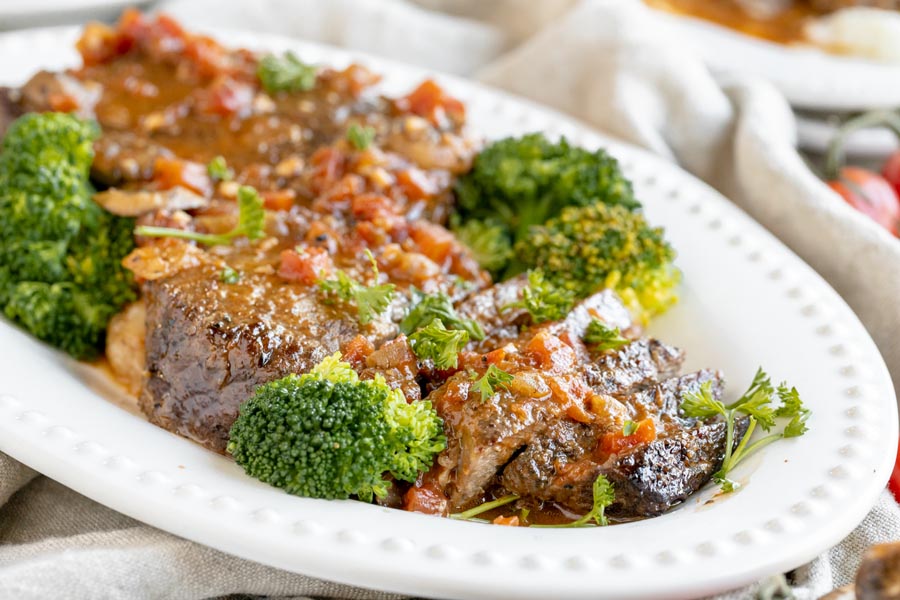
Serve with roasted vegetables and spoon over some of the pan juices. Save cooled leftover slices in shallow covered containers for lunches or a second cooked meal, using them within 3-4 days.
What Makes This Cut Special
This recipe is for a 3-pound boneless pork loin, a broad cut that can be sliced into a roast or chops. Leave the fat cap facing up in the pan, but do not rely on it to prevent overcooking: the lean center still needs a thermometer.
Bone-in roasts and differently shaped cuts need their own timing. There is no dependable fixed number of extra minutes per pound that makes them identical to this boneless recipe.
How to Season and Roast It
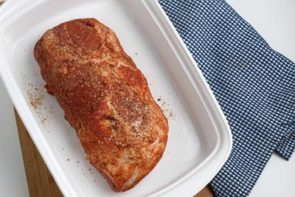
Preheat the oven to 375°F. Mix the salt, garlic powder, paprika, ground mustard and pepper. Pat the thawed pork loin dry, press the rub over the surface and place it fat-cap up in a baking dish.
Roast for about 60 minutes, beginning temperature checks before the estimated finish. Insert the thermometer into the thickest part, away from the pan. Keep cooking until the center reaches 145°F before removal.
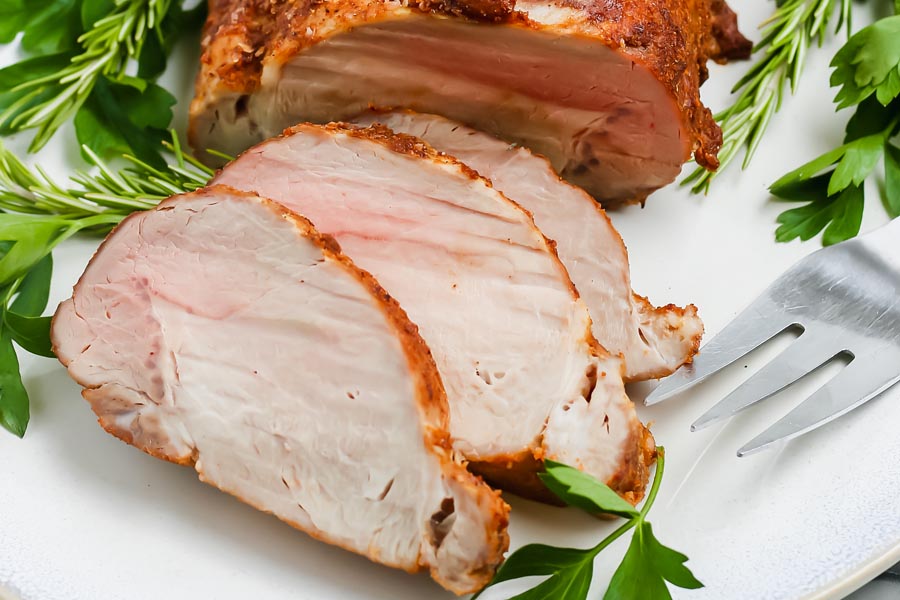
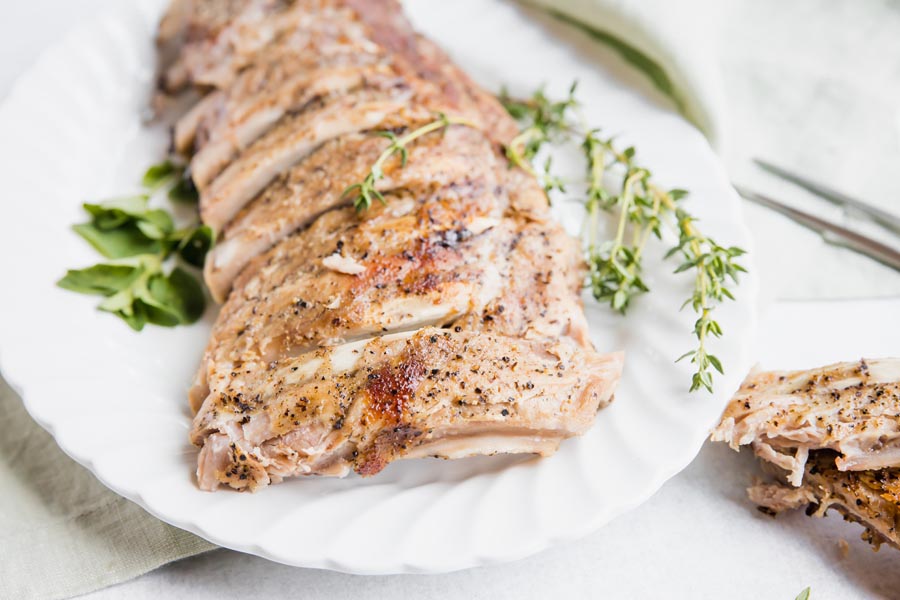
Rest for 15 minutes, then slice crossways into 3/4- to 1-inch pieces. Spoon over the drippings or use the optional pan-sauce idea below.
Loin vs. Tenderloin
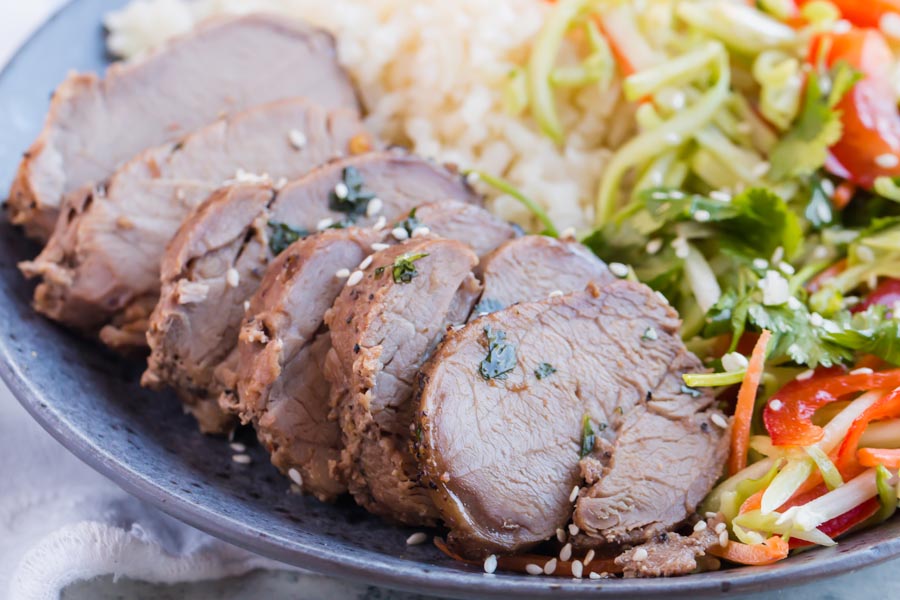
Pork loin and pork tenderloin are different cuts. A loin is broader and heavier; a tenderloin is long, narrow and usually cooks much faster. Both can be prepared in several ways, but their cooking times are not interchangeable.
Use the boneless loin specified here. If your package says tenderloin, choose directions developed for that smaller cut rather than following this roast’s one-hour estimate.
The Right Internal Temperature
Cook the center to 145°F before taking the pork out of the oven. USDA guidance for whole pork roasts requires 145°F followed by at least a 3-minute rest. This recipe keeps a longer, 15-minute rest before slicing.
Do not remove the pork at 140°F expecting a guaranteed rise. Carryover heat varies with the size and shape of the roast. Check with a food thermometer; color alone cannot establish doneness.
How Long to Cook It
About 20 minutes per pound at 375°F is a planning estimate for this boneless loin. A 3-pound roast may take around 60 minutes, but thickness, starting temperature and your oven matter more than a simple weight calculation.
Start checking before the estimated finish and roast until the thickest part reaches 145°F. Add the full 15-minute rest before serving. Larger or bone-in cuts need adjusted timing and the same careful temperature check.
Optional gravy from the pan drippings
The easiest finish is a spoonful of the roasting juices over each slice. For a richer pan sauce, the optional method is to combine the drippings with a little butter and 1/2 teaspoon of arrowroot powder, then whisk in heavy cream and chicken broth and cook until thickened.
Use a saucepan unless your roasting dish is safe for stovetop heat. Add the liquids gradually to reach the consistency you like and taste before adding salt, since the drippings already contain the rub.
This is an optional sauce rather than a precisely measured part of the roast recipe. Arrowroot contains carbohydrates, and butter, cream and broth change the nutrition of the finished portion. Refrigerate leftover sauce promptly and use within 3-4 days.
Preheat the oven to 375°F. Use a fully thawed boneless pork loin; keep it refrigerated until you are ready to season it.
2
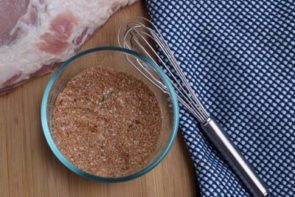
Mix seasonings
In a small bowl, mix together salt, garlic powder, paprika, ground mustard and pepper.
3
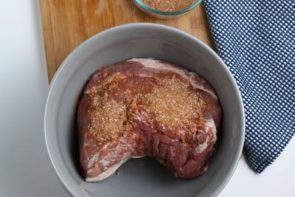
Dry rub down
Pat the pork loin dry with a paper towel. Massage dry rub all around pork loin roast.
4
Roast it
Place the seasoned pork loin in a baking dish with the fat cap facing up. Roast at 375°F for about 60 minutes, checking before the estimated finish, until a thermometer in the thickest part reads 145°F BEFORE you remove it from the oven. Rest for 15 minutes, then slice crossways into 3/4- to 1-inch slices. Spoon the pan drippings over the top if desired.
Nutrition
Per serving: 1/6 of roast and seasoning (sauce excluded)
Calories
383
Fat
19.1g
Protein
48.6g
Total carbs
1.2g
Net carbs
0.9g
Nutrition is an estimate calculated from the ingredients listed. Brands vary, so check labels if you track closely.
Frequently Asked Questions
Do I need to sear the pork first?
No. The original method roasts the seasoned loin directly at 375°F. A separate sear changes the process and timing; if you add one, still check that the center reaches 145°F before removing the roast and rest it for 15 minutes.
How do I reheat leftover slices?
Add a little broth or pan juices to the slices and reheat covered to help limit drying. Check the pork reaches 165°F when reheating leftovers. Heat only the portion you plan to eat and avoid relying on a fixed number of minutes for every slice thickness.
Can I cook this roast from frozen?
The timing here is for thawed pork. Thaw the roast in the refrigerator in a container that catches drips, allowing enough time for its size; overnight may not be enough. If using cold-water thawing, keep it in a leakproof package, change the water every 30 minutes and cook immediately after thawing.
What should I serve with pork loin?
Roasted vegetables, cauliflower rice, a green salad or mashed cauliflower all work alongside the sliced pork and pan juices. Count side dishes and optional gravy separately from the roast.
How long do leftovers keep?
Refrigerate in shallow covered containers within 2 hours of cooking, or within 1 hour above 90°F. Use refrigerated cooked pork within 3-4 days, or freeze it promptly for longer storage. Thaw frozen leftovers in the refrigerator and reheat to 165°F.
Can I season it the night before?
You can apply the dry rub ahead and keep the pork covered in the refrigerator until cooking. Keep raw pork separate from ready-to-eat foods and stay within its refrigerated storage window. Do not leave the seasoned roast on the counter overnight.
Can I portion and freeze a larger loin?
Yes. Cut a larger boneless loin into portions before freezing, wrap securely and label each with its weight and date. Thaw in the refrigerator before following this recipe. Different sizes and shapes need adjusted timing, so check for 145°F in the thickest part.
How long do I roast it per pound?
About 20 minutes per pound at 375°F is a rough guide for this boneless loin. For 3 pounds, allow around 60 minutes of roasting plus a 15-minute rest. Begin checking before the estimated finish and continue until the center reaches 145°F before removal.
How do I keep the pork from drying out?
Use a thermometer, avoid cooking well beyond the target temperature and rest for 15 minutes before slicing. Do not pull it at 140°F assuming carryover will make it safe. The center must reach 145°F before it comes out of the oven.
What does this recipe’s serving and timing information mean?
The batch makes 6 portions. Plan on about 10 minutes of prep, 60 minutes of roasting and 15 minutes of rest, or 85 minutes total. The card includes the rest in its cook allowance. The nutrition estimate covers one sixth of the 3 pound roast and listed seasonings, using USDA data for raw boneless pork top loin with lean and fat. It assumes all of those ingredients are eaten; trimming or discarding rendered fat changes the estimate. The optional pan sauce and sides are extra.
Is any pork roast suitable for this recipe?
No. Pork roast is a general description that can refer to loin, shoulder or other cuts. This method is for a boneless pork loin. Shoulder needs a different cooking approach, and a small tenderloin cooks faster; check the package before starting.
I finally quit skipping the room temperature step and that was the whole difference. Cold from the fridge, my last one was gray around the outside by the time the center caught up. This one sat on the counter about an hour and came out even all the way through. My dad noticed before I said anything, asked what I did different.
Cook the center to 145°F before taking the pork out of the oven, then rest it for 15 minutes before slicing. Check the thickest part with a food thermometer. Do not remove it at 140°F expecting carryover heat to supply a guaranteed temperature rise.
Used fresh garlic instead of garlic powder, four cloves on a microplane into the other dry spices, because I had some going soft in the crisper and it seemed worth trying. The rub turned into a paste that stuck to the loin in a way the powdered version never quite does. What caught me off guard was the crust: the fresh garlic browned differently in spots, went almost nutty where it took the most heat. Something underneath that the powder version never reaches. The aroma coming out of the oven was different too, that roasted garlic smell with the paprika and mustard behind it. I made the powder version once and this version three times now, and I genuinely cannot call them the same recipe anymore. The thirty seconds of grating is non-negotiable.
Microplaned garlic becomes a paste with the dry spices, and fresh sugars caramelize at 375 in a way the dried version just can’t do. That nutty spot is real. Tasha, I’m making this version next weekend.
Smoked paprika would change the flavor of the rub; the listed recipe uses paprika without specifying a smoked variety. Keep the same temperature check and 15-minute rest if you try that variation.
Brushed a little Dijon on before the dry rub and it gave the crust this extra depth I wasn’t expecting. Really pulled the paprika forward. Not going back.
So I mixed a little olive oil into the dry rub because I panicked it wouldn’t stick, and I think that’s what pushed the crust into almost bark territory. Came out darker than the photos. I nearly convinced myself I burned it, but then I cut into it and the inside was still juicy so I just went with it. I also threw some whole garlic cloves into the baking dish while it roasted (had them sitting there, figured they’d do something good), and the house smelled like I’d been cooking all day when it was maybe 12 minutes of actual effort. The paprika and ground mustard together are doing something I didn’t see coming from a recipe this simple, there’s this warmth that lingers after you swallow. Four stars because I pulled it a little late on my first try (please just use a meat thermometer, that’s the whole lesson here), but the leftover slices cold the next day were honestly better. Trying it again this Sunday and pulling it earlier.
The base recipe is a dry rub with no added oil. A little oil would be an optional change, not a required step. Refrigerate leftover slices promptly and use within 3-4 days.
I grew up on Sunday pork roasts and when I went keto I honestly thought that was just over. This proved me wrong (that mustard-paprika crust on the fat cap is everything). Going in the Sunday rotation permanently.
Made this on Sunday during the snowstorm and the house smelled so good by hour two that my wife kept wandering into the kitchen ‘just to check on things.’ She doesn’t eat the fat cap. Ever. I’ve been making pork roasts for years and she always cuts around it, plates it off to the side. This time I watched her pull a piece of the crisped fat off the cutting board while I was still slicing and just eat it, no comment, nothing. The dry rub caramelized into something really good with the garlic and paprika and I think the mustard brings more depth than people expect. This is our Sunday roast now.
The garlic, paprika and ground mustard give the outside its savory spice crust. The fat cap does not seal in juices, so keep checking the center and remove the roast once it reaches 145°F, then rest for 15 minutes.
The nutritional information does not add up. All the grams of fat, protein, and carbs should add up to the calories, but they do not. 9 calories per gram of fat, 4 calories per gram of protein, and 4 calories per gram of carbs. The recipe is delicious though!
I buy a 9 lb. Pork loin at Sam’s Club monthly, and have them cut it and wrap it in 1/3’s. Then I make this about 3x a month. It makes about 5 servings each. I live by myself and am always so excited for leftovers! It is great for lunches or dinners with just about any veggie you can imagine. It freezes beautifully, and works great as a meal prep idea. Thanks so much, Annie! This recipe always works perfectly!
Portioning a larger loin before freezing is useful. Label each portion with its weight, thaw it in the refrigerator and adjust the roasting time to its size. The thickest part should reach 145°F before removal, followed by a 15-minute rest.
I mix the dripping with a little bit of butter and 1/2 teaspoon of arrowroot powder. Then whisk in heavy cream and chicken broth. Let cook until thickened. Season with salt and pepper.