Carnivore Smoked Beef Ribs
Published August 15, 2020 • Updated July 20, 2026
This post may contain affiliate links. See my disclosure policy.
After years on my Traeger, I've landed on this dead-simple method for smoked beef ribs that my family requests every time we fire it up. No rubs, no fuss. Just salt, smoke, and patience. Fall-off-the-bone tender with a deep bark, zero carbs, built for keto and carnivore.
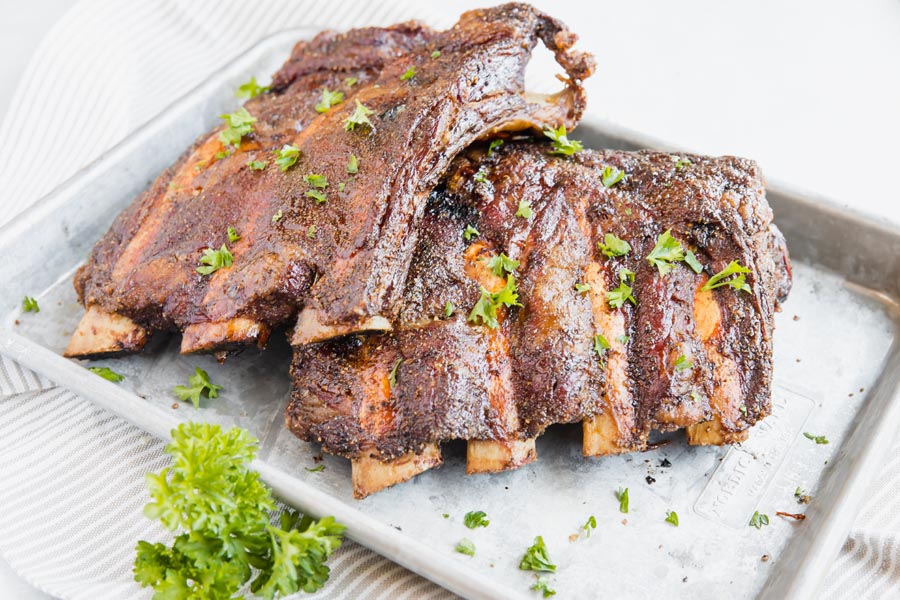
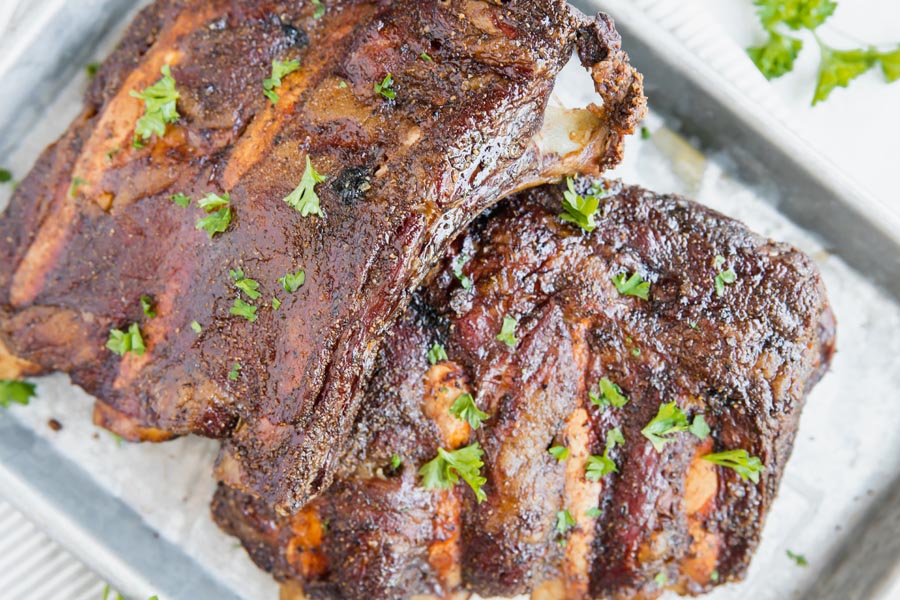
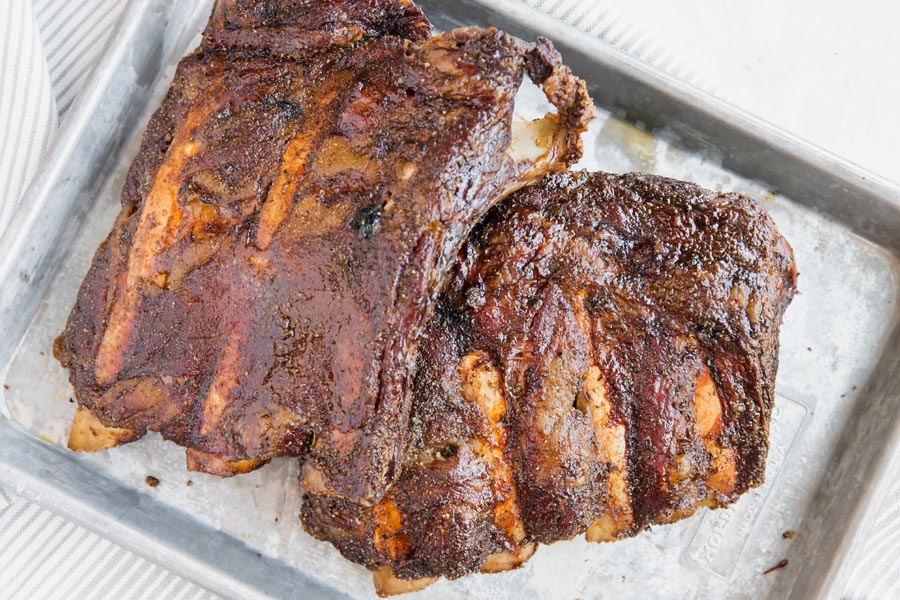
I started smoking ribs on my Traeger about four years ago, and I’ll be honest, my first few attempts were mediocre. I was overthinking everything: complicated spice rubs, wrapping in foil too early, fussing with the temperature every 30 minutes. I even tried a coffee-chili rub once that completely masked the beef flavor. The breakthrough came when I stripped it all back to just salt and smoke. That’s when the meat finally started speaking for itself.
If you’ve made my carnivore braised short ribs or slow cooker pork ribs, you know I like recipes where the protein is the whole show. These take that to another level. The fat caps and marbling render down over 6 hours into something silky and rich. And the bark on the outside gets this deep, almost caramelized crust from nothing but salt and wood smoke. No sauce competing for attention. Just beef, rendered fat, and a clean smoky finish.
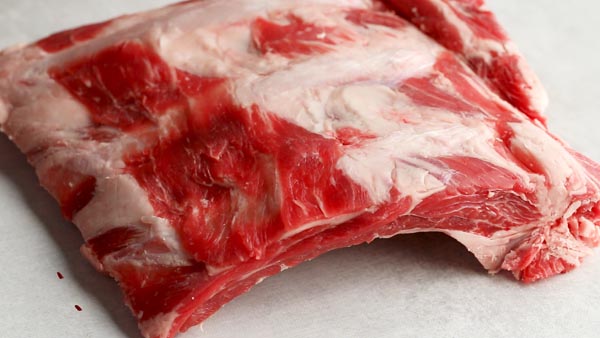
One thing I always do that I don’t see enough recipes mention: remove the membrane from the bone side before you season. There’s a thin, papery layer (silverskin) on the underside. Grab a corner with a dry paper towel and peel it off in one sheet. If you skip this, the smoke can’t penetrate evenly and the texture on that side stays chewy. I learned this the hard way on my second batch.
For wood pellets, I’ve settled on a hickory and cherry blend. Hickory gives you that deep, classic smoke flavor, and cherry adds a subtle sweetness that pairs well with beef without overpowering it. I tried mesquite early on and it was way too aggressive for a 6-hour cook. If you only have one type, go with hickory or oak.
The other thing most recipes skip is the rest. After I pull the ribs off the grill, I tent them loosely with foil and let them sit for 15-20 minutes on the cutting board. The juices redistribute, and the meat goes from great to unreal. I know it’s hard to wait when your kitchen smells like a smokehouse, but every time I’ve sliced right away, the juices run out onto the board and the meat is noticeably drier. That 15 minutes makes a real difference.
What I love about this recipe for keto is how satisfying it is. High fat, high protein, zero carbs. One rack keeps me full for hours. I pair mine with a simple side, sometimes grilled pork chops if we’re doing a full cookout, sometimes just a handful of greens. If you’re doing a carnivore day, these ribs are a complete meal on their own.
This has become one of our go-to weekend cooks. I fire up the Traeger in the morning, spray every hour, and by late afternoon we’re eating. If you want more low-and-slow ideas, my keto pulled pork uses a similar approach, and my smoked chicken wings are another Traeger favorite.
How to Smoke Beef Ribs
The biggest thing I wish someone had told me before my first smoke: expect the stall. Around 150-170°F internal temp, the ribs will seem to stop cooking. The temperature plateaus, sometimes for over an hour. This is evaporative cooling (moisture on the surface evaporates and keeps the meat cool, like sweat). I used to panic and crank the heat, which dried out the exterior. Now I just let it ride at 250°F and spray more often during that phase. The stall always breaks, and the bark that forms during it is worth the wait.
If your bark comes out soft or rubbery instead of crispy, there are three common reasons. Too much moisture in the cooker (a water pan will do this), the vents weren’t open enough to let moisture escape, or you wrapped too early. I get my best bark when I leave the ribs unwrapped the entire cook and keep the exhaust vent fully open. Low carb ribs don’t need a sugar-based rub to build bark. Salt and rendered fat do the work on their own.

Explore hundreds of keto recipe videos with step-by-step instructions, tips, and tricks to make keto easy.
Ingredients
 3 pounds beef ribs
 -
generous amount of salt for seasoning
-
1 cup beef broth
-
1 tablespoon apple cider vinegar
Step by Step Instructions
Step by Step Instructions
Season the ribs
Season the ribs generously with salt on all sides. I do this right before they go on the smoker, but if you have time, salting them an hour ahead and letting them sit uncovered in the fridge gives you an even better bark.

Smoke ribs
Turn pellet grill to smoke and let run with the door open until the initial heavy smoke clears- this usually takes about 5 minutes.

Slow cook
After 30 minutes, turn the heat to 250 degrees and let cook for 2 hours.

Spray with apple cider vinegar and beef broth mixture
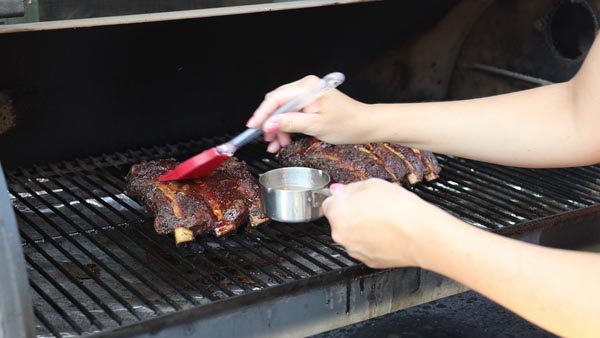
Combine the beef broth and apple cider vinegar in a spray bottle or a small bowl. After 2 hours, spray or baste the ribs with the beef vinegar mixture until coated.

Cook until tender
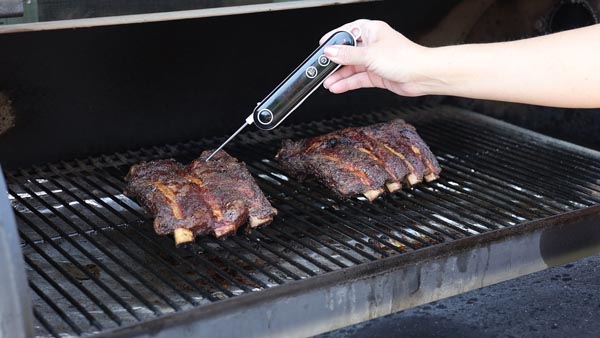
Continue cooking until the internal temperature reaches 195-203°F and the meat pulls away from the bones easily.

Nutrition disclaimer
The nutrition information provided is an estimate and is for informational purposes only. I am a Doctor of Pharmacy (Pharm.D.); however, this content is not intended to be a substitute for professional medical advice, diagnosis, or treatment. Always consult your physician or other qualified health provider before making any lifestyle changes or beginning a new nutrition program.
Your Macros. Your Recipes. Calculated in 60 Seconds.
Get personalized keto macros and instantly see which recipes fit your targets. No more guessing what to eat.
Get My Macros + Recipes →Frequently Asked Questions
Can I use a different smoker or grill instead of a Traeger?
I've used a charcoal kettle grill with indirect heat and it works fine. The key is holding 225-250°F with steady smoke. If you're using charcoal, add a few wood chunks (not chips, they burn too fast) and keep the vents mostly closed. A vertical smoker, kamado, or any pellet grill will get you the same results. I just happen to love my Traeger because I can set it and not babysit the fire. My grilled flank steak is another recipe that works on any grill type.
Should I remove the membrane from the bone side?
I always do. There's a thin, papery layer (silverskin) on the underside of the ribs. Grab one corner with a dry paper towel and peel it off in one sheet. If it tears, just grab the next section. I skipped this on my first batch and the bone side came out chewy while the smoke couldn't penetrate evenly. Takes 30 seconds and makes a noticeable difference.
What wood pellets work best for smoking ribs?
I've tried most of them. My favorite is a hickory and cherry blend. Hickory gives you that deep, classic smoke flavor and cherry adds a mild sweetness that pairs well with beef. Oak is another solid choice if you want something more neutral. I'd avoid mesquite for a long cook like this because it can turn bitter over 6 hours. If you only have one type, go with hickory.
Should I wrap the ribs in foil or butcher paper during cooking?
I don't wrap mine. Some pitmasters wrap at around 165°F internal temp to push through the stall (that plateau where the temperature stops climbing for a while). Wrapping speeds things up by about an hour, but you lose bark quality. I prefer to power through the stall unwrapped and spray more often during that phase. If you're short on time, pink butcher paper is the better option over foil because it still lets some smoke through.
Can I cook these at a higher temperature to save time?
I've tested 275°F and it cuts about an hour off the total cook, but the fat doesn't render as completely. At 250°F, all that connective tissue fully breaks down into gelatin, which is what gives you that pull-apart texture. If I'm pressed for time I'll bump to 275°F, but I always come back to 250°F because the texture is noticeably better. For beef that's ready faster, try my grilled tomahawk steak.
What's the difference between beef back ribs, plate ribs, and chuck ribs?
I use beef back ribs for this recipe. Back ribs come from the top of the rib cage near the spine, and they're leaner with meat between and on top of the bones. Plate ribs (sometimes called short plate ribs) come from the lower chest with a thick cap of meat on top. They're incredible but they're more of a competition-style cook and harder to source. Chuck ribs come from the shoulder area and have great marbling, but they're smaller and cook faster, so I'd adjust the timing down by about an hour. For a carnivore cook like this, I go with back ribs because they're easiest to find at most butcher counters and they cook the most evenly at 250°F. Ask your butcher specifically for beef back ribs with good marbling.
How should I store and reheat leftover smoked ribs?
I wrap mine tightly in foil and refrigerate for up to 4 days. For longer storage, I double-wrap in foil, slide into a freezer bag, and they keep for about 3 months. When I reheat, I go low and slow in the oven at 250°F for about 20 minutes, still wrapped in foil. This keeps them from drying out. I've also reheated on the Traeger at 225°F for 15 minutes and they come out tasting almost as good as fresh. Smoked ribs actually reheat better than most low carb proteins I cook, so they're a solid option if you want to cook once and eat twice.
What is the bend test and how do I know my ribs are done without a thermometer?
I use two checks every time. First, the probe test: slide a thermometer probe or toothpick into the thickest meat between the bones. When it goes in with almost no resistance, like poking room-temperature butter, the collagen has fully converted to gelatin. Second, the bend test: pick up the rack from one end with tongs. If the meat cracks on the surface and bends deeply without breaking apart, they're ready. If the rack stays stiff, give it another 30 minutes. I rely on the probe test most, but the bend test is a great backup when I don't have a thermometer handy. Between the two, I've never pulled a rack too early.
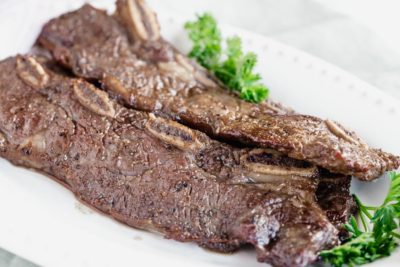
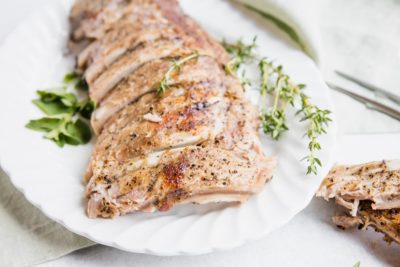
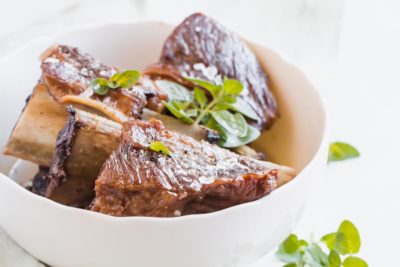
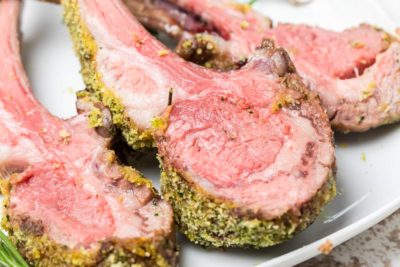
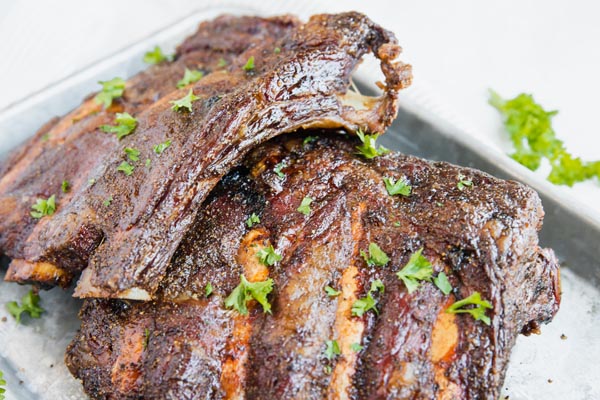 The Traeger grill was made for beef ribs. It creates a smoky flavor that is unbeatable when it comes to grilled ribs. This recipe starts with a simple dry rub of salt, garlic salt and pepper. The beef ribs are smoked on the pellet grill for thirty minutes then slow cooked over several hours. The collagen breaks down and the meat falls off the bone. These ribs disappear fast so make sure you snag a couple before the rest of your family gets them!






Made these last weekend and my family is already asking when I'm making them again.
Mine too. The bark gets even better day two if you manage to have any left.
Confession: nothing leaves my kitchen without a reheating plan. These honestly hold up better for that than most proteins I've cooked. The salt crust holds. The ACV spray at hour two is not optional if you want that bark to survive three days in the fridge. I pull half the batch at 195 because it slices cleaner cold, the rest goes to 203 for the days I want it to fall apart. At 63 grams of protein per serving, four portions goes fast. Started running a double rack when I can fit it.
I'm making these for my husband's birthday next weekend, wish me luck.
Brought these to a cookout without saying anything about the salt-only approach. The bark had enough complexity that everyone assumed it was rubbed. Which is kind of the whole point.
That test is the best one to run at a cookout. I've done the same, people always jump to 'what's in the rub' first. Smoke does more than most rubs anyway.
Spray every hour. Four guests asked what rub I used.
SO good, just wish 'generous salt' had an actual measurement
Tiffany, about 2 tablespoons of coarse kosher for 3 pounds. You want enough that you can actually see it sitting on the meat before it goes on the smoker.
zero net carbs. sat out of every rib cookout for two years.
Two years is a long time to sit out a cookout. Welcome back.
My dad used to smoke ribs every Fourth of July with big elaborate rubs and overnight marinades, and I thought that was the only way. I went keto three years ago and kind of grieved it. Made these last weekend (just salt, just smoke, just patience) and that bark on the outside, the way the meat pulls back from the bone, it brought me right back to his backyard. Didn't think the plainest version would be the one.
I've never smoked ribs before and the 'just salt, no rub' instruction had me second-guessing the whole thing. Went with it anyway, and when I pulled them at 200 internal, the meat was already separating from the bone before I tried to do anything. The bark was incredible. I'm so excited about how these turned out that I already have another rack thawing. Quick question: do you ever wrap them in foil partway through, or is the whole cook uncovered?
Never wrap on these. Wrapping would have killed that bark you got. If you hit a stall around 165 and the temp stops climbing for a while, just wait it out. It breaks through.
Smoked plenty of brisket but never beef ribs with just salt, no rub. Kept second-guessing myself the whole 2-hour cook. Hit 200° and the probe went in like butter. Making these again next weekend.
Second-guessing a no-rub cook is real the first time. Once you feel that probe slide at 200, you stop wondering.
Went in skeptical about skipping the rub entirely because I've always layered on paprika and garlic for smoked ribs. Just salt and the apple cider vinegar spray. These put every version I've made to shame.
Paprika and garlic are fine spices. Just not on these. The ACV spray is where the bark actually comes from.
Swapped half the beef broth for Worcestershire and the bark on these ribs was the best thing off my Traeger all spring.
Makes sense. Worcestershire concentrating as it steams off would lay right into that bark layer. Trying this next cook.
Tried probably six different smoked beef rib recipes over the years. Most had layers of rub, overnight dry brines, all of it. This is the first one where I actually tasted what beef is supposed to taste like. Salt and smoke and that ACV spray around the 2-hour mark built a bark I've never gotten before. Now I'm wondering what every other recipe was trying to cover up.
Yeah, that's been my whole theory. Heavy rubs are usually covering something. Salt and smoke just let the beef be beef.
Added a thin coat of beef tallow before the salt and the bark that formed was something else. Almost lacquered, really tight. Took a bit longer to hit 200 but worth it. Also started the broth and vinegar spritz at the 2-hour mark instead of waiting and found it kept the surface from drying out before the bark fully set.
Haven't done tallow before the salt but that bark description is making me want to. Moving the spritz to two hours is probably smarter. I've been waiting longer and the surface does start to dry.
I've smoked beef ribs with probably a dozen different rub combinations over the years, and salt-only always felt like leaving something on the table. Tried this method last weekend and pulled them at 200°F when the probe slid in clean. The bark was tighter and deeper than anything I've gotten with a full rub, and you could actually taste the beef instead of just the seasoning. Been doing it wrong this whole time.
You weren't doing it wrong, rubs just buried what was already there. 200 on the probe is the right call.