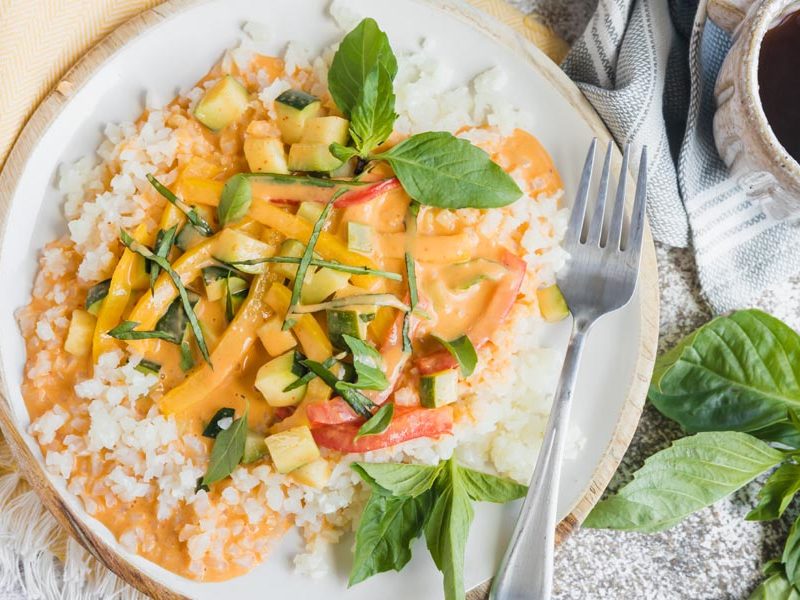
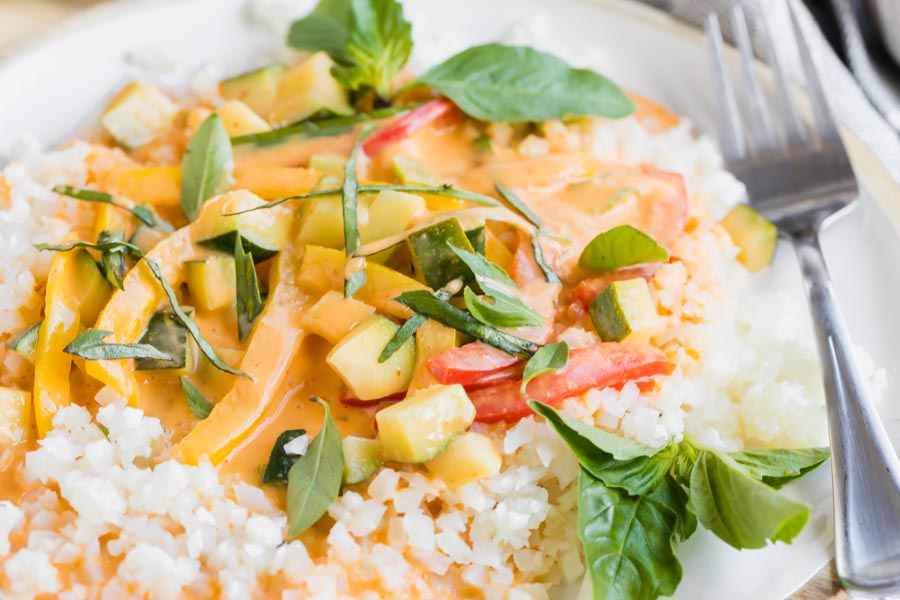
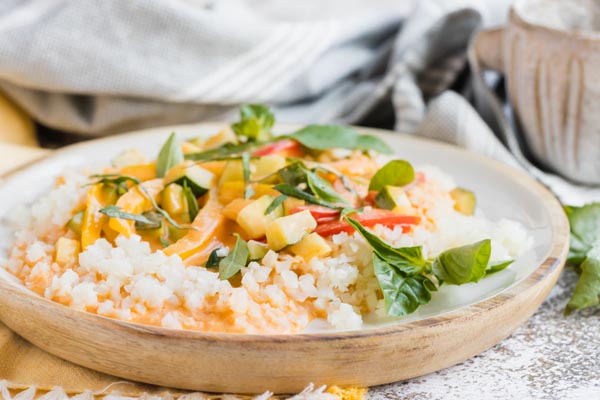
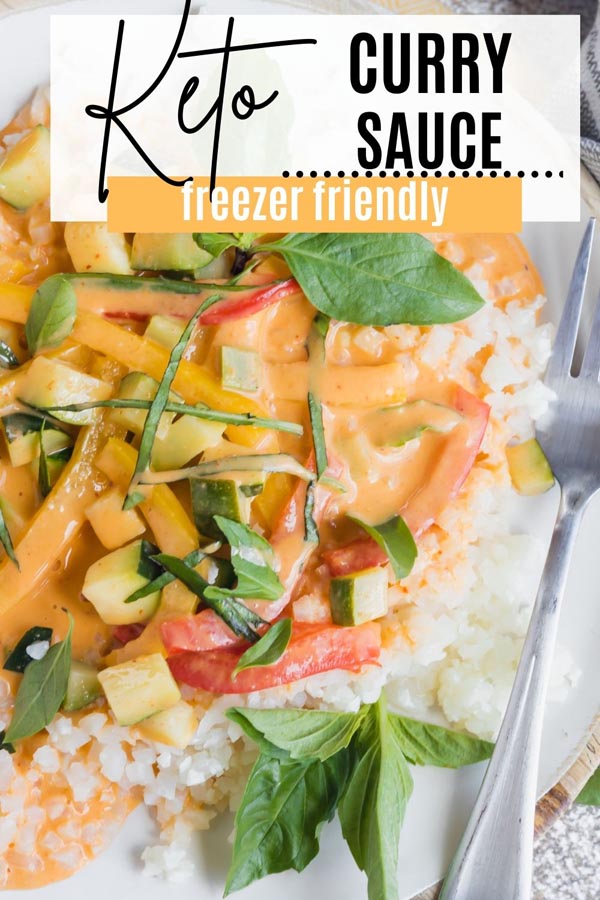
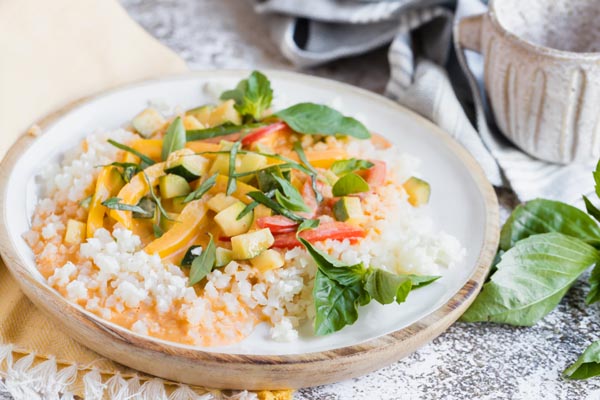
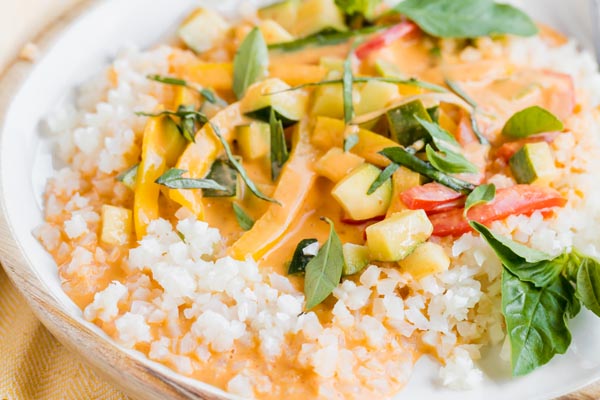
A creamy coconut curry sauce with only 5.2g net carbs per serving, ready in 25 minutes for whatever protein is around. The trick is reduction: I let the first can of coconut milk boil down by a third before the curry paste goes in, which is what thickens the sauce without any starch. Zucchini and bell pepper finish right in the pot.
I keep this curry sauce in my fridge at all times. It takes 25 minutes to make, and once you have a batch ready, any combination of protein and vegetables becomes a full dinner in under 10 minutes. Pour it over pan-seared chicken thighs, toss it with creamy garlic shrimp, or ladle it over a bowl of cauliflower fried rice. The sauce does all the heavy lifting.
Most curry recipes you find online are complete meals with protein and vegetables cooked into the sauce. This recipe is different. It is a standalone curry sauce, which means you control what goes into each serving. That makes it one of the most useful recipes I have for meal prep. I make a double batch on Sunday, portion it into containers, and use it throughout the week with whatever protein I have on hand.
The Reduction Technique
The key to getting a thick, deeply flavored sauce (instead of thin, watery curry) is reducing half the coconut milk before adding the curry paste. I pour one can into the pan and let it simmer until the fat separates and the liquid reduces. Then I stir in the curry paste and let it bloom in the concentrated coconut fat. This is where all the depth of flavor comes from. After that, I add the rest of the coconut milk to bring the sauce together. Skipping this step is the most common reason homemade curry tastes flat.
Pairing Ideas
My go-to pairings for this curry sauce include chicken stir fry vegetables (bell pepper, broccoli, mushrooms), diced chicken thighs, or shrimp. Firmer vegetables like broccoli go in when I pour in the second can of coconut milk, while the zucchini and bell pepper go in during the last few minutes like the steps call for, so they stay crisp. I skip potatoes, carrots, and sweet peas because the carbs add up fast. If you want a bowl-style meal, serve it over cauliflower rice with a squeeze of fresh lime. For a heartier dinner, I pair it with keto chicken katsu sliced on top. The mild heat from the curry paste works with almost any protein, and if you want something closer to Indian flavors, my keto butter chicken uses a similar coconut base with different spices.
At 5.2 grams of net carbs per serving, this curry sauce sits well within daily macros even when you add vegetables and protein on top. A typical Thai restaurant yellow curry runs 15 to 20 grams of net carbs per serving (before rice), mostly from added sugar and thickeners. This version gets its body from coconut fat and curry paste alone.
Is curry keto friendly?
With only 5.2 grams of net carbs per serving, this curry fits comfortably into a keto diet. The carbs come primarily from the curry paste and coconut milk. The brand I use (Thai Kitchen red curry paste) has about 3 grams of net carbs per tablespoon, but since you are splitting 3 tablespoons across 6 servings, the paste only contributes about 1.5 grams per bowl. Compare that to a typical restaurant Thai curry, which often adds palm sugar and cornstarch and can run 15 to 20 grams of net carbs before you even add rice.
Curry powder vs curry paste
Curry powder is a dry spice blend (turmeric, coriander, cumin, fenugreek, chili powder) that you add to dishes during cooking. It gives food a warm, earthy flavor but does not have the depth or complexity of curry paste. Curry powder works well when you want a subtle curry flavor in something like a soup or roasted vegetables.
Curry paste is a wet blend of fresh ingredients (lemongrass, galangal, garlic, shrimp paste, chilies) that have been pounded together. It delivers a much more intense, layered flavor than powder because those fresh aromatics release their oils when cooked in fat. This recipe uses curry paste because you get a bolder, more authentic Thai curry flavor with just a few tablespoons.
Can you substitute curry powder for the paste in this recipe? You can, but the result will taste very different. Use about 2 tablespoons of curry powder in place of the 3 tablespoons of paste, and add it after the coconut milk has reduced. The sauce will be thinner and milder, closer to an Indian-style curry than a Thai one. Both are good, but they are different dishes. I keep my stir fry sauce recipe on hand for nights when I want Asian flavor without the curry paste.
Red curry paste vs green curry paste
Red curry paste uses dried red chilies and tends to be milder with a deeper, earthier flavor. It pairs well with beef, chicken, and root vegetables. Most grocery stores carry red curry paste year-round, which makes it the more accessible option.
Green curry paste uses fresh green chilies and is typically spicier with a brighter, more herbaceous flavor from fresh basil and cilantro. It works well with shrimp, white fish, and lighter vegetables like zucchini and snap peas.
For this recipe, either works. I default to red curry paste because it is easier to find and my family prefers the milder heat. If you like more spice, go with green. You can also mix the two (1.5 tablespoons of each) for a balanced middle ground. The carb count stays about the same regardless of which paste you choose.
Coconut milk vs coconut cream
This recipe calls for full fat coconut milk, which has about 12 to 15 grams of fat per cup. Coconut cream is thicker (about 20 to 24 grams of fat per cup) because it has a higher ratio of coconut solids to water. Both work in this recipe.
If you use coconut cream, the sauce will be richer and thicker without needing as much reduction time. If you use coconut milk, you will need to let it simmer a few minutes longer in the first step to get the same consistency. I usually grab whatever is on sale. The brand matters more than the format. Look for cans with no added sugar and no guar gum if possible. Thai Kitchen and Aroy-D are both reliable options that I keep stocked.
How to meal prep keto curry
This curry sauce is one of the best recipes I have for meal prep because it stores well and pairs with anything. I make a double batch on Sunday and portion the sauce into individual containers. During the week, I cook a quick protein (chicken thighs, shrimp, ground turkey) and reheat the sauce to pour over it. A full batch makes 6 servings, so a double batch covers most of the week.
Storage: Refrigerator for up to 5 days in an airtight container. The sauce thickens as it cools, which is normal. It loosens back up when you reheat it on the stove or in the microwave. Add a splash of coconut milk if it gets too thick.
Freezer: Up to 3 months in freezer-safe containers or zip-top bags. Lay the bags flat to freeze for easy stacking. Thaw overnight in the refrigerator and reheat on the stove. The texture holds up well after freezing because the coconut fat stabilizes the sauce. I freeze it in single-serving portions so I can pull out exactly what I need for a quick sheet pan shrimp dinner or a simple chicken and vegetable bowl.
How to make keto curry
Start by reducing half the coconut milk in a pan until the fat separates. This concentrates the flavor and gives the sauce its thick, creamy texture. Stir in the curry paste and let it cook in the coconut fat for about a minute until fragrant, then pour in the remaining coconut milk. Season with fish sauce, lime juice, and salt. The whole sauce comes together in about 25 minutes. Add your favorite low-carb vegetables and protein to finish.
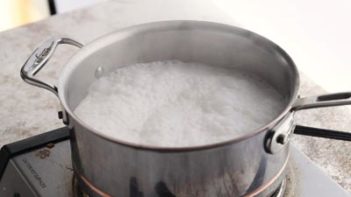
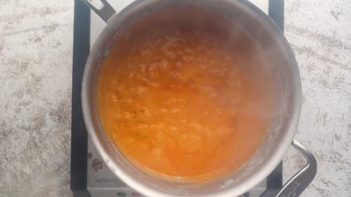
Add one can of coconut milk to a saucepan over medium-high heat. Bring to a boil, then continue cooking at a medium boil until the milk has reduced by a third to half.
2
Add curry paste
Stir in curry paste and mix until incorporated.
3
Add more coconut milk
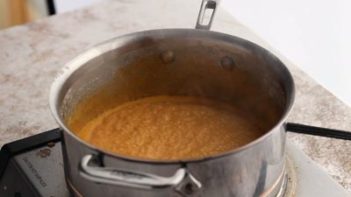
Add in the second can of coconut milk. Bring to boil and let cook until the sauce is thickened (about 5-10 minutes).
4
Add more flavor and vegetables
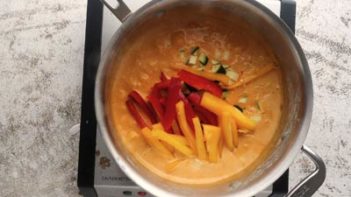
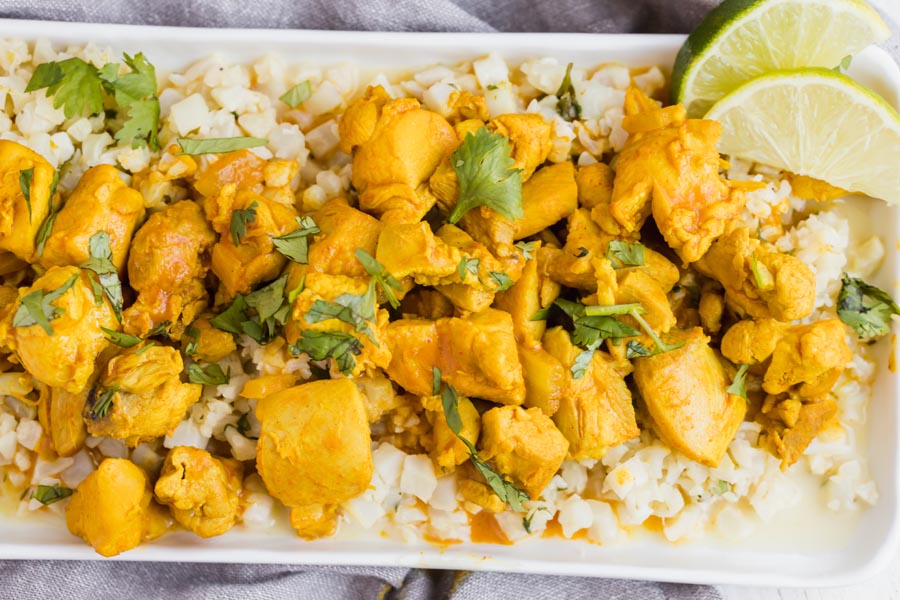
Stir in fish sauce, lime juice, salt, and zucchini. Let cook for 2 minutes. Add bell pepper and cook for 1 minute. Serve over cauliflower rice and add chicken or shrimp if you want.
Nutrition
Per serving: 1/6 of recipe
Calories
218
Fat
20.1g
Protein
1.8g
Total carbs
6.2g
Net carbs
5.2g
Nutrition is an estimate calculated from the ingredients listed. Brands vary, so check labels if you track closely.
Frequently Asked Questions
Can I use a different type of milk instead of coconut milk?
I've tested this with heavy cream and it works, but the flavor shifts away from Thai and toward a European-style cream sauce. Full fat coconut milk gives the richest texture, so that's my default. Use the same amount (two 14 oz cans) and follow the same reduction step. Avoid light coconut milk, skim milk, or almond milk because they don't have enough fat to create a thick sauce.
How spicy is this curry?
With red curry paste, I'd call this mild to medium heat. Most of the spice comes from the paste, and 3 tablespoons spread across 6 servings keeps it manageable. For less heat, I'd start with 2 tablespoons and taste before adding more. For more kick, add an extra tablespoon of paste or stir in a teaspoon of sambal oelek at the end.
What can I use instead of fish sauce if I don't have it?
Coconut aminos is my top pick if you're out of fish sauce. Soy sauce or tamari also work. Use the same amount (1 teaspoon). The flavor won't be identical because fish sauce adds a specific briny, savory note that's hard to replicate, but the sauce still tastes great without it. I keep a bottle of fish sauce on hand because I use it in so many Asian-inspired recipes.
What protein goes best with this curry?
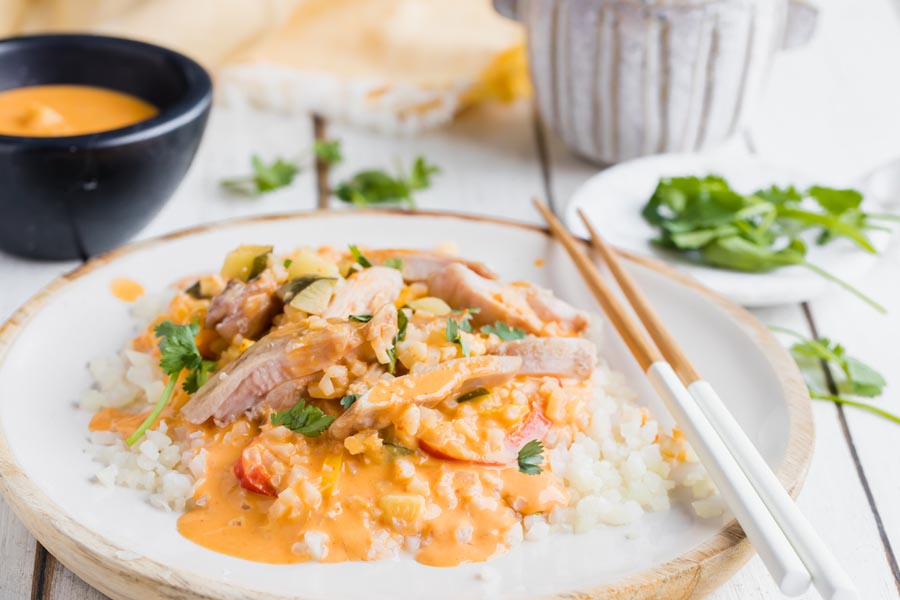
Chicken thighs and shrimp are my top two picks. I dice chicken thighs and pan-sear them before adding to the sauce, or toss raw shrimp straight into the simmering curry for the last 3 to 4 minutes. Chicken breast works too when that's what I have. Cut the simmer time to 10 to 12 minutes and pull the breast the moment it hits 165F so it doesn't dry out. Ground turkey, sliced pork, and pressed extra-firm tofu pan-fried until golden all work. Each protein changes the overall macros, but the sauce itself stays at 5.2 grams of net carbs per serving.
Can I make this in a slow cooker or as a dump-and-go freezer meal?
Make the sauce on the stovetop first either way. The reduction step needs direct heat to get the fat separation right, and I tried the all-in-one approach once (dumped everything into the crockpot raw) and the sauce came out thin and noticeably flatter. For the slow cooker, transfer the finished sauce with your protein and vegetables on low for 2 to 3 hours. For the freezer, cool a double batch completely, pour it into freezer bags laid flat, and freeze for up to 3 months. Thaw overnight in the fridge, reheat on the stove, then add fresh protein and vegetables.
What can I use instead of rice with this curry?
Cauliflower rice is my default, but I rotate through a few options. Shirataki noodles soak up the sauce well and add almost zero carbs. Steamed broccoli or roasted zucchini make it feel like a complete meal without a starch base. If you want a noodle-bowl feel, spiralized zucchini is my go-to low carb swap. On busier nights I pour it over sheet pan chicken and veggies that I already had roasting.
5 net carbs so I doubled it for the week. My nephew asked what I put in the sauce twice during dinner. He normally just wants pizza. Good enough for me.
Red curry paste into hot coconut milk and my kitchen suddenly smelled like something I hadn’t made in two years. Went keto and filed Thai food under ‘gone’ without actually checking if that was true. This sauce has more flavor than the versions I used to build from scratch with lemongrass and kaffir lime leaves. Didn’t see that coming. The fish sauce and lime at the end are doing more work than they look like they should. Poured it over shrimp with zucchini and red pepper on a weeknight and it was exactly the dinner I’d been skipping. Five net carbs. Permanent rotation.
Used green curry paste instead of red and added an extra squeeze of lime right before serving, and it was noticeably brighter than I expected. I wasn’t sure the swap would make that much of a difference but the green paste has this herby sharpness that lifts the whole sauce. Poured it over shrimp on a weeknight and it came together so fast I’ve already made it twice this week.
Made a big pot of this for a friends’ dinner last week, served it over chicken thighs, and my friend’s husband who never comments on food asked if I’d ordered it from somewhere. The lime and coconut together just works in a way that doesn’t scream ‘I made this in 20 minutes.’
Chicken thighs are perfect for it. The fat renders into the coconut and it goes from a sauce to something closer to a braise – hard to believe that’s 20 minutes.
Skeptical about fish sauce in a coconut curry, but followed it exactly before tinkering. Sauce reduced into this thick, almost glossy consistency I wasn’t expecting from two cans of coconut milk. Poured it over chicken thighs for a weeknight dinner and honestly the lime juice at the end is what makes it. Whole thing in under 15 minutes. Trying it with shrimp next.
That gloss is the coconut fat separating during the reduction – first time I saw it I thought something went wrong. For shrimp, toss them in the last 3-4 minutes straight into the simmering sauce. They cook fast and pick up everything.
Was ready to skip the fish sauce but went for it, and that’s honestly what makes this. You can’t taste it but you’d notice if it wasn’t there. Already have the second batch simmering.
This is in my cold-weather rotation now, fourth batch since January. Something I figured out on batch two: adding the lime juice at the very end (instead of with the fish sauce) keeps that brightness from cooking out, you get this fresh citrus hit underneath all that creamy coconut instead of it disappearing into the sauce. I’ve been spooning it over shrimp lately and it’s a different dinner than the chicken version (both worth making). Double batch next time because the leftovers go fast.
Four batches since January. Lime at the end is the right call, I’ve been adding it early this whole time and never noticed how much it was fading. Shrimp over this is a different dinner.
If you reduce the first can of coconut milk for a full 8-10 minutes instead of just until it boils, the sauce comes out noticeably richer and the curry paste flavor concentrates in a way that really holds up to heartier proteins. I also add an extra squeeze of lime right before serving. Only reason I’m at four stars is I think the fish sauce needs to be doubled, but with those two adjustments this has been in my cold-night rotation all February.
Has anyone tried using frozen zucchini for this? I’m planning some freezer meals for my family and red curry is my fav. I was wondering if I could just pour all the ingredients in a freezer safe bag and then reheat it in a crockpot later? Or if I need to cook the coconut milk before doing that?
Loved this! The spices were great and with the vegetables there was a wonderful freshness. We added diced fresh jalapeno with the vegetables and then topped with with sliced green onions and cilantro leaves. Upped the spice with some red pepper flakes, too. Thanks!