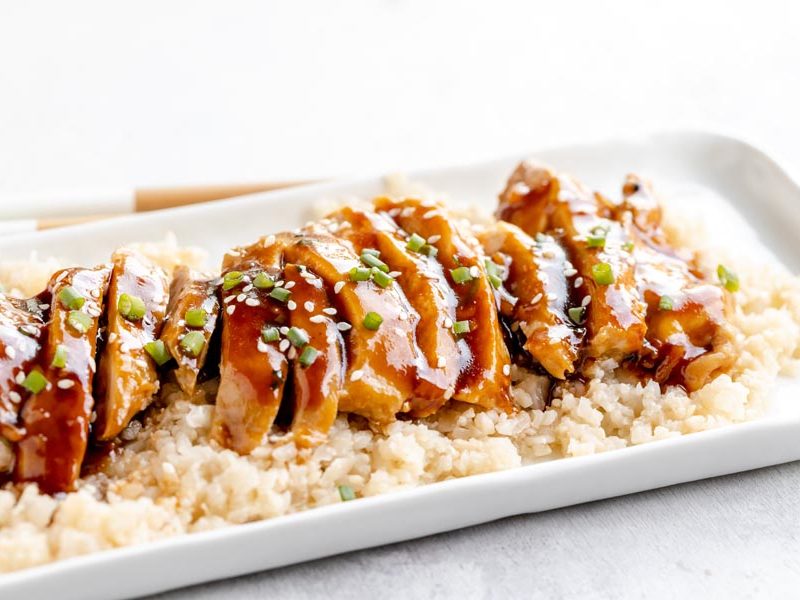
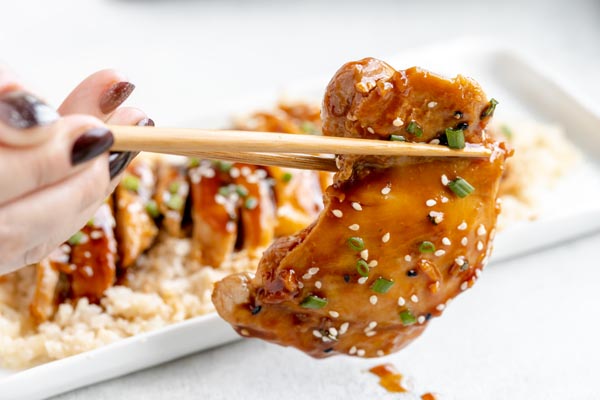
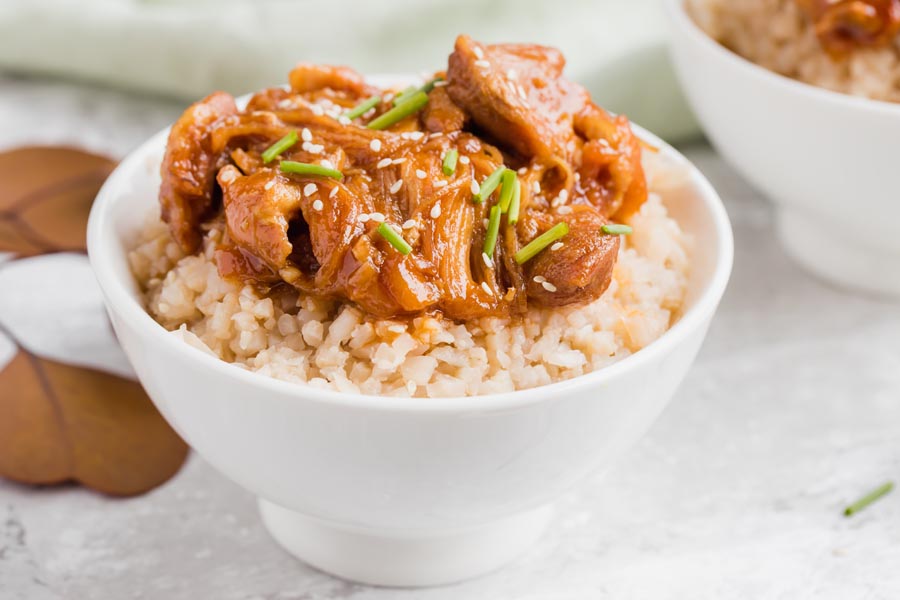
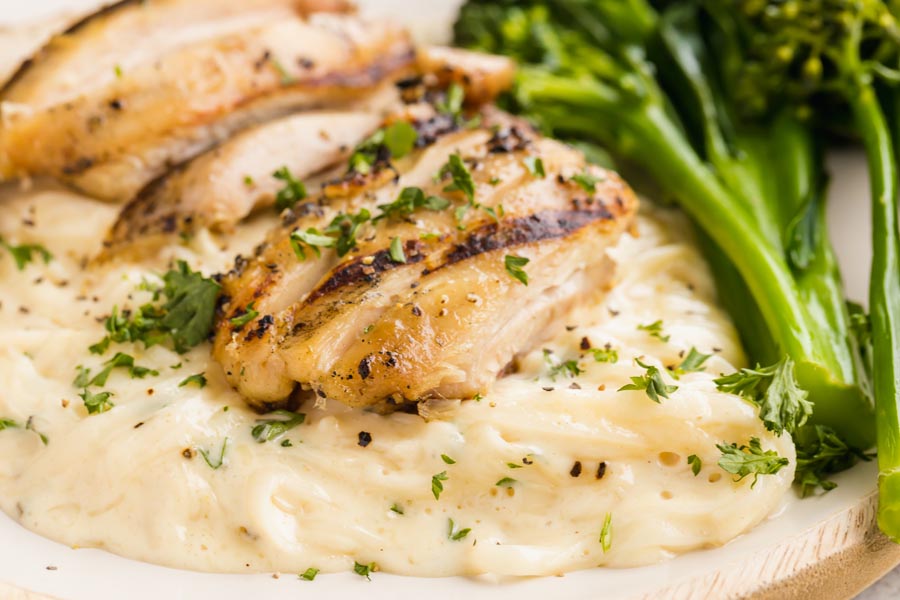
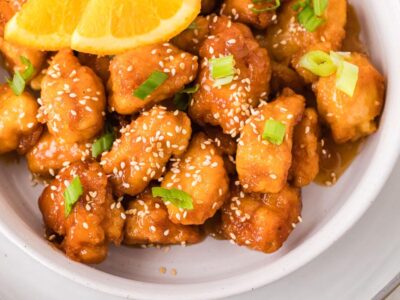
Better than takeout — this Instant Pot keto chicken teriyaki pairs juicy thighs with my homemade low-carb sauce and its secret umami twist. 1.8g net carbs and 20g protein per serving.
When I'm craving Asian food, this is the dinner I reach for. I've been perfecting my own teriyaki sauce for years now, and what I've figured out is that the secret to a great sugar-free version is tomato paste. Just a teaspoon. Most keto teriyaki recipes skip this entirely, but it adds an umami depth that rounds out the soy sauce and gives the glaze that layered, complex flavor instead of tasting flat and one-dimensional.
Here's why I make this at home instead of ordering out: restaurant teriyaki sauce is loaded with sugar. I'm talking 10-15g of carbs per serving, sometimes higher if they're using bottled. My homemade version uses a brown sugar substitute and comes in at only 1.8g net carbs. Same sticky, sweet glaze without the sugar spike.
I use chicken thighs because they have more fat and hold up to a hard sear without drying out. My husband prefers white meat, so I've tested this with breast too. It works, but you have to watch the cook time carefully or the chicken turns rubbery. Thighs are more forgiving and have better flavor. If you love keto Asian dinners the way I do, my chicken stir fry and Hunan chicken are two more I keep in heavy rotation.
The vegetables are totally optional here, but I almost always add them. Broccoli and sliced bell pepper are my go-to because they hold their texture in the sauce. I've also done asparagus, mushrooms, and green beans. Whatever is in your fridge works. Just cook them until they're tender-crisp before tossing everything in the sauce.
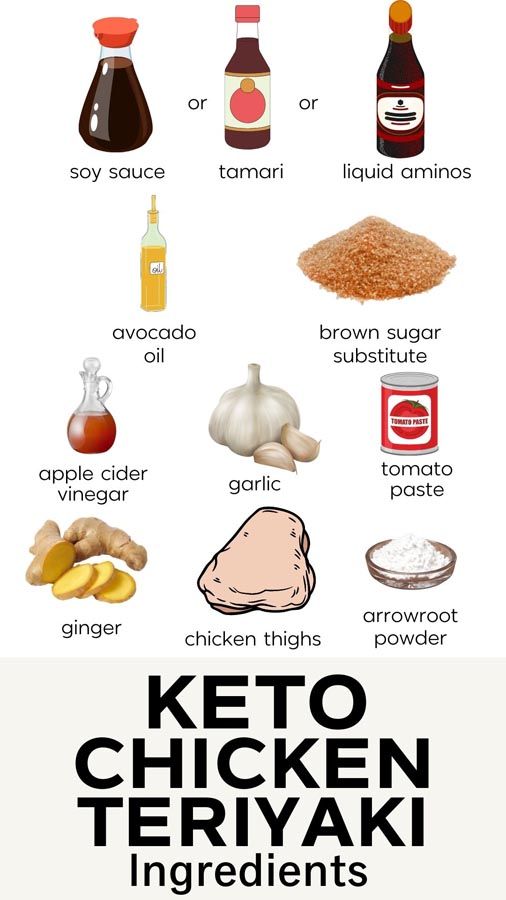
The sauce itself comes together in about two minutes. Soy sauce (or tamari for gluten-free), avocado oil, brown sweetener, apple cider vinegar, garlic, tomato paste, ginger, and arrowroot powder. I keep all of these stocked in my pantry because this sauce base works for so many dishes beyond just this one. I also published the keto teriyaki sauce as its own recipe if you want to mix up a bigger batch.
What I love most is the speed. Pan sear the chicken, cook your vegetables, toss everything in the sauce, and you're eating in about 20 minutes. Or for a more hands-off approach, I included Instant Pot instructions below (two methods depending on your model). Pile it over cauliflower rice or your favorite low-carb noodle and you've got a complete meal that honestly tastes like takeout.
I use two methods depending on which pressure cooker model I have.
Pressure Cook + Saute: Whisk the sauce ingredients together, leaving out the arrowroot powder for now. Add the chicken and vegetables to the liner and pour in most of the sauce (reserve a tablespoon or two). Pressure cook on high for 10 minutes. Let pressure release naturally for 5 minutes, then release the rest. Mix the reserved sauce with arrowroot powder, stir it in, and switch to saute mode. Cook until the sauce is bubbly and thickened.
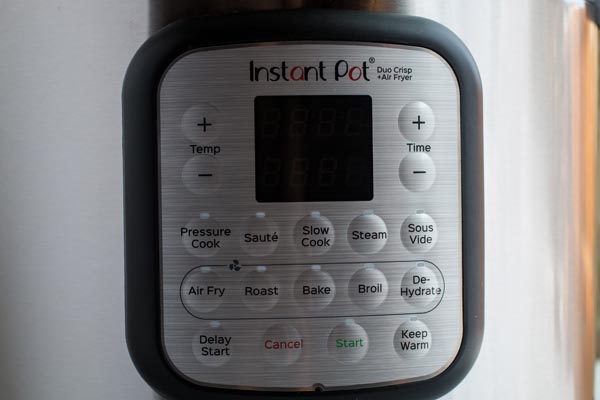
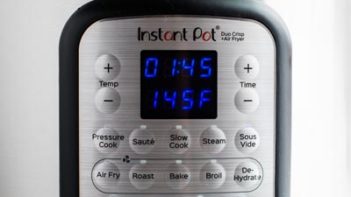
Sous Vide + Air Fryer (Duo Crisp only): This method is for the Instant Pot Duo Crisp model, which has both sous vide and air fry functions. I use this when I want the chicken extra tender with a glazed, crispy finish.
Attach the pressure cooking lid. Set to sous vide at 145 degrees for 1 hour 45 minutes, then hit start.
Transfer the chicken to the air fryer basket in a single layer for even cooking. Save the remaining marinade.
Swap to the air fryer lid. Air fry at 400 degrees for 5 minutes.
Remove the chicken and set aside. Pour the remaining marinade into the liner, add a splash of chicken broth, and saute on high until bubbly and thickened. Pour over the chicken and serve with vegetables or cauliflower rice.
What I serve with this
I usually pile this over cauliflower rice, which soaks up every drop of sauce. But when I want something that feels more like takeout noodles, these are my go-to options:
Hearts of palm noodles (my top pick for stir-fry dishes)
Shirataki noodles
Zucchini noodles
Kelp noodles
If you’re looking for more Asian-inspired dinners, my poke bowl and chicken katsu are two more I make on rotation.
Storing and freezing leftovers
I store leftovers in an airtight container in the fridge for up to 4 days. The sauce thickens as it cools, which is actually nice because it clings to the chicken better when you reheat.
To reheat: I prefer the stovetop over the microwave. A few minutes in a skillet over medium heat and the sauce gets glossy and bubbly again, almost better than the first time. If you microwave, add a splash of water so the sauce doesn’t dry out.
To freeze: This freezes well for up to 3 months. I portion it into individual containers for meal prep and grab one whenever I need a quick lunch. Thaw overnight in the fridge and reheat on the stovetop. The chicken stays tender and the sauce holds up. I slightly undercook the vegetables before freezing so they don’t turn mushy after thawing.
How to make keto teriyaki chicken
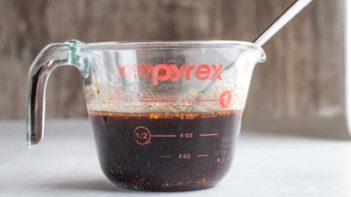
Whisk together the teriyaki sauce ingredients in a small bowl. Set aside.
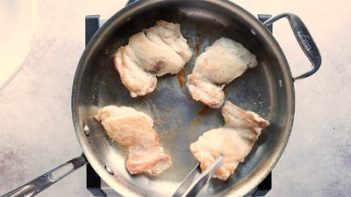
Pan sear chicken thighs or breasts in a skillet over medium-high heat. Cook on both sides until cooked through.
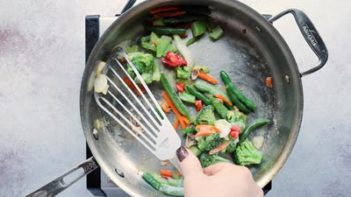
Remove the chicken. Add vegetables (if using) and cook until softened.
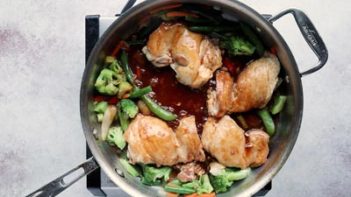
Add the chicken back in and pour in the teriyaki sauce. Cook until bubbly and thickened.
Serve over cauliflower rice or keto noodles (kelp noodles, shirataki noodles, hearts of palm noodles, or zucchini).
Key ingredients
Soy sauce, tamari, or liquid aminos: Your base for the sauce. Soy sauce is the cheapest and most available option. I use tamari when I'm cooking for friends who are gluten-free. Liquid aminos work if you're avoiding soy entirely. Coconut aminos are an option too, but they add more carbs than I like.
Avocado oil: This goes right into the sauce and gives the glaze its body and gloss. Olive oil works in a pinch. I sometimes add a teaspoon of sesame oil at the end for that toasty, nutty flavor.
Apple cider vinegar: Gives the sauce its tang. White vinegar works as a substitute, but I prefer the rounder flavor of ACV.
Garlic: Minced garlic, garlic powder, or garlic paste all work. If using powder, go with about 1/2 teaspoon.
Tomato paste: My secret ingredient. It adds umami depth alongside the soy sauce and gives the glaze a rich, layered flavor. I've tried making this without it and the sauce falls flat. Tomato sauce can substitute, but paste has more concentrated punch.
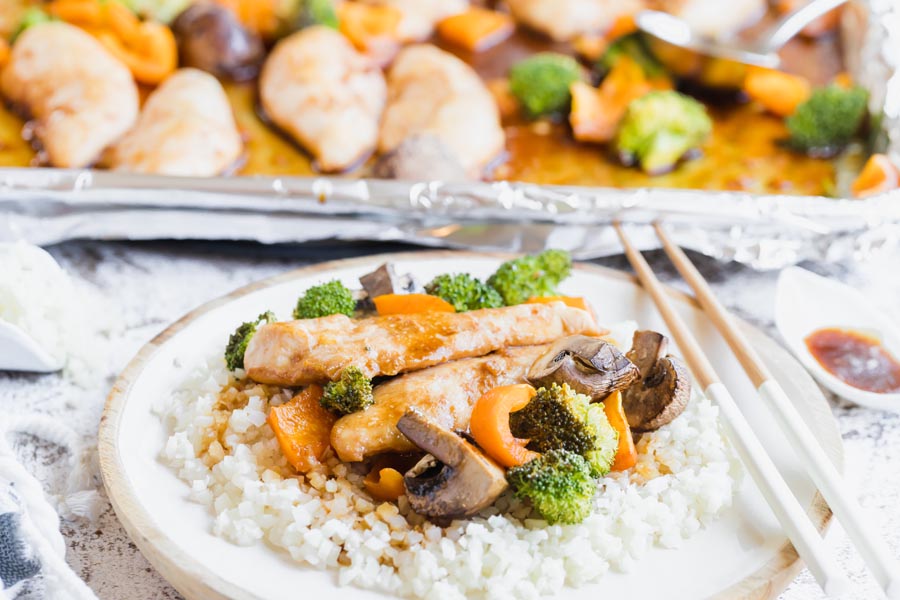
Arrowroot powder: My preferred thickener. It thickens cleanly without turning the sauce slimy the way xanthan gum can. I use the same approach in my sheet pan teriyaki chicken.
Sesame seeds: Optional, just for appearance. I toss on a mix of black and white sesame seeds.
Ginger: Fresh grated or ground both work. I reach for ground when I'm in a rush because the flavor difference is minimal in a sauce this bold.
Chicken: Thighs are my preference. More fat, more flavor, and they don't dry out as easily during the sear. Breast, tenderloin, or even chicken legs all work. Skin-on or skinless, your call.
Vegetables: Optional. I like broccoli, bell pepper, mushrooms, and asparagus. Green beans and zucchini work well too.
In a small bowl, combine the soy sauce, avocado oil, brown sugar substitute, apple cider vinegar, tomato paste, garlic, arrowroot powder, ginger and sesame seeds (if using). Mix until combined. Set aside.
For this step
Soy sauce/tamari/liquid aminos
Avocado oil
Brown sugar substitute
Apple cider vinegar
Garlic
Tomato paste
Arrowroot powder
Ginger
Sesame seeds (optional)
2
Pan sear chicken
Lightly coat a skillet with cooking spray and heat over medium high heat. Add chicken and cook on each side for 3-4 minutes or until cooked through (165 degrees internal temperature).
For this step
Chicken
3
Add vegetables
Remove chicken and add vegetables, if using, and cook until softened.
For this step
Assorted vegetables
4
Add teriyaki sauce
Add back in the cooked chicken and pour in teriyaki sauce. Let cook over medium heat until sauce is bubbly and thickened.
5
Instant Pot instructions
Mix the ingredients for the teriyaki sauce, leaving out the arrowroot powder for now. Add chicken and vegetables to the liner of the Instant Pot. Add most of the sauce: reserve a tablespoon or two. Pressure cook high for 10 minutes. Let pressure release naturally for 5 minutes before releasing the rest of the pressure. Mix remaining sauce with arrowroot powder and add to cooked chicken and stir-fry vegetables. Using sauté mode, cook until sauce is bubbly and thickened.
Nutrition
Per serving: 1/4 of recipe
Calories
208
Fat
14g
Protein
20.4g
Total carbs
2.1g
Net carbs
1.8g
Nutrition is an estimate calculated from the ingredients listed. Brands vary, so check labels if you track closely.
Frequently Asked Questions
Can I use this teriyaki sauce with other proteins?
I've made this with salmon, steak, and shrimp, and they all work. Salmon is probably my second favorite after chicken thighs. I pan sear a filet and pour the sauce over it in the last two minutes of cooking so the glaze caramelizes. For shrimp, the cook time is much shorter, so I make the sauce first and toss the shrimp in at the end.
Arrowroot powder or xanthan gum: which thickener is better for teriyaki sauce?
I've tested both, and I prefer arrowroot powder. It thickens the sauce smoothly without changing the texture. Xanthan gum works too, but if you use even a little too much, the sauce turns slimy and stringy. If you go with xanthan gum, use only 1/8 teaspoon and add it slowly. It is much stronger than arrowroot, so swapping it in at the same amount will gum up the sauce. Arrowroot is more forgiving and gives a cleaner result.
Is teriyaki keto-friendly?
Restaurant teriyaki usually isn't. Most places use sauces with brown sugar, honey, or mirin, which can add 10-15g of carbs per serving. My version uses a brown sugar substitute and comes in at 1.8g net carbs. So yes, you can eat teriyaki on keto, you just need to make the sauce yourself and control what goes in.
Can I freeze teriyaki chicken for meal prep?
I freeze this regularly and it's one of my best meal prep recipes. I portion the chicken and sauce into single-serve containers, freeze for up to 3 months, and grab one when I need a fast lunch. The key is to slightly undercook the vegetables before freezing so they don't turn mushy when you reheat. I thaw overnight in the fridge and warm it in a skillet.
Can I use chicken breast instead of thighs?
You can. I've done it for my husband who prefers white meat. Breast works fine, but you need to be more careful with cook time since it dries out faster than thighs. I sear breast for about 3 minutes per side and pull it as soon as it hits 165 degrees. Thighs have more fat and flavor, so they're more forgiving, but breast gives you a leaner option.
What's the best low-carb noodle to serve with teriyaki chicken?
I've tried all of them with this dish. Hearts of palm noodles are my top choice because they have a neutral flavor and hold sauce well. Shirataki noodles work too, but I rinse them for a full minute under hot water first to get rid of that fishy smell. Zucchini noodles are great if you want something lighter. And if you skip noodles entirely, cauliflower rice soaks up every drop of sauce.
Can I make the teriyaki sauce ahead of time?
I make this sauce in bulk all the time. Whisk everything together but leave out the arrowroot powder until you're ready to cook. Store the sauce in a jar in the fridge for up to a week. When I want to use it, I shake the jar, stir in the arrowroot, and pour it in. Having the sauce ready to go cuts my dinner prep down to about 10 minutes.
Go heavier, I would. The 1/2 teaspoon of freshly grated is my floor and I’ve pushed it to a full teaspoon when I want it sharper. Doubling the ground ginger instead just tastes dusty, so grate it if you’re going up.
I hadn’t used arrowroot before this, so I was watching the sauce a little nervously when the thickening step came. It caught really cleanly, nothing went gluey or grainy. One thing I can’t figure out: the apple cider vinegar is listed at just a tablespoon, but there’s a brightness in the sauce that I kept noticing. Is that where that’s coming from, or is it the ginger?
Both, but the ACV accounts for more of the brightness than the measurement suggests. Against that much soy, one tablespoon cuts through hard. The ginger is more warmth than sharpness, though I’ll go up to 1.5 tablespoons of the ACV when I want more acid.
Made the skillet version twice and got completely different results each time. First run I added the sauce while the pan was still at full heat after the chicken came back in, and it seized up into this glossy coat almost immediately. Second run I backed the heat off first thinking that would give me more control, and the arrowroot never thickened the way I wanted. Arrowroot apparently breaks down if you boil it too long, so now I’m second-guessing my approach. Do you add the sauce at high heat or pull it back first? Best keto teriyaki I’ve made and I’m not moving on until I can nail it every time.
Thanks Lindsey, I pull the heat back to medium before the sauce goes in, same as step 4. It’s only 1/2 teaspoon of arrowroot, so once it’s bubbly and coating the chicken I get the pan off the heat, usually inside two minutes. How long did you let it simmer on that second run? Arrowroot does thin back out if you hold it there.
208 calories and it actually fills you up, that’s what stopped me. Teriyaki has been off my keto list for months, so seeing that sauce thicken around the thighs in the pan was a genuine relief.
Marco, the skillet does something the IP can’t, which is char. The sauce caramelizes against the meat in a way that just doesn’t happen under pressure. I do both. Charred and sticky? Skillet. Just want it coated? IP’s fine. Sounds like what you got worked either way.
20.4g protein at 208 calories and this is a weeknight regular. Made it four times and learned to stop buying breast, thighs absorb the sauce better and stay tender while the breast dries out. One thing: fresh ginger versus ground is not optional. Ground disappears, fresh cuts through the sweetness of the brown sugar sub and you can taste it. That gap is why this is a 4 and not a 5.
I should’ve called that out louder in the recipe. Ground ginger just gets swallowed up in the sauce, fresh actually cuts through and you can taste it against the sweetness of the brown sugar sub.
Figured the arrowroot would break down in the fridge after a few days. Nope. Portioned into four containers, stovetop reheat on low, sauce stays thick every time.
Stephanie, arrowroot is more stable in the fridge than most people expect. I meal prep this one constantly and never get a watery sauce – low heat on the reheat is the right call.
One thing I figured out with arrowroot: it breaks down if you cook it too long after adding it. I mix mine into a tablespoon of cold water first, stir it in at the very end, and pull the pan off heat after about 90 seconds. The glaze stays thick and coats the chicken instead of going thin on the plate. Took a couple batches but that fix made the whole sauce click for me.
The slurry step makes a real difference. I landed on the same timing after a couple batches where the glaze went thin on me. 90 seconds off heat and it stays glossy the whole way to the table.
This sauce is close to what I remember from a spot I used to order from. Take that as the compliment it is. The tomato paste is doing something in the background I couldn’t place at first, but it rounds it out. One note: arrowroot thickens fast. Pull it off heat the second you see it coat the spoon or you’ll go from glossy to gluey in about 30 seconds. Solid weeknight dinner.
Tip for anyone new to this: when you add the arrowroot to the sauce, don’t walk away from the pan. I made that mistake the first time and it went from glossy to thick and gloopy before I even registered what happened. Keep stirring and pull it off the heat the moment it coats the spoon. The tomato paste is what gives it that savory depth (not just sweetness), and I genuinely wouldn’t have guessed that going in.
My wife noticed something was off about the sauce before I said anything (in a good way) – kept calling it ’rounder’ than the teriyaki we usually order. Took me a second to realize she was picking up on the tomato paste. Solid recipe, though I’d go a touch heavier on the arrowroot next time for a thicker glaze.
Made this four or five times. The tomato paste in the sauce is the thing I keep noticing. That depth makes it taste like actual takeout, not just soy sauce chicken. Spring rotation for sure.
Fresh ginger instead of ground made a noticeable difference, and letting the sauce reduce an extra minute before adding the chicken back helped it cling.
Okay so I’ve been staring at this recipe all week and I’m finally making it tonight, there’s like six inches of snow outside and this is exactly the right dinner for it. Did a grocery run this morning and completely spaced on arrowroot powder, I’ve never bought it before and didn’t even know it was a thing until this recipe, so I’m not sure what it does in the sauce. I’ve been doing keto for about three months and still figuring it out, I know cornstarch is the usual thickener but thought it was too high carb, though the recipe only calls for half a teaspoon so maybe the amount is tiny enough it doesn’t matter? If I skip the arrowroot will the sauce still thicken or is it going to be super runny? And if there’s a swap that works I really want to know, I’m set on getting this sauce right. That tomato paste addition has me curious, never thought about umami in a teriyaki before.
Half a tsp is just for gloss and helps the sauce cling to the chicken. Skip it and it runs thin but still tastes right. Cornstarch works at that amount, carbs are nothing. The tomato paste is the part people don’t expect (it’s what keeps it from tasting flat like bottled).
You must have a different model of instant pot. Some models don’t have the sous vide function. Just saute the chicken thighs and add in the sauce. Then cook until sauce has thickened.