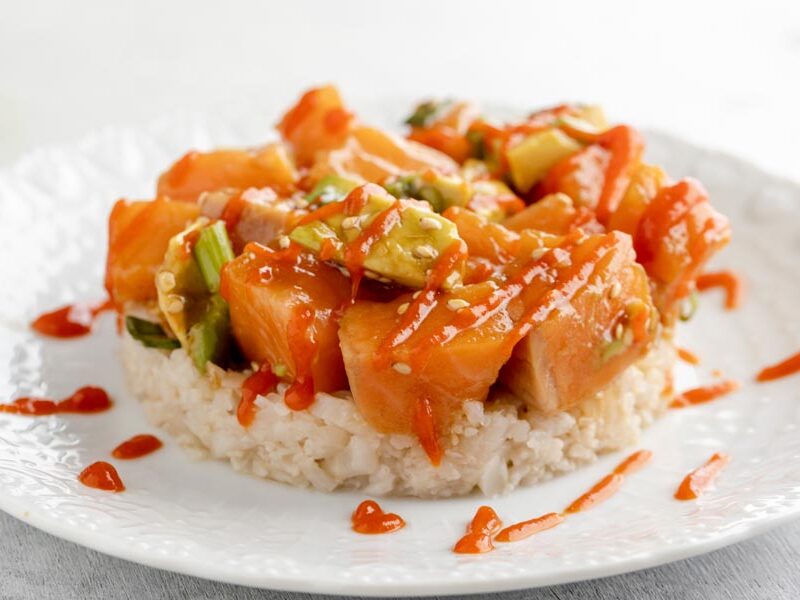
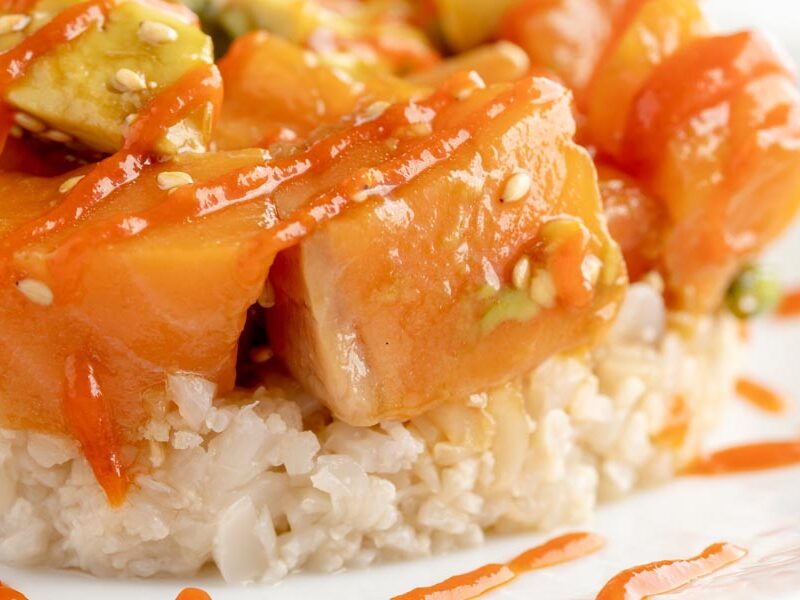
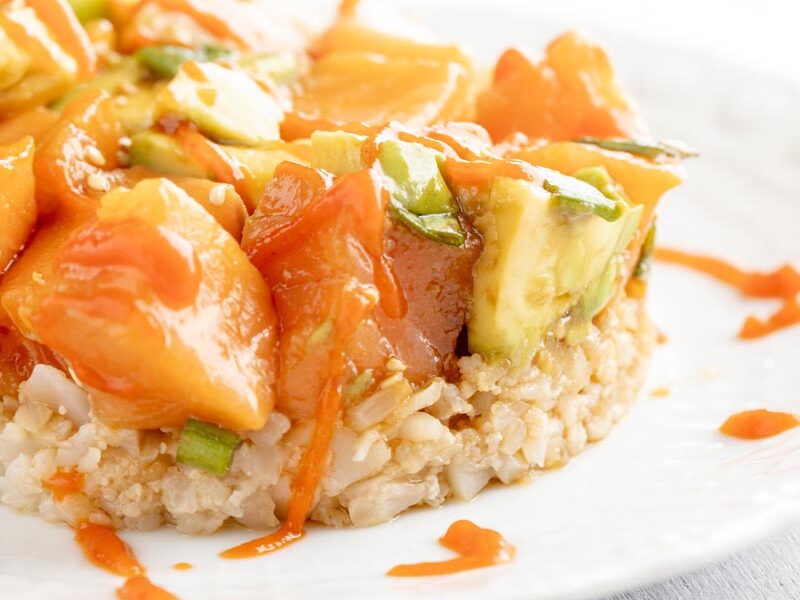
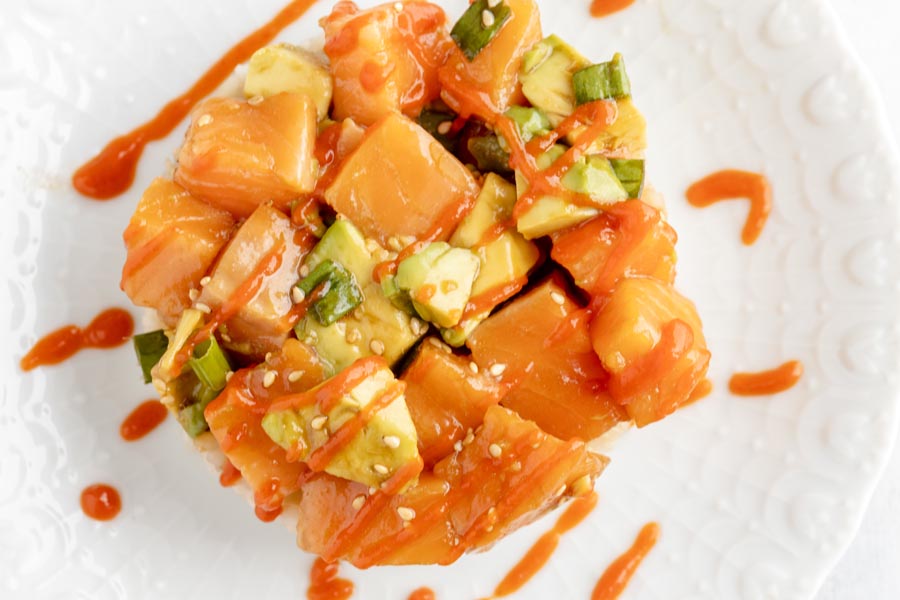
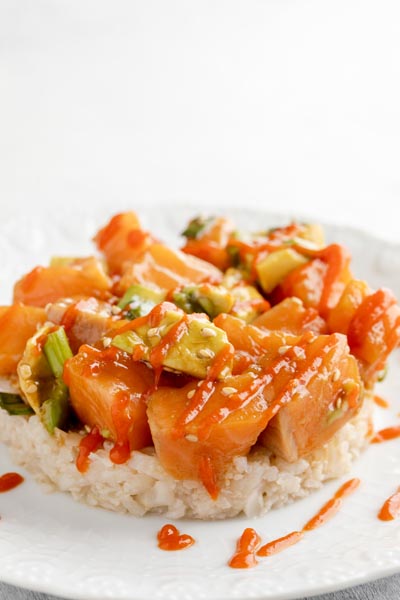
This keto poke bowl combines salmon, avocado, green onions, sesame oil, and soy sauce or tamari over cooked cauliflower rice. This low carb poke bowl has 3.4g net carbs and takes 5 minutes to assemble when the rice is ready.
This keto poke bowl is the low carb version I make when I want salmon poke without white rice or a sweet sauce. I toss salmon with soy sauce or tamari, sesame oil, lemon juice, green onions, avocado, and sesame seeds, then spoon it over cooked cauliflower rice.
The recipe card makes one bowl in 5 minutes and has 3.4g net carbs. That timing assumes the cauliflower rice is cooked and ready before you start. There is no separate marinating or cooking step in the card. Toss the salmon, assemble the bowl, and serve it right away.
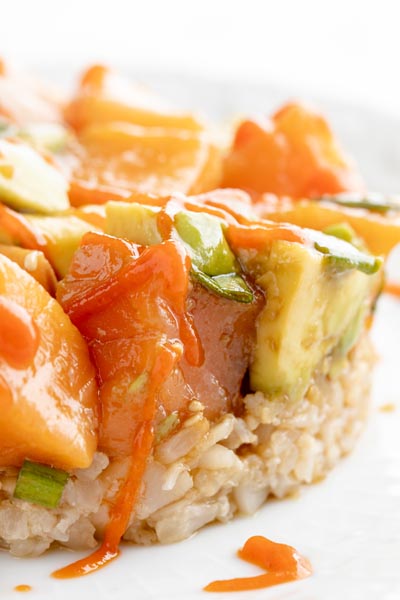
The cauliflower rice is the swap that makes this a low carb poke bowl. Avocado and sesame oil add richness, green onions and lemon brighten the salmon, and optional sriracha adds heat. A biscuit ring is optional if you want a neat mound of rice, but it does not affect the flavor.
Because the salmon is served raw, I buy fish specifically intended for raw preparation and keep it cold until serving. The phrase "sushi grade" is not a regulated safety guarantee. Proper freezing can kill parasites, but it does not kill every harmful germ, so thoroughly cooked seafood is the safest choice. People at higher risk of foodborne illness should avoid raw fish.
Why this poke bowl is keto and low carb
A poke bowl can pick up a lot of carbs from a white rice base or sweet sauces. My version uses the 1/2 cup of cooked cauliflower rice in the recipe card and has no added sweetener. One bowl has 12.2g total carbs, 3.4g net carbs, and 26.2g protein.
Those numbers apply to the listed amounts. Extra sauce, more avocado, spicy mayo, or other toppings change the nutrition. Sriracha is optional, so check the label if you track carbs closely.
What is poke?
Poke, pronounced poh keh, is a Hawaiian dish centered on cut, seasoned fish. Modern poke bowls often serve the fish over rice with toppings. My version uses salmon, the lemon, soy, and sesame mixture in the card, and a cauliflower rice base.
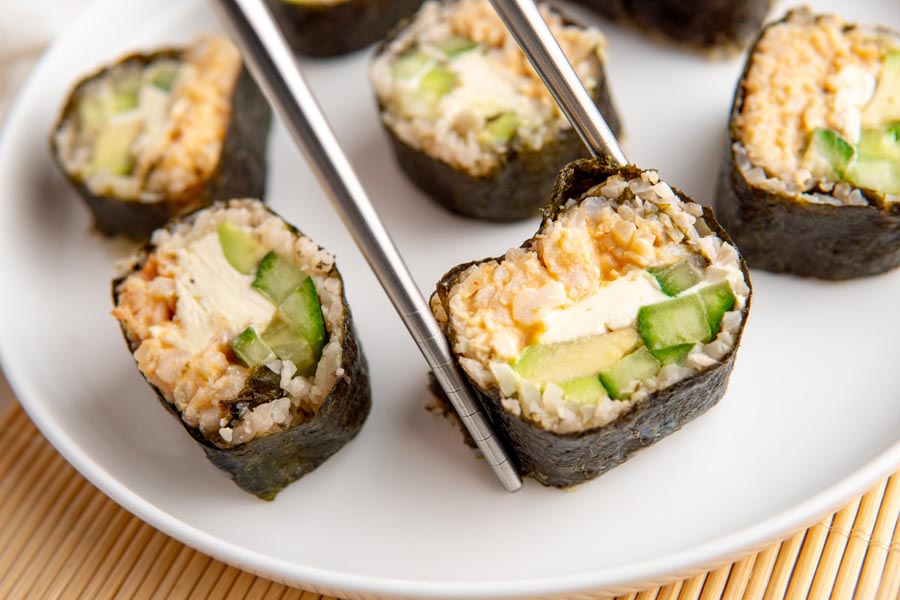
There is no rolling or shaping required. If you want a rolled option made with cauliflower rice, try my keto sushi.
How to choose salmon for raw poke
I ask the fish seller for salmon intended for raw preparation and how it was handled for parasite control. The words “sushi grade” are marketing language, not a regulated FDA standard, and previous freezing does not remove every food safety risk.
The FDA says cooking seafood thoroughly is the safest route. If you choose raw fish, keep it refrigerated and prevent cross contamination by using clean hands, a clean knife, a clean cutting board, and a clean bowl. Pregnant people, young children, older adults, and people with weakened immune systems should avoid raw fish.
Storage and make ahead
This recipe makes one bowl, so I assemble only what I plan to eat right away. I do not store the dressed salmon because the lemon changes its texture and the cauliflower rice absorbs the sauce.
For make ahead prep, cook and cool the cauliflower rice, measure the sauce ingredients separately, and keep the salmon refrigerated according to the package or seller directions. Cut the avocado and toss the salmon just before serving. Keep every component cold until you are ready to build the bowl.
How to make a keto poke bowl
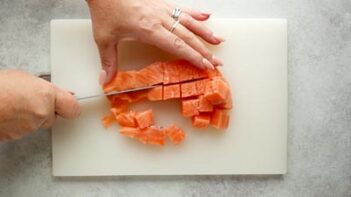
Cut the salmon. Pat it dry with a paper towel, cut it into bite sized pieces, and place it in a medium bowl.
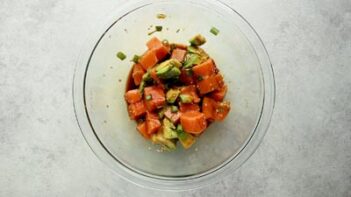
Season the salmon. Add the measured lemon juice, green onions, soy sauce or tamari, sesame oil, avocado, and sesame seeds. Gently stir to combine.
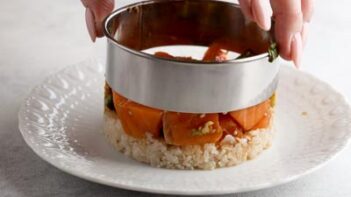
Assemble the bowl. Add the cooked cauliflower rice to a serving bowl, or shape it with an optional biscuit ring. Spoon the salmon poke over the rice and add sriracha if using.
Card timing: The 5 minute total assumes the cauliflower rice is cooked and ready. If the rice is wet, dry it in a hot skillet before you start, then let it cool before adding the raw salmon.
Key ingredients
Salmon intended for raw preparation: Ask the seller whether the fish is intended to be eaten raw and how it was handled for parasite control. Keep it cold until you assemble the bowl.
Soy sauce or tamari: The recipe card uses 2 tablespoons of either one. Brands vary, so check the label if sodium, gluten, or carbs matter to you.
Sesame oil and toasted sesame seeds: One teaspoon of sesame oil seasons the salmon, while the toasted seeds add texture.
Avocado, lemon, and green onions: Half an avocado makes the bowl creamy. Lemon juice and green onions brighten the salmon.
Cooked cauliflower rice: Have the measured 1/2 cup cooked and ready before you begin the 5 minute assembly.
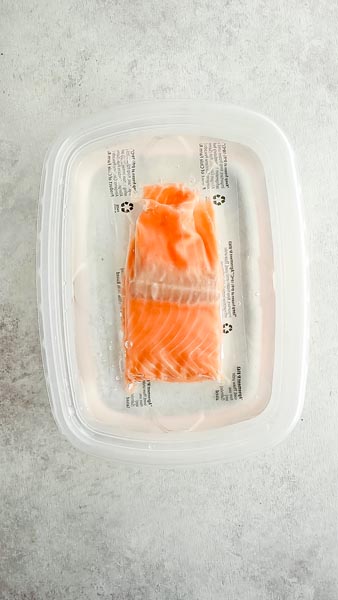
Pat salmon dry with a paper towel. Cut it into bite sized pieces and add it to a medium bowl.
2
Season the salmon
Add lemon juice, sliced green onions, soy sauce or tamari, sesame oil, diced avocado, and sesame seeds. Gently stir to combine.
3
Assemble the keto poke bowl
Add cooked cauliflower rice to a serving bowl, or shape it with an optional biscuit ring. Spoon the salmon poke over the rice. Top with sriracha if using.
Nutrition
Per serving: 1 bowl
Calories
304
Fat
18.5g
Protein
26.2g
Total carbs
12.2g
Net carbs
3.4g
Nutrition is an estimate calculated from the ingredients listed. Brands vary, so check labels if you track closely.
Frequently Asked Questions
Is a poke bowl keto friendly?
It can be. Many poke bowls use white rice or sweet sauces. My recipe uses cooked cauliflower rice and has no added sweetener, so one bowl has 3.4g net carbs according to the recipe card. Check the labels and nutrition separately if you change the base, sauce, or toppings.
How many carbs are in this keto poke bowl?
One bowl has 12.2g total carbs and 3.4g net carbs according to the recipe card. Those numbers cover the listed amounts, including 1/2 avocado and 1/2 cup of cooked cauliflower rice. Optional toppings or ingredient swaps can change the total.
Can I use ahi tuna instead of salmon?
Yes. Use the same 4 ounces of ahi tuna if it is sold for raw preparation. Handling requirements vary by tuna species and source, so ask the seller how it was handled instead of assuming every tuna is safe to eat raw. Keep it cold and use clean tools.
Do I need to marinate the salmon?
No. The recipe card has you toss the salmon with the other ingredients and assemble the bowl right away, with a 5 minute total. If you choose to let it sit, keep it refrigerated and brief because lemon changes the texture of raw fish.
How do I keep cauliflower rice from getting watery?
Start with cooked cauliflower rice and remove excess moisture before assembling the bowl. If it is wet, cook it in a dry skillet for 3 to 4 minutes, then let it cool before adding the raw salmon. That prep happens before the recipe card's 5 minute assembly.
How do I safely thaw frozen salmon?
Follow the package directions. The FDA recommends thawing seafood in the refrigerator overnight. For faster thawing, seal it in a plastic bag and immerse it in cold water. Do not microwave the salmon for this raw recipe because microwave thawing is intended for seafood that will be cooked immediately.
Can I make this low carb poke bowl ahead?
You can prepare the components separately. Cook and cool the cauliflower rice, measure the sauce ingredients, and keep the salmon refrigerated according to the package or seller directions. Cut the avocado and toss the salmon just before serving so the bowl does not get watery and the lemon does not change the fish's texture.
I ask the fish counter for salmon intended for raw preparation and how it was handled. Frozen salmon can work, but “sushi grade” is not a regulated guarantee, so I do not rely on that label alone. I follow the package thawing directions and keep it cold until I assemble the bowl.
Cut the avocado last. It goes fast once you slice it and a browned bowl looks wrong. I hadn’t ordered poke in two years (the carbs never worked with anything else that day), and this one reminded me what I was missing. Sesame oil and tamari over cauliflower rice is not a downgrade.
Avocado doesn’t wait around. I slice mine right before I plate, sometimes after everything else is already in the bowl, because even sitting out for two minutes changes the color. The sesame-tamari combo on cauliflower rice surprised me too the first time I tested it.
Not sure what I was thinking leaving the sriracha off the first few rounds. Started adding it around batch three and it actually changes what you taste in the sesame oil, there’s this warmth that makes the whole marinade seem richer. Six or so times in now and I’ve also stopped measuring the tamari, the ratio just lives in my hands at this point. Still the fastest filling dinner I make.
Once the tamari stops getting measured, everything else loosens up. I still use the card’s 1 teaspoon of sesame oil most often because that is the balance I tested for this bowl.
The cauliflower rice is what brings it down. The recipe card has 3.4g net carbs for one bowl, including the half avocado and half cup of cooked cauliflower rice. Optional toppings or swaps will change that number.
Pat your salmon dry before cutting and keep it on a cold plate while you prep. At room temperature, sushi-grade fish cuts ragged and the cubes lose that firm bite before they hit the bowl. I figured that out on a hot afternoon, rushing, kitchen already working against me. Never went back.
Toast your sesame seeds fresh in a dry pan right before assembling, about thirty seconds on medium. Seeds from a jar go flat over time. Freshly toasted ones bloom when they hit the sesame oil and tamari in a way that makes the whole bowl smell completely different. Both steps together take ninety seconds, which is why this is what I make on hot nights when I don’t want to turn anything on.
A cold plate helps keep the salmon firm while I prep. The card starts with toasted sesame seeds, so any extra time spent toasting them is outside the 5 minute assembly.
I meal prep Sundays and this would be perfect for weekday lunches. If I marinate the salmon the night before, will it still be good by Wednesday? I’m paranoid the lemon juice will start breaking down the texture before I even eat it. Better to just keep everything separate and dress it before eating?
Keep everything separate. The lemon juice starts cooking the fish past 10 minutes (edges go opaque, texture falls apart), so anything marinated overnight is going to be mushy by Wednesday. Store the salmon plain, mix the sesame oil and tamari fresh each day, toss right before eating.
Used coconut aminos instead of tamari and let the salmon marinate for about 15 minutes. The sesame oil came through so much cleaner, and the whole bowl felt more balanced. One thing: press the cauliflower rice dry first, or it’ll loosen everything up by the time you’re eating.
Coconut aminos does taste cleaner here. And yeah, 15 minutes is too long – the lemon juice starts cooking the edges past 10. Good call on pressing the rice.
I was skeptical about cauliflower rice as a poke base (every other version I’ve tried tastes like sad wet cauliflower). This one actually works, and I think it’s the sesame oil soaking in while everything sits. Weeknight dinner, didn’t want to turn on the stove, under 10 minutes. Regular sushi rice feels too heavy now. The cauliflower rice just lets the salmon be the whole point.
Yeah, the sesame oil is doing most of it. Pan-drying the cauliflower in a hot skillet before assembling helps too, it absorbs instead of just washing everything out.
I’ve never bought sushi-grade salmon before so I went in fully expecting to mess this up. The sesame oil and tamari come together so fast I kept waiting for the catch. Four stars because I’d add more sauce next time, but that’s a me problem.
More sauce is never wrong here. When I want it bolder, I reserve a little of the card’s 2 tablespoons of tamari and drizzle it on just before serving. For the fish, I ask the seller for salmon intended for raw preparation and keep it chilled.
The salmon marinade is the thing that makes this work. Soy, sesame oil, and lemon in that ratio is exactly how a good poke shop does it, and I’ve tried a lot of at-home versions that miss the balance. One thing I’d warn about: dry your cauliflower rice in a hot pan before it goes in the bowl. I made the mistake of using it straight after steaming and the liquid pooled at the bottom and ruined the texture of the whole thing. Pan-dried second time around and it was a completely different dish. The avocado and sesame seeds pull real weight here, so don’t skip them. Worth making this right.
The pooling thing catches everyone the first time. The recipe card starts with cooked cauliflower rice, so if yours is wet, dry it before the 5 minute assembly and let it cool. It makes a completely different bowl.
First time using sushi-grade salmon and I kept second-guessing myself the whole prep, but the sesame oil and soy sauce came together so fast I was kind of shocked it worked. Is it better to let the salmon sit in the seasoning for a few minutes before serving, or is the idea to toss and go right away?
Toss and serve is how the recipe card is written, so there is no separate marinating time. If you let it sit at all, keep it cold and brief because the lemon changes the texture.
Never cooked with sushi grade salmon before and almost talked myself out of it, but the lemon juice and soy sauce come together so fast. The cauliflower rice fooled me more than I expected.