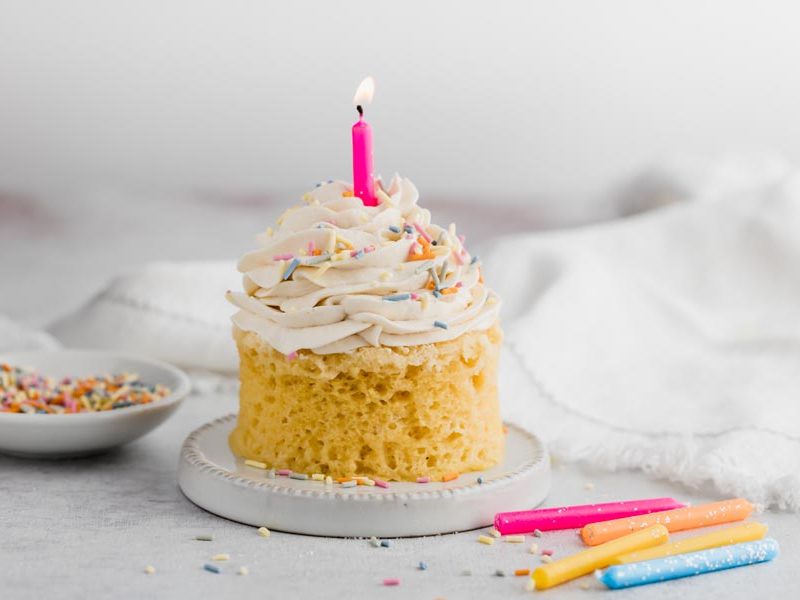
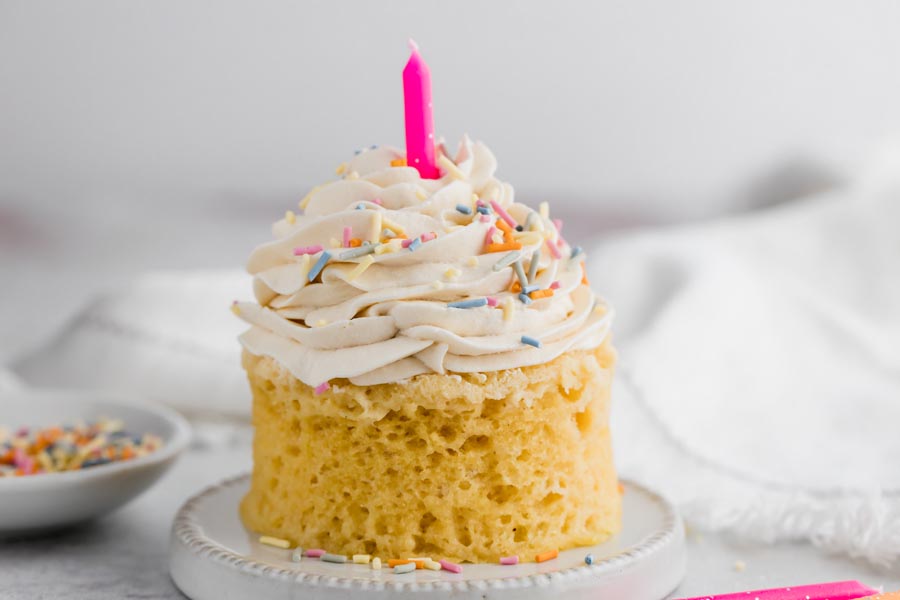
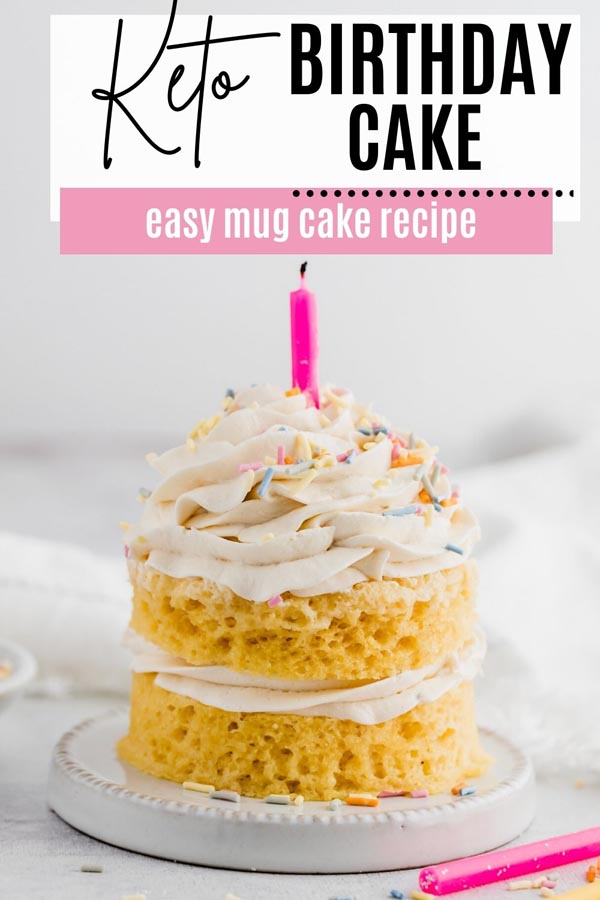
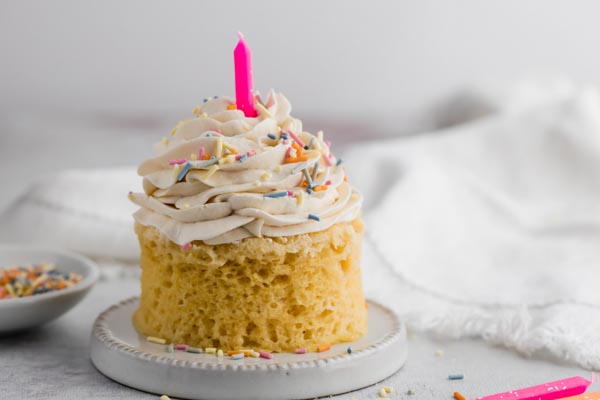
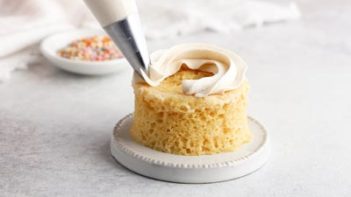
Two minutes in the microwave, and this fluffy keto birthday mug cake is done, with a vanilla buttercream swirl, sugar free sprinkles, and 1.5g net carbs. I made one the night before my youngest son's party and ate it myself.
I keep all the ingredients for this cake in my pantry at all times because birthday emergencies are real. Someone in my house has a birthday, a friend stops by, or I just want cake on a Tuesday night. This single serve vanilla cake goes from bowl to plate in 7 minutes, and it tastes like actual birthday cake, not a sad keto substitute.
The base is a mix of almond flour and coconut flour, which I landed on after testing a bunch of ratios. Almond flour alone made it too dense. Coconut flour alone was dry. The combination gives you that light, springy crumb you want in a birthday cake without any grittiness. I add an egg, melted butter, and a monkfruit sweetener blend to the dry ingredients, then stir in vanilla cupcake flavor drops from One-on-One Flavors (use my code Ketofocus-10 for 10% off). If you don’t have the drops, half a teaspoon of vanilla extract works fine.
I mix the batter in a small bowl, then transfer it to an 8 oz ramekin sprayed with cooking spray. Microwave at 70% power for 90 to 120 seconds. You want it set on top and springy when you press the center. If your microwave runs at 900W or higher, start checking at 75 seconds because overcooking dries it out fast. I learned that one the hard way. A lower wattage microwave runs the other way. If the center still looks wet at 120 seconds, keep going 20-30 seconds at a time until the top springs back.
The buttercream frosting is what makes this feel like a real celebration. I cream softened butter for a solid 2-3 minutes until it’s pale and fluffy, then slowly beat in powdered sweetener. The heavy cream controls the thickness. I use about 2 tablespoons for a thick, pipeable frosting, but you can go up to 4 tablespoons if you want it lighter. A hit of vanilla at the end pulls it all together.
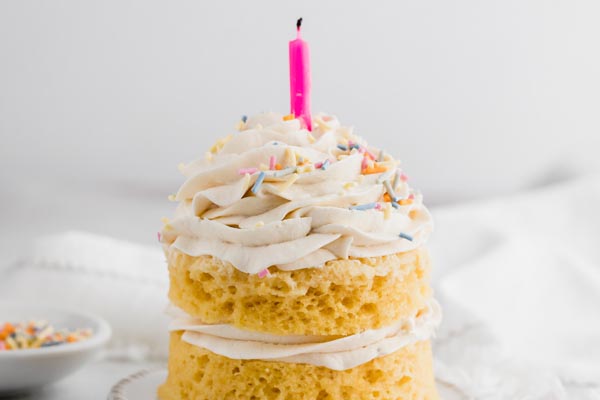
Once the cake cools, I run a knife around the edges of the ramekin, flip it onto a plate, and pipe the frosting on top. If you want to go all out, slice the cake in half horizontally and stack it with frosting in between for a two-tier mini birthday cake that looks like you spent way more effort than you did. Sugar free sprinkles on top and you’re done.
If you love these as much as I do, try my chocolate mug cake, red velvet mug cake, or chocolate chip mug cake. For a full-size version, I have a keto birthday cake that feeds a crowd. I haven't scaled this mug cake to a 13x9 pan because the ratios don't translate directly. Multiply everything equally and you end up with too many eggs and a rubbery texture. And if you want a fun spin, my birthday cake chaffle hits the same flavor in waffle form.
Keto Birthday Mug Cake Recipe
I started making this when I realized I could have actual birthday cake on keto without baking a full-size cake that would sit in my fridge for a week. Everything goes into one bowl, then into a ramekin, then into the microwave for about 90 seconds. That’s it. The almond flour and coconut flour combination gives you a texture that’s close to regular cake, soft in the middle with just a little structure around the edges.
For the flavor, I use vanilla cupcake flavor drops from One-on-One Flavors (10% off with my code Ketofocus-10). They make this taste like the vanilla cake mix I grew up eating. Vanilla extract works as a substitute, but the drops really do something special here. Top it with a sugar free vanilla buttercream and sprinkles, and you have a real birthday moment. I keep the ingredients stocked because someone in my house always needs a last-minute cake.
What Is a Mug Cake?
A mug cake is a single serve cake that you mix and bake in one container, usually a mug or ramekin. I like it because when I want one slice of cake, I don’t need to make an entire cake and stare at leftovers for three days. You mix the batter, microwave it, and eat it warm. For a low carb dessert, it doesn’t get simpler than this.
For this recipe, I mix everything in a small bowl first because it’s easier to get a smooth batter that way, then transfer to an 8 oz ramekin. After baking, I flip the cake out onto a plate. It looks like a small layer cake or a large cupcake once you pipe the frosting on top, which is a lot more fun than eating out of a mug.
How to Make the Buttercream Frosting
I don’t skip the frosting on this one because the buttercream is half the experience. You need softened butter, powdered sweetener (I use an erythritol blend), heavy cream, and vanilla. Cream the butter first for 2-3 minutes until it’s light and almost white. That step matters because under-creamed butter gives you dense, greasy frosting instead of the fluffy kind.
The amount of heavy cream controls your texture. I go with 2 tablespoons for a thick frosting that pipes well and holds its shape. If you want something lighter and more spreadable, add up to 4 tablespoons. For a chocolate spin, stir a tablespoon of cocoa powder into the butter before adding the sweetener. I’ve done it a few times and it makes a solid chocolate buttercream without a separate recipe.
Can I Bake This in the Oven Instead?
I include oven instructions because not everyone uses a microwave. Preheat to 350 degrees and bake for 5-10 minutes in an oven-safe ramekin until the cake is set and springs back when you touch the center. I recommend the ramekin over a mug for oven baking because the wider shape lets the heat reach the center more evenly.
It takes longer than the microwave, but the result is the same. I’ve done it both ways and can’t tell the difference once the frosting goes on.
Ingredient Substitutions
I’ve tested most of these swaps myself, so here’s what works:
Almond Flour: If you have a nut allergy, sunflower seed flour measures cup for cup and I’ve used it with good results.
Coconut Flour: There are only 2 teaspoons in the whole recipe, so it won’t taste like coconut. But if you’d rather skip it, add 2 more tablespoons of almond flour instead.
Heavy Cream: I’ve subbed in almond milk and coconut milk. Both work. Macadamia nut milk is another option.
Butter: Coconut oil makes this dairy free. I use the same amount. For the frosting, I use coconut oil in place of butter and coconut cream instead of heavy cream. The texture is more of a glaze than a fluffy buttercream, but I actually like it that way.
Frosting: If vanilla buttercream isn’t your thing, cream cheese frosting or whipped cream both work on this. I’ve also topped it with a simple glaze made from powdered sweetener and a splash of cream.
I have a bunch of flavors if you want to mix things up. The chocolate one is my go-to for weeknights, and the pumpkin version is what I make every fall.
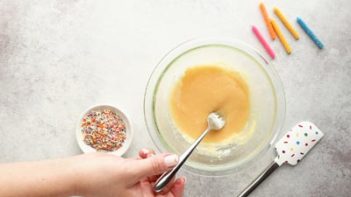
To a small bowl, add egg, almond flour, butter, sweetener, coconut flour, baking powder and flavoring.
2
Bake the birthday mug cake
Spray cooking spray in an 8 oz ramekin or large mug. Add batter to the ramekin and bake in the microwave at 70% for 90-120 seconds or until cake is set and springs back when you lightly touch the top. Oven instructions: Bake in an oven safe ramekin at 350 degrees for 5-10 minutes or until set. Let cake cool while you move onto the frosting.
3
Make buttercream frosting
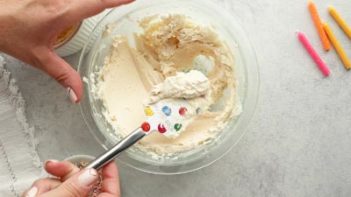
To a medium bowl, add softened butter and cream for 2-3 minutes until light in color and fluffy. Slowly add in powdered sweetener and mix until combined. Add 2-4 tablespoons of heavy cream until desired consistency is achieved. Add vanilla and cream until fluffy.
4
Pipe the frosting and add birthday sprinkles
Slide knife around the edges of the ramekin to loosen the cake. Place a plate over the ramekin and flip to place cake on a plate. Add buttercream frosting to a piping bag and pipe frosting on the cake. You can cut your cake in half to make two cakes in order to make a two tiered cake. Top with sugar free sprinkles.
Nutrition
Per serving: 1 mug cake
Calories
645
Fat
67.3g
Protein
5.1g
Total carbs
3.1g
Net carbs
1.5g
Nutrition is an estimate calculated from the ingredients listed. Brands vary, so check labels if you track closely.
Frequently Asked Questions
Can I use a different sweetener instead of monkfruit blend?
I've made this with erythritol, allulose, and a stevia-erythritol blend, and they all work. My preference is the monkfruit blend because it measures like sugar and doesn't have that cooling aftertaste I get from straight erythritol. If you use a concentrated sweetener like pure stevia, start with a fraction of the amount and taste the batter before baking.
How do I store or freeze this mug cake?
I store the cake in an airtight container in the fridge, and it stays good for about 2 days. I microwave it for 10-15 seconds before eating because the texture bounces back once it warms up. The frosting holds up well in the fridge too. To freeze, I wrap the unfrosted cake tightly in plastic wrap, then foil, and it keeps for about a month. I thaw it in the fridge overnight and microwave it for 15-20 seconds. I don't freeze it with the buttercream on top because the frosting gets grainy when it thaws, so I make fresh frosting when I'm ready to eat.
Can I mix sprinkles, chocolate chips, or nuts into the batter?
Yes. I fold in about a teaspoon of sugar free sprinkles right before the batter goes into the ramekin for a funfetti effect. The colors bleed a little in the microwave, but when you flip the cake out you can see the sprinkle pockets through the crumb. My daughter calls this the 'party version' and it does feel more festive than sprinkles on top alone. Sugar free chocolate chips melt into little pockets that are really good, and chopped pecans or walnuts work too. I keep any add-in to about a tablespoon so the batter still cooks through evenly in the microwave.
Can I make this in a coffee mug instead of a ramekin?
I've done it both ways. A standard 12 oz coffee mug works fine for the microwave version. The cake rises taller and narrower instead of spreading out, so it looks more like a traditional single serve cake. I prefer the ramekin because I can flip it out and frost it like a mini layer cake, but if you're eating straight from the mug with a spoon, go for it.
So I’ve been on a coconut flour kick lately because it just sits better with my stomach, and I really want to make this for my daughter’s birthday next week (she’s turning 8 and already extremely opinionated about the sprinkles situation). The recipe has both almond and coconut flour which I get, but is there any chance I could sub the almond flour portion entirely with more coconut flour or would that mess with the texture too much. I’ve done the swap in other keto bakes and I know coconut flour soaks up way more liquid so it’s not a straight one-to-one, but a mug cake is so small I honestly can’t tell if the same absorption logic still applies here. I was thinking maybe 1 tablespoon coconut flour for every 2 tablespoons of almond flour, but I’m kind of guessing at that math. Is the almond flour doing something specific for the rise that I shouldn’t touch, or is this the kind of swap that could actually work in something this small? I’d rather figure this out before her actual birthday than have a soggy cake situation on my hands.
Your math is close. I’d use 1 tablespoon coconut flour for the 2 tablespoons almond, but add a teaspoon more liquid (cream or water) because a mug cake batter is already so small that coconut flour drains it fast. The almond flour isn’t doing the rise, the egg and baking powder are. You’ll get a denser crumb. Still works, just not as springy.
Your sweetener is what’s throwing the math off. Monkfruit blends are mostly sugar alcohol, so it counts as zero net, and the fiber in both flours comes out too. That leaves the egg and about a gram from each flour. I keep those cupcake drops on hand for the same reason.
Six months keto and birthdays had become the awkward part, watching everyone else cut into actual cake. Made this for my own last week, and it’s not the same as bakery cake (the texture is denser), but there’s real buttercream, actual sprinkles, and 1.5 net carbs. Sat there with my ramekin on the counter and thought, ok, this counts. Still dialing in my microwave timing, but glad this exists.
That moment where it just counts is the whole point. Microwave timing you have to dial in for yours. Mine hits at 90 seconds, some people need closer to 100-105 depending on wattage.
Stirred the sprinkles into the batter instead of putting them on top and they swirl through the whole cake like confetti. Made it this way three pool days in a row, not going back.
Three times this month, so I’m clearly sold. The almond/coconut flour combo gives a better crumb than all-almond (less greasy, actually holds together), and the vanilla cupcake drops are what make it taste like birthday cake instead of sweet egg sponge. One note: the buttercream makes way more than two ramekin cakes need. Piped mine generously on both and still had enough for two more servings, which threw off my macros for the day. Make half unless you have somewhere to put the rest.
Yeah the coconut flour is what fixes the greasy problem. All-almond gets that dense, almost wet texture. And noted on the buttercream quantity, I should just halve the recipe in the post.
The cake part came together so fast I was actually shocked. Two minutes and it’s done. The buttercream is SO good, I piped way too much on and didn’t care. My one note: mine came out a little rubbery on top, like maybe 15-20 extra seconds would’ve helped? Not sure if it’s my microwave. Still finishing the second one as I type this, so clearly not a dealbreaker.
I pre-measure the dry stuff into a jar on Sundays. Takes maybe 90 seconds when I actually want it. The buttercream keeps 4-5 days in the fridge, so that’s ready too. Hard to beat on a weeknight.
My daughter, who thinks she hates cake, came back for the second one before I’d even started frosting mine, and now she calls it her birthday breakfast.
Browned the butter before mixing it in and this thing went from solid to freaking unreal. Did not expect that from a two-minute microwave cake. The nutty thing it adds on top of the vanilla drops is just different. One extra pan, 90 seconds. Worth it.nnFour stars only because coconut flour is brutal if you eyeball it. First go: dense, gummy in the middle. Weighed everything to the gram the second time and the crumb was completely different, way more tender and airy. If you’ve been messing with keto mug cakes and haven’t done browned butter yet, start here.
I don’t have instructions for that yet. A keto white cake is something that I need to come out with. You can’t just add equal amounts of the same ingredients because you would end up with too many eggs.
This is the first keto cake I’ve made that still tasted good 48 hours later. If I want to add cocoa, how much should I add? I don’t want to mess up the liquid/dry proportions. Thanks!
Hi!
I wanted to say I have made this twice now, and it’s so good for a birthday cake replacement. Today I used lemon extract for a twist.
Thanks for your recipes.