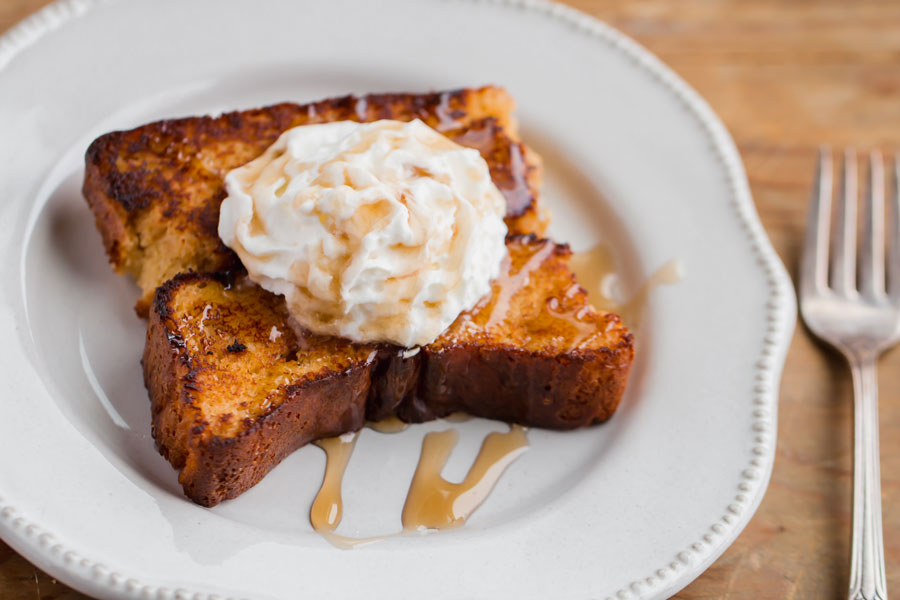
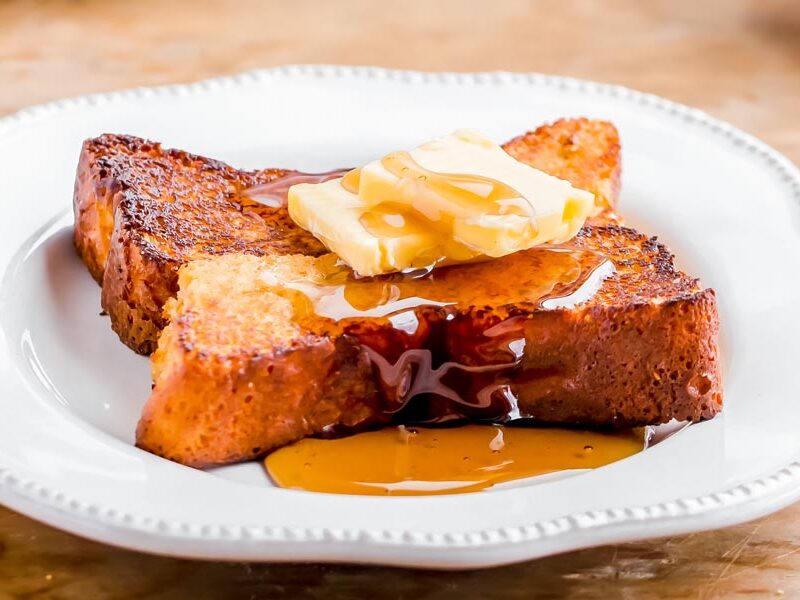
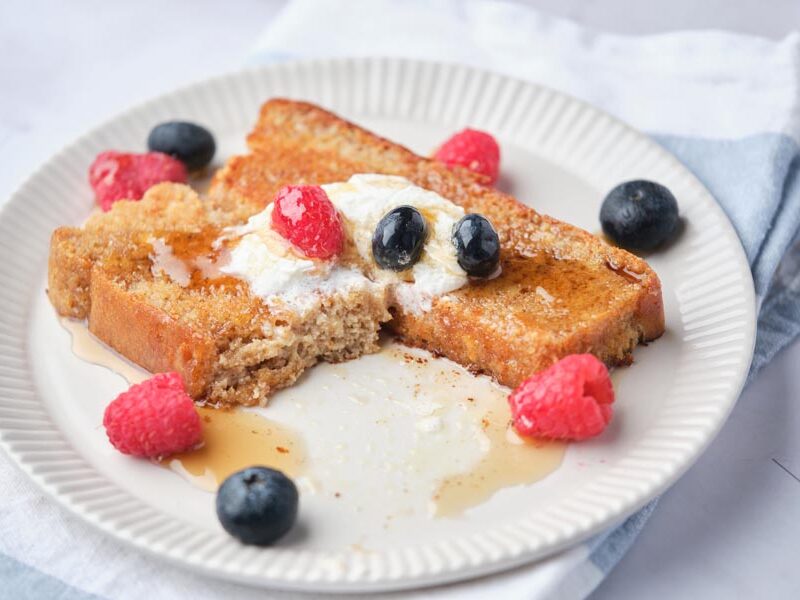
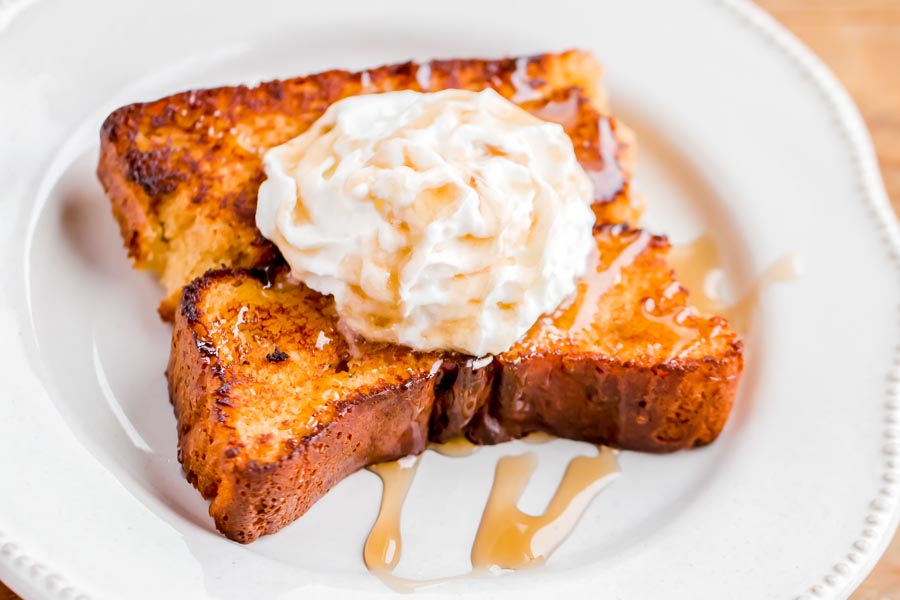
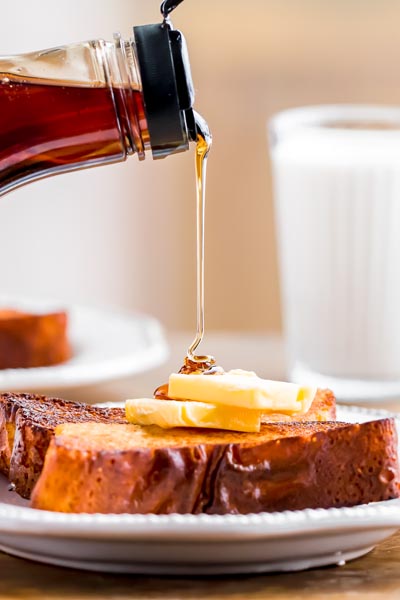
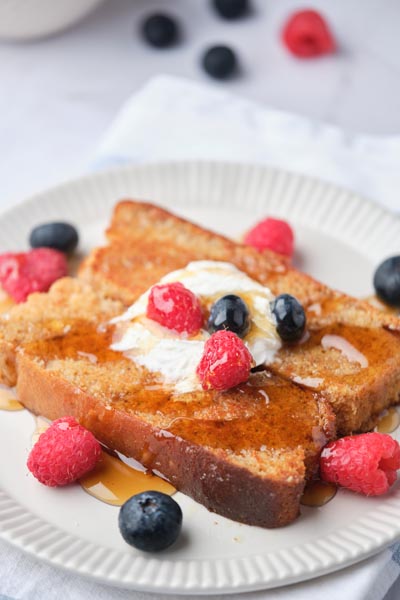
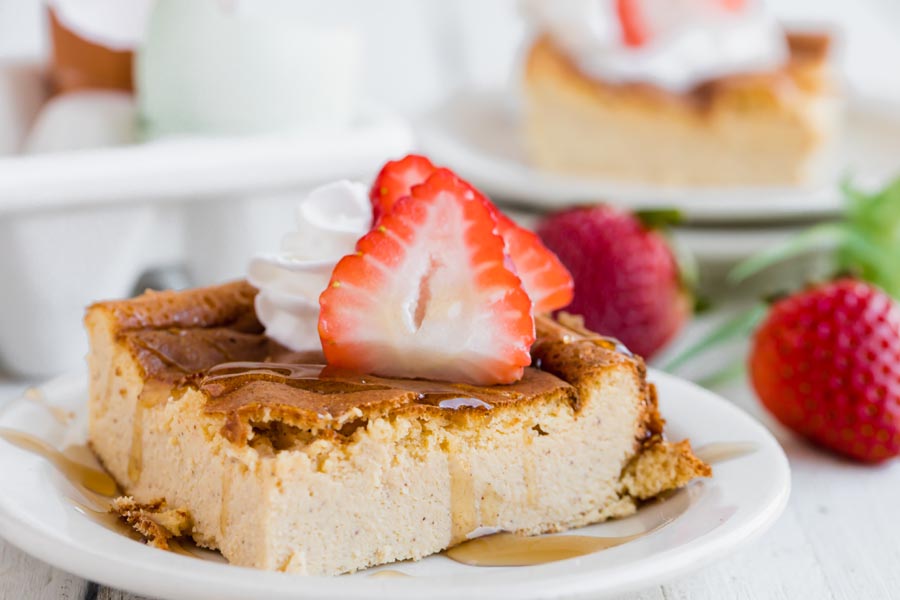
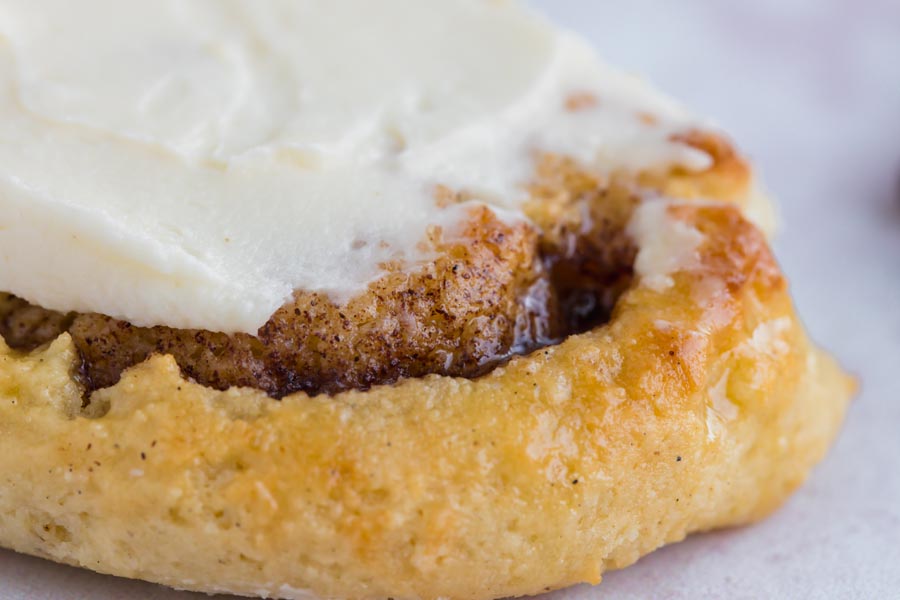
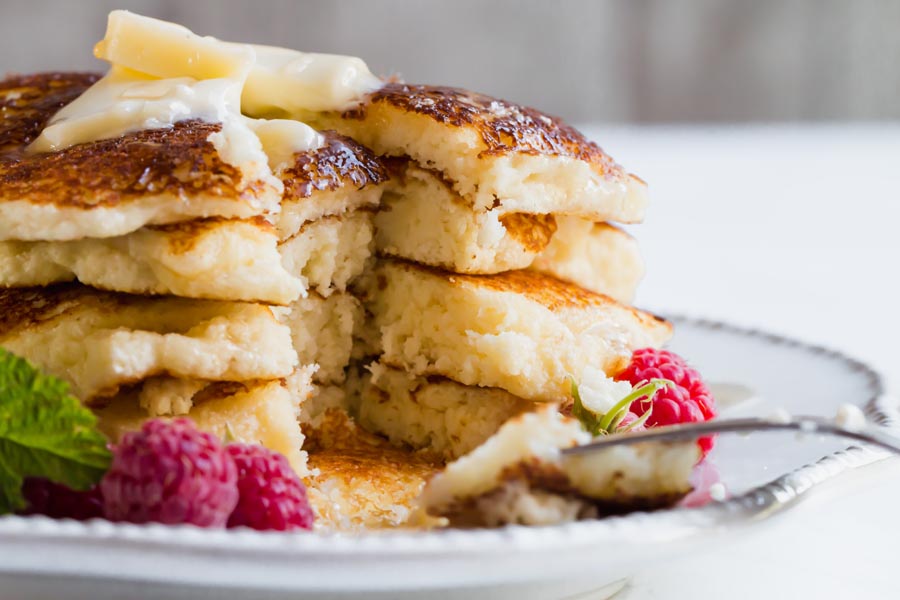
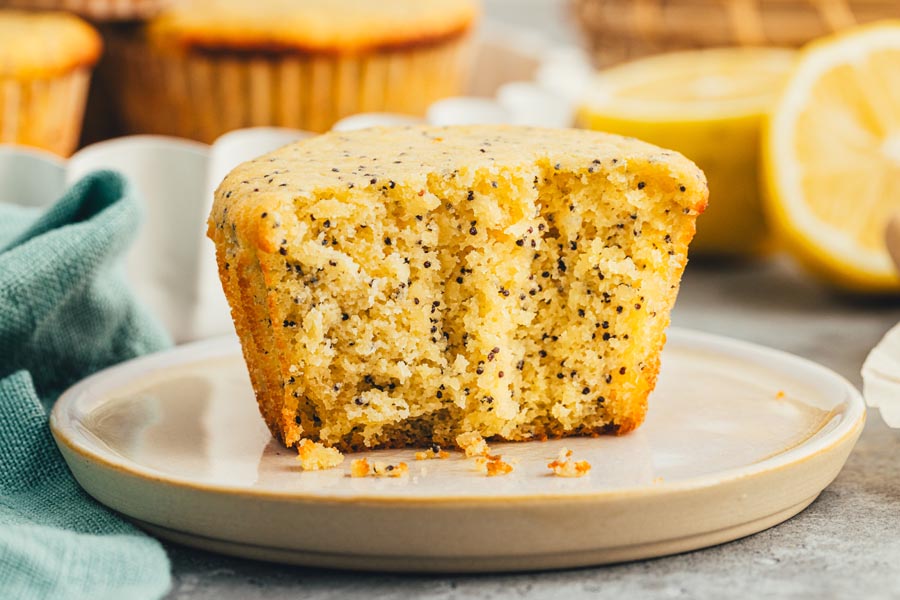
Keto French toast with a soft egg-loaf center and crisp, buttery edges. Bake the coconut-flour loaf, let it cool, then slice and fry. The recipe makes eight slices, estimated at 2.8g net carbs each before toppings.
My boys love French toast, which sent me looking for an egg loaf I could turn into a keto version. I talked about that in my original video, along with my preference for a thick slice. The loaf gives you a cinnamon-and-vanilla base that can go straight into a buttered skillet after it has baked and cooled.
The cream cheese, eggs and coconut flour bake into a soft loaf. It settles as it cools, so let it firm up before cutting. Fry each slice until the faces are golden and the edges are crisp, with a soft center underneath.
Divide the loaf into eight slices for the serving estimate. The 50-minute prep-and-bake time does not include cooling the loaf and frying the slices; allow extra time for those steps. Baking ahead makes the final skillet step easier to fit into breakfast.
Add sugar-free syrup, berries or whipped cream if you like, accounting for those toppings and the butter used for frying. The card’s 2.8g net carbs is a recipe estimate, not a comparison with every other French toast recipe.
Why I use an egg loaf for the base
The recipe starts with an egg loaf made from cream cheese, eggs, butter, cream and coconut flour. There is no separate bread-dipping custard: bake the loaf, cool it, then fry the slices directly.
Coconut flour is part of this formula and cannot be exchanged cup for cup with almond flour. The recipe has no almond flour or wheat flour, but that does not guarantee suitability for an allergy. Check every package for the ingredients and cross-contact information relevant to you; the loaf contains egg and milk.
Choosing a sugar-free syrup
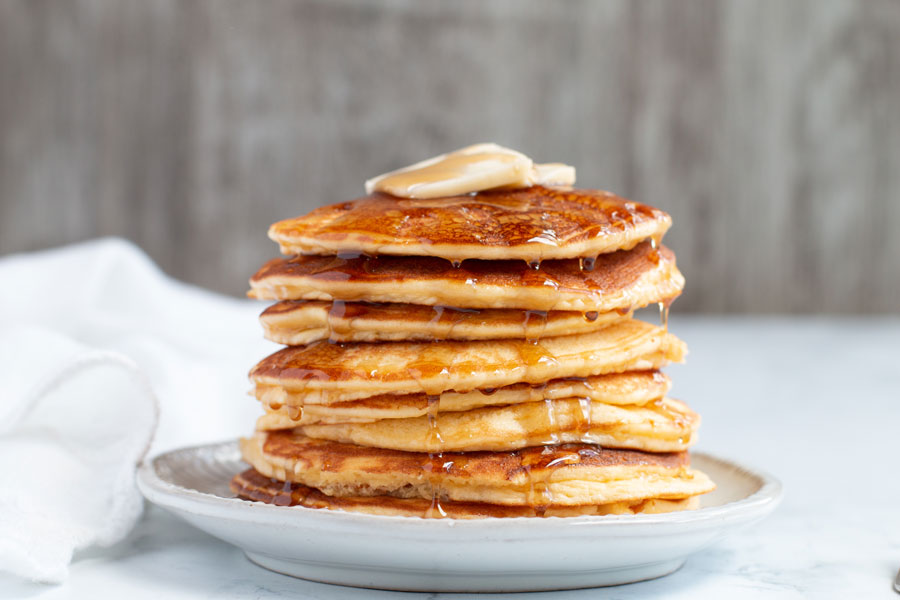
In my original video I recommended ChocZero and especially liked its maple vanilla flavor. Product ranges and recipes change, so choose a syrup you enjoy and read its current label. A light drizzle lets the crisp edges and cinnamon flavor come through; toppings add to the card’s nutrition estimate.
Refrigerate the cooled loaf or slices promptly in a covered container and use within 3–4 days. For longer storage, freeze individual slices, separated so you can remove what you need, for up to three months for best quality.
Thaw in the refrigerator before reheating. Warm slices in a buttered skillet over moderate heat until hot through to 165°F, adjusting the heat so the outside does not burn before the center warms. The exact time depends on thickness. Microwave reheating is an option, but softens the crust.
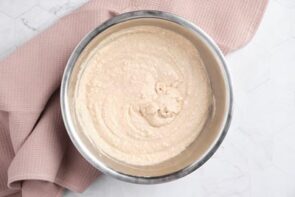
Add cream cheese, eggs, butter, heavy cream, vanilla, sugar free sweetener, coconut flour, baking powder and cinnamon to a bowl or blender and mix together until cream cheese is fully incorporated.
3
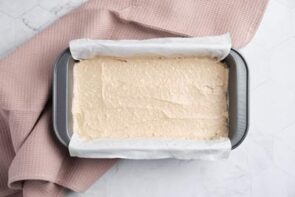
Pour into a loaf pan
Pour into a loaf pan lined with damp parchment paper. Leave a couple of inches of parchment paper hanging over the edges for easy lifting out of the pan.
4
Bake
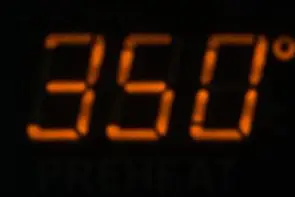
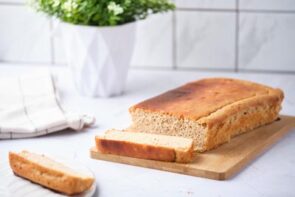
Bake at 350°F for about 45 minutes, until the loaf is set and firm to the touch; an egg dish should reach at least 160°F in the center. It will settle as it cools. Let it cool enough to slice cleanly, then cut into eight slices for the serving estimate. Allow additional time for cooling and frying beyond the prep-and-bake time in the card.
5
Fry french toast
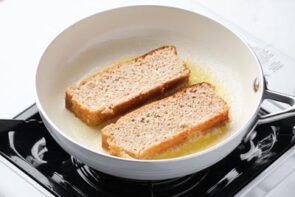
Heat a griddle or skillet over medium heat. Add 1-2 tablespoons of butter. Fry each slice until crisp and browned on each side.
Nutrition
Per serving: 1 slice
Calories
237
Fat
20.8g
Protein
5.9g
Total carbs
3.9g
Net carbs
2.8g
Nutrition is an estimate calculated from the ingredients listed. Brands vary, so check labels if you track closely.
Frequently Asked Questions
How many net carbs are in this recipe?
Each slice has 2.8 grams net carbs. That's the lowest I've found for any version of this breakfast. My nutrition info covers just the base recipe, the egg loaf slice fried in butter, so toppings like syrup, whipped cream, or berries aren't included in the carbs or calories and need to be tracked separately. I use ChocZero maple syrup, which adds about 1-2g net carbs depending on how heavy I pour.
Can almond flour be used instead of coconut flour?
I've tested both. If you swap coconut flour for almond flour, use about 1 1/4 cups almond flour to replace the 1/3 cup coconut flour. The texture changes: almond flour makes a denser, slightly grainier loaf. I prefer coconut flour for this recipe because it bakes lighter and fries up crispier.
Why is my batter so runny?
If you used a blender, that's why. I've made this both in a blender and by hand in a bowl. The blender version comes out much runnier, but don't panic. The coconut flour absorbs the liquid as it sits, and the batter thickens up within a couple of minutes. Either way, the loaf bakes up the same. Just give it a minute before you pour it into the pan.
Is the coconut flour measurement 1/3 cup or 1/4 cup?
The recipe is 1/3 cup. In my video I misspoke and said 1/4 cup. I've made it with both amounts and the loaf works either way, but 1/3 cup gives it better structure for slicing and frying. If you used 1/4 cup and your loaf turned out softer than expected, that's why. It'll still taste good, just a bit more delicate when you fry it.
I meal prep breakfast every Sunday, otherwise weekday mornings are a disaster. This one seems perfect for batch cooking since you’re already baking the loaf separately. Bake Sunday, fridge it, slice and fry each morning? Just wondering if the texture holds up after a few days or if it goes soggy when you fry it.
It blooms in the hot butter. Fat pulls out all the flavor that just sits there in cold batter. I noticed when I started frying the slices – you get way more cinnamon flavor than a teaspoon should give you.
Found out the hard way you have to let the loaf cool before slicing. Like, fully cool. First batch I cut into it while it was still warm and the slices fell apart the second they hit the butter. Refrigerated the second loaf overnight and those slices fried up solid, got crispy edges all around. If you’re new to this, the cooling step is not optional.
Cold loaf slices so much better. Overnight in the fridge and the texture firms up enough that the edges get that full crisp. Room temp right out of the oven? Falls apart every time.
Made a loaf Sunday and I’ve been slicing and frying a piece every morning this week (3 minutes on a medium skillet, nothing to it). The custardy center still holds up on day 4, which I was not expecting.
My 7-year-old watched me slice the loaf and told me flat out this wasn’t real french toast. Then the butter hit the pan and she didn’t move from that stove. Now she calls it ‘the real french toast’ and I genuinely don’t know what to do with that.
Made a batch for my sister’s spring brunch and one of her friends, who eats regular food, asked what bakery the french toast came from. I had to explain I made it myself from a cream cheese egg loaf. Four stars because my first loaf came out a little dense (I think I over-mixed the coconut flour), but once I figured that out the texture was spot on. Making another batch before Easter.
Over-mixing is it. Coconut flour gets dense the second you overwork it, just fold until it’s barely combined. Non-keto friend asking about the bakery is the whole win.
I’ve made keto french toast before and it always tastes like you’re frying an omelette and pretending it’s not. The egg loaf thing had me skeptical. I figured it’d just be a denser, weirder version of the same problem. Made it Sunday morning not expecting much. The frying step is where it clicked. Butter in the pan, medium heat, and the edges actually got golden with a real crust. Inside stayed custardy in a way nothing else I’ve tried has pulled off. Every other version fools nobody, including me. This one does.
That golden edge is exactly what I was after. Most keto versions cook through before the outside does anything interesting. The egg loaf holds long enough for it to actually develop.
Pulled mine out a few minutes early the first time and the slices fell apart in the pan. Once I let it go the full 45 minutes until it was firm to the touch, the edges crisped up the way they’re supposed to. Worth making, but the bake time is not optional.
Made this a few times now and finally figured out what was bugging me (the slices kept falling apart mid-fry). Letting the loaf cool completely in the fridge overnight before slicing was the fix. Much cleaner cuts, and the pieces actually held their shape in the pan without crumbling. I also started browning the butter first, and the nutty smell that comes off the skillet is something else. It picks up this extra depth that makes it taste less like a workaround and more like actual french toast. Only note: you can still kind of taste the coconut flour if you’re sensitive to it, but Lakanto maple syrup mostly covers it. Four stars from me, but I’m still working out my process.
The overnight fridge rest is legit. Clean cuts every time once it’s fully cold. Browned butter against the cinnamon (that nutty smell), yeah. I’m trying it.
They freeze great! Texture changes a little more eggy after reheating, but for a quick breakfast it’s totally worth it. Toast them straight from frozen rather than microwaving.
OMG!! This was the bomb! My hubby and I just started Keto 1/23 and are having a difficult time getting used to the new way of eating and cooking. I found you on YouTube and fell in love with your information. I will continue to try your recipes.
New keto is hard. This one’s good to have early in the rotation. Egg loaf base fries up with crispy edges and a custardy center for 2.8g net carbs, keep going.
Have this in the oven and was reviewing my steps because my batter was way more runny than yours (I blended ingredients in a blender). I noticed in the video you stated 1/4 cup coconut flour, but the written instructions state 1/3 cup of coconut flour, which is what I used. Even then, batter consistency was different. I am hoping this still turns out well. Please advise if it is 1/3 or 1/4 cup of flour.