Keto Sauerkraut

Published March 7, 2021 • Updated March 9, 2026
This post may contain affiliate links. See my disclosure policy.
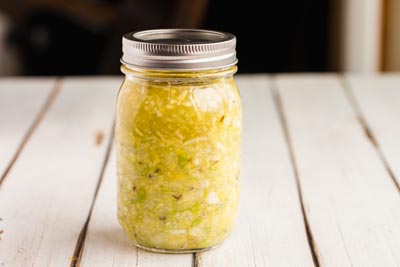
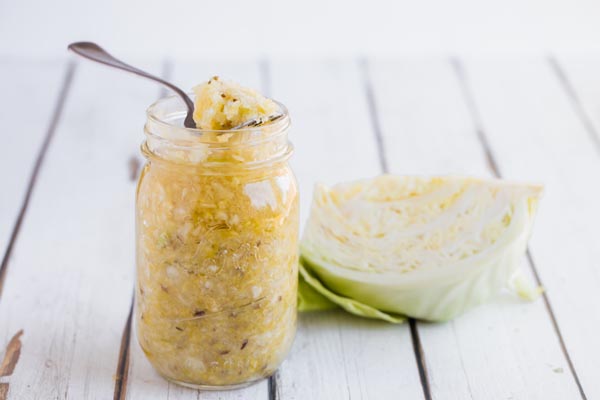
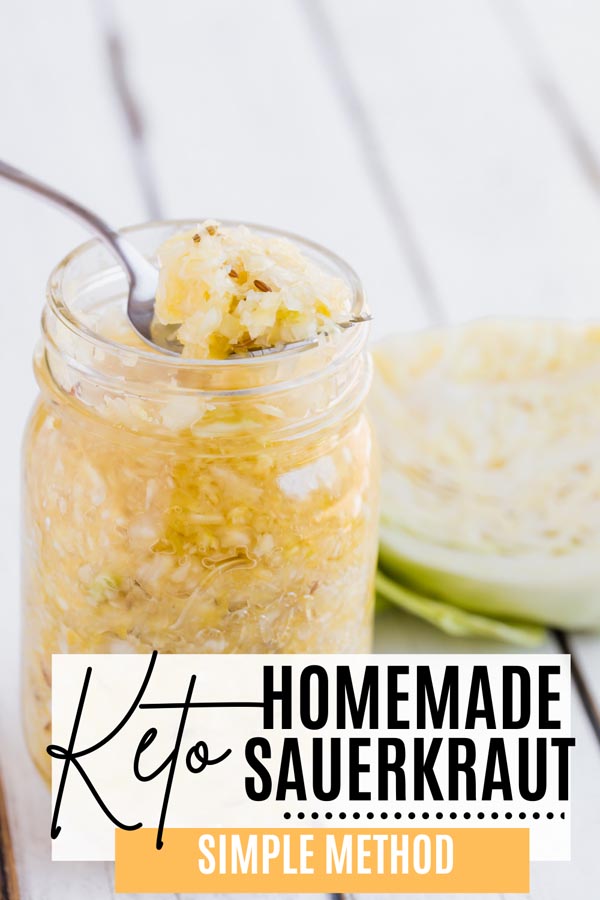
Keto sauerkraut needs just two ingredients and a jar. I add fennel and coriander seeds for a tangy, complex crunch that's naturally low carb with real probiotic benefits.
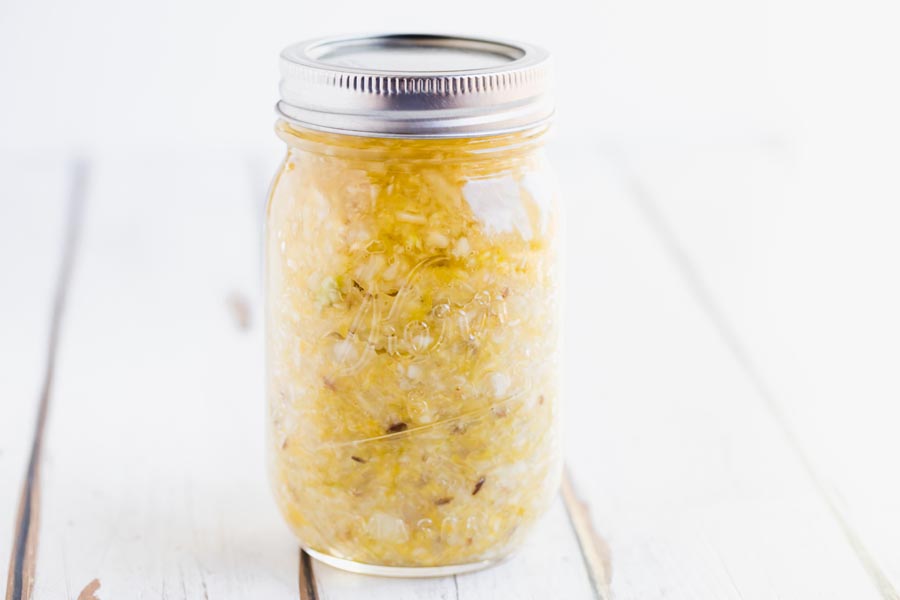
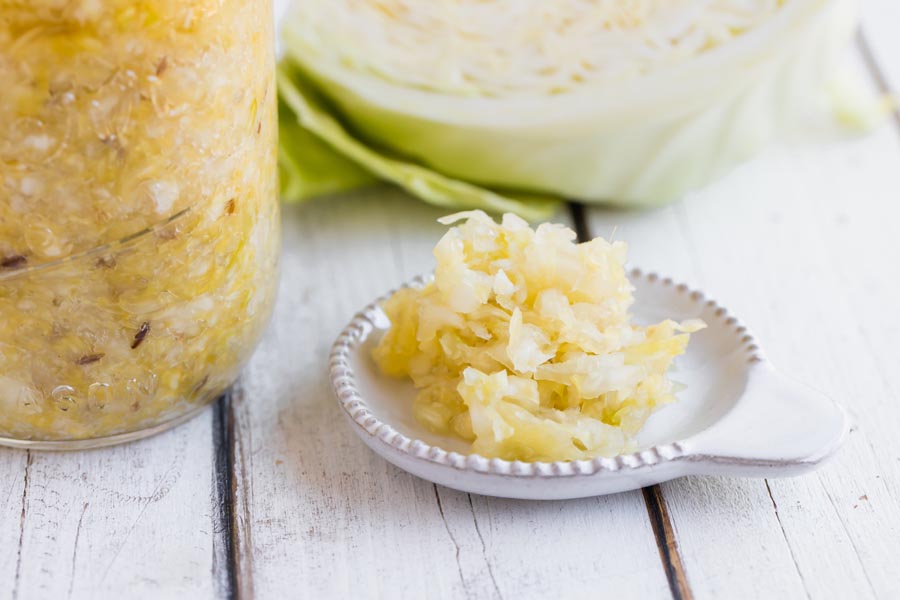
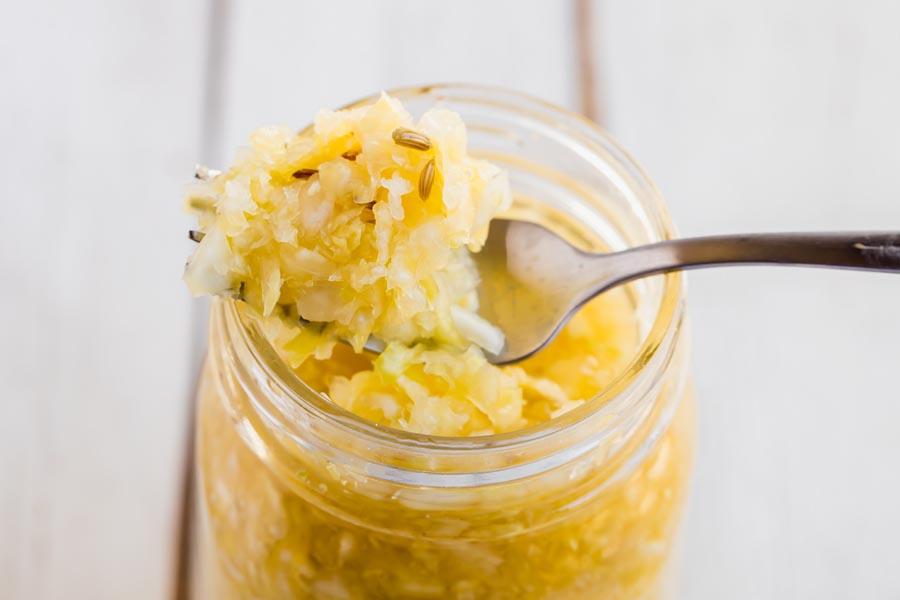
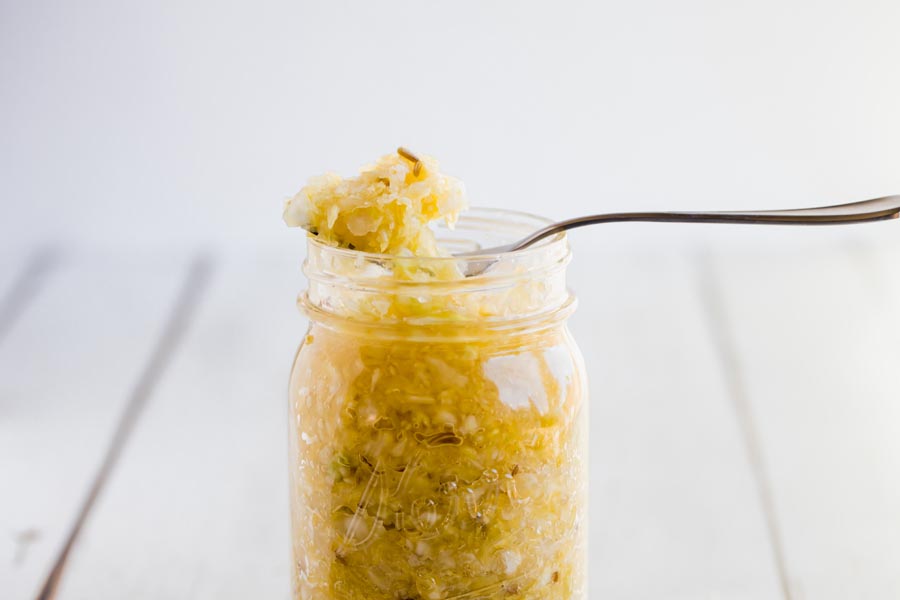
I started making my own sauerkraut years ago because the jarred stuff from the store never had enough tang. Most of those versions are pasteurized, which kills off the beneficial bacteria and flattens the flavor. What comes out of my kitchen after a week on the counter is a completely different thing.
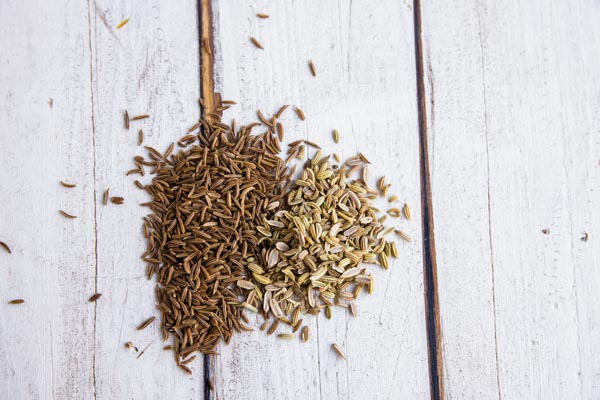
The difference is the spice trio. Most homemade recipes call for nothing but salt, but I add fennel and coriander seeds to every batch. A reader named Fatima tipped me off to adding caraway alongside them, and now I consider those three non-negotiable. The fennel can go sharp on its own, but caraway rounds it out. By day five the spices bloom into the fermentation, and by day seven the flavor is complex enough that readers compare it to what you’d find at an actual deli counter.
I keep a jar of this in my fridge at all times because it goes with more than you’d expect. It’s obvious alongside roasted potatoes or piled on sausages, but I also spoon it on top of bacon wrapped chicken tenders, serve it next to green beans and bacon as a tangy contrast, and pile it onto bacon wrapped asparagus kebabs straight off the grill.
What surprised me when I first started fermenting is how forgiving the process is. You don’t need special equipment, fancy starters, or precise temperatures. Cabbage, salt, a clean jar, and time. That’s it. The lactobacillus bacteria already living on the cabbage surface handle the fermentation on their own. No starter cultures, no temperature controllers. I walk you through every detail below, including the salt ratio mistake I see people make most often and how to fix it if it happens to you.
If you’ve been buying sauerkraut at the grocery store, I get it. It’s convenient. But once you taste homemade, you’ll understand why I don’t go back. Store-bought pasteurized kraut has zero live probiotics and a fraction of the flavor. Mine has both, plus I control exactly what goes in.
The whole process from start to finish is about ten minutes of active work, then you wait. I check my jar daily, push any floating cabbage back under the brine, and taste every couple of days. When it hits the tanginess I want, into the fridge it goes. It stays good for months, and since fermentation actually lowers the carb count below raw cabbage, this is one of the most keto-friendly condiments you can make at home.

Explore 683+ keto recipe videos with step-by-step instructions, tips, and tricks to make keto easy.
Ingredients
 1 head of cabbage
 -
2 tablespoons salt
-
1 teaspoon fennel seeds
-
1 teaspoon coriander seeds
Step by Step Instructions
Step by Step Instructions
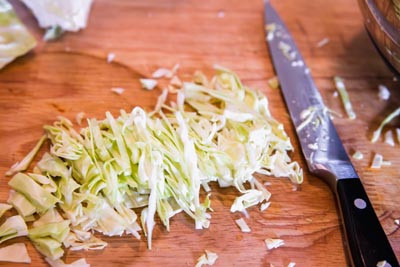
Shred the cabbage
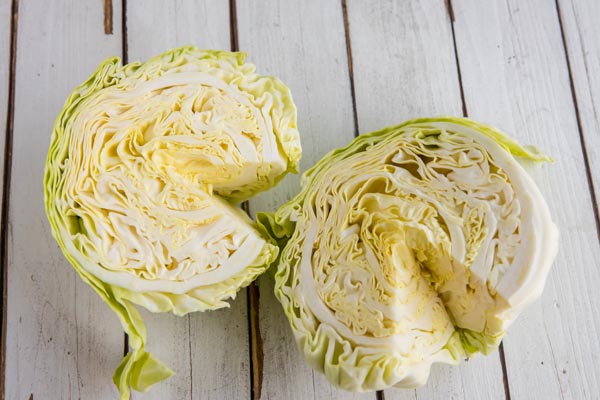
Shred the cabbage into thin strips using a knife, mandoline slicer or food processor.
Add salt & seasoning
Place the cabbage shreds in a large bowl along with salt, fennel and coriander.
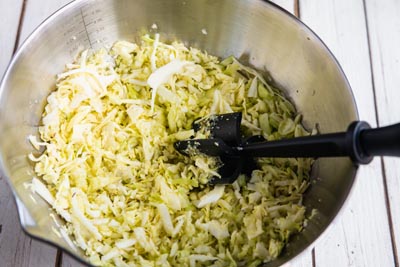
Press the cabbage
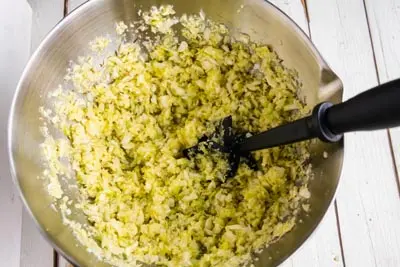
Press the liquid out of the cabbage by smashing it using a spoon or meat hammer. The combination of the pressing action and salt will help release the fluid from the cabbage. This will take about ten minutes.
Add to the mason jar
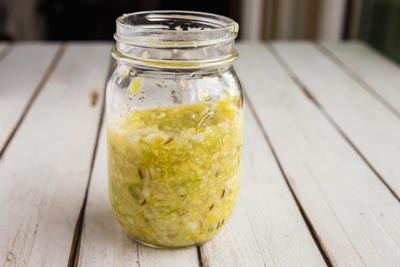
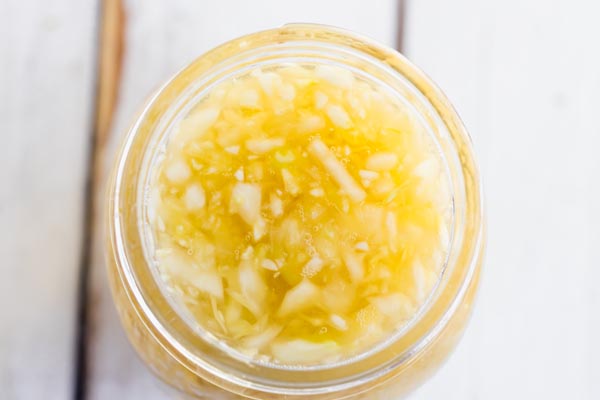
Add a few spoonfuls to a clean, dry mason jar. Press down the cabbage as you add it with each spoonful. Keep adding cabbage and pressing it down until the liquid rises above the cabbage and the liquid is about an inch from the top of the jar. This will allow room for expansion during fermentation.
Nutrition disclaimer
The nutrition information provided is an estimate and is for informational purposes only. I am a Doctor of Pharmacy (Pharm.D.); however, this content is not intended to be a substitute for professional medical advice, diagnosis, or treatment. Always consult your physician or other qualified health provider before making any lifestyle changes or beginning a new nutrition program.
Your Macros. Your Recipes. Calculated in 60 Seconds.
Get personalized keto macros and instantly see which recipes fit your targets. No more guessing what to eat.
Get My Macros + Recipes →Frequently Asked Questions
What kind of salt should I use for sauerkraut?
I use sea salt or kosher salt for every batch. The key is avoiding iodized table salt, because iodine kills the lactobacillus bacteria that drive fermentation. I've tried pink Himalayan salt too, and it works fine. Just make sure whatever you pick doesn't list iodine or anti-caking agents in the ingredients.
Can you freeze homemade sauerkraut?
I tried freezing a batch once and won't do it again. The texture goes soft and mushy after thawing, and you lose most of the probiotic benefits since freezing kills a lot of the beneficial bacteria. I keep mine in the fridge where it lasts 2-3 months easily. Just make sure it stays submerged in the brine.
Does fermentation reduce the carbs in cabbage?
It does, and I find this one of the best reasons to make sauerkraut at home. During lacto-fermentation, bacteria consume some of the natural sugars in the cabbage as fuel. The finished product ends up with fewer net carbs than the raw cabbage I started with. My homemade batches come in around 2 grams of net carbs per cup, which is lower than what raw cabbage would give you at the same volume.
Can I use red cabbage instead of green?
I've made it with red cabbage and it works great. The flavor is slightly sweeter and earthier than green, and the color is beautiful (deep purple brine, vibrant kraut). My process stays exactly the same. The only difference I've noticed is that red cabbage is a bit firmer, so I press it a little longer to get the brine flowing.
What does white film on top of sauerkraut mean?
That white film is almost certainly kahm yeast, and I've seen it on plenty of my batches. It's harmless. I scoop it off with a clean spoon and let the fermentation continue. The real warning signs are colored mold (green, black, pink), putrid smells, or slimy texture. Those mean contamination, and I toss the whole batch.
How many net carbs are in sauerkraut?
One cup of my homemade keto sauerkraut has about 2 grams of net carbs. I weigh portions occasionally to double-check, and it's consistently in that range. For context, that's actually less than raw cabbage at the same volume, thanks to the fermentation process consuming some of the natural sugars.
Why is my sauerkraut not producing brine?
This usually means the cabbage wasn't fresh enough or I didn't press hard enough. I spend a solid ten minutes pressing and smashing the salted cabbage until there's a visible pool of liquid at the bottom of the bowl. If you've pressed well and still don't have enough brine, dissolve a teaspoon of salt in a cup of filtered water and pour it over the cabbage in the jar until everything is submerged.







Toasted the fennel and coriander in a dry pan before adding them, maybe two minutes until fragrant, and the brine ended up tasting more complex than any kraut I've made before. The spices kind of bloom into the fermentation over time (day five was noticeably different from day three). Worth the extra minute if you have it.
Toasted coriander has so much more depth than raw. I've been adding mine straight to the jar. Not doing that anymore.
Made three other sauerkraut recipes before this one and they were all basically the same, but something about the fennel and coriander here makes it taste like it came from an actual deli.
Added caraway seeds alongside the fennel and coriander and the flavor got so much more complex, like something from an actual deli counter. If you're on the fence about the fennel seeds, the caraway rounds it out and keeps it from tasting too sharp.
Caraway keeps the fennel from going too sharp. That's the trio most traditional recipes use.
Love the flavours but waaaay too salty. The real variable in the recipe is "a head of cabbage". I guess the head of cabbage I used is much smaller than the recipe expects. Will try soaking it in cold water to make it palatable.
Soaking works for this batch. Small head next time, try 1.5 tablespoons instead.
I think this was the best sourkraut I've ever had ..Mine took 7 days to be absolutely perfect .I love cooking and I always thought sourkraut was a hard long process never image it could be so easy lol. Well you do have to have patience 😁
Seven days is my sweet spot too. The coriander really comes through by then.