Sous Vide Steak

Published September 22, 2019 • Updated March 6, 2026
This post may contain affiliate links. See my disclosure policy.
I've been cooking steak sous vide for years, and it's the most reliable way I've found to nail a perfect medium rare at home. In this recipe I walk you through my full process plus three ways to finish with a sear (grill, cast iron, or torch).
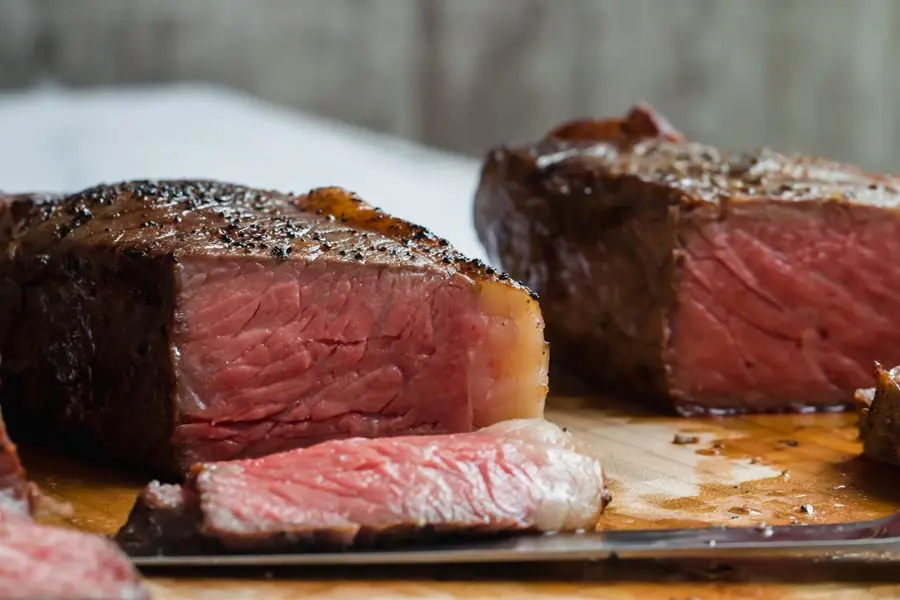
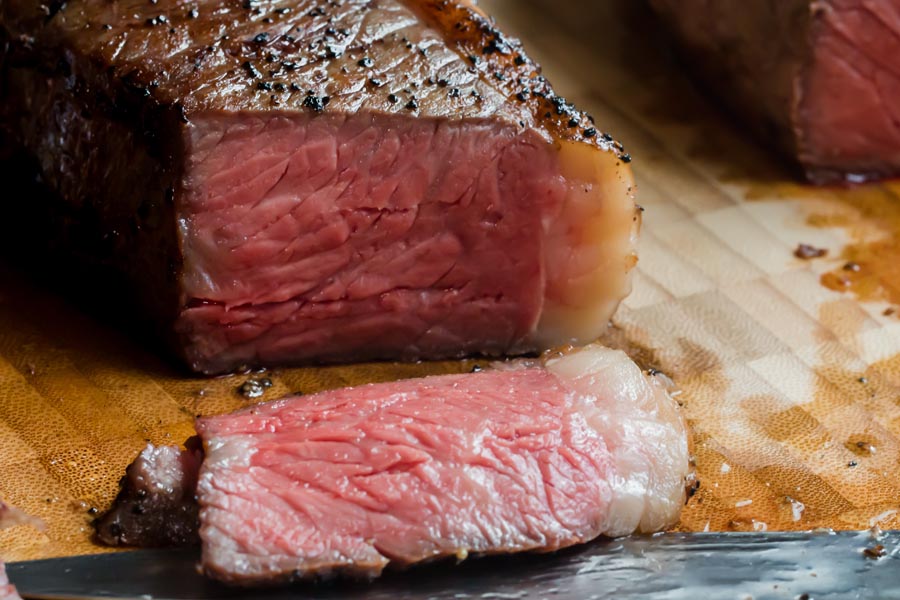
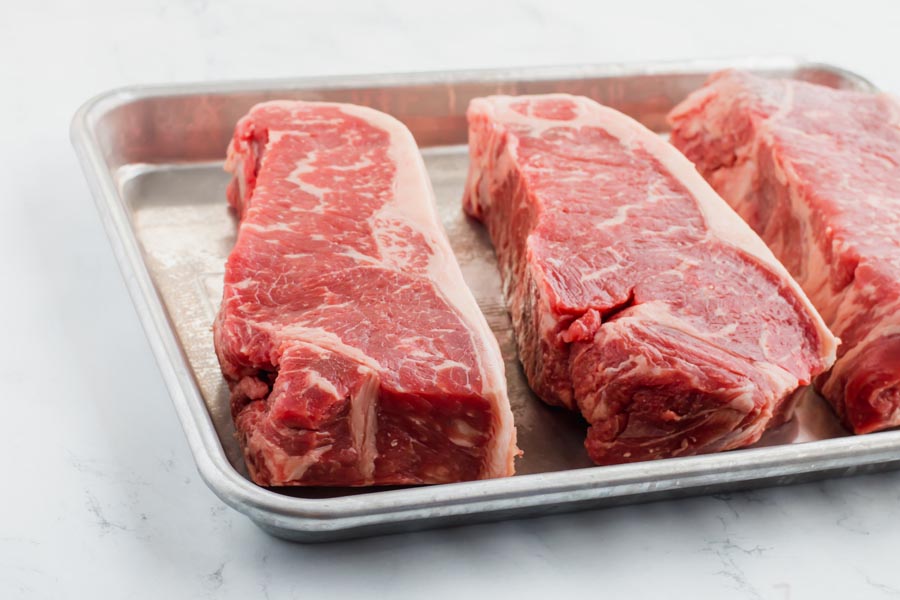
I started cooking steak in a water bath back in 2016 when I got my first Anova circulator, and I haven’t gone back to grilling blind since. The whole idea is simple: you heat water to the exact temperature you want your steak to finish at, seal the meat in a bag, and let the water do the work. No guessing, no cutting into the meat to check, no dried-out edges with a raw center.
What sold me was the first time I pulled a ribeye out of the bath at 131 degrees. The entire steak, edge to edge, was the same blush pink. I’d never gotten that from a grill or cast iron alone. The grill gives you a great crust but the inside is always a gradient, medium rare in the middle fading to gray at the edges. With this method, every single bite is the doneness you chose.
The process fits naturally into a keto kitchen because there’s nothing to add. It’s beef, salt, pepper, and heat. I season my steaks before they go in the bag, sometimes with a sprig of rosemary or a couple of crushed garlic cloves, and that’s it. After the bath, I pat the steak dry, let it cool for about 10 minutes in the fridge, then finish with a hard sear. That cooling step matters because it gives you a wider window to build a crust without pushing the interior past your target temp.
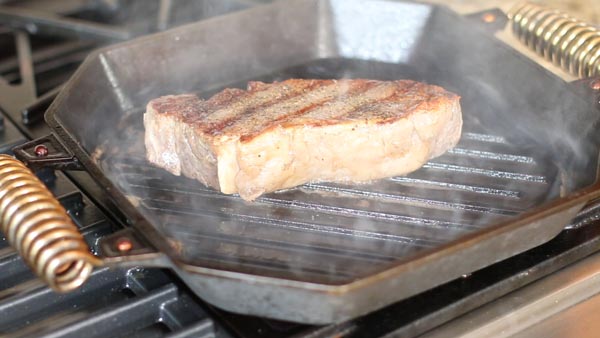
I’ve tested all three finishing methods dozens of times. The cast iron pan sear is my everyday go-to because the butter basting adds flavor you can’t get from a grill. The grill finish is what I use when I’m already outside cooking for a crowd. And the torch is fun for a quick hit of char, though I’ll be honest, if you hold it too long the steak picks up a faint gas taste.
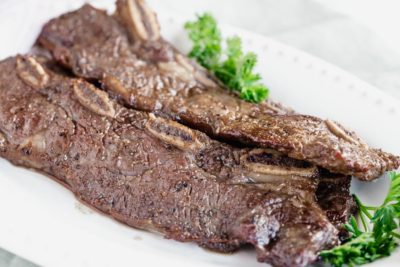
If you love steak as much as I do, try my grilled flank steak for a faster weeknight option, or my grilled dry aged tomahawk steak when you want to go all out on a weekend. For braised beef that practically falls apart, my carnivore braised short ribs are incredible.
What is sous vide steak and why does it work?
The sous vide method means sealing your cut in a bag and cooking it in temperature-controlled water until the interior reaches exactly the doneness you want. I know it sounds strange. When I first heard about it, I pictured a steak bobbing in a boiling pot, but the reality is completely different. The water stays at a low, precise temperature (I set mine to 131 for medium rare) and the bag keeps the meat protected from the water entirely.
The reason I switched to this method is control. When I cook a steak on my grill or in a skillet, I’m fighting temperature swings the entire time. Ovens can fluctuate 20 degrees in either direction. The circulator holds the water within one degree of your target, so the steak physically cannot overcook past that point. I’ve left steaks in the bath for 2 hours when dinner got delayed and they came out just as good as the ones I pulled at the 1-hour mark.
It’s also naturally low carb. There’s no breading, no marinade sugar, no flour. Just the steak, salt, pepper, and whatever aromatics you toss in the bag. After the bath, you finish with a quick reverse sear to build the crust. That combination of precise interior temperature plus a hard, fast sear is what gives you that edge-to-edge pink with a caramelized exterior. If you want another quick beef option for busy nights, try my slow cooker steak and peppers or my low carb smash burgers.

Explore 683+ keto recipe videos with step-by-step instructions, tips, and tricks to make keto easy.
Ingredients
 16 oz steak (NY or Ribeye) at least 1 inch thick
 -
gallon ziploc bag
-
salt and pepper for seasoning
-
2 tablespoons of avocado oil if pan searing with a castiron skillet
-
4 tablespoons butter if pan searing with a castiron skillet
Step by Step Instructions
Step by Step Instructions

Set the sous vide temperature
Add your immersion circulator to the water bath and turn on. Set the immersion circulator to your desired doneness. For rare, set to 120 – 129 F. For medium rare, set to 129 – 135 F. For medium, set to 135 – 144 F.


Sous vide
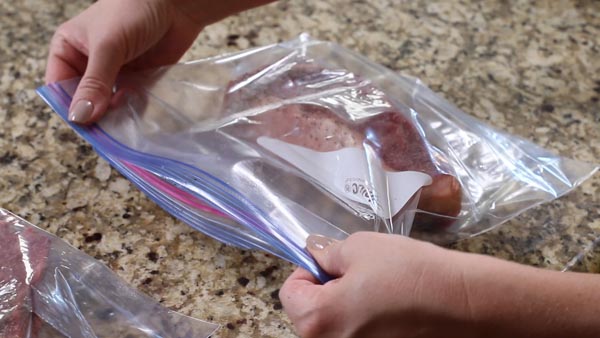
Place the seasoned steak in a gallon ziploc bag. Partly seal the bag. Don’t close all the way yet. Dip the bottom of the bag in the water bath and push it down. As the bag moves down the water bath, the water will push the air in the bag out. Once the opening of the bag is almost touching the water, seal the rest of the bag. Clip the bag to the side of the pot. If the bag floats, there is too much air in the bag. Unseal and dip down again to release the air.

Wait a couple hours
Let cook for 1 to 2 hours, depending on the thickness of your steak. Most one inch steaks will cook in 1 hour. Don’t worry, you can’t really overcook the steak. If it cooks for 3 to 4 hours, it will still be fine. See explanation below.

Pat dry
Once steak is finished cooking in the sous vide water bath, remove the bag and take out the steak. Pat dry with a paper towel. And refrigerate steak for about 10 minutes to allow it to cool.

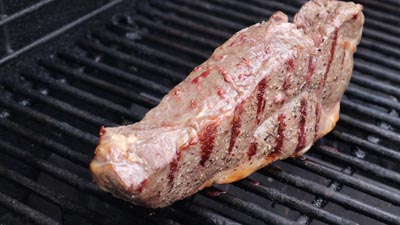
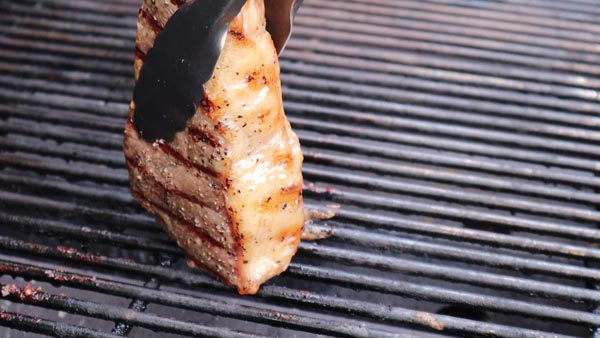
Grill finish
To finish the steak on the grill, preheat grill to high heat, about 450 – 500 degrees. And sear both sides for 1-2 minutes on each side.
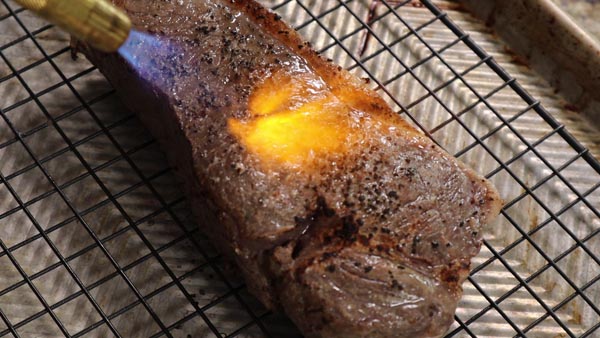
Torch finish
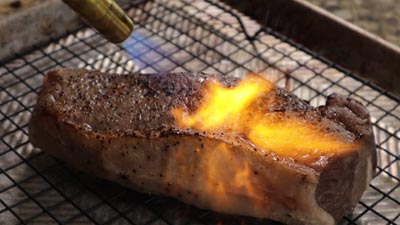
To finish the steak with a blow torch, turn on torch and sear all sides for 2 minutes each side.

Nutrition disclaimer
The nutrition information provided is an estimate and is for informational purposes only. I am a Doctor of Pharmacy (Pharm.D.); however, this content is not intended to be a substitute for professional medical advice, diagnosis, or treatment. Always consult your physician or other qualified health provider before making any lifestyle changes or beginning a new nutrition program.
Your Macros. Your Recipes. Calculated in 60 Seconds.
Get personalized keto macros and instantly see which recipes fit your targets. No more guessing what to eat.
Get My Macros + Recipes →Frequently Asked Questions
What type of steak works best for sous vide cooking?
I reach for NY strip and ribeye more than anything else. The marbling keeps them juicy through the bath and the fat renders beautifully during the sear. I've also done filet mignon when I want something leaner, and it comes out incredibly tender. For tougher cuts like sirloin, I extend the cook time to 8 to 10 hours, which breaks down the connective tissue and turns it into something surprisingly tender.
Can I cook steak from frozen?
I do this all the time when I forget to thaw. Just add about 1 extra hour to your cook time and plan on an extra minute per side when you sear. I've cooked frozen ribeyes and strip steaks this way and the results are just as good as fresh. The only thing I watch for is making sure the bag stays submerged since frozen steaks tend to float more at the start.
What's the best steak thickness for the water bath?
I've found that 1.5 to 2 inches is the sweet spot. Anything thinner and the sear can push the interior past medium rare before you get a good crust. My local butcher cuts to order, so I always ask for 1.5 inches. If you're buying pre-cut from the store, look for the thicker packages near the back of the case.
What temperature should I set for rare, medium rare, and medium?
I cook at 131 for medium rare, which is where I land 95% of the time. For rare, I set it between 120 and 128. For medium, 135 to 144. My husband prefers his steak closer to medium so I pull his out of the same bath and give it a longer, harder sear to push the edges up a bit. That way I'm not running two water baths.
How long is too long for sous vide steak?
I keep my cook window at 1 to 2 hours for standard 1 to 2 inch cuts. Going to 3 hours won't ruin anything, but past 4 hours the texture changes noticeably. I left a pair of strip steaks in for 5 hours once and they came out mushy even though the color was still perfect medium rare. One safety note: if you're cooking below 130 degrees (for rare), keep the total time under 2.5 hours for food safety.
Can I use olive oil instead of avocado oil for pan searing?
You can, but I prefer avocado oil because it handles high heat without smoking up my kitchen. Olive oil's smoke point is lower, so it starts to burn and smell before I get the crust I want. If olive oil is all you have, it'll work in a pinch. Just keep the heat at medium rather than medium-high and expect a lighter sear.
Can I sear the steak in an air fryer instead of a pan or grill?
I haven't done this with a full steak after the water bath, but I've used my air fryer plenty for my air fryer steak bites and the sear is solid. If you try it with a full cut, I'd set the air fryer to 450 and go about 2 minutes per side. Pat the steak completely dry first because any moisture will steam instead of sear. My one concern is you lose the butter basting that makes the cast iron method so good, but for convenience it should work.
How long can I store prepped steak in the fridge before searing?
I keep prepped steaks in the fridge for up to 4 days and they reheat perfectly. After the initial cook, I pat the steak dry, let it cool, then store it in a clean bag or airtight container. To reheat, I drop it back in the water bath at the same temperature for about 30 minutes, then sear as usual. I've also frozen steaks straight from the bath (still in the bag) for up to 3 months. Thaw overnight in the fridge before reheating. The texture holds up surprisingly well from frozen.
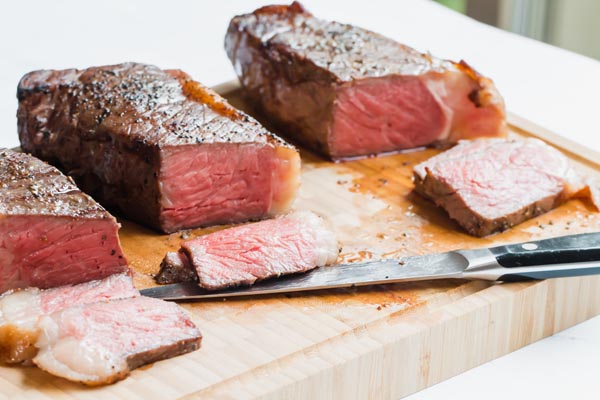

Made this for a dinner party last weekend and the steak became a whole conversation mid-meal. One guest who considers himself a serious griller kept cutting into slices to examine the cross-section. Consistent pink edge to edge, no gray band anywhere. Before he left he asked for my exact temp and whether my immersion circulator was worth buying. Coming from someone who owns three grills, that meant something.
A grill guy asking for your temp is the review. Tell him 131. The circulator pays for itself on the second steak.
One thing I wish someone had told me before my first few attempts: after you pull the steak from the bag, pat it really, really dry before the cast iron sear. I mean thorough, multiple-paper-towels dry. The sous vide leaves the surface wet and moisture is the enemy of a proper crust. I kept getting a pale, steamy exterior instead of that deep brown I was going for, and this was the whole problem. Also preheat the cast iron longer than feels reasonable, I go a full 3-4 minutes on high with the avocado oil before the steak even touches the pan. The difference in crust between a properly dried steak on a screaming hot pan versus what I was doing before is not subtle at all. Four stars only because it took me a few rounds to figure this part out, not because of the recipe.
Yeah, the drying step is where most people get stuck the first few tries. 3-4 minutes on the cast iron is right, I hold until I can see the oil shimmer before the steak goes in.
My husband grades every steak on the char, so I knew the sous vide would be a hard sell. Pulled these out after two hours in the water bath and did a cast iron sear, and he cut in and paused. Said it was the most evenly cooked steak he had eaten at home. Coming from him, that is not small praise.
I've been hesitant to try sous vide for years, convinced it was more equipment drama than it was worth. Set the circulator to 130 for medium rare, pulled the ribeye after about 90 minutes, and then finished it in the cast iron with the butter. The sear took maybe two minutes and the edge-to-edge pink was something I've never pulled off consistently on a steak before. The circulator is coming out every Sunday now.
130 is fine - I cook at 131 but one degree doesn't change anything you'd notice. The edge-to-edge pink still gets me every time and I've been doing this for years.
One thing worth knowing before you start: pat the steak completely dry after it comes out of the bag before you sear it. I skipped this the first time and got a lot of steaming instead of that hard crust. Now I pull it out, set it on a paper towel for a couple minutes, then hit the cast iron with avocado oil as hot as I can get it. The crust you get is genuinely something else, and the inside is still that perfect pink all the way through. Small step, big difference.
Dry surface is everything! I pat mine down, get the cast iron screaming hot, then lay it down. That first 60 seconds is where the crust happens.
I'm not kidding, this is the best steak I've ever cooked. My wife and I were amazed at how juicy it was.
Thank you Timothy! I will be doing some more sous vide recipes soon, please check back soon!