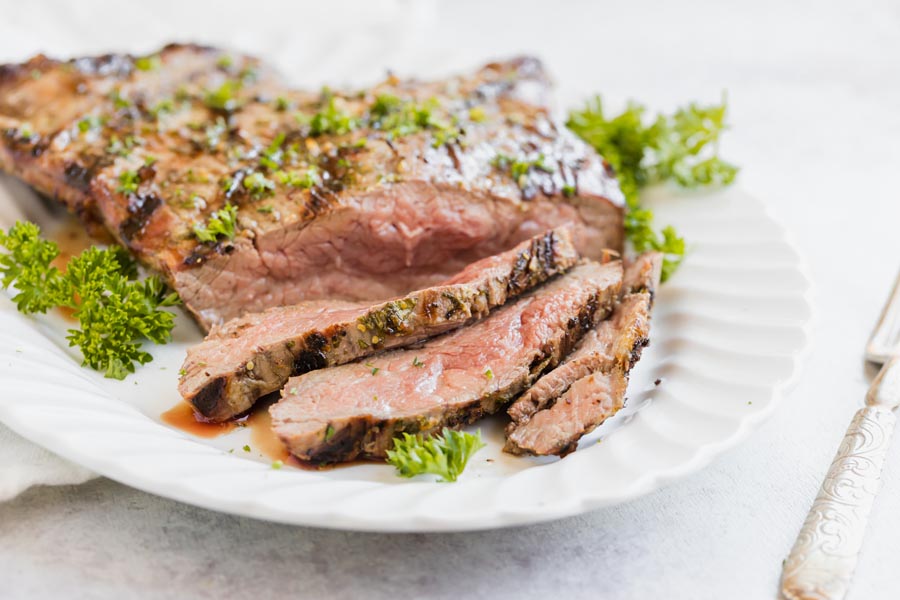
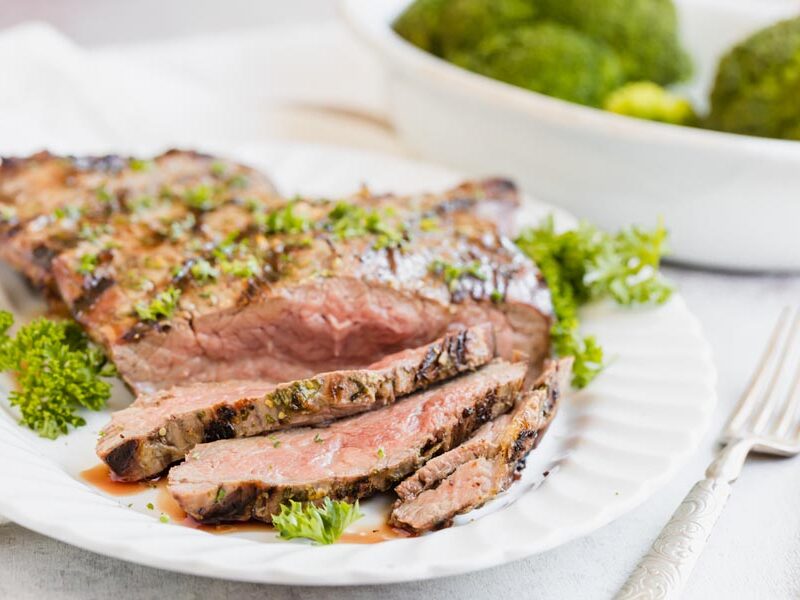
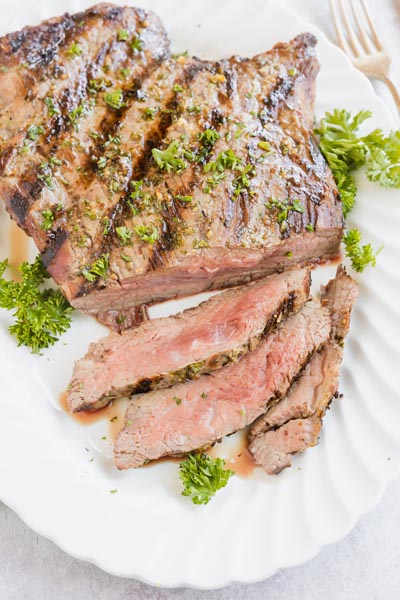
Grilled flank steak gets a tangy, smoky depth from my mustard-herb marinade and cooks in under 10 minutes on a hot grill. At 36g protein and 1g net carbs, it's my favorite keto dinner for weeknights and cookouts all summer.
Flank steak is one of those cuts I come back to every grilling season. It's a fraction of the price of a tomahawk or ribeye, but when you cook it right (high heat, quick sear, proper rest), the flavor holds its own against steaks that cost three times as much. The outside gets a dark, smoky char while the inside stays pink and juicy. I've been making some version of this recipe since 2016, and it's the one my husband asks for when grilling season kicks off.
I developed this mustard-herb marinade specifically for this cut because it doesn't absorb marinades the way skirt or hanger steak does. The stone ground mustard and red wine vinegar are what drive the flavor. The vinegar gently breaks down the surface fibers for a more tender bite, while the mustard creates a tangy crust that caramelizes on the grill. Fresh cilantro and parsley round it out with an almost chimichurri-like brightness that makes the whole plate smell incredible. One thing I picked up from a reader: press the marinade into the meat with your hands instead of just brushing it on. Takes an extra 30 seconds, but you get noticeably more flavor through every bite.
What I love about this recipe is how little fuss it takes. I marinate for 2-8 hours (I've found 4 hours is the sweet spot for flavor without the meat turning chalky from the vinegar), preheat the grill to 450-500 degrees, and the steak is done in under 10 minutes. That's faster than most weeknight dinners I make, and the cleanup is basically nothing.
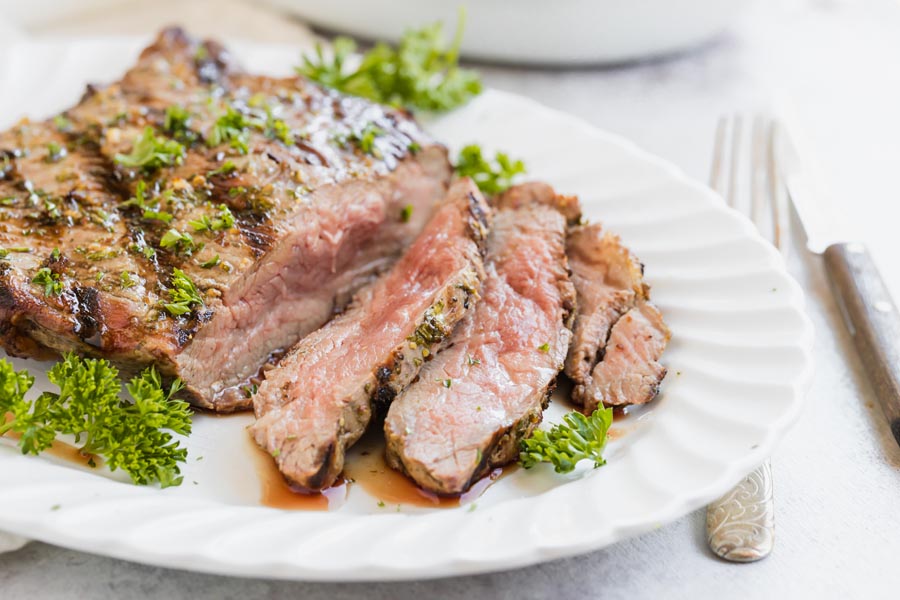
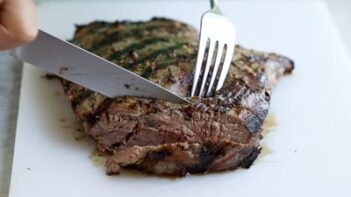
I've served this at backyard cookouts alongside grilled marinated chicken and firecracker shrimp, and the steak always disappears first. The trick is slicing against the grain into thin strips about 1/4 inch thick. Cut with the grain and you'll be chewing forever. Cut against it, and each piece practically falls apart on the fork. I use a long carving knife and let the blade do the work.
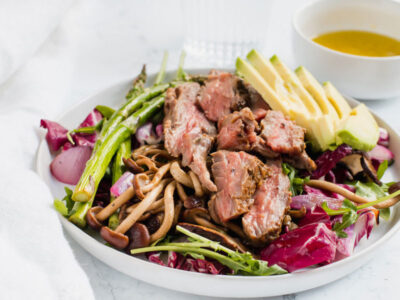
If you're looking for a protein that doubles as meal prep, this is a good one to know. I've sliced leftovers cold over salads or reheated strips in a hot skillet for taco night. The marinade flavors stay punchy even the next day, and it reheats without getting tough if you keep it quick. For a keto-friendly cut with zero carbs and plenty of protein per serving, this is hard to beat.
What is flank steak
This cut comes from the belly of the steer, toward the rear end. It’s a wide, flat, rectangular piece with a moderately beefy flavor and a strong visible grain. I reach for it instead of pricier cuts like ribeye because it’s significantly cheaper and, when cooked correctly, just as tender and juicy.
Since it’s on the thinner side, the grill is where this steak really shines. I can feed a whole table off one piece and have it done in minutes over high heat, while still nailing a medium-rare center. It’s a naturally low carb cut with zero carbs and solid protein per serving.
Another name for flank steak
You might see it labeled as London Broil or Jiffy Steak at the butcher counter. Some grocery stores sell it pre-sliced as stir-fry beef, but I always buy the whole cut so I can control the slice thickness.
Selecting the best cut
When I’m shopping, I look for an even, deep red color with some fat marbling running along the muscle. I avoid any piece that still has a thin membrane attached or looks shredded on the surface. A smooth, clean surface without nicks or gouges means the butcher handled it well.
Skirt steak vs flank steak
These are two different cuts, though I get asked about the comparison constantly. Both are flavorful, affordable, and cook best over high heat, but here’s how I tell them apart:
Where they come from: Both are from the belly of the cow. Skirt is the diaphragm muscle, while flank sits just below it.
Texture: Flank is leaner and more compact with a tight, pronounced grain. Skirt has a looser texture and turns tough fast if you overcook it.
Shape: Skirt comes in a long, thin strip. Flank is wider, more rectangular, and a bit thicker.
Flavor: I find skirt has a beefier, more buttery taste. Flank is milder, which is why I like pairing it with a bold marinade.
Flank steak substitutes
If your grocery store doesn’t carry this cut, I’ve used all of these with good results. They cook the same way (hot and fast), have a similar flavor profile, and are all thin enough for quick grilling.
My top substitutes are skirt steak, hanger steak, and flap meat. Skirt is the closest match in flavor. Hanger has a bit more richness. Flap meat (sometimes called sirloin tip) is the most budget-friendly of the three. All work with this mustard-herb marinade.
How to cut flank steak
Most of the time this cut comes pre-trimmed from the butcher with membranes removed, so there’s no extra prep work on your end. I just pat it dry and it’s ready for the marinade.
After cooking, the key is cutting against the grain. The grain is those long, parallel lines running along the surface of the meat. I position my knife perpendicular to those lines and slice into thin strips, about 1/4 to 1/2 inch thick. Thinner slices give you more tender bites. I use a long, sharp carving knife and let the blade do the work.
Simple flank steak marinades
This cut has a mild, beefy flavor on its own, so I keep my marinades simple and let the meat stay the star. Besides the mustard-herb version in this recipe, here are a few others I’ve tested and keep coming back to:
Herb garlic: 1/4 cup olive oil, 4 cloves smashed garlic, 1 tablespoon whole black peppercorns, 1 teaspoon fennel seeds, 1/2 cup chopped parsley, 1/2 teaspoon fresh thyme, 2 tablespoons soy sauce, 1 1/2 teaspoons salt. I marinate at least 6 hours with this one.
Homemade steak sauce: My version of A-1. Combine 1/2 cup Worcestershire sauce, 1/4 cup soy sauce, 3 tablespoons brown sugar-free sweetener, 2 cloves smashed garlic, 2 tablespoons Dijon mustard, 2 tablespoons tomato paste, 1/2 cup avocado oil. Even an hour of marinating gives good flavor.
Cilantro lime: Fresh cilantro and lime juice. Bright and tangy. I like it best sliced over cauliflower rice or tucked into tacos.
Fajita: A soy sauce-based marinade that tastes like the steak fajitas at a good Mexican restaurant. I reach for this one on taco night.
I rotate through all of these during the summer. They’re all keto with zero net carbs from the marinades.
Recipes that use flank steak
I usually enjoy this steak on its own or with a simple side, but it works in a lot of other meals too. Here are some recipes I rotate through:
Air fryer steak bites: Cut the steak into cubes before cooking for a fast weeknight version.
Keto grilled pizza: Sliced leftover steak makes an incredible pizza topping.
Keto BBQ chicken: If you’re firing up the grill for steak, throw some chicken on the other side.
Grilled salmon: Another fast-grilling protein I rotate with through the summer.
How to grill flank steak?
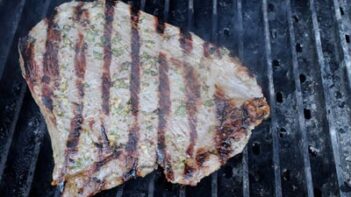
I grill this cut over the hottest fire I can build, 450-500 degrees minimum. The wide surface area and relative thinness mean high heat is what gives you that charred, smoky crust before the inside overcooks. I shoot for 3-5 minutes per side, flipping occasionally until I see a good sear on both faces.
The biggest mistake I see people make is overcooking. This steak is at its best between rare and medium. Once you push past medium (above 145 degrees internal), it turns chewy and rubbery, and no marinade will save it. I pull mine at 125 degrees for medium-rare or 135 degrees for medium, then let it rest 5 minutes. Carryover heat brings it up another 5 degrees.
One thing I've learned over the years: set up a two-zone fire. All your heat on one side of the grill, nothing on the other. Sear hard over direct heat, then slide it to the cool side to finish gently if it needs more time. That way you're in full control of the cook.
This works the same way on gas or charcoal. On gas, crank all burners to high for 10-15 minutes with the lid closed, then turn off one side for your cool zone. On charcoal, I light a full chimney and pile the coals under one half of the grate. Gas gives you more temperature control, charcoal gives you a deeper smoke flavor. I prefer charcoal for this recipe, but I've gotten great results on both.
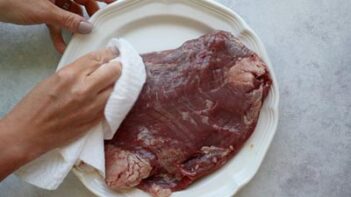
Pat steak dry with a paper towel on all sides. Place steak in a large baking dish, plate or Ziploc bag.
For this step
18 oz flank steak
2
Make flank steak marinade
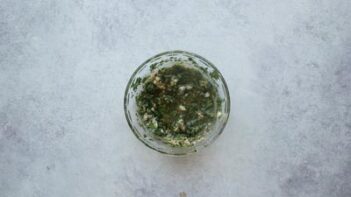
In a small bowl, whisk together avocado oil, minced parsley, minced cilantro, mustard, vinegar, garlic and salt.
For this step
3 tablespoons avocado oil
2 tablespoons minced parsley
2 tablespoons minced cilantro
2 tablespoons stone ground mustard
1 tablespoon red wine vinegar
3 cloves minced garlic
1 1/2 teaspoons salt
3
Marinate flank steak
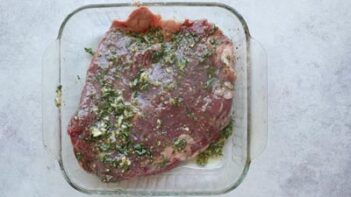
Rub or brush steak marinade all over the meat. Let marinade soak in for at least 1-2 hours but up to 8 hours. Refrigerate while marinating.
4
Grilling flank steak
Thirty minutes before cooking, remove the flank steak from the refrigerator and allow beef to come to room temperature for even cooking. Preheat one side of the grill to high (450-500˚F). Once the grill is hot enough, place the flank steak on the hot side of the grill and cook until well charred, about 3-5 minutes. Flip and continue to cook until the second side is well charred, about 3 minutes more. Transfer the steak to the cooler side of the grill, cover and cook until the internal temperature is 125˚F for medium-rare or 135˚F for medium.
5
Let rest
Transfer steak to a cutting board and allow to rest for at least 5 minutes before slicing the steak against the grain to serve.
Nutrition
Per serving: 6 oz steak
Calories
410
Fat
28g
Protein
36g
Total carbs
1g
Net carbs
1g
Nutrition is an estimate calculated from the ingredients listed. Brands vary, so check labels if you track closely.
Frequently Asked Questions
How long to grill flank steak?
I cook mine for about 3-5 minutes per side over a very hot grill (450-500 degrees). The exact time depends on thickness and how hot your grill runs, but I always go by internal temperature rather than a timer. For medium-rare I pull it at 125 degrees, for medium at 135 degrees. Since this is a thin cut, it cooks fast, so I stay right next to the grill the entire time.
Can you marinate flank steak overnight?
I've done it, but I don't recommend going longer than 8-10 hours. The red wine vinegar in this marinade starts to break down the surface fibers, and past about 10 hours the texture gets chalky and firm instead of tender. My sweet spot is 4 hours. If you're short on time, even 1-2 hours of marinating makes a noticeable difference in flavor.
What internal temperature should flank steak reach?
I pull mine at 125 degrees for medium-rare or 135 degrees for medium. After resting 5 minutes, carryover heat brings it up another 5 degrees or so. I never cook this cut past medium because the texture turns rubbery and tough no matter what. A good instant-read thermometer is the single best tool I own for grilling.
Can you freeze marinated flank steak?
For the freezer, I make the marinade, coat the steak, and freeze it flat in a Ziploc bag. It keeps well for up to 3 months. The nice part is the steak marinates as it thaws in the fridge, so by the time it's defrosted (usually overnight), it's seasoned and ready for the grill.
How do you cook flank steak without a grill?
I use my cast iron skillet when grilling isn't an option. Heat it over high on the stovetop until it's smoking, then sear the steak 3-4 minutes per side. The broiler works too: set it to high, position the rack about 4 inches from the heat, and broil 4-5 minutes per side. I've gotten great results with both methods, though I prefer the cast iron for the crust it builds.
Can yellow mustard be used instead of stone ground mustard?
I've tested this with yellow mustard, stone ground, and Dijon. All three work, but I prefer stone ground because the coarser texture gives the marinade more grip on the surface of the meat. Yellow mustard is tangier and thinner. Dijon falls somewhere in between. Any of them will give you a good result, but stone ground is my first choice for this recipe.
How do you store and reheat leftover flank steak?
I wrap leftover slices tightly in foil or press them flat in a zip-top bag with the air squeezed out. They keep well in the fridge for 3-4 days. For reheating, I use a hot cast iron skillet with a splash of avocado oil, 30-45 seconds per side. The key is keeping it fast so it doesn't overcook and turn tough. I've also eaten cold slices straight from the fridge over a big salad, and the marinade flavor actually holds up better cold than reheated.
Can I use soy sauce or coconut aminos in the marinade?
I've swapped in soy sauce for the red wine vinegar and it works, but it changes the flavor profile from tangy and herbaceous to more of a savory, umami-forward steak. Coconut aminos are sweeter and milder, so I'd use a bit more if you go that route. I prefer the vinegar-mustard version on this recipe because the acidity cuts through the richness of the meat, but for an Asian-style variation I'd do 2 tablespoons soy sauce, skip the mustard, and add a teaspoon of sesame oil.
Almost went with a safer cut to impress people. The stone ground mustard marinade made it look more intentional than it was, and one guest kept asking about the herbs. Definitely repeating this, though I’d push the marinade to an hour.
An hour is better. The red wine vinegar needs more time than 30 minutes to actually work in. I get the herb questions every time, people assume there’s something more exotic going on.
Louder sizzle means drier surface. I press the paper towel into the meat and hold it for a few seconds instead of quick blots. This marinade needs that contact heat to actually sear in, not steam.
It matters with this cut. Flank steak is thin and cooks so fast that cold meat on a 500 degree grill means the outside chars before the center catches up. I do the 30 minutes every time.
I wasn’t sure flank steak could last a week in containers. Most cuts like this get rubbery by day three, so I made a small test batch first. The stone ground mustard marinade is what changed my mind. Sliced thin against the grain and refrigerated overnight, it held its texture better than I expected when I pulled it out for lunch Wednesday. Reheats fine in a dry skillet, about 90 seconds. No microwave needed if you have two minutes. I skip the cilantro when packing since it goes limp, then add fresh when I’m eating. Four servings Sunday, cleared by Thursday. This is in the weekly rotation.
Sarah, yes, especially with this cut. The fibers run long and parallel, so cutting against them shortens every bite. I also never go past medium or it turns rubbery on you.
My wife has to avoid vinegar (acid reflux) and I really want to make this work for her. Would lemon juice be a decent swap, or does vinegar do something to the flank steak that lemon just can’t?
That 10 minutes only holds if the grill is already at 500 before the steak goes on. I’ve had people say it took twice as long and every time the grill wasn’t hot enough.
That fast char smell when the meat hits the grate, batch five and it still stops me mid-conversation. Started going overnight with the marinade instead of just the minimum, and when you slice it the mustard and herbs are actually through the whole thing instead of just sitting on the surface.
Overnight is a different recipe tbh. Four hours felt fine until I cut into the overnight version and saw the herbs had actually gone all the way through.
1 net carb, 36 grams of protein, weeknight. Hard to beat. Most flank marinades I’ve tried lean on sweeteners or citrus and just soften the beef instead of doing anything useful with it. This mustard-herb base goes the other way. Cilantro and parsley totally disappear on the grill, or not disappear exactly, but they just leave this clean grassy note under the crust. Marinated 45 minutes, pressed it in by hand rather than brushing, and it held all the way through. Slice against the grain at medium-rare and it pulls apart cleanly. Next time I’m doubling the marinade to have extra for dipping.
I hand-press too, and the grip it gives on the surface is noticeably different. Laura, doubling for the dip is worth it – it keeps sealed in the fridge 4-5 days and I end up putting it on everything.
Nervous going into this because I’ve never actually made flank steak before, and the 10-minute grill time had me convinced I was going to undercook it. It came out rested and pink in the middle, and I’m still a little stunned. My son who picks out every green thing on his plate ate the whole piece, cilantro marinade and all, then came into the kitchen to ask what I put on it. I did not tell him about the cilantro.
Cilantro and stone ground mustard in the same marinade had me skeptical. I make flank steak all the time but always go soy-based, so this felt like competing flavors waiting to happen. It’s not. The red wine vinegar pulls it together, and the cilantro actually works instead of just sitting on top. Haven’t gone back to soy since.
Only had 20 minutes to marinate instead of the full time. The mustard and vinegar held through the whole cook though, more flavorful than flank I’ve left overnight in simpler marinades.
Gina, the mustard is the reason. Coarser texture grips the surface better than a thin vinegar or soy marinade, so 20 minutes is actually enough for it to do its thing. I’ve had overnight flank in simpler marinades taste like almost nothing compared to this.
Ran out of avocado oil mid-prep, used olive oil to finish it. Emulsified thicker. Actually clung to the steak more evenly than usual. Left it overnight and by morning the stone ground mustard and garlic had really worked into the surface. Worth a shot if the marinade keeps sliding off before the grill.
Olive oil thickens the emulsion with mustard, so yeah that tracks. Just don’t push past 10 hours, the red wine vinegar in this one breaks surface fibers down and you get chalky instead of tender.
Tried this on a cast iron grill pan and the stone ground mustard crust charred up in a way I was NOT prepared for. Outdoor grill might be retiring for this recipe.
The mustard and cilantro marinade is one of the better ones I’ve tried for flank. Pulled it off the grill and the crust had this charred-tangy thing going on that I wasn’t expecting. One note: 5 minutes rest wasn’t enough for my cut. Needed closer to 8-10 before slicing or the juices went everywhere. Nothing against the recipe, just worth flagging if you’re working with a thicker piece. Stone ground mustard flavor is legit though, and I’ll be making this all spring.
Yeah, 5 minutes is the floor for a thin cut. Anything over an inch, I’d go 8-10 easy. The stone ground crust holds up better than you’d expect while it rests.
I’ve never grilled a steak in my life. I picked this one because the marinade felt manageable and ten minutes seemed short enough to not ruin. Expected something tough and dry, honestly. The stone-ground mustard and herbs formed a tangy crust while it cooked, and when I sliced in after resting, the inside was still pink and the smell hit me all at once. I am officially someone who grills steak now.
Been keeping meals simple since January, mostly ground beef and chicken, because I figured good steak cuts weren’t really a keto thing. This marinated flank steak proved that wrong. Rested it five minutes, sliced against the grain, the mustard-herb crust held. 36g of protein, one net carb, done in under ten minutes on the grill. Didn’t think I’d still be eating dinners like this.