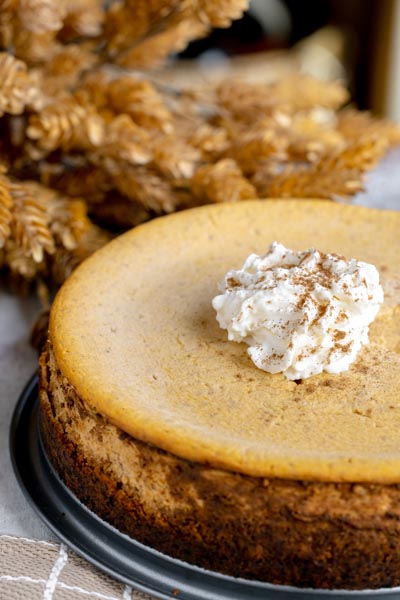


Keto Pumpkin Cheesecake
Published November 24, 2025 • Updated March 14, 2026
This post may contain affiliate links. See my disclosure policy.
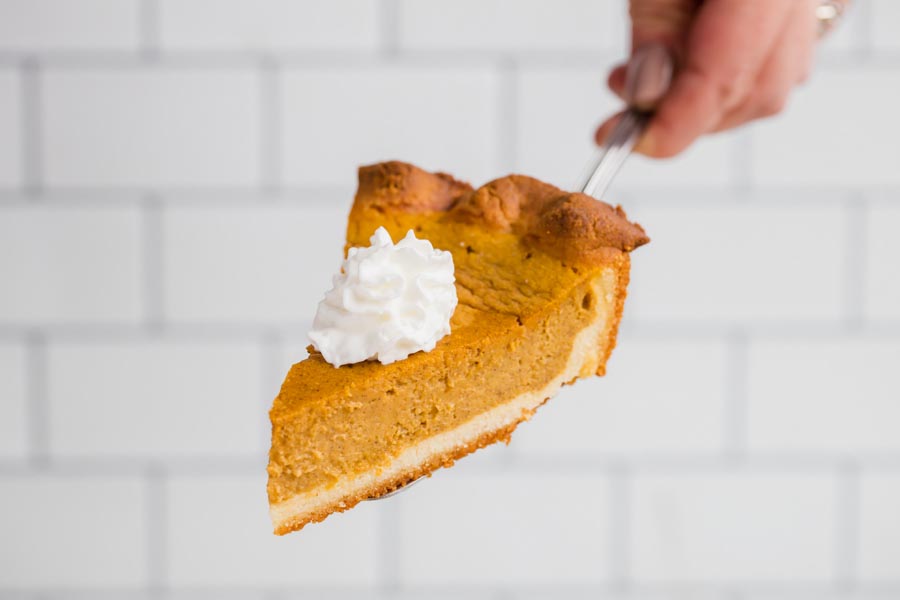
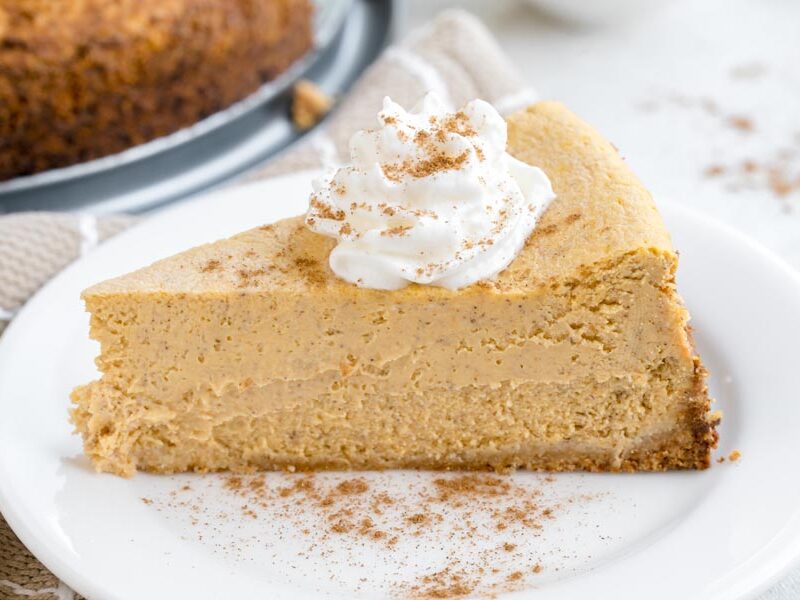
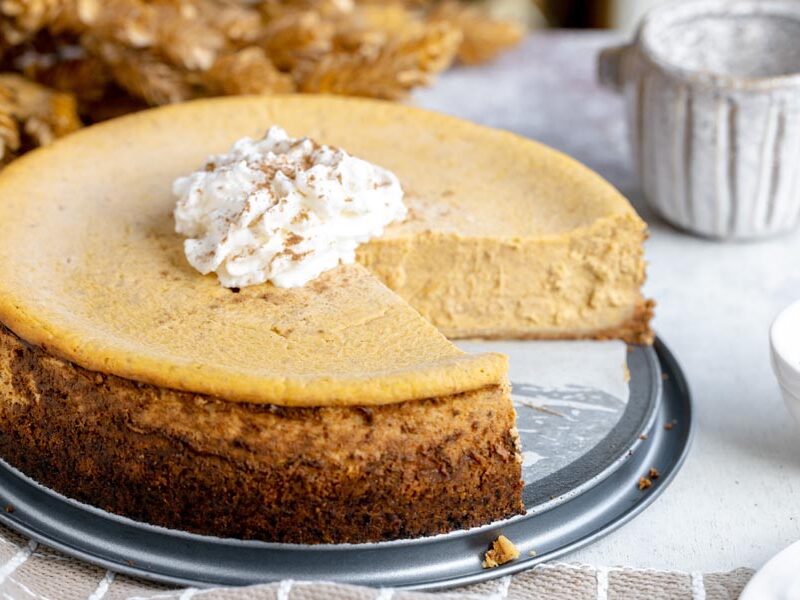
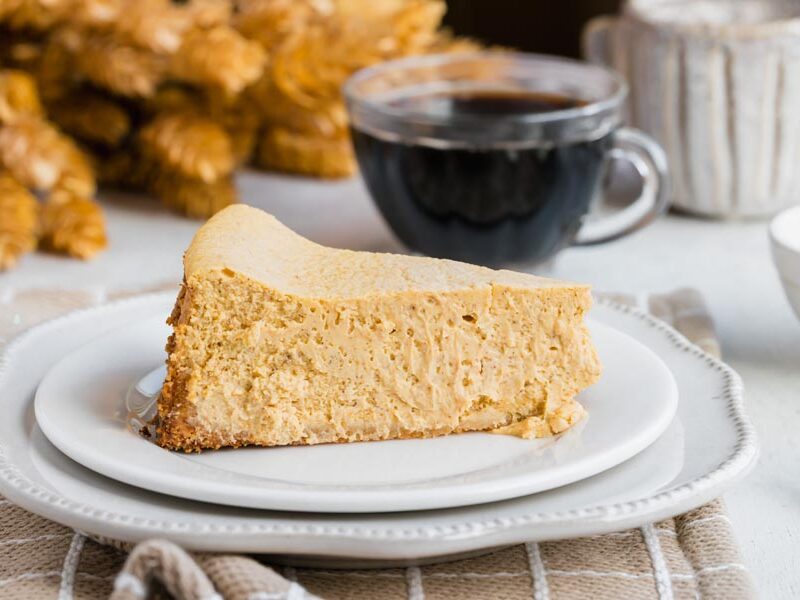
This pumpkin cheesecake starts with a buttery graham-style crust and a velvety filling that tastes like fall in every bite. I bake it using my no-stress method that keeps it creamy and crack-free without ever touching a water bath.
I’ve made my New York-style keto cheesecake more times than I can count, and I bake a pumpkin roll every single fall. But it took me years to combine the two into one dessert, and I’m still annoyed at myself for waiting so long. This recipe hits that perfect middle ground: warm fall spices with the creamy tang of cheesecake, and it’s become the dessert I bring to every Thanksgiving.
The crust is where a lot of low carb cheesecakes fall short, so I spent extra time getting this one right. It’s made with almond and coconut flours, brown sweetener, and vanilla for that nostalgic graham cracker flavor. I tested a straight almond flour crust first and it came out too sandy and crumbly. Adding coconut flour gives it a tighter crumb that holds together when you slice, which matters when you’re cutting clean portions for a holiday table. Reader Lindsey found the same thing I did: press the crust a solid inch up the sides or it bakes thinner than you expect.

The filling uses three blocks of cream cheese, a full cup of real pumpkin puree (not pie filling), and a spice blend I dialed in over multiple batches. Most recipes dump a tablespoon of pumpkin pie spice and move on. I measure cinnamon, ginger, nutmeg, and cloves separately so the cinnamon leads and the cloves stay in the background. That ratio is what gives the filling depth without tasting like a candle.
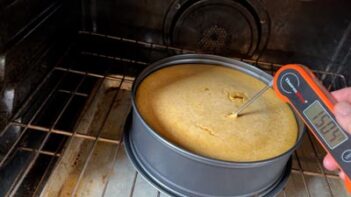
What I’m most proud of is the baking method. I skip the water bath entirely. A quick blast at 450°F sets the top, then I drop to 200°F and let the cheesecake coast to an internal temp of 150°F. No foil wrapping, no boiling water, no soggy crust. Reader Kevin has made this four times and still says the crack-free top surprises him every batch.
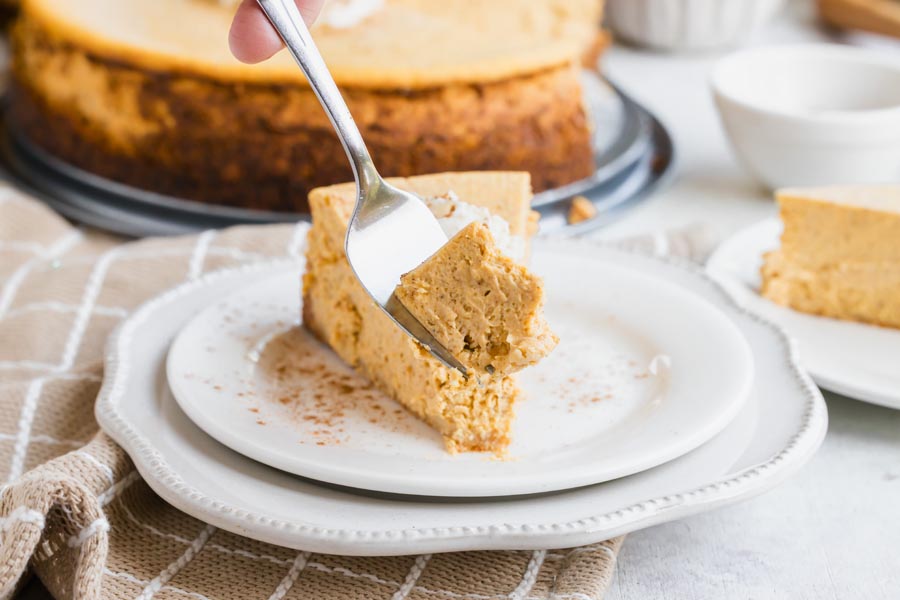
One serving tip I confirmed after a reader mentioned it: pull each slice out about 10 minutes before serving. The pumpkin flavor opens up significantly once it loses that deep chill. Straight from the fridge it’s good. At room temperature it tastes like fall. Each slice comes in around 5 net carbs, so it fits your macros even on a holiday spread. I’ve brought this to Thanksgiving two years running and left with an empty plate both times. If you love fall baking, try my pumpkin cupcakes, pumpkin mug cake, or spice cake with cream cheese frosting for more seasonal options.
Explore hundreds of keto recipe videos with step-by-step instructions, tips, and tricks to make keto easy.
Keto Graham Cracker Style Crust Ingredients
1 ¼ cup almond flour
3 tablespoons coconut flour
1 tablespoon sugar free brown sweetener
1/2 teaspoon baking powder
1/2 teaspoon xanthan gum
1/4 teaspoon salt
4 tablespoons unsalted butter, chilled and cubed
1/2 teaspoon vanilla extract
Keto Pumpkin Cheesecake Filling Ingredients
24 oz (3 blocks) cream cheese, softened to room temperature
1 cup pumpkin puree
1 cup sugar free sweetener
1 ½ teaspoons vanilla extract
2 teaspoon ground cinnamon
1 teaspoon powdered ginger
1/2 teaspoon ground nutmeg
1/2 teaspoon salt
1/4 teaspoon ground cloves
1 egg yolk
4 large eggs
Step by Step Instructions
Preheat oven & prepare the pan
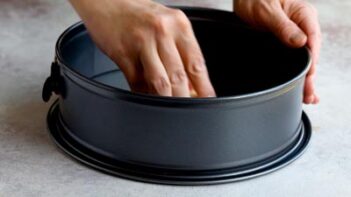
Preheat oven to 350 °F and spray the inside of a 9-inch springform pan with cooking spray or brush with melted butter.
Mix the crust ingredients
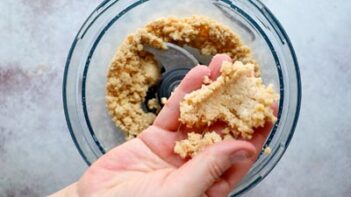
In a food processor, add almond flour, coconut flour, brown sugar sweetener substitute, baking powder, xanthan gum and salt. Pulse a few times to combine. Add cubed butter and vanilla. Pulse until coarse crumbled form.
- 1 ¼ cup almond flour
- 3 tablespoons coconut flour
- 1 tablespoon brown sugar substitute
- 1/2 teaspoon baking powder
- 1/2 teaspoon xanthan gum
- 1/4 teaspoon salt
- 4 tablespoons unsalted butter, chilled and cubed
- 1/2 teaspoon vanilla extract
Bake crust
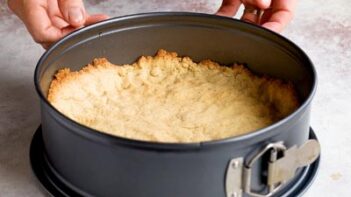
Press the crust ingredients into the prepared springform pan. Make sure you press into an even layer along the bottom and a little bit up the sides. Bake at 350 °F for 9 minutes. Remove from oven to cool. Increase oven temperature to 450 °F.
Start pumpkin filling
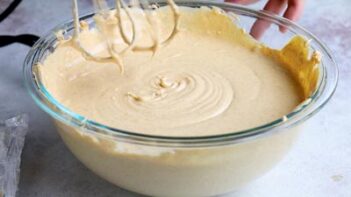
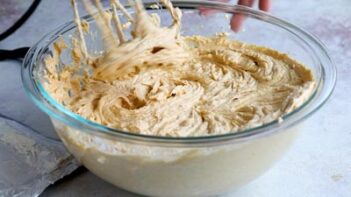
In a large bowl, add cream cheese, sugar-free sweetener, pumpkin, vanilla, and our spices – cinnamon, ginger, nutmeg, salt and cloves. Mix with an electric mixer at medium-low speed until smooth.
- 24 oz cream cheese, softened to room temperature
- 1 cup pumpkin puree
- 1 cup sugar-free sweetener
- 1 ½ teaspoons vanilla extract
- 2 teaspoon ground cinnamon
- 1 teaspoon powdered ginger
- 1/2 teaspoon ground nutmeg
- 1/2 teaspoon salt
- 1/4 teaspoon ground cloves
Add the eggs
Add egg yolk and continue mixing at medium low speed until combined. Scrape bowl and add remaining eggs two at a time. Mix until combined (about 1 minute).
- 1 large egg yolk
- 4 large eggs
Bake cheesecake
Pour cheesecake filling on top of crust in the springform pan. Place pan on a cookie sheet. Bake at 450°F for 10 minutes. Lower heat to 200°F and continue baking until center of the cheesecake reaches an internal temperature of 150°F (about 1- 1 1/2 hours). Remove from oven. Let cool for a few minutes then slide a knife around the edges to loosen from the sides. Continue cooling at room temperature for 1-2 hours before wrapping with plastic wrap and placing in the refrigerator to finishing cooling (about 3 hours). To unmold cheesecake from the springform pan, flip the latch to remove the side. Let cheesecake stand at room temperature for about 30 minutes before serving.
Nutrition disclaimer
The nutrition information provided is an estimate and is for informational purposes only. I am a Doctor of Pharmacy (Pharm.D.); however, this content is not intended to be a substitute for professional medical advice, diagnosis, or treatment. Always consult your physician or other qualified health provider before making any lifestyle changes or beginning a new nutrition program.
Your Macros. Your Recipes. Calculated in 60 Seconds.
Get personalized keto macros and instantly see which recipes fit your targets. No more guessing what to eat.
Get My Macros + Recipes →Frequently Asked Questions
Can I use pumpkin pie filling instead of pumpkin puree?
I wouldn't. Pumpkin pie filling has added sugar and pre-mixed spices that will throw off both the flavor balance and the carb count. I use plain pumpkin puree so I can control exactly how much sweetener and spice goes in. If the can says 'pumpkin pie filling' or 'pumpkin pie mix,' put it back. You want the one that lists pumpkin as the only ingredient.
Why did my cheesecake crack?
In my experience, the two biggest culprits are overmixing the eggs and cooling too fast. When you beat the eggs on high or mix longer than about a minute, you whip in air bubbles that expand in the oven and then collapse into cracks. I mix my eggs at medium-low speed, just until they disappear into the batter. The other fix: after the 10-minute blast at 450°F, I open the oven door for a few seconds to help the temperature drop to 200°F. That transition is where most cracks happen.
Can I make this crustless?
I've done it. Spray your springform pan well and pour the filling straight in. The bake time stays the same. You lose that graham-style crunch, but the filling is rich enough to stand on its own. I actually prefer the crustless version when I'm making it for myself and want to save a few carbs.
Why does the pumpkin flavor taste muted straight from the fridge?
Because cold dulls spice flavors, and pumpkin is subtle to begin with. I noticed this myself and started pulling slices out about 10 minutes before serving. The difference is real. The cinnamon and ginger wake up, the pumpkin tastes richer, and the filling softens just enough to feel more custard-like. One of my readers, Dana, independently figured out the same thing after meal-prepping 12 slices for the week.
What sweetener works best for this recipe?
I've tested this with granulated erythritol, monk fruit blends, and allulose. My go-to is a granulated monk fruit blend (like Lakanto) because it measures 1:1 with sugar and doesn't recrystallize in the fridge. Allulose works great too and gives the filling an even silkier texture, but use about 70% of the amount since it's sweeter by volume. Straight erythritol can have a slight cooling aftertaste in a low carb cheesecake, so I'd avoid it as the sole sweetener.
Can I make mini cheesecakes in a muffin tin?
I haven't tested a mini version of this specific recipe yet, but the method would be the same as my mini keto cheesecakes. Press about a tablespoon of crust into each lined muffin cup, fill to about three-quarters, and reduce the bake time. I'd start checking at 15 to 18 minutes at 325°F instead of using the 450-to-200 method, since the smaller volume doesn't need that heat shock.
Can I swap the almond flour crust for pecans or walnuts?
I've tried a pecan crust on other cheesecakes and it works well. Pulse the pecans in a food processor until fine (but not butter), then use the same ratios. Walnuts work too but tend to taste slightly more bitter. The reason I use the almond-coconut blend for this recipe is that the coconut flour tightens the crumb and gives you cleaner slices. A straight nut crust will be more crumbly, so press it firmly and pre-bake for the full 9 minutes.
Can I make a no-bake version of this?
I haven't developed a no-bake version because the baked filling is what gives this its texture. The 450-to-200°F method produces a custard-like center that a no-bake cream cheese filling can't replicate. If you want something you can set in the fridge without an oven, I'd try a mousse-style approach (whipped cream folded into the pumpkin cream cheese base), but it will be a different dessert entirely. My baked version is worth the oven time.

Third time making this and I finally added a pinch of cardamom to the filling. That warm, almost floral layer on top of the pumpkin spice caught me off guard. Not going back.
Thought for sure skipping the water bath was going to give me a cracked disaster, but it came out completely smooth. Every other keto pumpkin cheesecake I've tried has this thick, almost chalky filling and this one is actually creamy.
Made this four times since fall and just started batch five. The crack-free method sold me initially, but it's the almond flour crust that keeps me coming back. Holds up clean even on day three.
One thing that made the second batch way better: I drained the pumpkin puree through a paper towel for about 15 minutes first. The first one was a little too soft in the middle and I couldn't figure out why. After draining, the filling actually set up firm, the way cheesecake should. Also swapped the vanilla for maple extract and it pushed that fall flavor up a notch. It's April and I'm still making this.
Made this last weekend and my daughter, who treats pumpkin as a strictly September-through-November ingredient, ate two slices and then got quiet the way she does when something actually got her. She kept poking at the crust before trying it, said it didn't look like any cheesecake she'd had before (the almond flour base does look different than graham cracker). But one bite and she stopped talking for a full second. I was genuinely nervous the whole bake since I'd never done cheesecake without a water bath, and it came out crack-free and so creamy I felt like I'd finally figured something out. She asked me to make it again for her friend's birthday in June. In April. That's the review.
Crack-free without a water bath sold me too the first time I made it. June birthday request in April. She's in.
Brought this to a spring dinner and didn't say a word about it being keto. The no-water-bath method had me a little nervous since I've cracked more cheesecakes than I care to admit, but it came out completely smooth. One of my friends kept circling around it trying to figure out what was 'different' about it. She eventually landed on 'lighter somehow' and I just nodded and changed the subject.
I started keto in January and spent two months convincing myself I just wouldn't eat dessert anymore. That was the deal I made with myself. Then I made this last weekend (first cheesecake I've ever attempted, keto or otherwise) and I was not prepared for how much it felt like getting something back. The crust has this buttery, slightly crisp texture and I kept poking at it because I couldn't figure out how almond flour did that. The filling is so smooth and creamy, nothing watery or off about the texture, it just tastes like cheesecake. I cried a little, which is embarrassing to admit, but there it is. Making it again for Easter and not saying a word to anyone about what's in it.
Brought this to Easter dinner. My sister-in-law bakes from scratch and the first thing she asked was how I got it to set so cleanly with no cracks. When I said I skipped the water bath she went quiet for a second, then pulled up the site herself.
My wife is dairy-free so I'm trying to figure out if this works with vegan cream cheese. The filling uses 3 full blocks, and in my experience dairy-free cream cheese is a lot softer and wetter than the regular kind. Would it set up okay with the same bake time, or does the texture end up too loose?
Violife holds up better than most - brand matters here. I'd extend the bake by 5-10 minutes and give it a full overnight chill before cutting. Texture runs a little looser than regular but it does set.
My son has claimed for years that he hates pumpkin, anything pumpkin, won't touch it. Made this on Sunday mostly for myself and he was cutting into it before I'd even unclipped the springform. Told him what it was after he finished his slice and he gave me this look, then just said 'when are you making that again.' I think it was the almond flour crust that got him. That buttery crunch against the filling hits differently than any regular cheesecake crust I've ever made.
That crust converts people. The almond-coconut flour combo gives it this crumbly, buttery texture that regular graham just doesn't have. Pumpkin hater asking when you're making it again - that's the one.
Easter brunch, 18+ people, so I need to at least double this. My instinct is two separate 9-inch cheesecakes instead of trying a bigger pan, but have you tested it either way? I'm nervous about how the center would set with your no-water-bath method since timing gets weird when you go deeper and wider. The crust is what I'm most unsure about. The almond flour to coconut flour ratio already feels precise and I genuinely can't predict what happens when you double both at once. Two pans seems more predictable. But if a 10 or 11 inch actually works I'd rather just do one.
Two 9-inch pans. The crust ratio doubles cleanly, I've done it on other cheesecakes and the almond-to-coconut flour balance holds. The timing issue in a bigger pan is real and I wouldn't risk that for 18 people.
Used a muffin tin since I don't have a springform pan, pressed the crust into each cup. Chilled about an hour and they popped right out. Works fine if you're missing the pan.
Oh interesting, only an hour and they popped clean? I always figured the smaller volume would set faster but hadn't tested it. Good to know the crust holds.
Added cardamom to the filling on top of the existing spices because I put it in everything fall-related, and somehow it made this taste even more like an actual bakery cheesecake. The pumpkin gets this warm, almost floral thing from it. Worth it if you have any.
Cardamom in fall baking is so good. That floral warmth you're describing is exactly why I keep meaning to test it here but keep forgetting. Going in on my next batch.
Batch-made this for the week and it holds up through day five with no texture change. The trick is letting it chill overnight before slicing (the filling firms enough to cut clean), then stack slices with parchment between and refrigerate. Easiest dessert prep I've done for a full work week.
Overnight rest changes the filling texture in a way a two-hour chill doesn't. Mine usually disappears before day five but I believe it.
Tried a few keto pumpkin cheesecakes over the last couple years, and the crust was always the problem. Either too crumbly to slice cleanly or with that chalky aftertaste from too much coconut flour. The almond and coconut flour ratio here is different, it actually holds a clean edge when you cut it. The filling is properly creamy too, no dense or gummy patches from overcooking. First one I'd bother making outside of fall.
Yeah the coconut flour ratio took the most testing. Go past 3 tablespoons and that chalk creeps in. I make this in January when everyone's sick of holiday food.