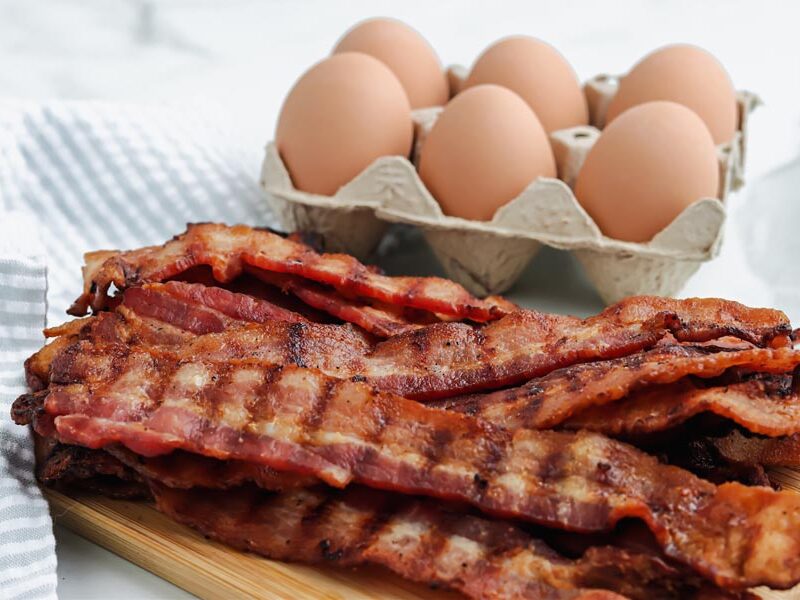
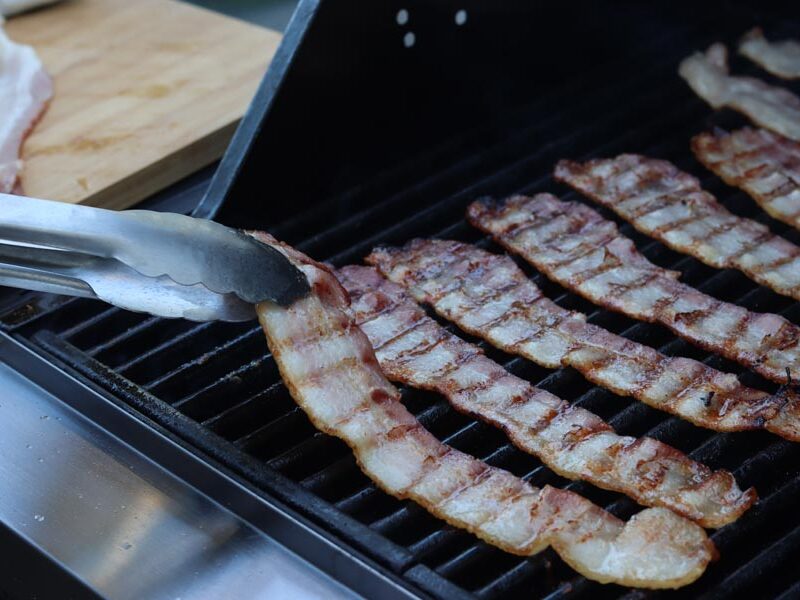
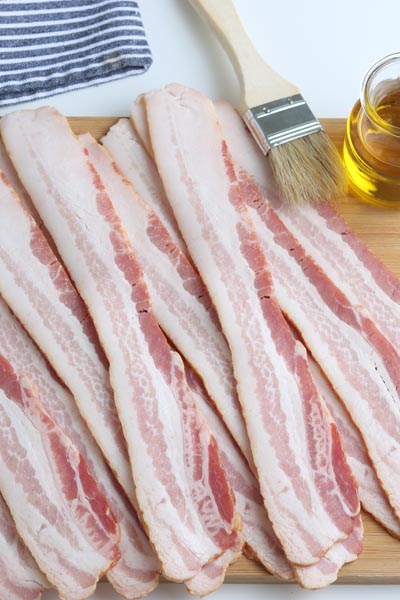
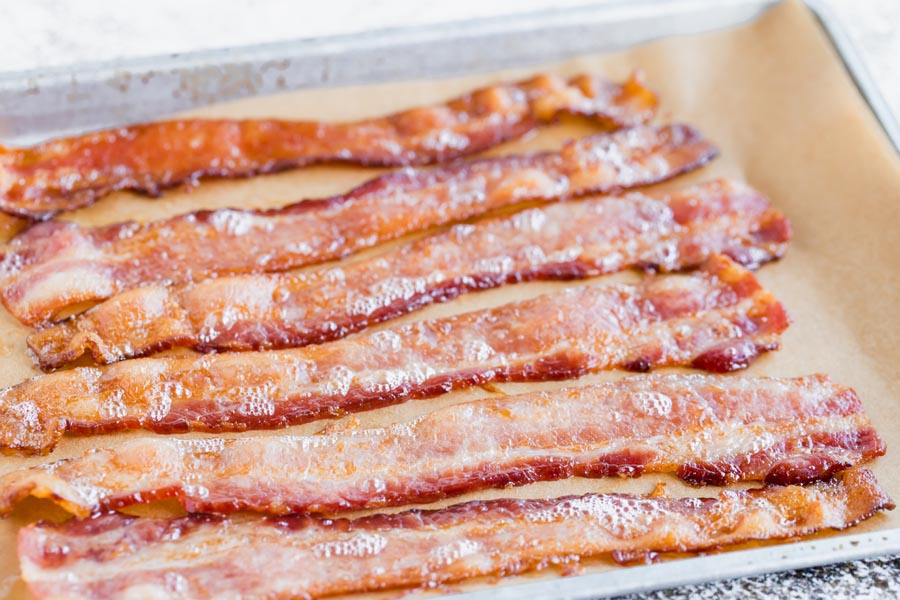
Crackly bacon from the grill, with the extra smokiness of charcoal or wood when that is what you cook over. I lay thick-cut strips across the grates over indirect heat at about 325°F, then turn and check them as the fat renders.
Bacon belongs on the grill when you're already cooking outside or want to keep the stovetop clear. With charcoal or wood, it also picks up a smoky flavor that suits a breakfast plate as well as a burger.
The key is indirect heat. Put the strips over an unlit burner or an area without coals directly underneath. Fat will drip as it renders, so stay at the grill and move the bacon away from any flare-up.
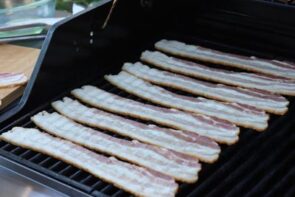
I lay the strips across the grate bars, not along the gaps. Thick-cut bacon is easier to turn and less likely to slip through. Start checking around 10 minutes, and keep going until the fat has rendered and the strips are as crisp as you like.
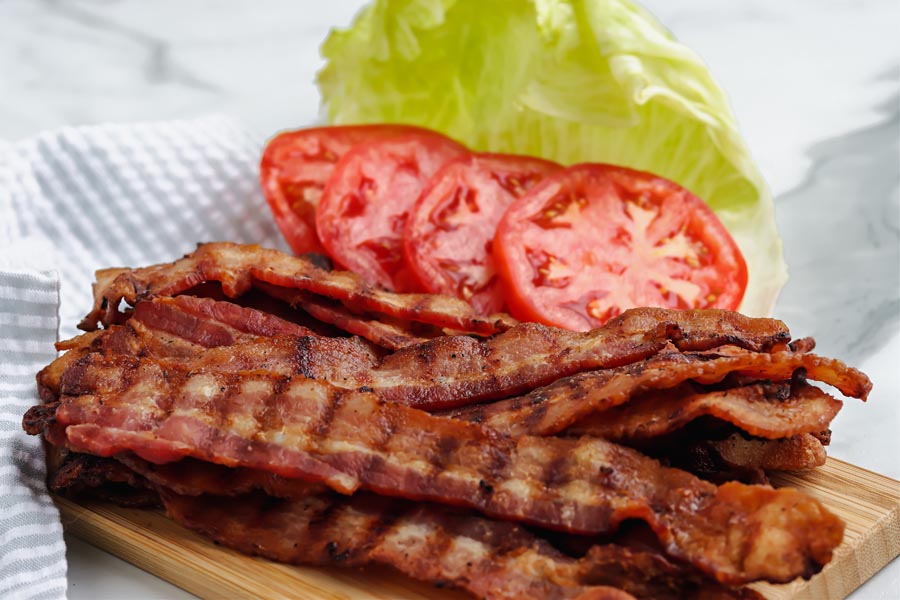
Use the finished bacon in a breakfast sandwich, crumble it over eggs or vegetables, or serve it alongside sliced tomatoes. For another way to bring bacon to the grill, try bacon wrapped asparagus kebabs.
Choosing bacon for the grill
Thickness matters more to this method than whether the package says cured or uncured. Pick slices that are thick enough to turn easily, and check the ingredient and nutrition label for sugar and sodium.
‘Uncured’ does not tell you that bacon is automatically saltier, lower in sodium or better for grilling. Products vary. Use the label for the bacon you buy rather than assuming the curing description gives you its nutrition.
Setting up indirect heat
On a gas grill, heat one side and leave the other side unlit. On a charcoal grill, arrange the coals to one side. Place the bacon on the grate over the cooler area so dripping fat is not falling directly into the main heat source.
Indirect heat reduces scorching, but it does not guarantee there will be no flare-ups. Keep a cooler space available and move the strips if flames reach them. Let the grill cool before cleaning its grease tray according to the manufacturer’s instructions.
Serving and flavor ideas
Freshly cracked black pepper is an easy addition before grilling. If you add a sweet glaze, use it near the end and watch closely because it can burn. Count the glaze separately from the plain-bacon nutrition.
The method here cooks strips directly on the grates, so it does not collect clean rendered fat for another recipe. For eggs or vegetables you plan to cook in bacon fat, use a pan method that collects it separately instead.
How to store grilled bacon
Refrigerate cooked bacon promptly in an airtight container and use within 3–4 days. Don’t leave it out to cool for hours. For longer storage, freeze portions with parchment between the strips so you can remove only what you need.
Reheat a portion in the air fryer or microwave until it reaches 165°F. Thin strips heat quickly, so check frequently; a fixed 15-second microwave time will not work for every portion or appliance.
How to grill bacon step by step
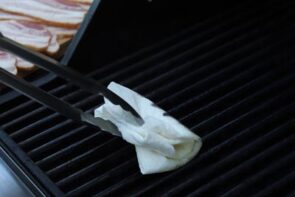
Set up the grill for indirect heat at about 325°F. Clean the grates and brush with a light coating of oil.
Lay the bacon perpendicular to the grate bars on the cooler side, away from the lit burner or coals.
Cook for about 10–14 minutes, depending on thickness, turning as needed. Watch throughout cooking and move strips to a cooler area if flames flare up.
Transfer to a paper towel-lined plate when the bacon is cooked and crisped to your liking.
Best bacon for grilling
The card uses thick-cut bacon because it is easier to handle on the grates. Regular slices cook faster and shrink more. Keep either cut over indirect heat for this method; direct flame can scorch it before the fat finishes rendering.
Set up the grill for indirect heat at about 325°F, heating one side and leaving a cooler area for the bacon. Clean the grill grates and brush with a light coating of oil.
2
Grill bacon
Lay the bacon strips perpendicular to the grate bars, away from the lit burner or coals. Cook over indirect heat, checking around 10 minutes and turning as needed until the bacon is cooked and crisped to your liking. Thick slices may take 12–14 minutes or longer. Watch throughout cooking and move strips to a cooler area if flames flare up. Transfer to a paper towel-lined plate.
Nutrition
Per serving: 3 slices
Calories
210
Fat
15g
Protein
12g
Total carbs
0g
Net carbs
0g
Nutrition is an estimate calculated from the ingredients listed. Brands vary, so check labels if you track closely.
Frequently Asked Questions
How do you know when grilled bacon is done?
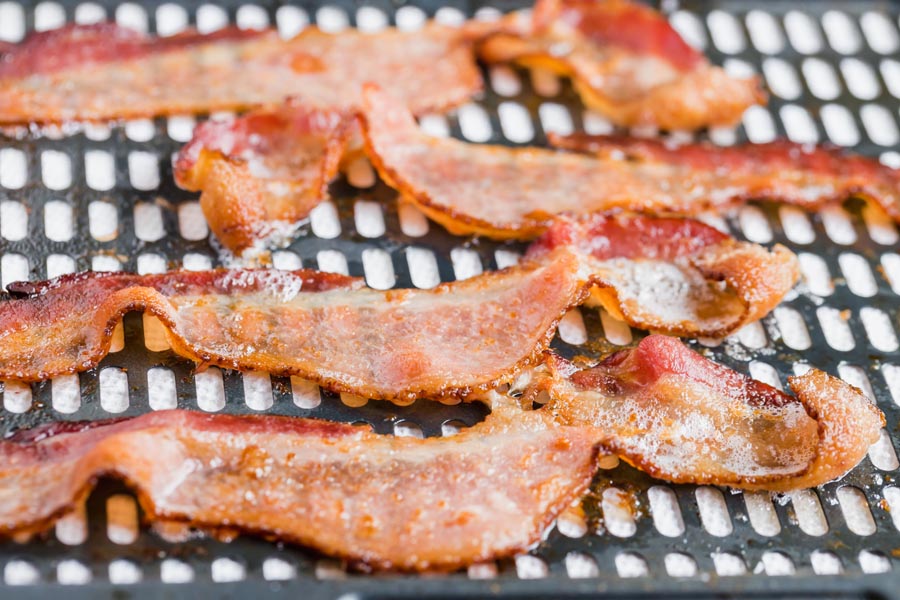
I look for golden-brown color, edges that have started to curl and crisp, and fat that's mostly rendered but still a little flexible in the center if you like any chew. I pull mine just before it looks done, because it keeps cooking for another minute on the plate.
Can I grill bacon at 400 degrees?
I don't recommend it. Every time I've run the grill hotter, the fat drips too fast and causes flare-ups, and going much lower takes forever. That's why I've settled on 325°F over indirect heat as my sweet spot after years of doing this.
Can you grill bacon on a gas grill?
Yes. I light one burner, bring that side to about 325°F, and lay the strips over an unlit burner so they cook over indirect heat, then flip once around the halfway mark. Watch for flare-ups, and if flames pop up, move the strips to a cooler area until they settle.
How do I keep bacon from falling through grill grates?
I lay the strips perpendicular to the grate lines so each one bridges across several bars instead of sitting in a gap. I lost my share of strips before I started doing this, and it costs nothing and works with any cut.
This is the first breakfast in two years of keto that didn’t feel like settling. Same twelve slices of thick cut, but standing out there with my coffee while they cook is the part I missed.
Figured grilled bacon would need constant babysitting. The indirect setup runs itself though, and two people actually just stood there watching the fat render. Fair warning: the window between done and overdone is tighter than I expected on thick-cut, and my first batch went too far.
Annie, not sure if this counts as a compliment exactly, but one of my friends said the bacon ‘tasted different, like from somewhere.’ When I told her I just grilled it she kind of stared at me. Eight people over for a late Saturday brunch, half of them not watching what they eat. One guy who genuinely doesn’t do breakfast food was going back for more before anyone else sat down. Did not see that coming. Kept it around 325, let the fat render away from the heat, nothing stuck to the grates, nothing burned (which for me is not always a given). There’s something about charcoal smoke getting up under the fat that I can’t get on a pan no matter what I try, and I think that’s what had her confused about where it came from. The plate was empty before I got back to the grill to put the tongs away, so next time I’m doubling it before anyone shows up.
David, ‘tasted different, like from somewhere’ is the reaction charcoal earns. She just didn’t have a frame for it. The non-breakfast guy going back first before anyone sat down is the better story anyway. That doesn’t happen with every preparation. You had the temp dialed too, 325 with the fat away from the heat is where it clicks and most people push too hot their first time. Doubling before they show up is right. Full pound done before anyone parks because it’s always cleared before I get back to the grill.
Zero flare-ups the last four grill sessions once I started putting a disposable foil pan under the coals. Fat has somewhere to go instead of hitting them and igniting. Before that I was doing constant lid checks, moving strips every time flames jumped, and the bacon would cook unevenly the whole time. Indirect heat is supposed to mean hands-off, but you don’t actually get that if the drips keep flaring. Now I’m out there maybe once to flip. That’s it. One pan for every couple of burners on gas, and on charcoal I fold a double sheet of heavy foil into a little tray. Can’t go back.
The indirect heat instruction had me skeptical. Fat needs fire under it, or so I figured. Put the strips away from the flames anyway and eight minutes later the fat had gone from raw to that crackling, translucent stage without a single flare-up. I’ve done thick-cut in the oven for years to avoid splatter, but the smokiness here gets INTO the meat in a way the oven never does.
My 12-year-old smelled this from inside and came out to the backyard barefoot. She doesn’t do that for anything I cook. I’ve made her bacon a hundred ways and she’s never once stood at the grill watching the last two minutes like she had a stake in it.
My husband is a cast iron bacon purist, so I was not expecting much enthusiasm when I made this outside last weekend. He watched me lay the strips away from the direct heat and told me I was doing it wrong. Then he ate four pieces standing at the grill before I could even get them to the plate. Something about the char at the edges that a skillet just never gives you.
My dad used to cook bacon on the grill every Fourth of July and I thought that was just a him thing. This brought all of that back, the smell especially, that charcoal smoke hitting the fat as it renders. Saving this for every cookout from here on.
Kids smelled it from inside and were on the patio before I pulled the first strip. 325 indirect keeps the fat from flaring. Strips come off flat, good char. We always do bacon when the grill’s already going.
Been cooking bacon on a cast iron skillet my whole life and never saw any reason to drag it outside until I tried this. The indirect heat thing is what got me. I went in expecting flare-ups and char, not actual even cooking. Every strip had this layer of smoke flavor on it that the skillet just flat out can’t do. Burned my first batch because I had the heat too high, so the 325 range on the thermometer actually matters. Second try came out right. The cleanup is also real. Wiped the grates, walked away. That skillet takes me 20 minutes of scrubbing. Not going back.
325 is not negotiable with bacon. I’ve pushed it higher trying to speed things up and ended up exactly where you were on the first try. The cleanup thing is what finally got my husband to try it outside. He hates dishes.
The indirect heat thing was new to me and it actually worked (way fewer flare-ups than when I just lay bacon straight over the flame). Mine were pretty thick-cut so I probably could have pulled them a minute sooner, but the smoky flavor came through in a way my stovetop never gets close to.
Direct heat with bacon is basically asking for flare-ups. The fat drips too fast. For thick-cut, I watch the fat going translucent more than the color on the lean side. That’s when you’re close.
Thought grilling bacon was just a gimmick. Every time I tried it before I got flare-ups and burnt ends. The indirect heat setup actually fixed that, and the smoke you get is something my skillet flat out can’t touch.
Four grilling weekends in a row and I still can’t nail the timing on thick cuts. But the indirect heat setup? Zero flare-ups, and the smoky char beats any skillet bacon I’ve made.
Thick-cut needs closer to 12-14 minutes, and I check every 3-4 minutes instead of waiting. Flip once when the underside goes from pink to golden. The fat takes longer to render and that’s where the timing trips people up.
Okay so I was completely convinced this was one of those gimmick things where it sounds interesting but you end up with a mess and regular-tasting bacon, like why would you move something that works perfectly in a pan to a grill. First real spring weekend I finally tried it because we were already outside anyway and I figured if it flopped I still had a backup plan. The indirect heat part threw me at first (I almost set it right over the flames), but once I got it away from the direct side and just let it go, the fat started rendering in this slow even way I’ve never seen in a cast iron. And then the smoke got into it. I don’t know how else to say it except it made bacon taste like bacon but more so, with something underneath the salt that a skillet just cannot do. I stood there eating pieces off the grates before they even made it to a plate, and now I’m trying to figure out how to justify firing up the grill on a Tuesday morning.
Tuesday morning is completely justified. If you want to push further into what you tasted, try tossing a handful of applewood chips on the coals – it pulls something out of the cure that hickory doesn’t get.
Batch cooked two pounds on indirect heat Sunday for the week ahead. Reheats cleaner than pan-fried and holds its texture better in the fridge. Would have given five stars but I tried rushing the first batch over direct heat and it curled up and burned at the ends.
My husband does NOT cook but he spent the whole time standing outside in February cold because he ‘just wanted to watch it.’ Once those thick-cut strips started picking up that smoky charcoal smell he was basically useless for anything else. The flavor difference from pan bacon is genuinely shocking — I wasn’t prepared for how much the charcoal changes it. Four stars because we had a little flare-up situation (our fault, we moved the strips too close to the heat) but the recipe was clear, we just didn’t listen.
Indirect heat at about 325°F helps, but it cannot rule out every flare-up. Keep the strips away from the lit burner or coals, watch while they cook, and move them to a cooler area if flames reach them.