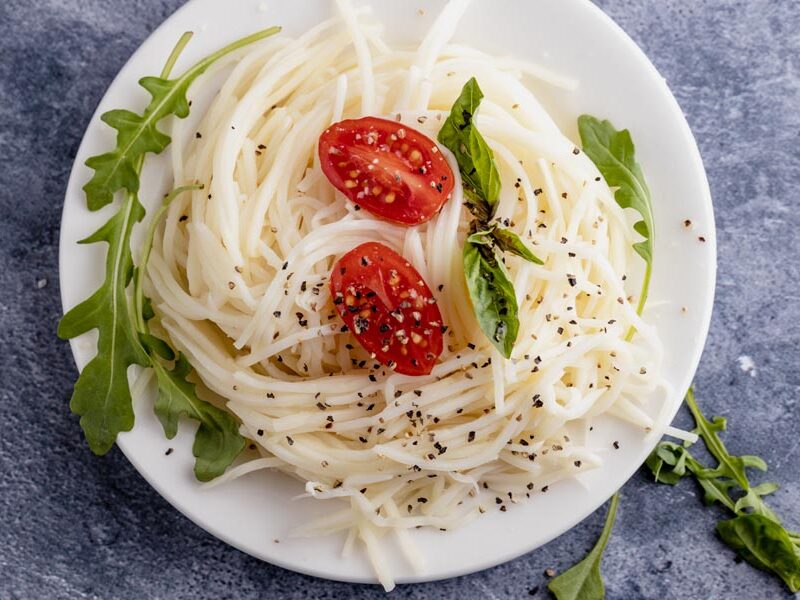
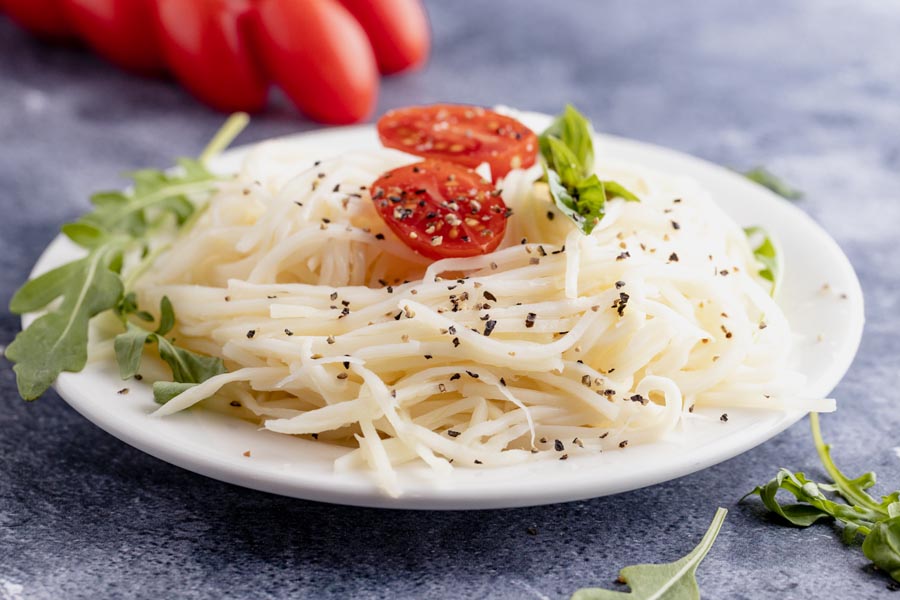
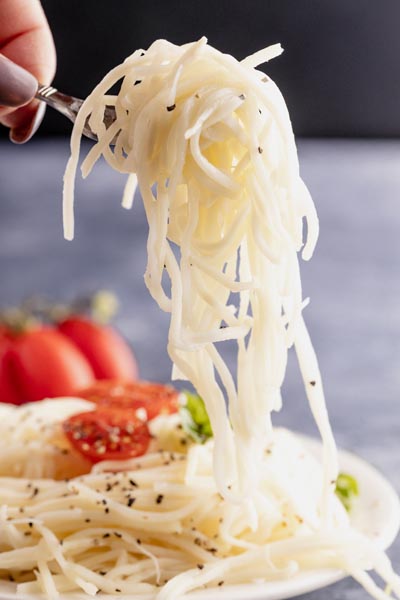
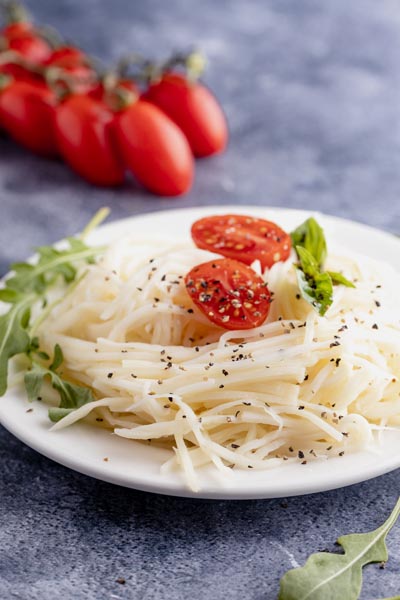
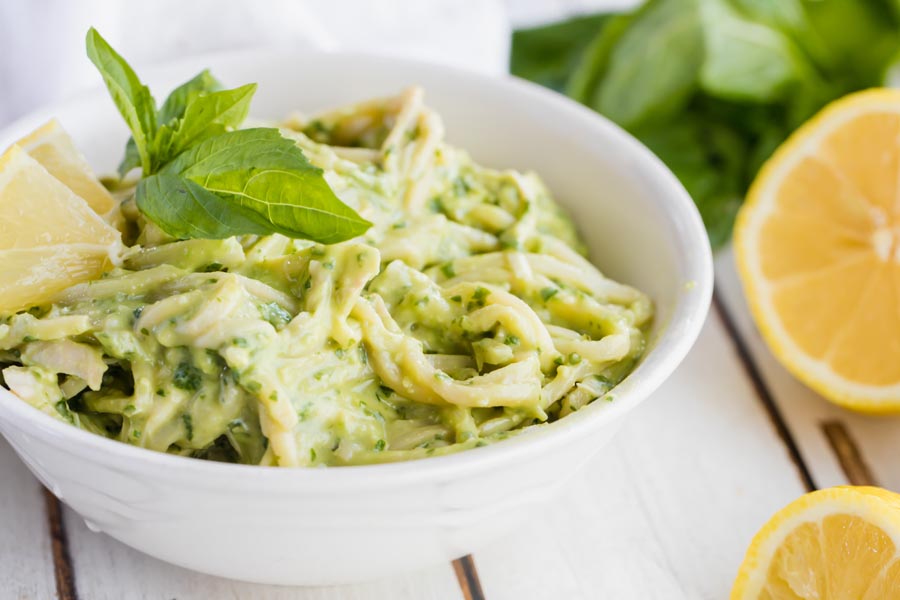
Tender hearts of palm strands give you a quick base for your favorite pasta sauce. I use Natural Heaven noodles, which need no rinsing or boiling. Drain off any liquid, toss with sauce, and serve; warming them is optional.
Hearts of palm pasta is one of the noodle alternatives I compared in my keto noodle video. I use Natural Heaven here because the strands are ready to eat from the package, without a pot of boiling water or a rinsing step.
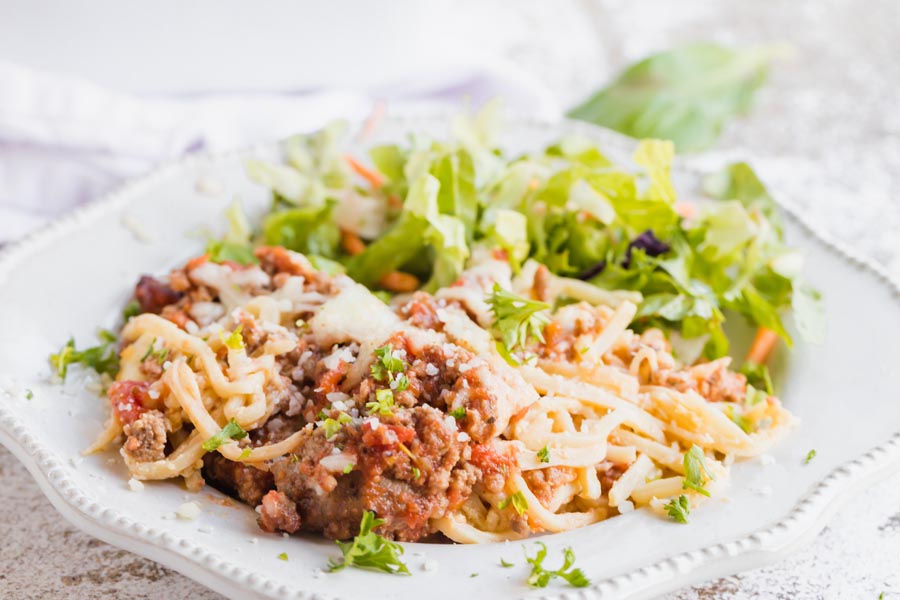
The noodles are cut from hearts of palm, the edible inner portion of a palm tree. They have a mild vegetable flavor and a different bite from wheat pasta. A sauce you enjoy makes a big difference. My keto spaghetti is one way I use them, with a tomato and meat sauce.
This recipe covers the quick preparation: open the package, drain any liquid, and add sauce. A pan sear is not required. For a warm dish, heat the noodles according to the package or the complete recipe you're making.
One 9 ounce package makes two portions here. That's half the package per person, not the smaller serving printed on some labels. The nutrition below covers the plain noodles only; oil, sauce, cheese, and other toppings add to it.
What to expect from the noodles
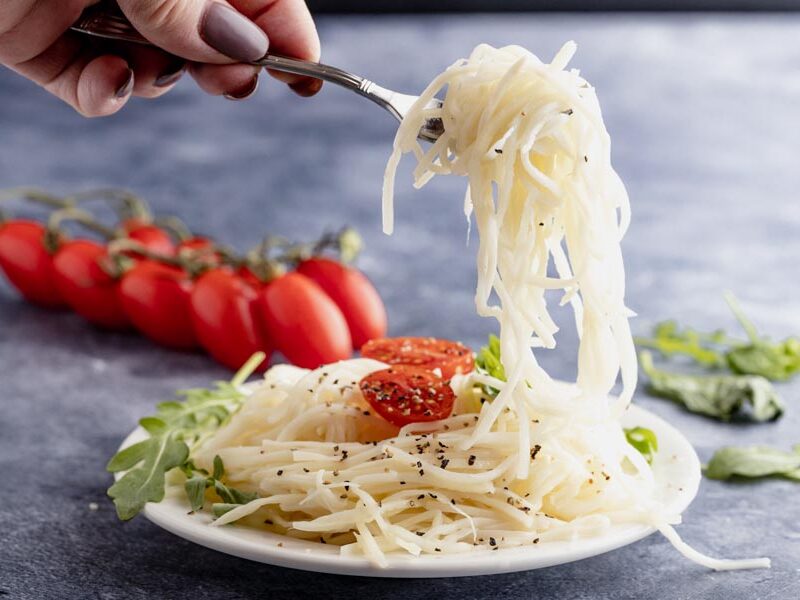
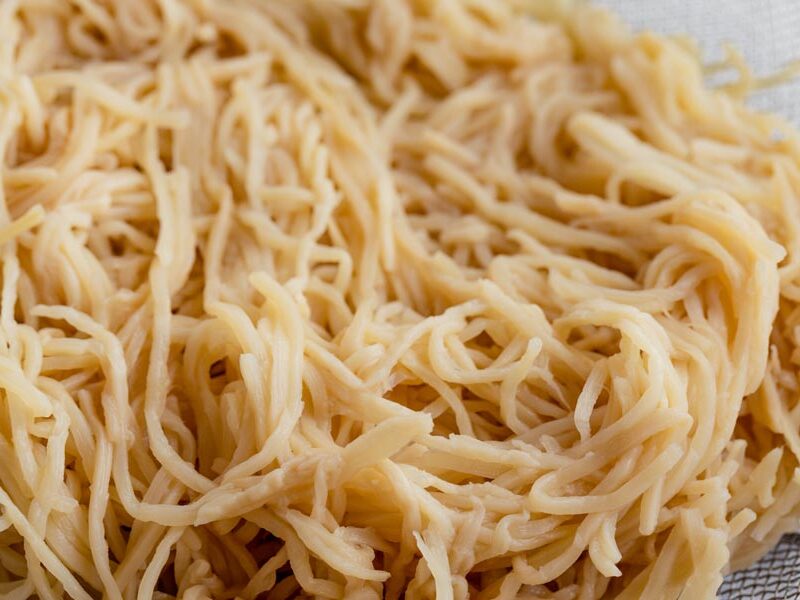
These are vegetable strands, so expect a mild hearts of palm flavor rather than the taste of wheat pasta. The spaghetti shape twirls on a fork and gives sauce something to coat. Draining well keeps extra package liquid out of the bowl.
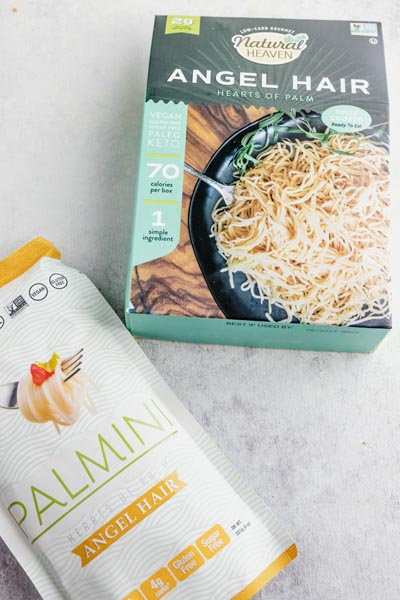
The current Natural Heaven spaghetti label lists 70 calories, 15 g total carbohydrate, and 10 g fiber per 9 ounce package. Dividing the package into the two portions used here gives 35 calories and 2.5 g net carbs per portion before toppings. Its labeled 2/3 cup serving is smaller than half a package. Check your own package if you use a different brand or size.
Sauces and serving ideas
Tomato sauce: Toss the spaghetti strands with marinara, or follow my keto spaghetti recipe for a full meal with meat sauce.
Stir fry: Add the drained noodles to a cooked stir fry and toss with a little stir fry sauce. Start with less sauce and add more to taste.
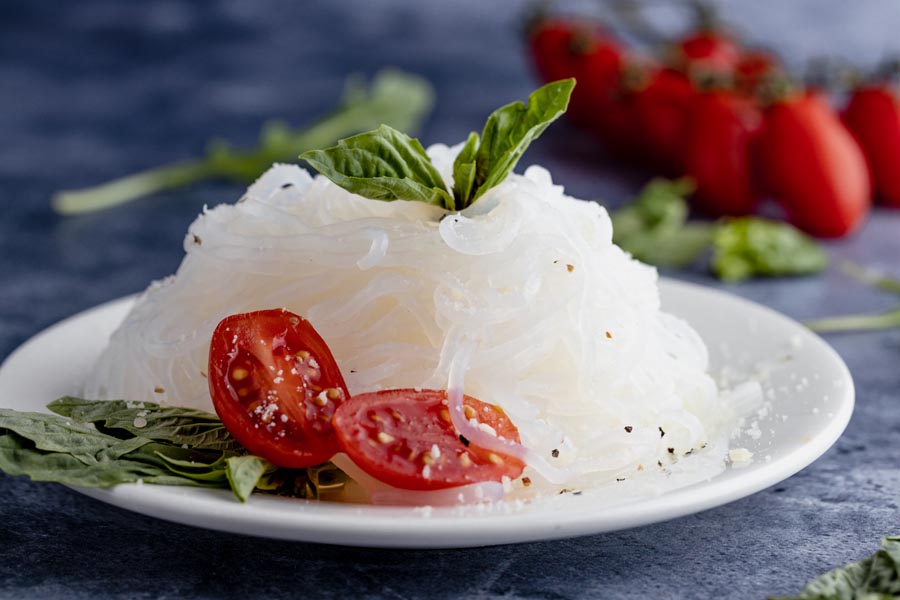
A simple bowl: Dress with the optional olive oil, salt, and pepper, then add cherry tomatoes and parmesan if you like. Oil and cheese are additions to the plain noodle nutrition.
Lasagna sheets and rice cuts need the instructions for their own shape and recipe. Use a complete recipe when adding ingredients that need cooking, such as raw meat or eggs.
Choosing a brand and storing leftovers
I use Natural Heaven in this recipe. Its spaghetti is ready to eat and does not need rinsing or boiling. Palmini has its own rinsing directions, so check the package before preparing either brand.
Keep unopened packages as directed on the label. Once opened, refrigerate unused noodles promptly in a covered container and follow the package’s storage limit. Plan to use them within 3 days unless the label gives a shorter limit.
For a finished dish, follow the storage instructions for the sauce and other ingredients too. Reheat leftovers thoroughly; adding fresh sauce does not restart their storage time.
How to prepare palm noodles
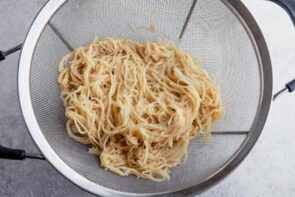
Open the 9 ounce package and drain any liquid. Natural Heaven does not require rinsing; follow the instructions on your package if using another brand.
Shake off excess liquid so it doesn't dilute the sauce.
Divide into two portions and toss with your chosen sauce, or add the optional olive oil and seasonings. Warm according to the package directions if desired.
The 2 minute preparation time covers opening and draining the noodles. It does not include making a sauce or heating a finished dish.
Open the 9 ounce package of hearts of palm noodles and drain any liquid in a colander. Follow the package directions for rinsing; Natural Heaven does not require it.
2
Add to sauce
Shake off excess liquid. Divide into two portions and toss with your favorite sauce, or add the optional olive oil, salt, and pepper. Warm according to the package directions if desired. Sauce and warming time are not included in the 2 minute preparation time.
Nutrition
Per serving: 1/2 package (127.5 g), plain noodles
Calories
35
Fat
0.75g
Protein
1.5g
Total carbs
7.5g
Net carbs
2.5g
Nutrition is an estimate calculated from the ingredients listed. Brands vary, so check labels if you track closely.
Frequently Asked Questions
Are hearts of palm keto-friendly?
Yes, and they're one of the easiest keto swaps I keep on hand. A serving runs about 2g net carbs, which barely registers against my daily limit. I've reached for them since 2018 precisely because I never have to think twice about whether they fit my macros. The whole vegetable is mostly water and fiber, so there's no hidden starch sneaking in.
Does this pasta taste like the real thing?
It's closer than I expected, though I won't pretend it's identical to wheat pasta. The flavor is neutral with a faint artichoke note straight out of the package, and that disappears the second it hits sauce. The texture is where it wins for me, especially after a dry pan-sear. I'd put it well ahead of zucchini noodles, which go mushy and water down whatever you toss them with.
Can I boil palm noodles for softer texture?
I've never needed to boil the Natural Heaven brand because they're already soft, like cooked spaghetti straight from the package. If you're using Palmini, which runs crunchier, simmering them in your sauce for a few minutes can help. I'd skip a full boil in plain water though. Too much heat and they get mushy.
How do I store and reheat leftover palm noodles?
I try to use the whole 9 oz package in one meal, but an opened package keeps in water in an airtight container in the fridge for about 3-4 days, and sealed packages sit in my pantry for months. Leftover dishes reheat in a skillet over medium heat with a splash of the same sauce, about 3-4 minutes, or covered in the microwave for 90 seconds, and they don't turn mushy the way regular pasta leftovers can. Frozen, they hold up for 1-2 months, possibly 3 if I press the air out of the container, and the texture stays close to the original after thawing.
Tried hearts of palm noodles once before, just dumped them straight into my arrabbiata after straining. Texture was okay but slippery the whole way through. You mentioned a quick pan sear, which I think is probably what I was missing (I skipped it). How hot do you get the pan and how long before they actually start to change texture?
Medium-high, and the key is starting dry. No oil. I let them sit untouched for about 2 minutes until the edges go from translucent to slightly brown, then add the olive oil. You can actually see the texture change when they start to release steam.
I had no idea these even existed until I saw this recipe, and I’m a little annoyed I waited this long. It was 95 degrees outside and I had zero interest in turning on the stove, so the fact that you just strain and go was exactly what I needed. Tossed mine with some Rao’s marinara and the texture was way closer to pasta than I expected from something that comes out of a can. Still deciding if I should try the pan sear next time, but for a first attempt, I’m genuinely impressed.
Tried adding a little butter to the olive oil while pan searing and wow. Noodles browned faster, got this caramelized edge, and held onto the sauce way better. Won’t go back.
Butter does something to these that olive oil alone doesn’t. The browning goes deeper and the noodles actually grip the sauce instead of letting it slide off.
I kept passing these at the store for months because I couldn’t imagine a canned vegetable doing anything useful as pasta. Finally grabbed a package, pan seared them, tossed them in marinara, and now I keep three packages in the pantry at all times.
Three is the right number. I bumped my own stash after the third time I ran out mid-dinner and had to improvise. The pan sear with marinara is a good combo, that bit of caramelization gives the sauce something to grip. Straight from the can they taste fine but you lose the thing that makes them feel like real food. Glad you finally got some.
First time trying hearts of palm and I genuinely didn’t know what to expect. Strained the package, threw it in with some Rao’s, and it actually held up like real pasta. Is there a sauce you’d avoid with these? Wondering if something heavier would weigh them down.
My daughter doesn’t trust keto swaps, so I didn’t say anything when I made this for Sunday dinner. She cleaned her bowl, then checked the package herself. She read ‘2 net carbs’ out loud twice. Already picked up two more packages.
The pan sear completely changes these. I skipped it my first time and was underwhelmed, but dried them in a kitchen towel before searing on round two and they were SO much better. Only thing: the recipe undersells the straining step, because any leftover moisture will water down the sauce.
My husband is convinced nothing can replace real pasta, so I just made this on a Tuesday and didn’t say a word. Tossed the hearts of palm in some Rao’s marinara and plated it like normal. He ate the whole bowl and then asked why I switched pasta brands. I had to pull out the package. Only note from me is I wanted a little more chew, but I’m new to all this and I can’t believe that actually worked.
Ha, that’s the real test. For more chew, try Palmini instead of Natural Heaven. Natural Heaven’s softer out of the package, Palmini runs crunchier. Rao’s was a good call too.
My mom had this Sunday night thing, pasta with just olive oil and a ridiculous amount of cracked black pepper, nothing else, and it’s the one food memory I’d basically written off since going keto. Made these hearts of palm noodles the exact same way last week and I was genuinely not ready for it. The way they absorb the olive oil, that’s the part that got me. Not identical, but close enough that it hits the same spot.
Started pan-frying the noodles for 2-3 minutes before adding sauce and the texture shifted completely. They pick up this slight chew instead of staying soft and wet, way more pasta-like. Using Rao’s arrabbiata with them lately and not going back.
Pan-frying dry first is what takes them from okay to actually pasta-like. I do the same, about 2 minutes before any olive oil. The firmer texture holds Rao’s arrabbiata really well.
Had no idea what hearts of palm even were before this but I’m freaking obsessed now. Threw mine in a hot pan with olive oil for a few minutes before adding the sauce (I just like a little char on things) and whatever that does to the texture, it’s so much better. They actually hold the sauce instead of making it watery and the bite is completely different. If you’re pouring sauce straight on cold noodles out of the package, try this first.
The quick sear is the move. I go in dry for the first minute before the olive oil, just to get a little color on them. Cold out of the package works but yeah, this is better.
I actually haven’t tried that. That might be suggested for the Palmini of noodles because they are harder, but the Natural Heavens brand (which is the one I use and recommend) is already soft like cooked spaghetti noodles.
Freezing guidance depends on the noodle brand and the finished dish. Palmini lists up to 3 months for its noodles, but the sauce and other ingredients may have a shorter quality window. Follow your package and recipe instructions, and thaw in the refrigerator; the texture can change.