Chicken Bone Broth

Published January 5, 2020 • Updated March 12, 2026
This post may contain affiliate links. See my disclosure policy.
I make this chicken bone broth in my slow cooker every few weeks. It's packed with collagen, zero carbs, and when you cool it down, it turns into this rich, jiggly gel that tells you it's loaded with nutrients.
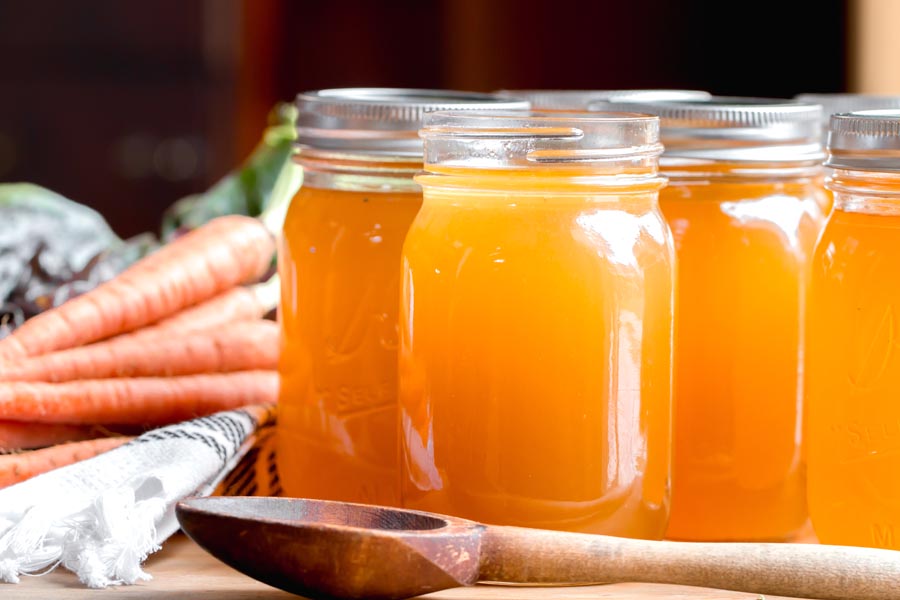
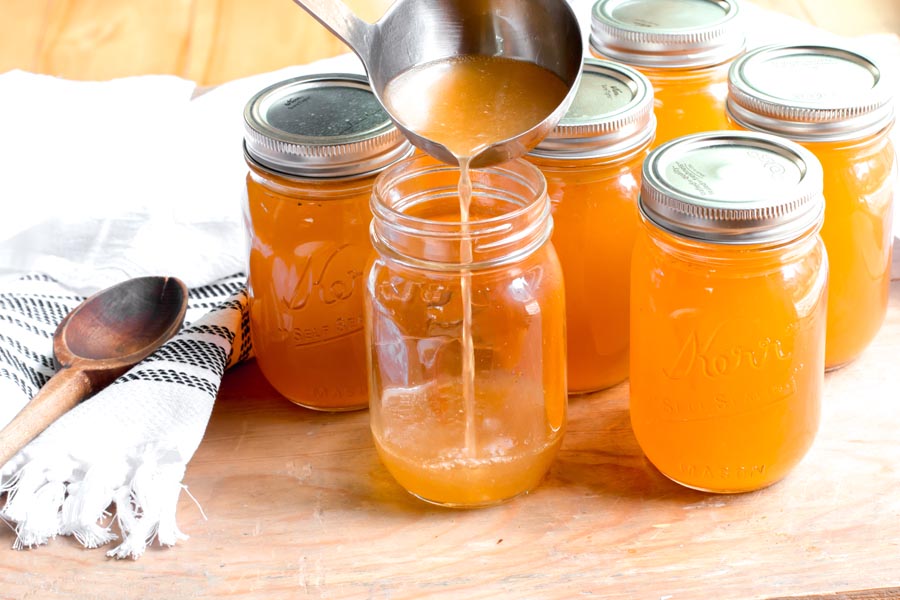
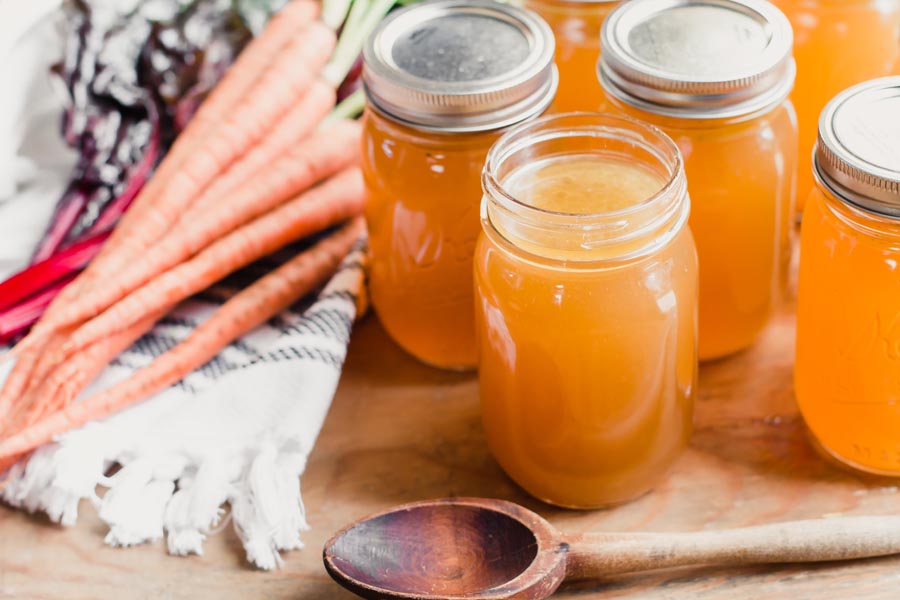
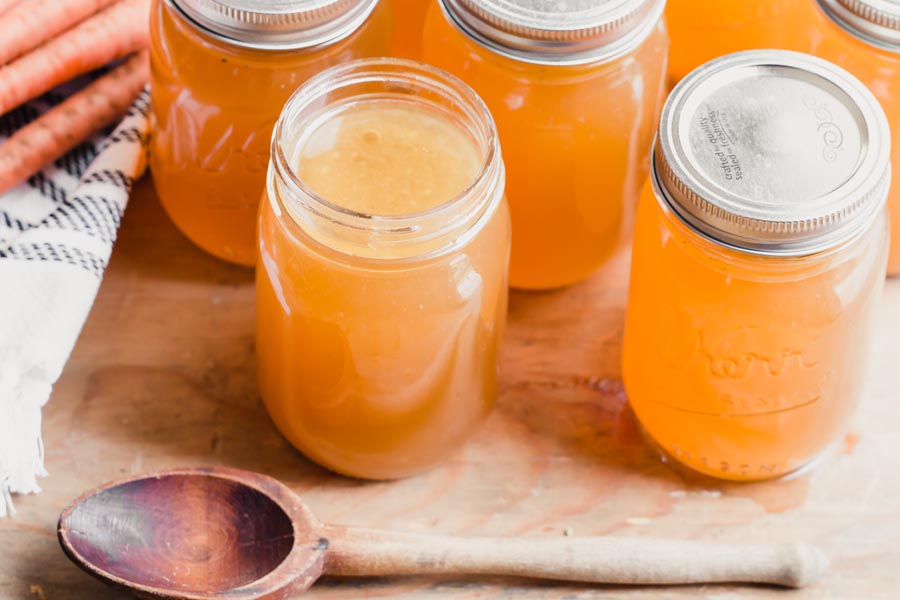
Once you make bone broth from scratch, you will never go back to store-bought. I can tell the difference just by looking at it. My homemade broth is opaque, rich yellow-orange, almost glowing compared to the pale, watery stuff from a carton. That color is how I know it’s full of minerals, collagen, and amino acids that actually do something for your body.
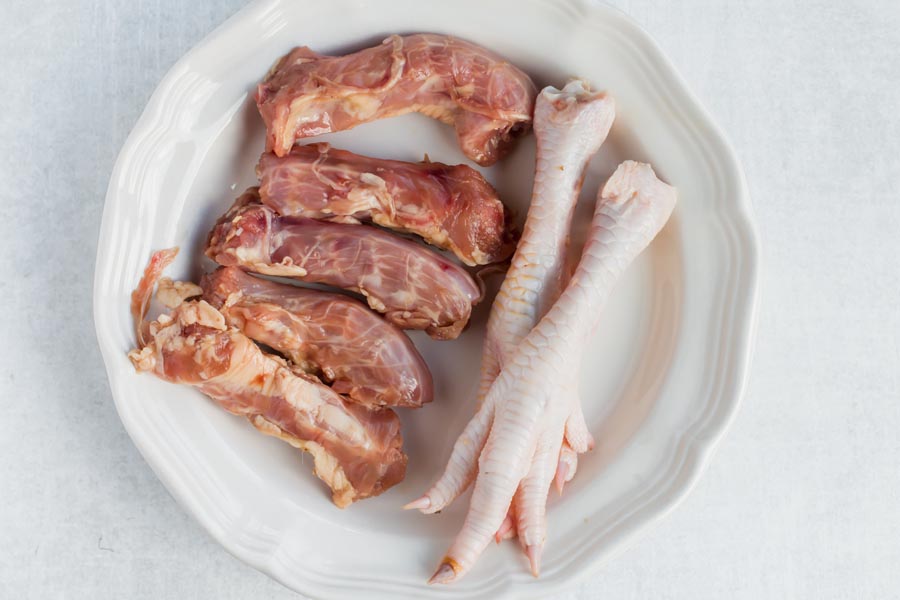
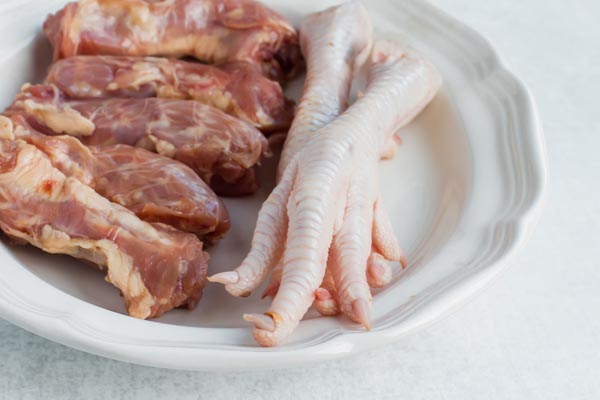
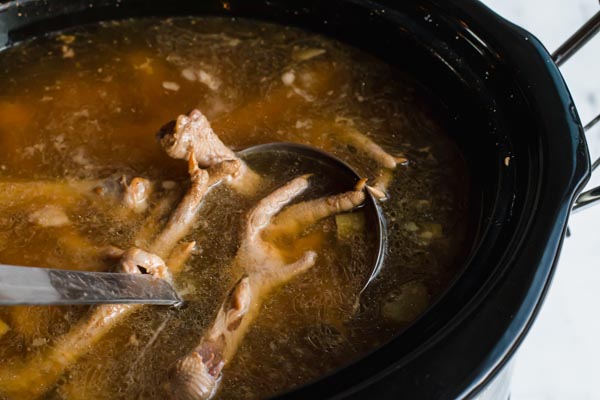
I’ve been making my own broth for years, and the single biggest upgrade was switching to chicken feet and necks as my primary bones. The gelatin yield is noticeably higher. When I pull a jar from the fridge the next morning and it’s fully set (like jello), I know I got a good batch. If it’s still liquid, something went wrong (usually not enough joints or too much water).
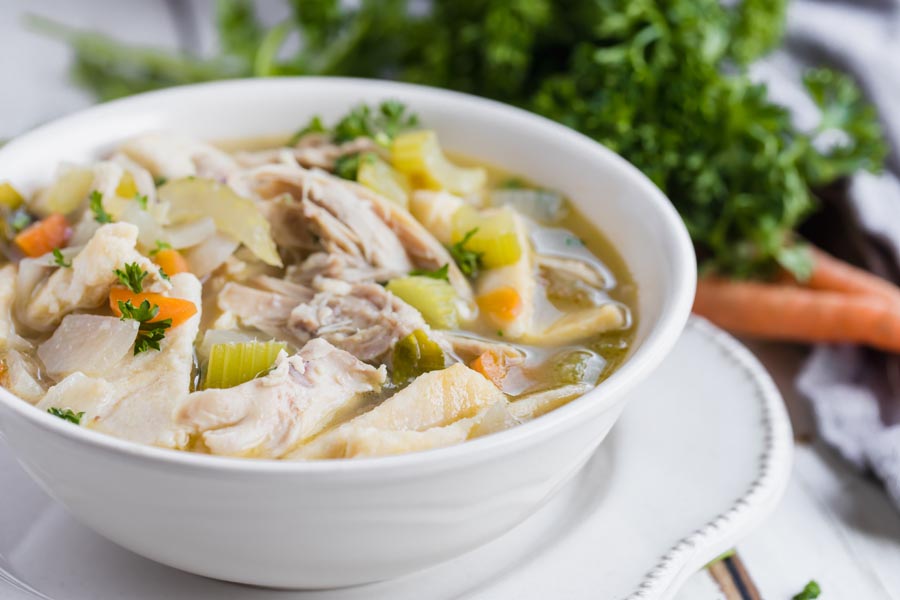
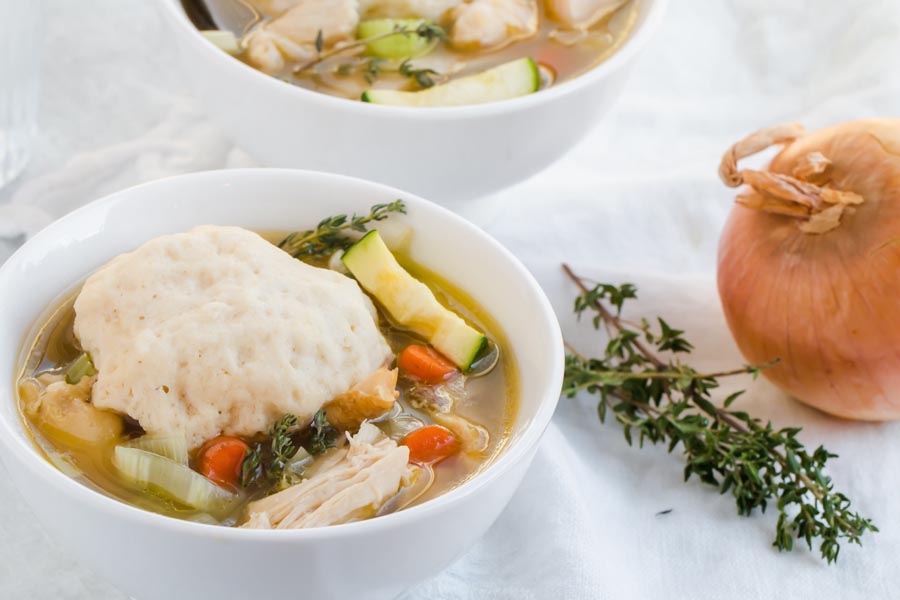
The other thing I love about making it myself is how versatile it is in my kitchen. I use it as the base for keto chicken noodle soup and keto chicken and dumplings, stir it into scrambled eggs, or just heat up a mug when I want something warm and filling. My kids don’t even realize they’re getting all that nutrition because to them it’s just soup.
What makes this recipe different from regular chicken stock is the cook time. I let mine go for 2-3 days in the slow cooker. That long, low simmer is what pulls the collagen and minerals out of the bones. Stock cooks for a few hours and tastes fine, but it won’t gel when cold. If your broth doesn’t jiggle in the fridge, it’s stock, not bone broth.
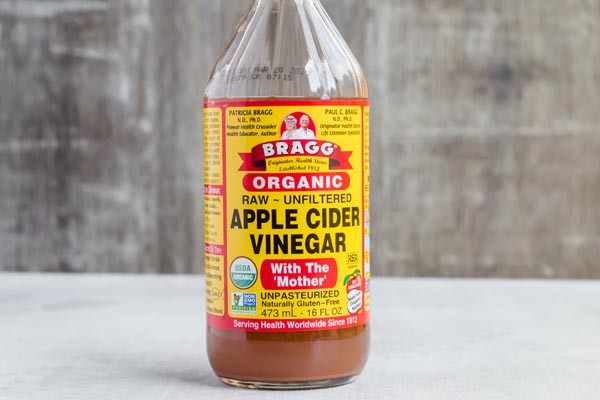
I add apple cider vinegar to the pot because the acidity helps soften the bones and extract more nutrients. You won’t taste it in the finished broth, but it makes a real difference in how gelatinous the result is. Between the vinegar, the chicken feet, and the long cook time, this is the method I trust to get a nutrient-dense broth every single batch.
How to make Chicken Bone Broth?
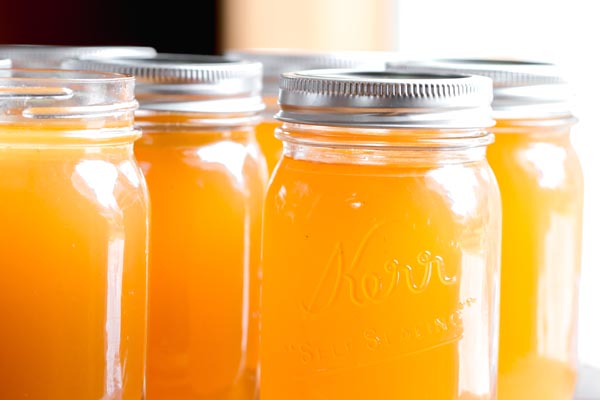
I consider bone broth one of the most nutritious things I keep in my kitchen. It’s loaded with collagen, amino acids, gelatin, and minerals that support everything from gut health to joint repair. The process is simple: simmer bones and connective tissue in water long enough for all of that good stuff to leach out. I add vegetables and herbs for flavor, but the bones do the real work.
Chicken stock vs bone broth: What’s the difference?
The difference comes down to time. Regular chicken stock simmers for 1-2 hours. Bone broth simmers for 24-72 hours. That extended cook time is what extracts the deep nutrition, the gelatin, the collagen. The longer it cooks, the more nutrient-dense your broth becomes. I know my batch is done when it gels solid in the fridge, which means it’s loaded with joint-healthy collagen.
How to guarantee a gelatinous result
This is the question I get asked most. The secret is using bones with lots of connective tissue. Chicken feet, necks, and wing tips have the highest gelatin content. I use a combination of feet and necks from US Wellness Meats, and my broth gels every time. If you’re using just a carcass with no feet, add a few extra hours of cook time and make sure you’re not diluting with too much water.
EXPERT TIP: Chicken feet, necks, and heads produce the most gelatinous broth. I’ve tested this side by side, and feet make the biggest difference.

Explore 683+ keto recipe videos with step-by-step instructions, tips, and tricks to make keto easy.
Ingredients
 6 to 10 pounds chicken bones, necks, feets, wings, or legs
 -
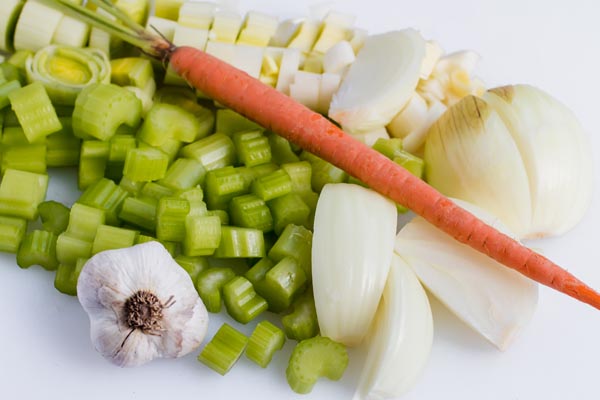
2 onions, roughly chopped
-
4 celery stalks, roughly chopped
-
1 carrot, chopped
-
1 leek, sliced
-
4 garlic cloves, smashed
-
1 tablespoon fennel seeds
-
1 tablespoon coriander (seeds or powdered)
-
1/2 tablespoon whole peppercorns
-
3 bay leaves
-
1/2 teaspoon thyme
-
1/2 teaspoon sage
-
1/2 teaspoon rosemary
-
3 tablespoons apple cider vinegar
-
4 teaspoons salt
Step by Step Instructions
Step by Step Instructions

Cook it
Cover with the lid and Cook on low for at least 24 hours. You can let it cook for 2-3 days. Keep an eye on the water level – you’ll likely need to add more water as it cooks to account for evaporation. Periodically skim off the foam off the top of the broth. This will result in a clearer broth with a cleaner taste.

Strain it
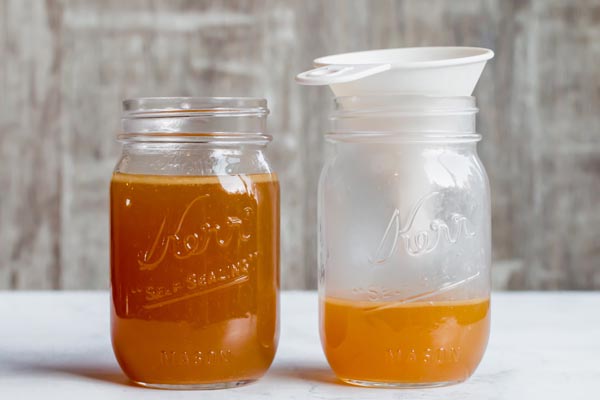
After 2 – 3 days, remove from heat and strain out vegetables and bones using a strainer.


Nutrition disclaimer
The nutrition information provided is an estimate and is for informational purposes only. I am a Doctor of Pharmacy (Pharm.D.); however, this content is not intended to be a substitute for professional medical advice, diagnosis, or treatment. Always consult your physician or other qualified health provider before making any lifestyle changes or beginning a new nutrition program.
Your Macros. Your Recipes. Calculated in 60 Seconds.
Get personalized keto macros and instantly see which recipes fit your targets. No more guessing what to eat.
Get My Macros + Recipes →Frequently Asked Questions
Why isn't my bone broth gelatinous?
I've troubleshot this a lot. The three most common reasons: not enough connective tissue (you need feet, necks, or wing tips, not just a bare carcass), too much water diluting the gelatin, or not cooking long enough. I aim for at least 24 hours in the slow cooker, and my best batches go 48-72 hours. If your broth is still liquid after cooling overnight, try adding chicken feet next time. That one change fixed it for me.
Can I freeze bone broth in mason jars?
I do this with every batch. The key is leaving at least an inch of space at the top of the jar because the liquid expands as it freezes. I've cracked a few jars by filling them too full. Wide-mouth jars work better than regular mouth for freezing because the straight sides let the broth expand evenly. My broth keeps in the freezer for about 6 months.
How long does bone broth last in the fridge?
I keep mine in the fridge for up to 5 days. You'll notice a layer of fat solidifies on top when it cools, and that actually acts like a seal that helps preserve it. I don't remove that fat layer until I'm ready to use each jar. If it starts to smell off or looks cloudy in a way that's different from the normal gelatin opacity, I toss it.
Can I use this same recipe to make beef bone broth?
I've used this exact method for beef bones too, including the leftover bone from my baked ham shank. Since beef bones are larger and denser, I add an extra 1-2 tablespoons of apple cider vinegar to help extract more minerals. I also increase the cook time. My beef batches usually simmer for an extra day beyond what I do for chicken. The result is a darker, more intensely flavored broth that I love in stews.
Can you make bone broth from a roasted chicken?
This is actually how I make most of my batches. After I serve something like blackened chicken or chicken katsu, I save the carcass in a freezer bag until I'm ready. I also toss in bones from turkey, even duck. My one rule: don't use any part that was eaten off directly (where someone's teeth touched the bone). Carve the meat off, then freeze the carcass. When the bag is full, I dump everything frozen into the slow cooker.
What does the apple cider vinegar do?
I add it to help pull more minerals out of the bones. The acidity softens the bones over time, which means more calcium, magnesium, and collagen end up in my broth instead of staying locked in the bone. I use 3 tablespoons per batch, and I've tested it with and without. The batches with vinegar gel more consistently and have a richer body.
Should I roast the bones before making bone broth?
Two of my readers, Greg and Tiffany, started roasting their bones at 400°F for 20-30 minutes before adding them to the slow cooker, and both reported firmer gel and deeper color. I tried it after reading their comments, and my last batch came out so thick I had to warm the jar before I could scoop anything out. Roasting caramelizes the bone surfaces, which adds a darker, richer base flavor to the finished broth. My standard batches still gel well without this step, but if you have the extra 30 minutes, try it. I haven't gone back.
What's the difference between chicken and beef broth collagen?
I make both, and the collagen is different depending on the animal. Chicken broth is rich in type 2 collagen, which comes from cartilage and connective tissue and is the type associated with joint health. Beef broth leans toward types 1 and 3, which support skin, hair, and nails. I notice the biggest difference in my knees when I'm consistent with my chicken batches specifically. If I had to pick one for joint stiffness, I'd go chicken every time, but I rotate both throughout the month.






Roasted the bones at 400 for 20 minutes before the slow cooker. Broth ran noticeably darker from the start. The gel set firmer than any batch I've made before, which I wasn't expecting from one small change. Fennel seeds were new to me in broth but they add a faint sweetness that keeps it from tasting flat. Full 3 days over 24 hours is worth it if you can swing it.
Every time I pull this out of the fridge and see it set into that thick jelly, I feel like I actually did something right. Fourth batch since January.
Honestly, I kept putting this off because 24-plus hours in a slow cooker felt like overkill for broth. I make soups constantly and figured store-bought chicken stock was close enough. Finally made this on a Sunday when I had nothing going on, threw everything in before bed, and by Monday afternoon my whole house smelled incredible. The part that actually won me over was opening the fridge the next morning and finding real, jiggly gel. I'd read about that happening but had never seen it from something I made myself. Been through three batches since January. Four stars for now because I'm still dialing in the seasoning (I went lighter on the coriander than called for and I think that was a mistake), but the difference from carton broth is not even close.
Full tablespoon on the coriander next time, maybe a pinch over. It gets really subtle when you hold back on it. Three batches since January though, you've got the routine down.
Roasted the bones at 400 for 30 minutes before the slow cooker and the gel came out so thick I could barely get it out of the jar, never skipping that step again.
Yeah the roast step does that. My last batch I couldn't even scoop it, had to warm the jar a little first. Worth it every time.
Hi, wondering how much sodium in the recipe/ per serve please?
The only sodium is from the salt. There are 4 teaspoons which has 9.6 grams of sodium...servings depend on how much you use or how much water you add.
5 stars! I made this last night using chicken necks that I roasted in the oven first. I didn't have any leeks but added some dried rosemary and a piece of crushed ginger. I cut the salt a bunch because I like to add it to taste later. Cooked in the instant pot for 2 hours then natural release. Cooled in the fridge overnight, it gelled so nicely, then skimmed the fat off. I'm drinking a cup right now and it is delish! This will be my go to stock recipe from now on!
Ginger is such a nice add with the coriander already in there. Two hours in the IP is short but if it gelled that well, it's clearly enough.
I have an 18 qt roaster will that work?
Probably, as long as you can let something cook in it for a long time at low heat.
This was the most informative article I have found on making chicken bone broth. I have just started and look forward to my next batch.
Thank you for the information.
Connie VH
Glad it helped. One thing I wish someone had told me early: don't skim that fat cap off when it solidifies in the fridge. It seals the broth and actually keeps it fresh longer.
How much water please or what size slow cooker?
Add water to the top of the slow cooker. The more water, the more broth you will get. I will even add more water as it cooks since you lose some to evaporation. I have a 6 quart slow cooker
Feed to your dog! Put in your garden or compost!
Am not sure that you should feed your dog something with all that onion, garlic and bones.
Do you also add the skin to the crock pot with the bones?
Yes, you can add skin-on chicken. You will just strain it out after it's done cooking