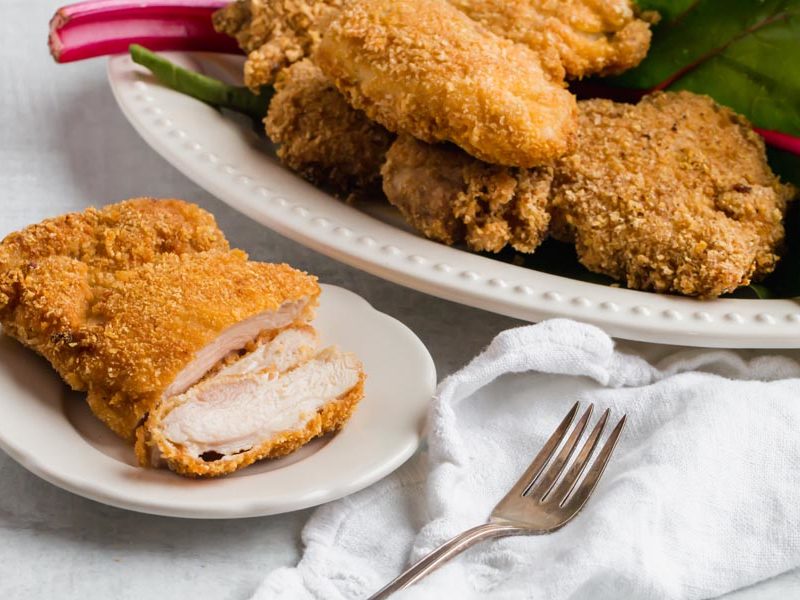
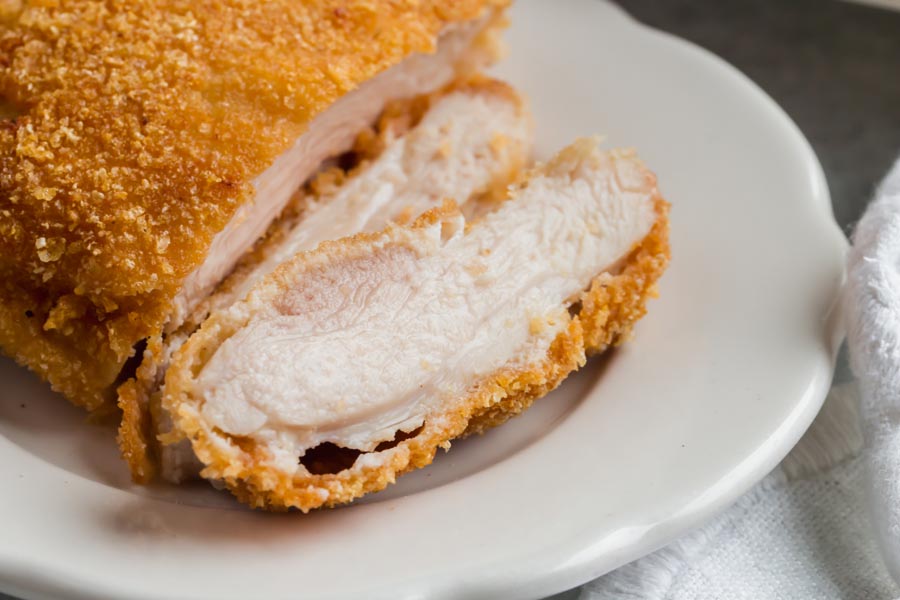
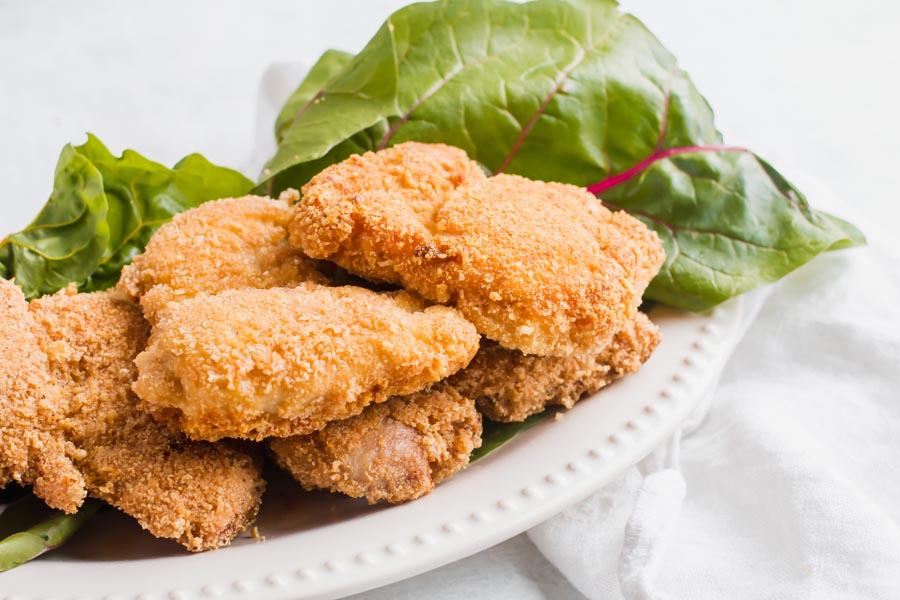
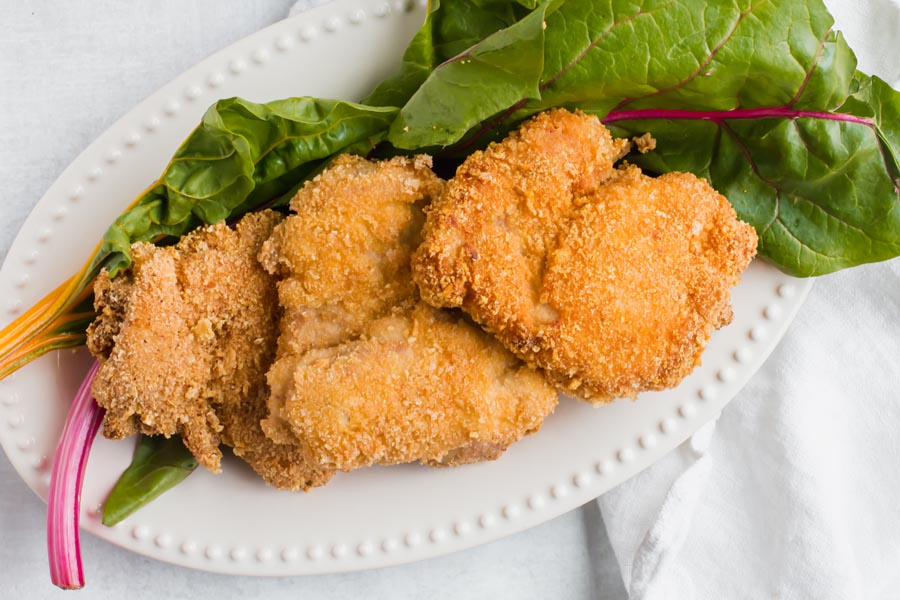
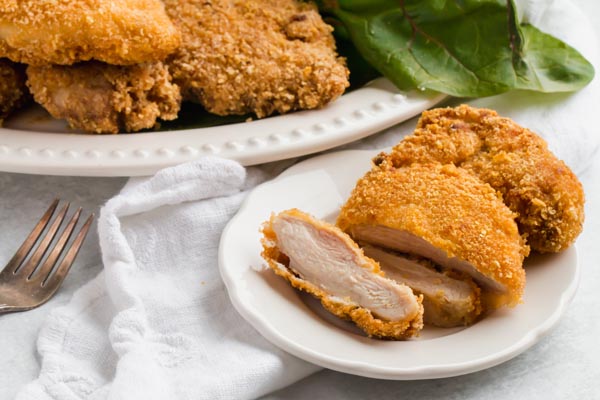
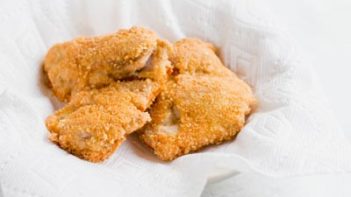
Bite into my keto chicken schnitzel and the crust shatters — I bread thin chicken thighs in almond flour and ground pork rinds, then fry them crisp in avocado oil. 1.7g net carbs and 46.6g protein per serving.
I keep a short list of recipes that never leave my weekly rotation. My blackened chicken, boursin chicken, and this chicken schnitzel are the ones I come back to constantly.
Traditional schnitzel is a German dish where breaded, thinly sliced meat gets fried in oil until the outside is shatteringly crispy. For my low-carb version, I swap regular breadcrumbs for a combination of almond flour and ground pork rinds (pork panko). The almond flour gives the egg wash something to grip, and the pork rinds do all the work on crunch. I tested coconut flour as a substitute for anyone avoiding nuts, and it works fine, though the coating comes out slightly thinner. The whole breading process takes maybe 5 minutes once you have your three dipping stations set up.
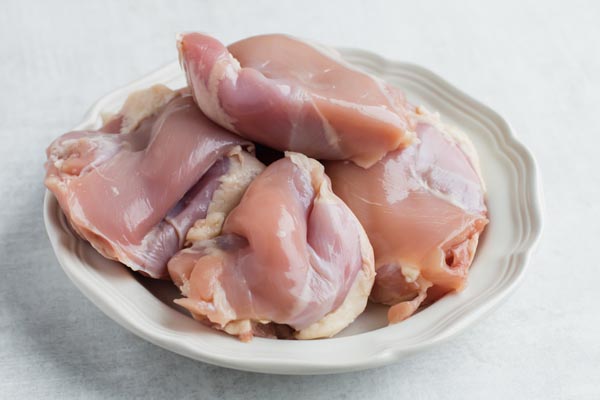
I use chicken thighs instead of breasts because thighs hold their moisture through pounding and frying. Breasts dry out fast, especially when you slice them thin. If you only have breasts on hand, they still work. Just watch your cook time closely.
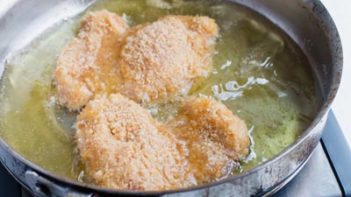
The technique that made the biggest difference is something I stumbled on after making this dozens of times: once the chicken hits the hot avocado oil, shake the pan back and forth over the burner. This sends hot oil up over the edges and top of the breading, crisping areas that would otherwise stay soft. It sounds small, but the difference in the final crust is real.
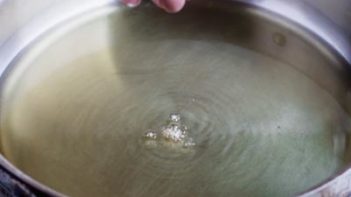
I fry in avocado oil because it handles high heat without smoking, though ghee works too if you prefer the flavor. The oil is ready when a small pinch of the breading sizzles immediately on contact.
This is one of those meals my family requests by name. My kids don’t care that it’s keto. To them it’s just a crispy chicken dinner, which is the whole point. If you’re feeding a crowd or want leftovers for the week, make a double batch. The coating does get soft in the fridge overnight, but 8-10 minutes at 400 degrees in the oven or air fryer brings the crunch right back. I reheat leftovers this way at least once a week.
If you like breaded chicken dinners, my chicken divan takes thighs in a completely different direction with a creamy broccoli sauce.
Why I pick chicken thighs for schnitzel
I always reach for chicken thighs over breasts when I’m making this. Thighs keep their moisture through pounding and frying because they carry more fat than breast meat. Breasts will work in a pinch, but they dry out faster, especially once you slice them thin.
You want each piece about 1/4 inch thick. Chicken cutlets from the store are already there. If you’re starting with full thighs, put them between two sheets of plastic wrap and pound them down with a mallet or rolling pin. I find this takes about 30 seconds per thigh. Even thickness means even cooking, so take the extra minute here. Thin pieces cook fast in hot oil, so I check the thickest piece with a meat thermometer and pull the chicken at 165 degrees.
The low carb breading
I use this same breading approach on a lot of my recipes. My chicken katsu uses a nearly identical coating, and it works just as well on chicken casserole when I want a crunchy top layer.
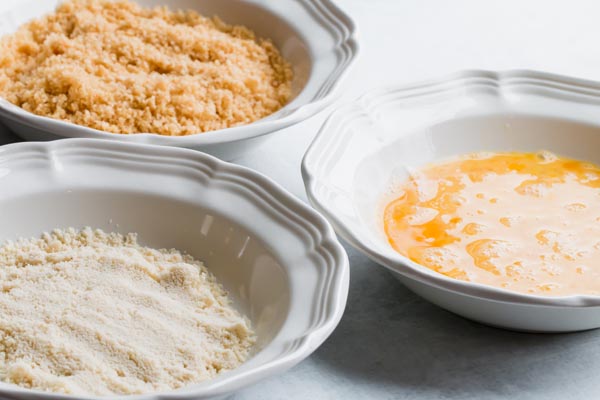
The breading is a two-part system. First, a light dusting of almond flour. This gives the egg wash something to cling to. You can substitute coconut flour if you’re avoiding nuts. After the egg dip, the chicken goes into ground pork rinds for the real crunch layer. The pork rinds are what separate this coating from anything made with regular breadcrumbs.
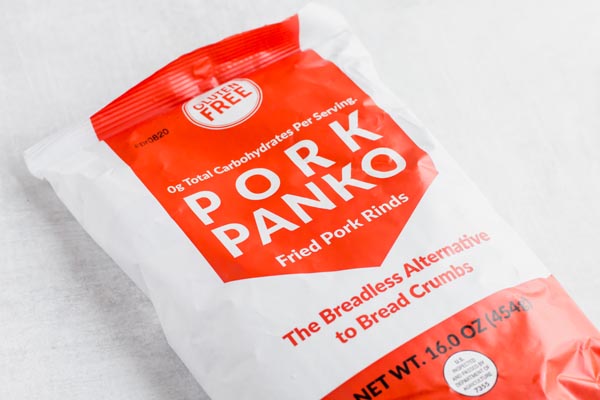
You can grind your own pork rinds in a food processor, but I stopped doing that years ago. The grind is never as even as store-bought pork panko, and uneven pieces mean uneven coating. The brand I use is Pork Panko by Bacon’s Heir. I keep a few bags in my pantry at all times because I go through them fast.
How to reheat and freeze leftover schnitzel
The coating will get soft in the fridge overnight, but that’s easy to fix. I reheat mine at 400 degrees in the oven or air fryer for about 8-10 minutes, and the crust crisps right back up. No microwave. The microwave turns the breading into a soggy mess.
For freezing, let the pieces cool completely, then lay them flat on a sheet pan until frozen solid (about an hour). Transfer to a freezer bag and squeeze out the air. They keep for about 2 months. When I’m reheating from frozen, I go straight to the oven at 400 degrees for 12-15 minutes. No thawing needed. The coating won’t be quite as crispy as fresh out of the pan, but it’s close.
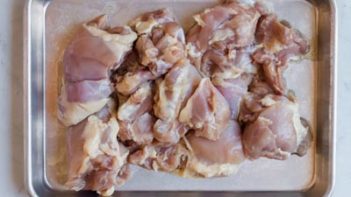
Season each chicken thigh with salt and pepper. To get thinner cuts of thighs, place the thigh in a ziploc bag or between two pieces of plastic wrap or parchment paper. Using a mallet or rolling pin, pound the meat until the chicken is ¼ inch thick.
For this step
Chicken thighs
Salt
Pepper
2
Prepare the coating
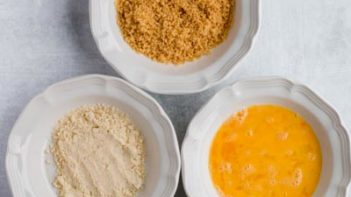
Place almond flour in a shallow dish. Place eggs and 1 tablespoon of water in another shallow dish and beat. Place ground pork rinds in a third shallow dish.
For this step
Almond flour
Eggs
Water
Ground pork rinds
3
Dip the chicken
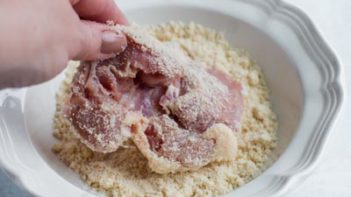
Dip each chicken thigh in almond flour bowl to evenly coat with a light dusting of flour.
4
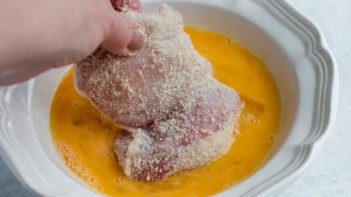
Dip in egg wash
Dip the floured chicken thigh in the egg mixture.
5
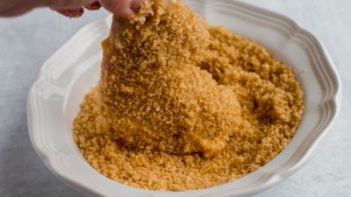
Coat in pork rinds
Finally dip the chicken in the ground pork rinds.
6
Add oil to skillet
To a large skillet, add ½ inch of avocado oil or ghee. Heat over medium high heat. The oil is hot enough when a small piece of the breading mixture sizzles in the skillet.
For this step
Avocado oil (or ghee)
7
Add the chicken
Add 2-3 chicken thighs to the skillet. Only add in enough chicken to allow for even cooking. Have about ½ inch room around each thigh. You will have to cook the thighs in batches. Shake the pan back and forth over the burner to allow for the hot oil to slide over the edges and top of the coated chicken. This gets the edges crispy.
8
Cook till golden brown
Cook the thighs until golden brown, turning halfway through. Check the thickest part with a food thermometer; the chicken must reach 165°F. Transfer to a paper towel lined plate when done.
Nutrition
Per serving: 1/4 of recipe
Calories
416
Fat
24.4g
Protein
46.6g
Total carbs
3.2g
Net carbs
1.7g
Nutrition is an estimate calculated from the ingredients listed. Brands vary, so check labels if you track closely.
Frequently Asked Questions
Can I make this in the air fryer?
I have tested the air fryer multiple times and I still can't get the same crispiness you get from pan-frying in hot oil. The pork rind coating needs that direct oil contact to really shatter. That said, the air fryer is great for reheating leftovers. I set mine to 400 degrees for about 8 minutes and the crust crisps right back up. If you figure out a method that works from raw, I genuinely want to know (annie@ketofocus.com).
What sides go well with schnitzel?
I usually keep sides simple because the schnitzel itself is the star. A quick cucumber salad with vinegar works perfectly. Steamed green beans with butter is my go-to on weeknights. I've also served this alongside roasted sheet pan veggies (just the veggies, skip the extra protein). When I want something more filling, cauliflower mash rounds it out nicely.
Can I freeze the leftovers?
I freeze these all the time. Let the cooked pieces cool completely, lay them in a single layer on a sheet pan, and freeze for about an hour. Once solid, transfer to a freezer bag. They keep well for about 2 months. When I'm ready to eat them, I go straight from frozen into the oven at 400 degrees for 12-15 minutes. No thawing. The coating won't be quite as crispy as fresh, but it's close enough that my family doesn't complain.
Can I use pork chops or veal instead of chicken?
Traditional schnitzel is actually made with veal, so that swap works beautifully. I have made this with thin-cut pork chops too and the breading holds up the same way. The key is getting your meat to about 1/4 inch thickness before breading. Pork chops might need a few extra minutes in the pan depending on thickness, and I pull fresh pork at 145 degrees. Veal cooks about the same as chicken thighs.
Is this the same as a chicken cutlet?
Basically, yes. A chicken cutlet is just a thin piece of chicken breast or thigh. Schnitzel is what happens when you bread and fry that cutlet. I use thighs because they stay juicier, but you can use store-bought chicken cutlets (breast) and skip the pounding step entirely. My cilantro lime chicken is another way I use cutlets when I want something without breading.
What dipping sauce goes with schnitzel?
I squeeze fresh lemon juice over mine most of the time because it cuts through the richness of the fried coating. For something more indulgent, I make a quick mushroom cream sauce (sauteed mushrooms, heavy cream, garlic, salt). A garlic aioli works too. My kids prefer ranch, which I can't argue with. Traditional German schnitzel is served with a jager sauce, and you can make a keto version with mushrooms and beef broth thickened with a little xanthan gum.
What is schnitzel made of?
Schnitzel is traditionally thinly pounded meat (veal in Austria, pork in Germany) that gets breaded and fried. For my version, I use boneless chicken thighs pounded to 1/4 inch, coated in almond flour, dipped in egg wash, then pressed into ground pork rinds. The pork rinds give it that signature crunch without any wheat flour or regular breadcrumbs. I buy Pork Panko by Bacon's Heir because the grind is consistent, but you can pulse regular pork rinds in a food processor.
How many net carbs are in this recipe?
My version comes in at just 1.7g net carbs per serving. Regular schnitzel made with traditional breadcrumbs can hit 20g or more. The almond flour and pork rind coating is what keeps the count so low. I have tested coconut flour as a substitute for the almond flour (for anyone with nut allergies) and the carb count stays about the same.
Can you have chicken schnitzel on keto?
Yes, as long as the breading is not wheat based. My keto chicken schnitzel uses almond flour and ground pork rinds instead of breadcrumbs and comes in at 1.7g net carbs per serving. Regular breadcrumb schnitzel can hit 20g or more, so the coating is the whole game. I pan fry mine in avocado oil and the crust still shatters when you bite in.
Can I make chicken schnitzel without flour?
Yes. There is no wheat flour anywhere in this recipe. I dust the chicken in almond flour so the egg wash has something to grip, then press it into ground pork rinds for the crunch. That coating keeps this schnitzel at 1.7g net carbs per serving. Coconut flour works in place of the almond flour if you are avoiding nuts, and the carb count stays about the same.
I was nervous about frying since I’m still new to keto cooking, but the pork rind coating went on so easy and came out golden and crispy on my first try! So happy with this.
Making this for a dinner party Saturday, eight people, and want to get ahead where I can. My main worry is the coating. Every breaded thing I’ve made turns soft and sad if the chicken sits after coating, and pork rinds seem even less forgiving about moisture than regular breadcrumbs. Can I bread the thighs the night before, leave them uncovered in the fridge, or does the almond flour and egg wash situation make that a bad call? Or is it smarter to pound and season them Friday and just do the coating Saturday morning? I need that crust to actually shatter when you bite in. Not willing to shortcut my way out of it.
Eric, coat Saturday morning. Pork rinds pull moisture from the egg wash faster than breadcrumbs, and a full night even uncovered will turn that crust from a shatter into a chew. Pound and season Friday, keep them wrapped, then run the almond flour, egg, pork rind line right before the oil gets hot. That’s exactly how I’d do a party of eight.
Thanks Ray, I’ve only pan-fried these so I can’t promise on baking. The pork rind coating needs direct oil contact to really shatter, and my air fryer tests never got close to the same crunch.
First time making keto schnitzel and pretty excited about the pork rind coating step. Do they need to be ground to a fine crumb, like close to panko texture, or is chunkier okay? I crushed a bag by hand and the pieces are pretty uneven, so wondering if I need to run them through the food processor for a better crust.
Chunky is fine. Uneven pieces actually give the crust some character. The only thing to watch for is pieces so big they won’t stick, so break down anything pea-sized or larger. I’ve done the bag-smash method plenty of times and it works, you just get a slightly more rustic crust than the food processor version.
Figured ‘shatters when you bite in’ was recipe hyperbole. It’s not. First bite, I understood why pork rinds are the coating here instead of regular crumbs. The texture is different from anything I’ve made with conventional breading. Third batch, still not stopping.
46.6g of protein per serving was what got me through the door. Batch seven now, and the thing that actually mattered was resting the breaded cutlets in the fridge for 20 minutes before they go in the oil. The pork rind crust holds completely, no patches peeling mid-cook, and the shatter when you cut in is more consistent. I think the cold is setting the egg wash. Four stars only because I keep crowding the pan every time I try to scale up.
The fridge rest is real. Cold egg wash grips before the oil hits, and seven batches is enough to believe it. For scaling, two pans at once. No other fix for the crowding without losing the crust between rounds.
Stirred lemon zest into the ground pork rinds before coating and was not prepared for how much it changed things. About half a lemon’s worth mixed right into the crushed rinds before the final dip. The crust still shatters when you bite in, but now there are these little pops of brightness cutting through the fat from the avocado oil that make it feel more alive. I’ve made different schnitzel recipes over the years and the pork rind breading is already doing serious work, but the lemon takes it somewhere else entirely. The smell when those lemon-coated pieces hit the hot oil was something. Kept eating straight off the paper towels before dinner was even on the table.
Lemon zest right into the rinds is something I haven’t tried and now I kind of have to. I always squeeze juice over after, just not the same as working the zest into the crust where it cooks in the fat. Casey, the smell of citrus hitting hot oil is one of my favorites. Doing this next batch.
Never used pork rinds as breading before and wasn’t totally sure what to expect. The crust got this real crunch to it, like actual schnitzel. I used the chicken thighs and they stayed juicy even after pounding them down thin, which I was worried about. Do you reheat these in the oven or does the crust still hold up in the microwave?
Microwave kills it, crust goes soft. Oven at 350 on a wire rack, 8 minutes, gets it pretty close. If I really want the crunch back I’ll do a quick skillet reheat with a tiny bit of oil, 2 minutes a side.
Oil temperature makes or breaks this one. First try I went in too soon and the pork rind crust just peeled off in chunks. Bummer, because the chicken underneath was perfect. Waited until the oil was shimmering on attempt two and it locked on and shattered exactly the way schnitzel should. Also swapped coconut flour for almond flour in the dredge. Lighter, crispier. I’m into it.
Yeah, almond flour in the dredge is what I use most of the time too. Coconut gets denser in this coating – the pork rinds end up fighting it a little. Lighter is the right call.
I’ve tried every keto breaded chicken situation there is. Straight almond flour? Tastes like health food. Pork rinds alone? Good crunch but slides right off. The combination here is the thing I didn’t know I was missing. That crust actually shatters when you bite through it, not in a crumbly falling-apart way but in a ‘this is what schnitzel is supposed to do’ way. I’ve made this three times in the last month and I keep thinking I’ll go back to my old version but I never do. The almond flour layer under the pork rinds is doing something and I can’t fully explain it, it just holds everything together differently. Switching to avocado oil made a real difference too.
Yeah, the almond flour is basically what makes the egg wash stick. Without it the pork rinds have nothing to grip. They just slide. Avocado oil handles the heat better too, doesn’t break down the way other oils do at that temp.
Added a little smoked paprika to the pork rinds before coating and the crust had this whole extra layer I wasn’t expecting. It was already crispy and good but the paprika made it something else. Not going back.
My son has been on a mission to catch me using pork rinds ever since he figured out what they are. Made this schnitzel last week without saying a word about the coating. He ate every bite and asked when I was making it again. Didn’t notice. Didn’t care. That crust speaks for itself. Making it again Sunday.
The pork rind crust has this crunch that actually shatters when you bite in and it stopped me mid-bite. Four stars because my first few pieces lost their coating in the oil (I think I crowded the pan), but the ones I gave space came out perfect. If your coating is sliding off, try fewer pieces at a time.
Get your avocado oil to 350 before the first piece goes in. Too cool and the pork rind crust drinks up oil instead of crisping, and you lose that shatter. I use a probe thermometer now, no guessing. Also press the ground pork rinds in hard when you coat, don’t just dip. The coating stays put a lot better that way.