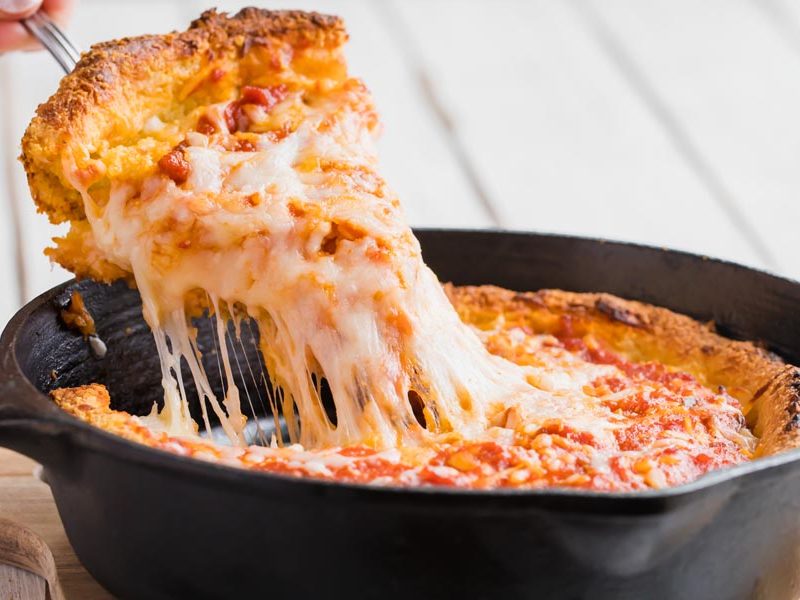
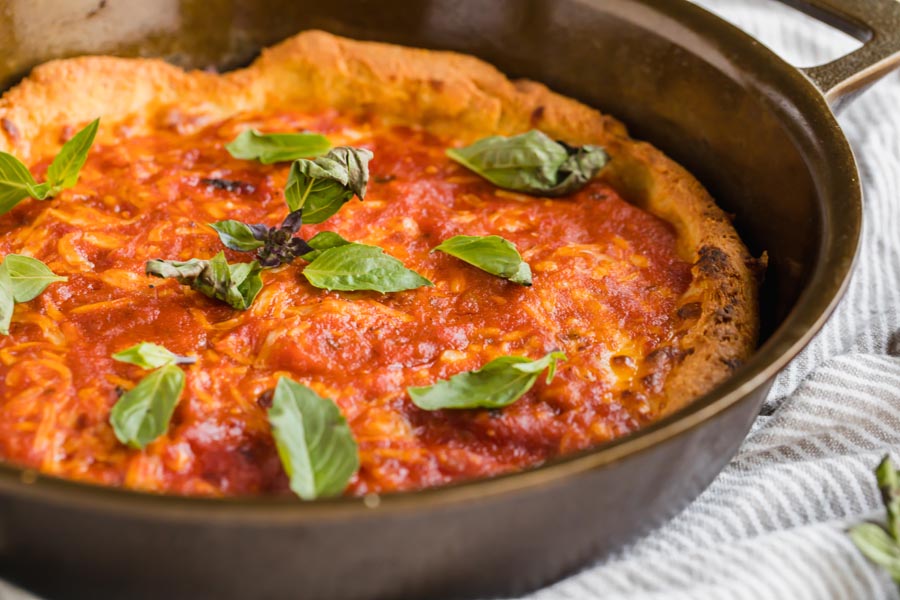
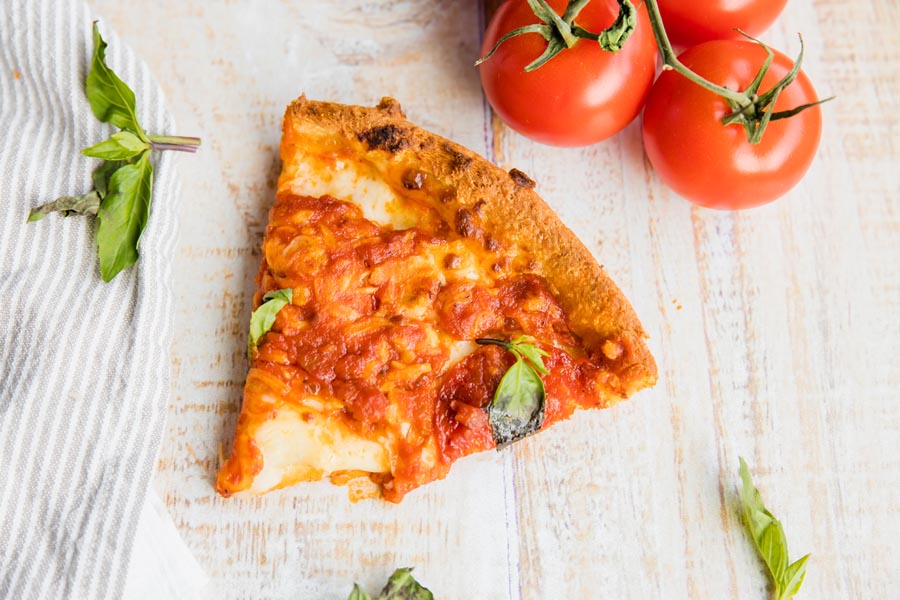
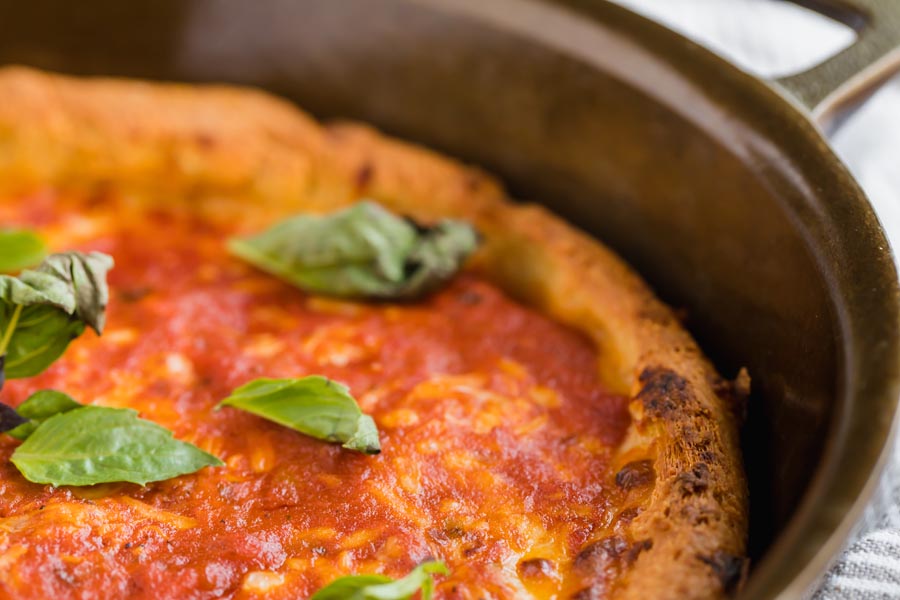
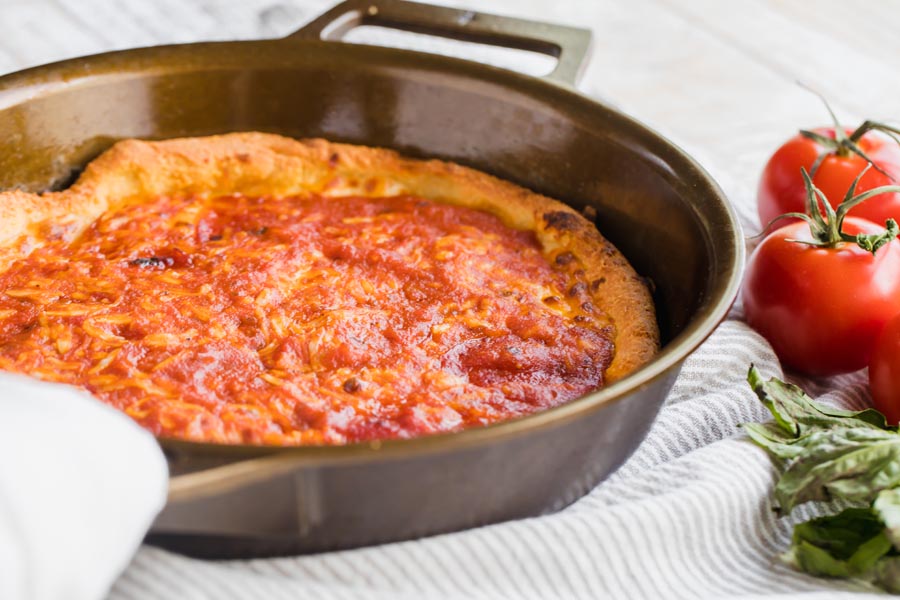
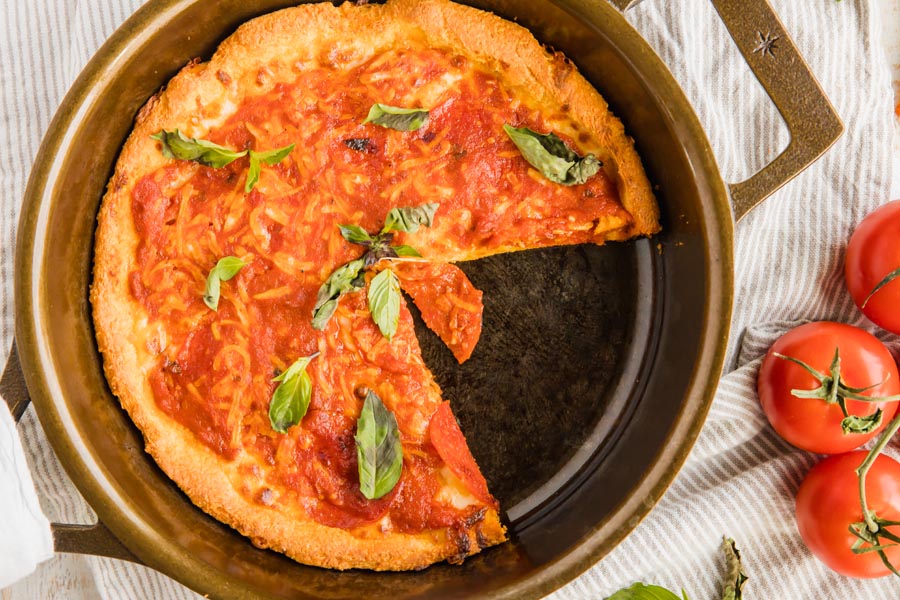
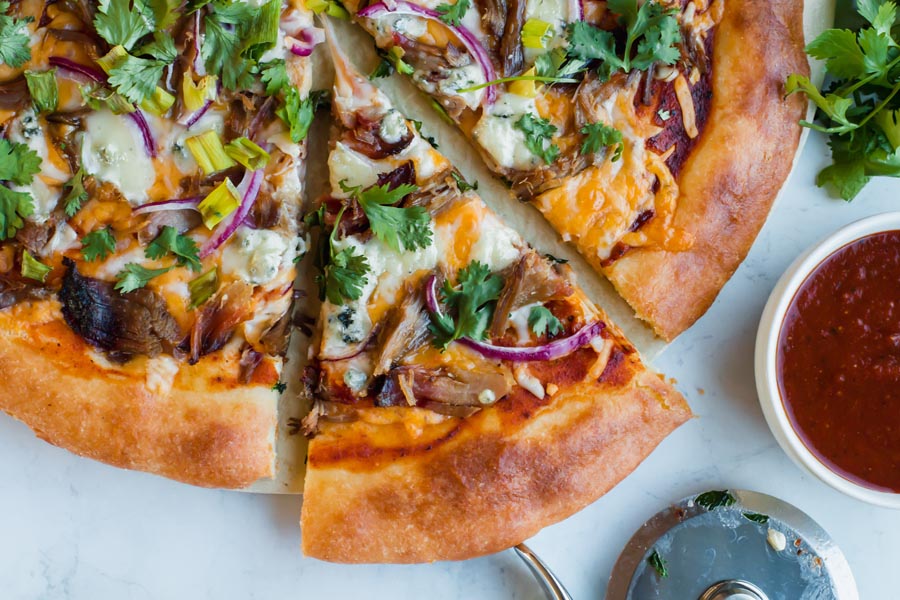
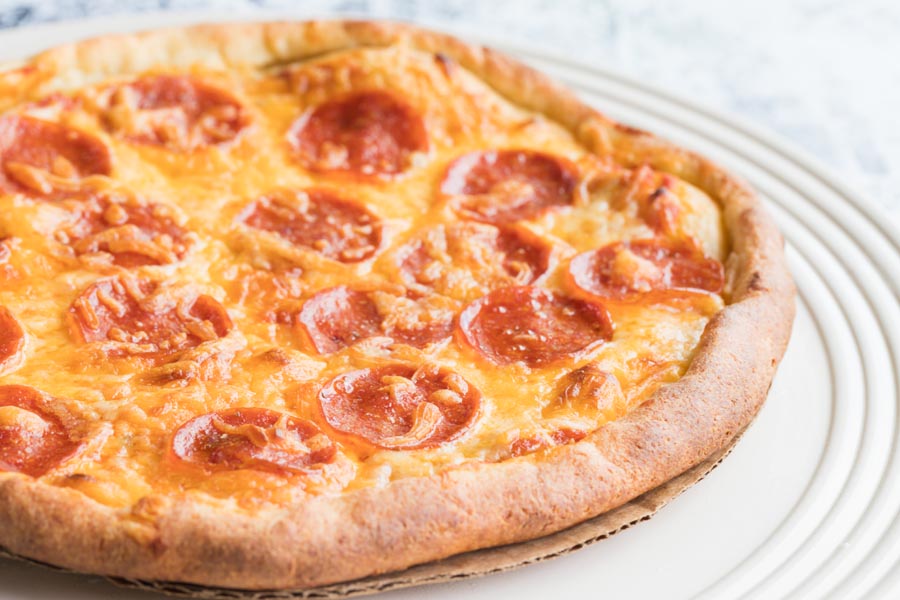
Thick, cheesy keto deep dish pizza on a lupin meal crust that bakes up cornmeal-like, layered with pepperoni and sauce, Chicago style in cast iron. 2.5g net carbs and 18.1g protein per serving. No pre-baking required.
If you want a pizza that actually tastes like pizza on a low carb diet, this is it. I’ve made every crust out there (chicken crust, fathead, cauliflower, you name it) and this is the one my family requests on Friday nights. Not because it’s ‘healthy’ (they don’t care about that), but because to them it’s just pizza night. The crust is thick, the cheese is layered, and the whole thing comes together in a cast iron skillet that gives the bottom a golden, crispy crunch.
The secret is lupin meal. It gives the crust a cornmeal-like flavor and texture that’s almost identical to traditional Chicago style pizza. I tested both lupin flour and the meal grind, and the meal creates a denser, more authentic crust. That texture is what sets this recipe apart from everything else I’ve tried. Readers who have tried every version out there keep telling me the same thing: the lupin meal is the difference.
You don’t have to pre-bake the crust, either. Press the dough into a cast iron skillet, layer your toppings Chicago style (cheese first, then meat, then more cheese, sauce on top), and bake the whole thing at 350. Mine usually takes about 20 minutes, then I finish it under the broiler for 2-3 minutes until the edges go golden and bubbly. Most keto pizza recipes make you bake the crust first, add toppings, and bake again. This one goes straight from raw dough to fully loaded in one shot.
At 2.5g net carbs per slice, the macros are genuinely better than what you’ll find in most pizza recipes out there. And the crust holds up. I loaded mine with pepperoni, olives, banana peppers, and way too much mozzarella, and the center didn’t buckle once. Even when I doubled the recipe for a 10-inch skillet, it held together.
I make this for pizza night almost every week. Sometimes I stick with the classic pepperoni, sometimes I switch it up with sausage and mushrooms. The dough takes about five minutes in the food processor, and the whole pizza is done in about 30 minutes. It’s not a weekend project.
If you’re not in the mood for dough, my crustless pizza and keto pizza casserole skip the crust entirely. My chicken crust pizza makes a thick crust too, but it’s built on chicken, so it’s a completely different experience. When I want the real thing (thick crust, layers of cheese, that golden cast iron bottom), this is the recipe I come back to.
Low Carb Deep Dish Pizza
This is the real deal. My chicken crust pizza makes a thick crust too, but it’s built on chicken, so the flavor is completely different. This one uses lupin meal for a crust that tastes and feels like actual cornmeal-based dough. My kids scarf it down without hesitation every time I make it.
The crust gets layered Chicago style and bakes up golden in a cast iron skillet. No pre-baking required. Most recipes make you bake the crust first, then add toppings and bake again. Not this one. Press the dough in, pile everything on, and let the oven do the work in one shot.
Why Lupin Meal Makes the Best Crust
This recipe uses lupin meal, a legume flour that’s becoming popular in low carb baking. It’s high in protein, high in fiber, and only 1 net carb per serving. Lupin beans are closely related to peanuts and soybeans, so if you have a peanut or soy allergy, check with your doctor before using this ingredient.
I’ve tested both the flour and the meal grind. Both work, but the meal gives a denser, more authentic cornmeal-like texture. Multiple readers confirmed this in the comments. The flour works too if that’s what you have, but the meal version is what I keep coming back to. The crust tastes remarkably like traditional pizza dough, especially the cornmeal crusts you’d find in Chicago.
How to Layer a Chicago Style Pizza
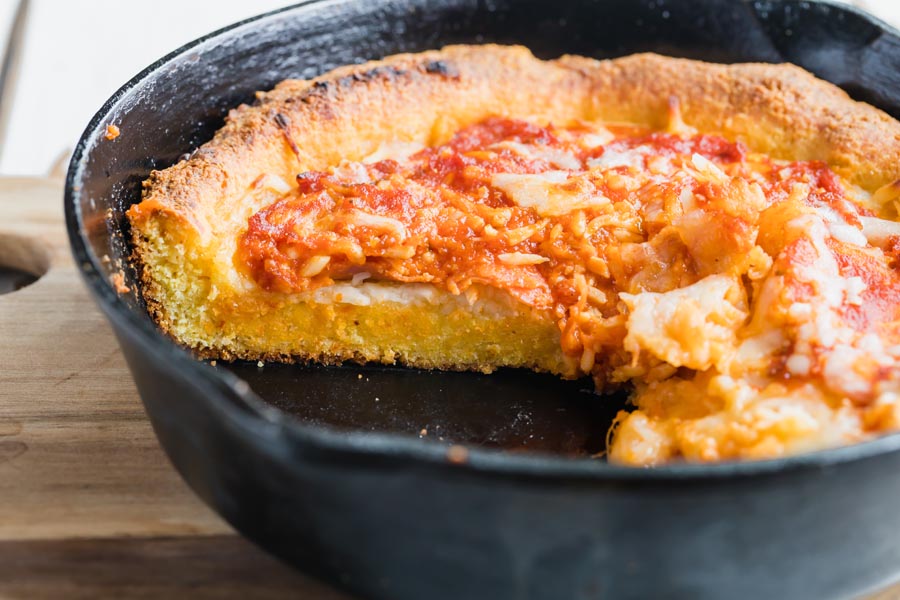
What makes this a Chicago style pizza? Two things: the thick cornmeal crust and the inverted layering.
I don’t use actual cornmeal (not exactly keto-friendly). Instead, lupin meal mimics that same color, flavor, and gritty texture perfectly. Since this is a deep dish pizza, it takes longer to cook than a standard thin crust. The pizza is thick and the toppings are piled on. If you put mozzarella on top like a regular pizza, it burns before the center finishes cooking.
That’s why Chicago style layers the toppings in this order:
Crust
Cheese
Meat and veggies
More cheese
Pizza sauce on top
The layering order seemed backward to me at first. But it works. The sauce on top protects everything underneath, and the cheese melts into the crust instead of burning. Readers who know Chicago deep dish have told me it tastes like the real thing. If someone who grew up on the real thing says it’s legit, I’ll take that.
How This Compares to Fat Head Pizza Dough
Fat head pizza is probably the most common pizza you can make while keeping your carbs low. The crust is mostly mozzarella cheese, sometimes with cream cheese (I don’t find that necessary). If you want a classic thin crust, my fathead pizza crust is solid.
This recipe is a modified version. I designed it with less mozzarella in the crust because some people don’t love how cheesy a traditional fat head dough gets. The lupin meal carries more of the structure here, which gives you a breadier, denser result. If you like a crispy thin crust, go fat head. If you want something thick and substantial that holds up to heavy toppings, this is the one.
Best Pizza Sauce Options
Some marinara sauces have hidden sugars, and it adds up fast when you’re loading sauce onto a pizza. I stick with brands that keep the sugar low:
If those are out of your budget, you can make your own pizza sauce at home. It’s simple: crushed tomatoes, garlic, oregano, and a pinch of salt. I make a big batch and freeze it in ice cube trays so I always have some ready to go.
More Pizza Recipes to Try
I think this is the best pizza I’ve made, but variety keeps things interesting. Here are a few more I come back to regularly:
I use a 6.5-inch or 8-inch cast iron skillet for this recipe. The smaller skillet gives you a thicker, puffier crust. The 8-inch makes slightly thinner slices but feeds more people. Either way, cast iron is what gives the bottom that golden, crispy layer you can't get from a regular baking pan.
Spray the inside of the skillet generously with cooking spray before pressing the dough in. Push it up the sides about an inch. If the dough sticks to your hands, wet them slightly. I process everything in a food processor, but a stand mixer works too, and you can even knead by hand if you start with really hot, melted mozzarella. It just takes a few more minutes.
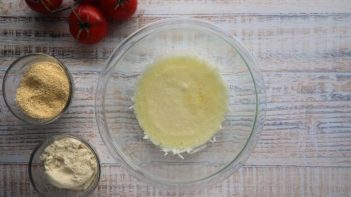
Place 1 1/2 cups mozzarella cheese in a microwave safe bowl. Microwave at 60 second intervals, stirring in between, until melted. You can also melt cheese in a non-stick skillet over medium heat on the stove top.
3
Food process it
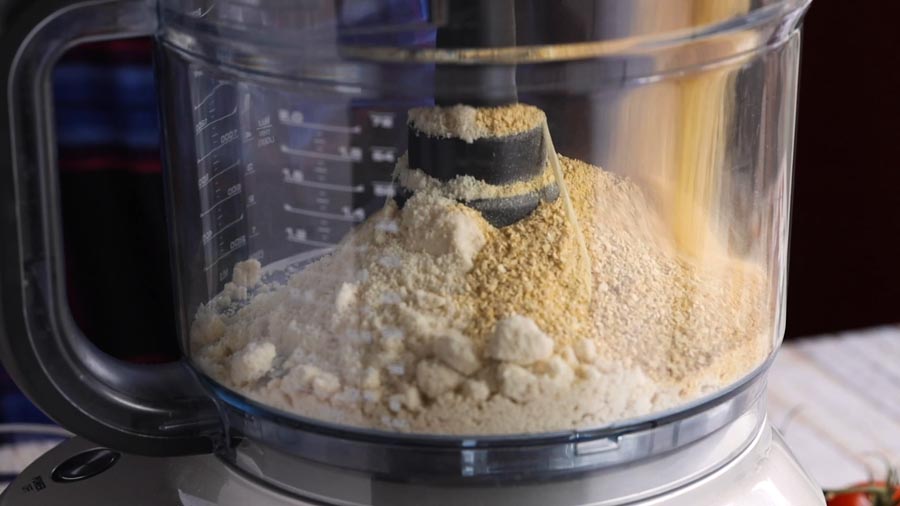
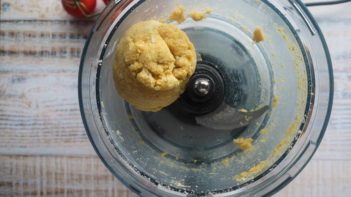
Add melted cheese to a food processor. Add remaining ingredients for the pizza crust. Pulse until dough ball forms and ingredients are combined. If ingredients aren’t fully combined, you can knead the dough on the counter until combined or microwave the dough for 30 seconds and pulse again in the food processor.
4
Put the dough into a pan
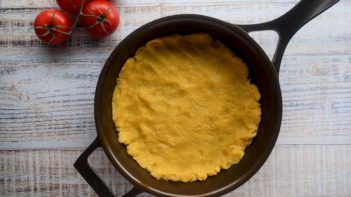
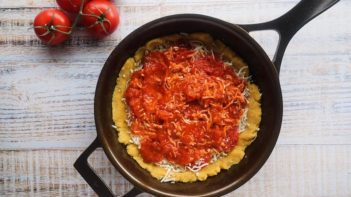
Spray the inside of a 6.5 inch or 8 inch cast iron skillet, cake pan or square baking dish with cooking spray. Press pizza dough into the bottom of the skillet and up along the edges.
5
Halve the cheese
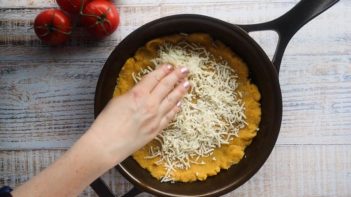
Add about half of remaining cheese on top of the dough.
6
Pepperoni time
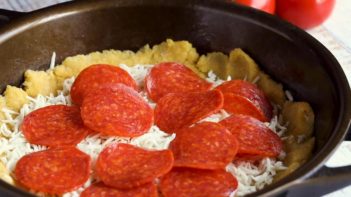
Layer down pepperoni on top of the cheese.
7
Bake at 350
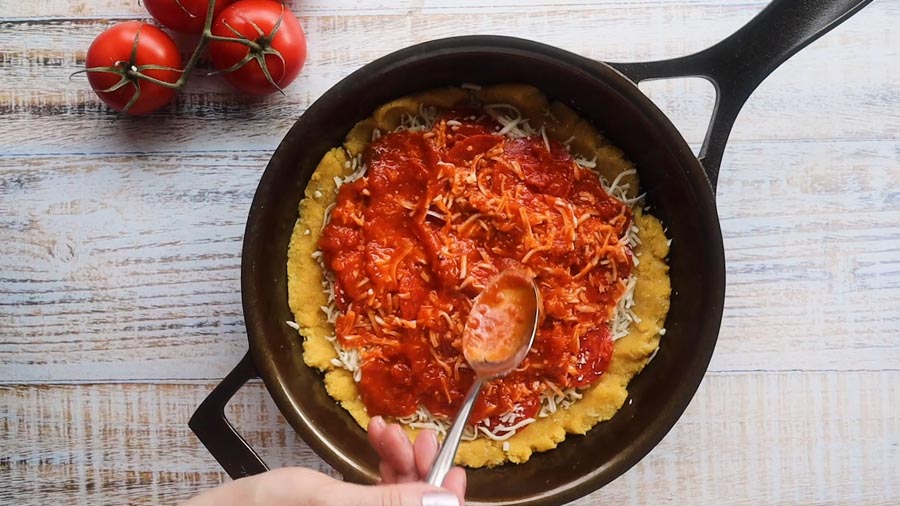
Sprinkle remaining cheese. Spread marinara sauce on top of the cheese. Bake at 350 degrees for 20 to 25 minutes. Finish the pizza under the broiler for 2-3 minutes.
Nutrition
Per serving: 1 slice
Calories
227
Fat
15.8g
Protein
18.1g
Total carbs
6.5g
Net carbs
2.5g
Nutrition is an estimate calculated from the ingredients listed. Brands vary, so check labels if you track closely.
Frequently Asked Questions
Is lupin flour the same as lupin meal, and which one should I buy?
I've tested both in this recipe and both produce a good crust. They come from the same bean, but the grind is different. Lupin meal is coarser, like cornmeal, and lupin flour is finer. I prefer the meal grind because it gives a denser, more cornmeal-like texture that's closer to traditional Chicago style pizza dough. The Amazon link in this recipe is for the meal, which is what I use every time.
Can I make this without a food processor?
I use a food processor because it's fast, but a stand mixer with the dough hook works too. You can also knead by hand. Start with really hot, freshly melted mozzarella so it incorporates more easily. By hand takes a few extra minutes of kneading, but you'll get there. Just make sure the dough is smooth and holds together before pressing it into the skillet.
What size cast iron skillet works best for this pizza?
I use a 6.5-inch or 8-inch cast iron skillet. The 6.5-inch gives you a thicker, puffier crust with taller edges. The 8-inch spreads the dough thinner and gives more surface area for toppings. Both work well. If you want to double the recipe, a 10-inch skillet or a standard cake pan handles that amount. I wouldn't go larger than 10 inches without doubling.
Can I freeze this pizza?
I slice the whole pizza, wrap each slice in plastic wrap, and freeze them in a zip-top bag. They keep for about 2 months. To reheat, I bake the frozen slices at 375 for 12-15 minutes directly on a sheet pan. The crust holds its texture surprisingly well from frozen. I wouldn't microwave them though, because the crust gets soft and loses that crispy bottom.
What toppings can I add to this pizza?
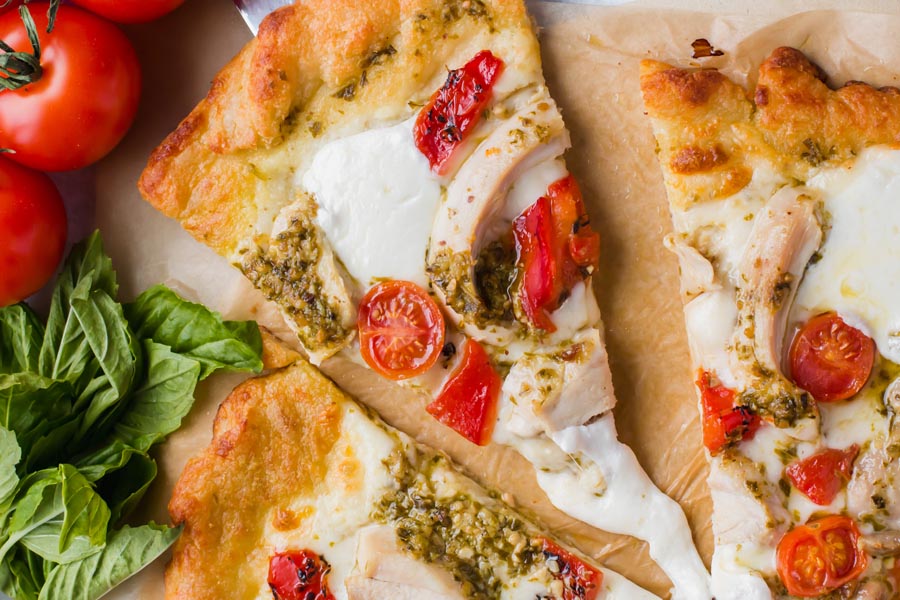
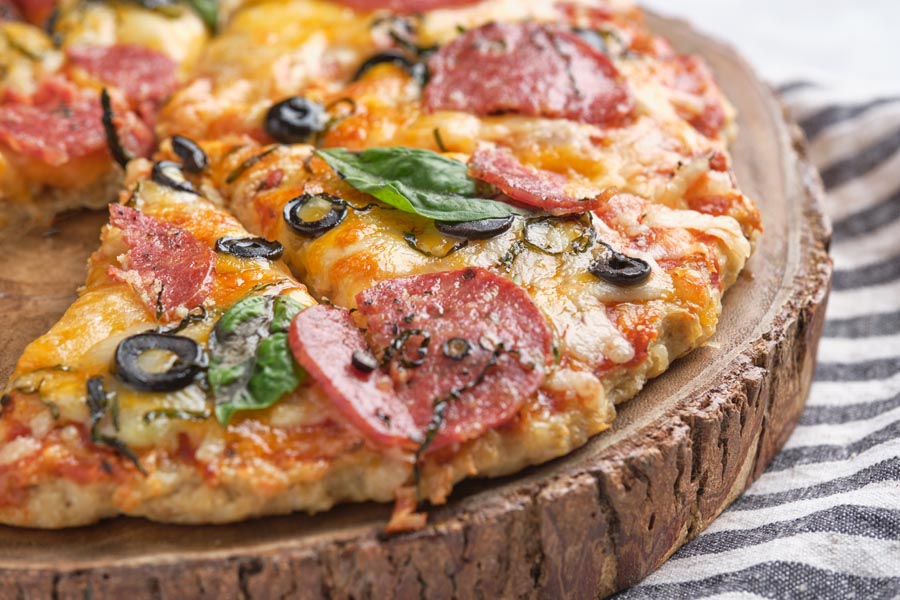
I usually go with pepperoni because it's classic and keeps things simple. But I've also loaded this up with sausage, mushrooms, bell peppers, olives, and banana peppers with no issues. The crust holds heavy toppings without buckling. Just watch the carbs on any sauces you add, and remember the layering order: cheese first, then toppings, then more cheese, then sauce on top.
Can I par-bake the crust for extra crispiness?
You don't need to, which is one of my favorite things about this recipe. But if you really want an extra-crispy bottom, you can bake the crust by itself at 350 for 8-10 minutes before adding toppings. I've done this a few times when I wanted maximum crunch. The edges get almost cracker-like. Just watch it closely so it doesn't over-brown before you add the toppings and put it back in.
Will 2 slices of pizza kick me out of ketosis?
Not this one. Each slice runs 2.5g net carbs, so two slices come to 5g net carbs, and that fits comfortably inside a typical keto day. Regular pizza is a different story because a wheat flour crust stacks up carbs fast. That's the whole reason I build this crust from lupin meal and almond flour instead.
What is the most keto-friendly pizza?
The most keto-friendly pizza is one with a crust built from low carb flours instead of wheat. This deep dish uses lupin meal and almond flour and comes in at 2.5g net carbs per slice. If you want to cut carbs even further, my crustless pizza skips the dough entirely.
Run the food processor a few extra seconds after the cheese melts in, the dough gets elastic and presses clean. Annie, I layered the sauce on top last and it sent me back to a deep dish place I went to once in my twenties. This one got the structure right.
I’ve been looking for a keto pizza I actually like, and a thick cast iron crust sounds way more satisfying than the thin cauliflower ones I’ve tried. My store doesn’t carry lupin meal though, can I just use extra almond flour, or does lupin meal do something specific that almond flour can’t?
Lupin meal gives the crust that cornmeal-like graininess and weight. Almond flour alone works (keep it at 1/2 cup) but the crust comes out softer and more bread-like, less of that deep dish density. Worth hunting down online. The texture difference is real.
Something about the lupin meal crust having actual weight to it got me. Grew up going to a spot in Naperville where it came out in the cast iron still popping, and I’d written off that kind of pizza after going keto three years ago. This undid that.
Naperville knows deep dish. That weight from the lupin meal is what got me too when I first tested it. Almond flour crust is fine but it’s airy, and airy doesn’t feel like Chicago pizza. The cast iron is doing the real work, holding heat from the bottom the way those restaurant pans do. Three years is a long time to give something up.
Cast iron from the bottom is what makes it work. Lupin meal firms up under heat in a way almond flour doesn’t, so by the time the cheese melts the crust is already set.
Hosted pizza night last Friday instead of ordering delivery. One friend is a Chicago deep dish person who has a specific place she orders from every couple months. She picked up her slice, looked at the bottom, and said she didn’t get how it held together that clean. That lupin meal crust actually does what a real crust does. Already texting people for a rematch next week.
A Chicago deep dish person flipping the slice to check the bottom is about the hardest test you can put this through. The lupin meal is what does it. Coarser grind means actual structure, not just something that holds together in the pan and falls apart when you pick it up. Cast iron helps seal the bottom. Already texting for a rematch means she’s sold. I’ll take that.
Added a pinch of garlic powder and crushed fennel seed to the crust and it completely changed everything. The lupin meal already gives it that cornmeal texture, but now it actually tastes like a real deep dish place.
That lupin crust has a real cornmeal bite to it, which surprised me. Four stars though because 1/3 cup of marinara barely registers under all that mozzarella, so I doubled it on round two and it made a noticeable difference.
Doubling the sauce works. I kept it at 1/3 cup to prevent a soggy bottom, but 1/2 holds up fine with a little extra bake time. The cornmeal bite from the lupin meal grind is exactly what I was going for.
Give it about 60 seconds off the heat first. You want it still warm and stretchy but not steaming. I’ve rushed it before and the egg starts cooking on contact.
I was skeptical about lupin meal doing anything close to a real deep dish crust, but the texture is genuinely closer than any fathead version I’ve tried. Holds up to the toppings instead of going soggy underneath.
Fathead collapses under anything heavy. The lupin meal grind is closer to cornmeal than almond flour, so it actually builds structure. I pile it without worrying about the center going soft.
Subbed the pepperoni for crumbled Italian sausage (browned with fennel seeds first) and I think that’s my permanent version now. The fennel just opens up into the lupin crust as it bakes. Whole kitchen smells like an actual Chicago pizza place when you pull it from the cast iron. Kept the Rao’s and the layering exactly as written, just that one swap. Something about the sausage fat soaking into that thick crust is better than I expected.
Used spicy Italian sausage instead of pepperoni and the fat rendering into the crust gave the edges this almost fried crunch I wasn’t expecting. Going with the 8-inch skillet every time now.
Made this four times. Last batch I crumbled Italian sausage under the mozzarella instead of pepperoni on top. The fat soaks into the lupin crust and the bottom gets noticeably crispier. Still trying to nail the top getting more golden but the rest is locked in.
Tried pressing the crust halfway up the sides of my 8-inch cast iron instead of just lining the bottom. Changes everything. The rim comes out almost biscuit-like, way more substantial than a thin edge. Also tucked a thin layer of ricotta under the mozzarella before the pepperoni, and that creaminess does something marinara alone can’t. One thing: bigger pan, add 5 minutes. The center takes longer to set.
Ricotta under the mozzarella, I need to try that. The creaminess would fill in where the marinara can’t reach. Yeah, 8-inch needs at least 5 more minutes, center takes longer.
Figured out that pressing the dough thicker along the sides keeps the marinara from seeping through during baking, which made cleanup a lot easier. Swapped the pepperoni for crumbled Italian sausage and the cast iron crust held everything just as well.
Thicker along the sides, yes. That’s something I should put in the recipe. Sausage in cast iron is better than pepperoni sometimes (all that fat renders into the crust).
Two pans going at once on Sunday and lunch is finally handled for the week. The slices hold up in the fridge way better than fathead does, and the air fryer at 375 for 4 minutes gets the crust back to almost exactly how it came out. Lupin meal base is why this actually works for batch cooking.
375 for 4 in the air fryer, noted. I’ve done it at 400 and the edges went too far. The fathead comparison is real – lupin meal just holds structure in a way fathead can’t after day 2 in the fridge.