Gluten Free Yeast Rolls

Published November 13, 2025 • Updated March 6, 2026
This post may contain affiliate links. See my disclosure policy.
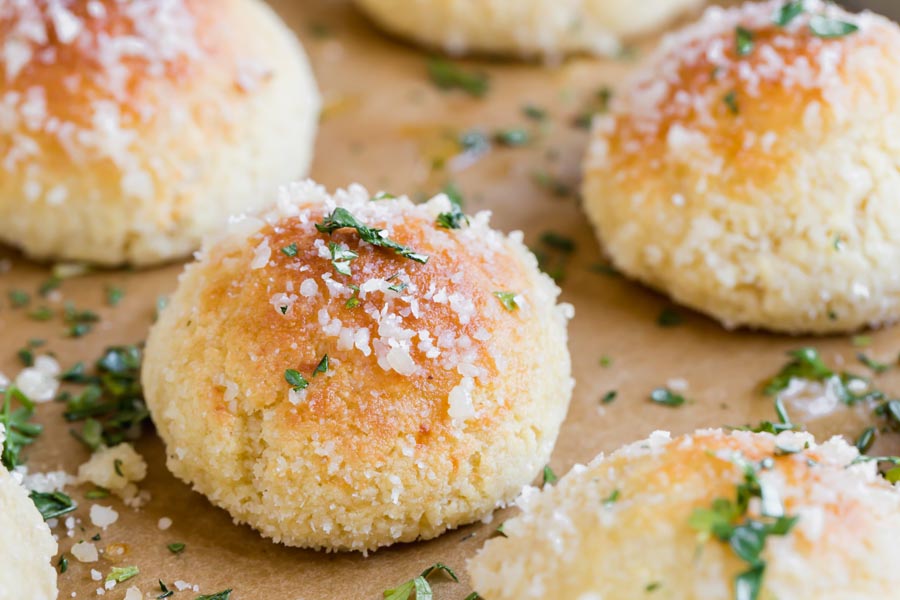
These gluten free yeast rolls are soft, fluffy, and actually rise with real yeast, no sugar needed. I use heavy cream to feed the yeast and a special flour blend that keeps them tender, low carb, and completely gluten free.


I’ve made keto dinner rolls before and you all loved them, but I wanted to make a version with real yeast. There’s something about that classic bread flavor and aroma that you just can’t replicate with baking powder alone. The challenge was doing it without sugar to feed the yeast and without gluten-based flours for structure.

I cracked this last year when I released my Thanksgiving for One video on YouTube, but that version only made two rolls. So many of you asked for a full batch recipe, and I finally delivered. My husband is gluten free too, so these are now on heavy rotation in our house.
Here’s what makes them work. I use heavy cream to feed the yeast instead of sugar. The natural lactose gives the yeast just enough to activate without adding carbs. Then it’s a blend of almond flour, oat fiber, and a touch of coconut flour that gives these rolls their structure. The oat fiber is the real star here. It creates that light, airy crumb that feels like actual bread, not the dense puck you get with almond flour alone. Add psyllium husk for binding and you get keto rolls that hold together, pull apart, and smell like a bakery when they come out of the oven.
What sets these apart from other gluten free roll recipes I’ve tried is that I don’t use any store-bought gluten free flour blends or xanthan gum. No gritty texture, no weird aftertaste. These are soft straight out of the oven and pull apart the way a dinner roll should. I’ve also kept them completely sugar free, using allulose for just a hint of sweetness that rounds out the flavor without spiking your blood sugar.
I love serving these alongside keto stuffing at holidays, or with a bowl of soup on a random Tuesday. They’re also great next to keto green bean casserole or keto sweet potato casserole for a full low carb holiday spread. Warm one up, add a pat of butter, and try to stop at one. I usually can’t.
If you love these, you should also try my keto bread that actually rises, my keto biscuits, or my keto hamburger buns for more low carb bread options.

Explore 685+ keto recipe videos with step-by-step instructions, tips, and tricks to make keto easy.
Gluten-free Yeast Rolls Ingredients
 1/4 cup heavy cream
 -
1 1/4 teaspoons dry active yeast
-
2 cups almond flour
-
1/4 cup oat fiber
-
2 teaspoons powdered allulose
-
1 teaspoon baking powder
-
1/2 teaspoon salt
-
4 tablespoons unsalted butter, softened
-
2 large egg whites
-
4 teaspoons sour cream
-
2 teaspoons psyllium husk powder
-
1/4 cup warm water
Egg Wash Ingredients
-
1 egg white
-
1 tablespoon milk or nut milk
Step by Step Instructions
Step by Step Instructions
Preheat oven and proof the yeast
Preheat the oven to 350°F. Pour heavy cream in a small bowl and heat in microwave on high for 25 seconds. Let cool to 105-120°F (ideally closer to 120°F). Add yeast, stir and let sit for 10 minutes.

- 1/4 cup heavy cream
- 1 1/4 teaspoons dry active yeast
Combine the dry ingredients
To a large bowl, stir to combine almond flour, oat fiber, allulose, baking powder, and salt.

- 2 cups almond flour
- 1/4 cup oat fiber
- 2 teaspoons powdered allulose
- 1 teaspoon baking powder
- 1/2 teaspoon salt
Add in wet ingredients
Once yeast is ready, add butter, egg white, sour cream, and yeast mixture to the dry ingredients. Mix using a fork, pastry blender or electric mixer to combine. Do not overmix.

- 4 tablespoons unsalted butter, softened
- 2 large egg whites
- 4 tablespoons sour cream
- yeast mixture
Prepare psyllium husk
In a small bowl, stir psyllium husk powder with warm water until gel forms then add to the dough. Mix everything until combined.

- 2 teaspoons psyllium husk powder
- 1/4 cup warm water
Form the rolls and proof
Wet your hands with water to prevent the dough from sticking to your hands. Then divide the dough into eight portions and roll each into a ball. Place the balls on a parchment lined baking tray and let proof in a warm place, covered with a clean towel, for 30 minutes.

Prepare egg wash
In a small bowl, mix egg white with milk or nut milk and brush over the top of the dough balls.

- 1 large egg white
- 1 tablespoon milk or nut milk

Nutrition disclaimer
The nutrition information provided is an estimate and is for informational purposes only. I am a Doctor of Pharmacy (Pharm.D.); however, this content is not intended to be a substitute for professional medical advice, diagnosis, or treatment. Always consult your physician or other qualified health provider before making any lifestyle changes or beginning a new nutrition program.
Your Macros. Your Recipes. Calculated in 60 Seconds.
Get personalized keto macros and instantly see which recipes fit your targets. No more guessing what to eat.
Get My Macros + Recipes →Frequently Asked Questions
Can I make these rolls dairy-free?
I've tested this with unsweetened almond milk in place of the heavy cream and it works, but you need to add a teaspoon of honey or a pinch of sugar to give the yeast something to feed on since almond milk has no lactose. Use ghee or coconut oil instead of butter, and dairy free yogurt in place of sour cream. My dairy-free friends have made these successfully with those swaps.
Do these rolls actually rise without sugar?
They do. I was surprised the first time I tested it. The yeast feeds on the natural lactose in the heavy cream. I've made these at least a dozen times now and they rise every single time. The rise is more subtle than wheat bread, but you still get that fluffy, pull-apart texture.
Can I use instant yeast instead of active dry yeast?
I've tried both. Instant yeast works, but I prefer active dry because I can see it activate in the cream and know for sure it's alive before I commit to the dough. If you use instant, skip the proofing step and mix it directly into the dry ingredients. I'd drop the cream temp to about 110°F.
What can I substitute for oat fiber?
I've tested bamboo fiber as a 1:1 swap and it works well, very similar texture. You can also use a bit more coconut flour, but the rolls come out slightly denser. I wouldn't swap in oat flour (that's a totally different ingredient with way more carbs). Oat fiber is the secret to that light crumb, so I always recommend ordering it online if your local store doesn't carry it.
Why didn't my rolls rise?
Nine times out of ten, this happens because the cream was too hot and killed the yeast. I aim for 120°F, and I actually use a kitchen thermometer because guessing doesn't work. The other common culprit is expired yeast. I keep mine in the fridge and always check the date. If your cream-yeast mixture doesn't get cloudy and bubbly after 10 minutes, start over with fresh yeast. If they rose but came out dense instead of fluffy, overmixing is usually the problem. Once the wet and dry ingredients are combined, stop. I also weigh my oat fiber now instead of scooping because it compacts easily and throws off the ratio.
Can I make the dough ahead and refrigerate overnight?
I've done this a few times for holiday prep. Shape the rolls, cover the tray tightly with plastic wrap, and refrigerate. In the morning, pull them out and let them come to room temp for about 45 minutes before baking. They rise a little less than fresh dough, but the convenience is worth it when I'm juggling a full holiday menu.
Can I add herbs or toppings like everything bagel seasoning?
I've tried rosemary folded into the dough and garlic butter brushed on top right after baking, and both work really well. The base is sturdy enough to handle extra moisture from fresh herbs without going dense. Everything bagel seasoning pressed lightly on top before baking is another favorite in my house. I'd stick to one or two additions per batch so you can taste what each one does. One of my readers added rosemary and garlic butter together and said the rolls held up perfectly.
Are these celiac-safe or just gluten-free?
I make these with almond flour, oat fiber, coconut flour, and psyllium husk, so there's no wheat, barley, or rye in the recipe. If you have celiac disease, the main thing to watch is your oat fiber source. I use one that's certified gluten free, because regular oat products can be cross-contaminated during processing. Check the label on yours. The rest of the ingredients are naturally gluten free, so as long as your oat fiber is certified, these should be safe.





I added garlic powder to the dry ingredients and brushed them with melted butter straight out of the oven. Pretty new to keto baking so I kept waiting for something to go wrong, but the yeast actually bloomed and they puffed up. Soft and a little chewy inside, and the garlic butter smell took over the whole kitchen. Trying rosemary next.
Garlic in the dough means every bite gets it instead of just the top. And pulling the butter while they're still hot is the trick, they absorb it way faster.
Made these Sunday and my kid refused to believe they weren't regular rolls. Stood there arguing with me until I showed him the almond flour bag. The way they puffed up and smelled like actual dinner rolls still kind of wrecks my brain. Only been keto a few months.
Ha, that smell is all the yeast. Heavy cream feeds it the same way sugar does in regular rolls, so it rises like real bread. Kid had every right to be skeptical.
My daughter has celiac and she stopped trusting gluten-free bread years ago. These came out of the oven and she said they smelled like actual yeast rolls. She ate two without once mentioning they were gluten-free, which does not happen.
Two rolls and no mention is better feedback than any five-star review. The oat fiber is the one thing I'd flag for celiac, just make sure it's a certified GF source. Everything else in this one is clean.
Added a tablespoon of fresh rosemary to the dough and brushed the tops with garlic butter straight from the oven because I had a roast going and wanted something to match. The rolls held up to the butter without going dense, which surprised me given how light the almond flour base is. The psyllium husk gel really does its job keeping the texture together through the extra moisture. Four stars for now, still dialing in the rosemary amount, but the technique is solid.
Rosemary in this one is so good. I land around 1 to 1 1/2 teaspoons and the yeast flavor still comes through. Go heavier and it takes over.
Made a double batch Sunday and I'm still thinking about how well they held up three days out. Wrapped individually in plastic wrap once cooled, reheated at 325 for 7 minutes. Came back almost exactly as they came out of the oven. The psyllium husk gel step gives these the pull and structure basically every other keto roll recipe is missing. They survive the week without crumbling into dust by Tuesday. I've batch-prepped four other gluten free roll recipes and they all turned into dense, sad pucks by day two. These didn't. Already scaling to a triple batch next weekend because six rolls for the week is not enough.
Psyllium gel is the whole reason this one survives the week. I've hit the dense-puck wall with so many other GF rolls. 325 for 7 tracks, maybe 8 if they're cold from the fridge. Triple batch, yeah.
I've tried probably six different gluten free roll recipes over the past year and most of them are dense enough to use as a doorstop. These are the first ones that actually rose and had a real soft interior. The heavy cream for the yeast sounds strange but the result speaks for itself. I'm genuinely mad it took me this long to find this recipe.
Ha, six is about where I was before I landed on this one. The lactose in the heavy cream feeds the yeast, that's why it doesn't need sugar.
My husband has made no secret of his feelings about gluten-free bread (dense, dry, not worth it), so I made these on a Sunday and said nothing about what was in them. He took a second one and said they reminded him of the rolls his mom used to make for holiday dinners. Coming from someone who has written off gluten-free baking entirely, that's the whole review. The psyllium husk step felt unnecessarily fussy when I read it, but it earns its keep. These have a soft, pillowy texture I've never pulled off with almond flour alone.
A GF skeptic taking seconds and saying it reminded him of his mom's holiday rolls - I'd put that in writing. And the psyllium husk is worth the fuss. Skip it once and you'll see why fast.
Proofed mine in a barely-warm oven instead of at room temp and got noticeably more rise, not perfect but freaking close to a real dinner roll.
Yeah the warm oven is more consistent. Room temp proofing swings too much depending on the season, my kitchen in winter is basically proof-sabotage.
Husband ate three before I could even sit down. Are these actually low carb?
Ha, that's the best compliment. Yes, they're low carb - 3g net carbs per roll. I use a mix of almond flour and vital wheat gluten to keep them soft and bread-like without the carb load.
Took me two tries to get the yeast proofing right. Heavy cream has to be warm enough or nothing happens. Once I nailed that they came out great.
Yeah that's the tricky part. I aim for 120°F, anything cooler and the yeast just sits there. Once you nail that temp they rise like regular rolls.
The psyllium husk trick is what makes these actually hold together. Soft inside, golden on top. Best keto roll I've tried.
Yeah the psyllium husk does all the heavy lifting for structure. Without it they'd fall apart.
can I freeze the dough balls for rising and baking later?
I'm not entirely sure how well this dough will freeze since I haven’t tested it, but if you test it out, let me know how it goes!