There's always a batch of this chimichurri sauce in my fridge — bright, punchy, and just 0.5g net carbs. Parsley, cilantro, garlic, and red wine vinegar make any grilled protein taste like I spent way more time on dinner than I did.
I started making chimichurri years ago when I got tired of reaching for the same bottle of hot sauce every time I grilled something. Now it's the one condiment I never let run out. A batch takes about five minutes, it sits in the fridge all week, and it tastes better on day two than it does fresh.
What I love about this recipe is how forgiving it is. You can hand-chop everything for a chunkier, more traditional texture with visible flecks of parsley and cilantro, or pulse it in a food processor if you want it smoother and faster. I've done it both ways dozens of times. Hand-chopping gives you that rustic look where you can see every herb. The food processor saves time, but I've learned to pulse in short bursts (3-4 pulses, not a full blend) because over-processing turns it into a green paste instead of a sauce.
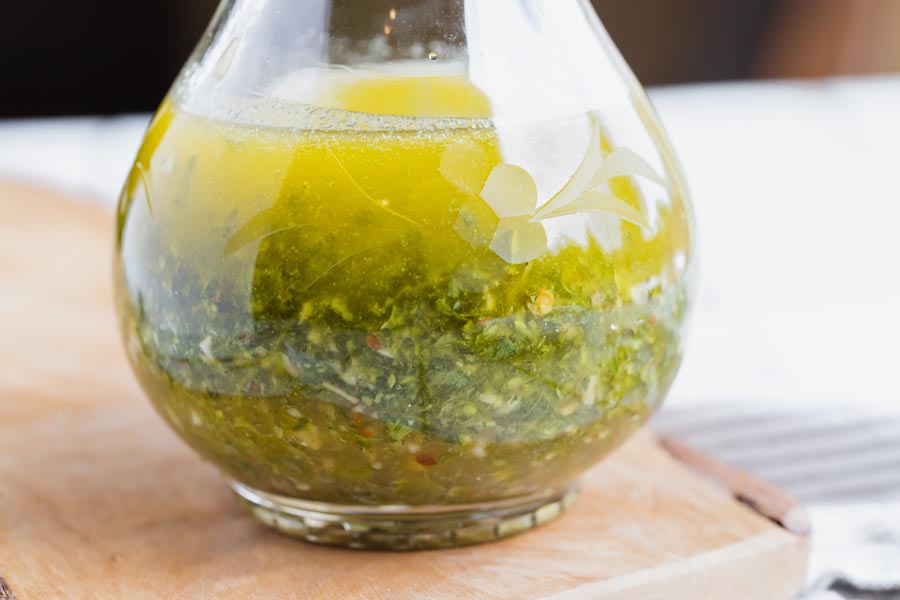
The flavor base is simple: fresh parsley, cilantro, oregano, garlic, red pepper flakes, and red wine vinegar in an avocado oil base. I've tried other vinegars over the years. Balsamic changed the flavor completely (and added unnecessary carbs). White wine vinegar works in a pinch, but red wine vinegar gives you that slightly tangy bite that makes chimichurri what it is. Stick with it if you can.
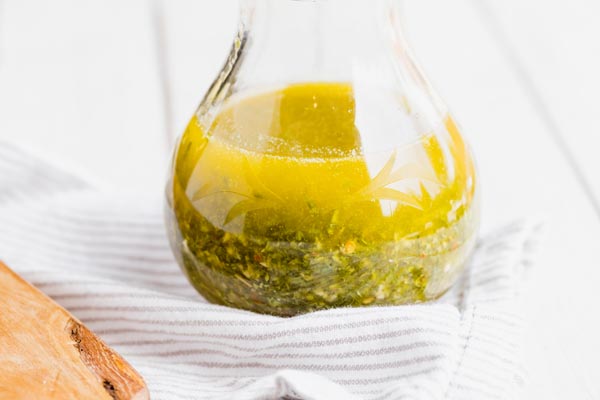
Once mixed, I let the jar sit in the fridge overnight. That resting time is not optional in my kitchen. The garlic and vinegar infuse into the oil overnight, and I ran a side-by-side comparison: the one-hour version was bright and sharp, but the overnight version had noticeably deeper, more layered flavor. It's the kind of difference you taste immediately.
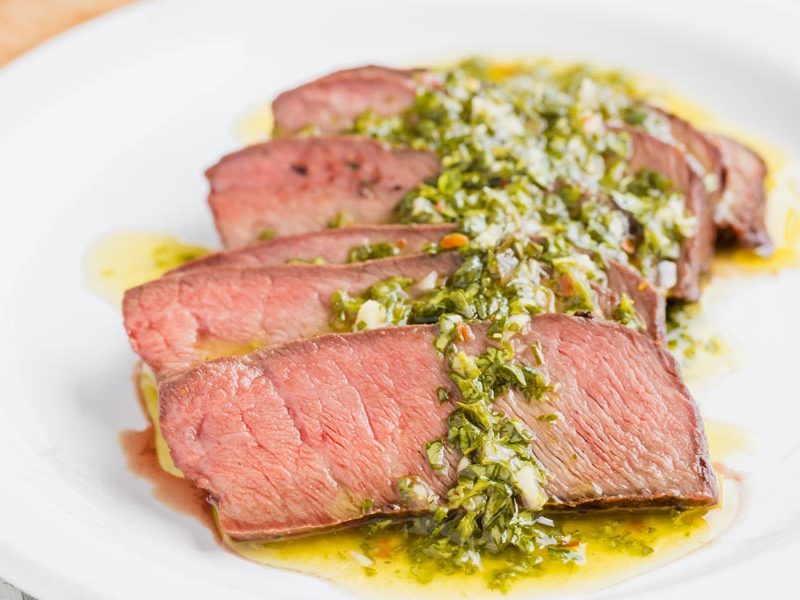
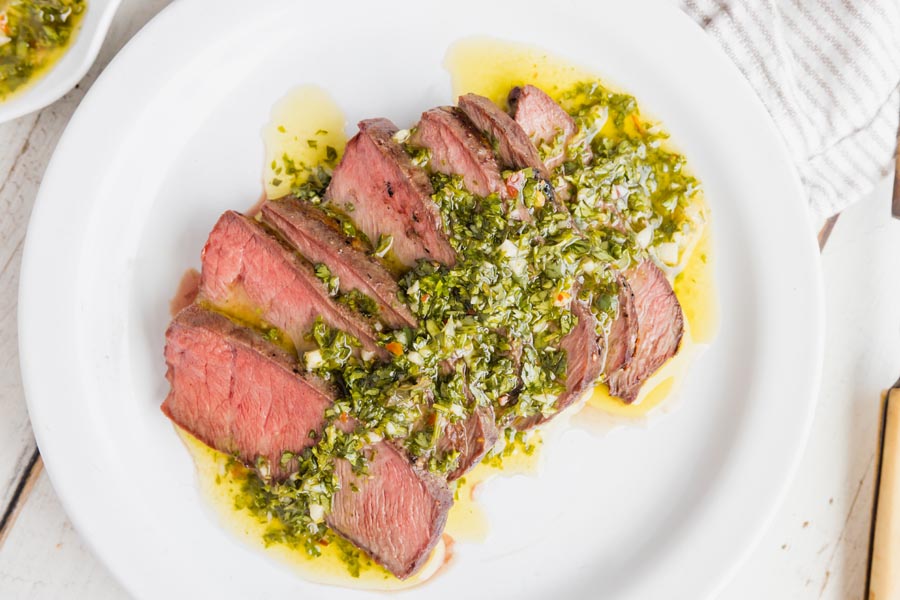
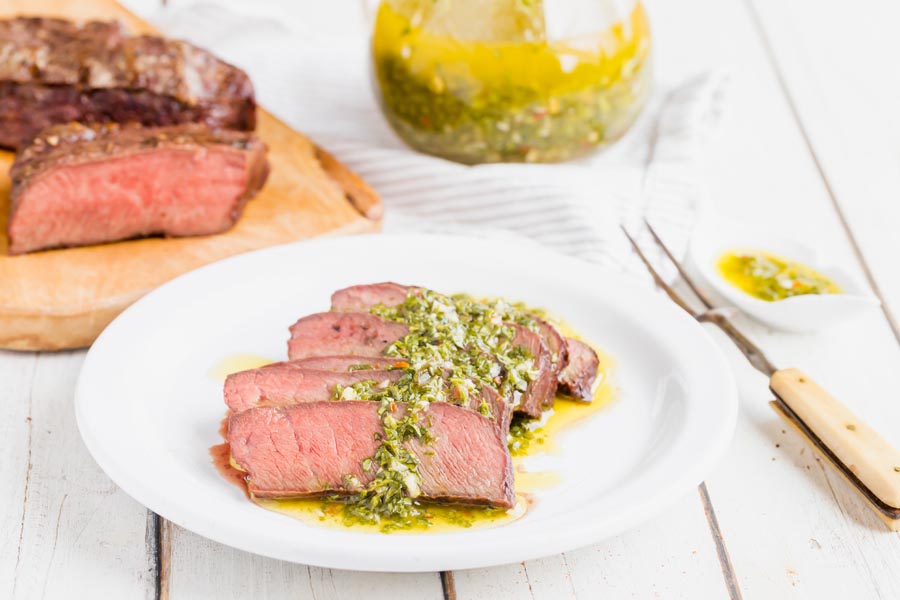
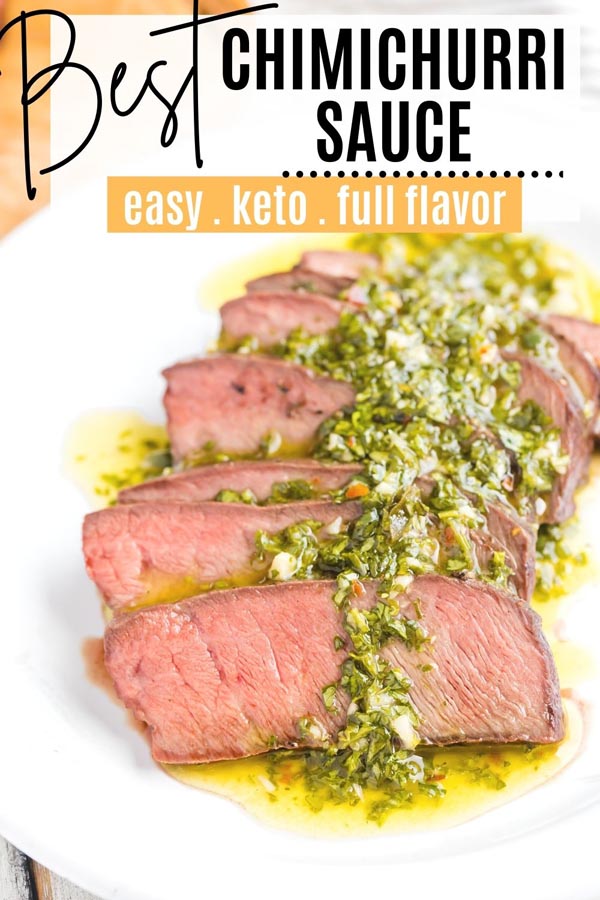
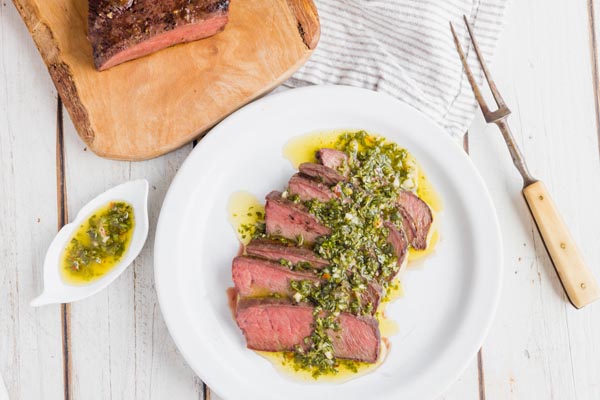
I spoon this over grilled steak, fajita-marinated chicken, pork chops, fish, and eggs. It works on everything. If you're building out your keto condiment collection, this belongs right next to your avocado mayonnaise and keto BBQ sauce. Five minutes of effort for a week of flavor.
Homemade Chimichurri Recipe
When you eat keto, seasoning your protein with just salt and pepper gets old. I hit that wall years ago. But I also don’t want to spend an hour on a weeknight dinner, so I started keeping chimichurri in the fridge at all times. Five minutes of chopping, one jar, and every meal that week gets an upgrade. The fresh parsley, cilantro, oregano, and garlic give any grilled meat a bright, herby punch that makes plain chicken or steak feel like something I’d order at a restaurant. This is the recipe I come back to more than any other condiment I make.
What Is Chimichurri?
Chimichurri is a traditional Argentinian herb sauce originally made for grilled meats. I think of it as Argentina’s answer to pesto, but lighter and sharper. The base is finely chopped parsley and cilantro in oil, with garlic, red pepper flakes, and red wine vinegar adding an acidic, garlicky bite. It’s an oil-based condiment, not a cream sauce, so it’s naturally low carb even when you’re generous with it. I use it as a finishing sauce, a marinade, and a dipping sauce depending on what I’m cooking that night.
How to Customize Your Chimichurri
I’ve made this enough times to know what works and what doesn’t when you start tweaking the recipe. Here’s what I’ve learned.
Use flat-leaf parsley, not curly. I’ve tested both. Flat-leaf has more flavor and chops into that spoonable texture you want. Curly is tougher and tastes grassy by comparison.
If you hate cilantro, skip it and double the parsley. I’ve made a parsley-only version and it still holds together. You lose the citrusy brightness cilantro adds, but the garlic, vinegar, and red pepper flakes carry the sauce. A small handful of fresh mint fills that gap nicely, especially with lamb.
If you don’t like heat, skip the red pepper flakes entirely. If you want more kick, I add extra flakes or a few slices of fresh jalapeno. Start small and taste as you go.
For a stronger garlic flavor, use more cloves and let them sit in the sauce for at least an hour. The garlic mellows slightly as it rests.
Always taste your sauce before you jar it. I adjust the salt, vinegar, and garlic every single time based on what I’m tasting.
Red wine vinegar is the authentic choice and the one I always reach for. Lemon juice is a legitimate swap, not just a backup. It makes the sauce brighter and cleaner. One of my readers paired lemon juice with extra red pepper flakes over grilled shrimp and I’ve been making that version regularly since. I’d avoid balsamic entirely because it changes the flavor and adds more carbs than other vinegars.
A tablespoon of finely minced shallot or red onion adds a nice layer. Shallot is milder and sweeter. Red onion is sharper, so I use less (about two teaspoons). Neither is traditional, but both are good additions I’ve tested multiple times.
Olive oil works perfectly in place of avocado oil. I use whichever I have on hand.
For chopping, a food processor saves time, but pulse in short bursts (3-4 pulses) so you don’t turn it into a paste. I actually prefer hand-chopping when I have the time because you get those visible herb flecks that look and taste more authentic. If you hand-chop, go fine so the texture stays spoonable.
Once mixed, I put the jar straight in the fridge overnight. Room temperature for an hour works if you’re in a rush, but overnight rest gives you noticeably deeper, more layered flavor. I ran a side-by-side comparison and overnight wins every time.
What to Serve with Chimichurri
I put this on everything. That’s not an exaggeration. Chimichurri works across proteins, vegetables, and eggs. My favorite pairings are skirt steak, flank steak, and grilled chicken thighs. It’s also great on pork tenderloin and grilled fish. If you already make my cilantro lime marinade, think of chimichurri as its bolder, more herbaceous cousin. I also keep cilantro aioli and keto garlic sauce in rotation, but chimichurri is the one I reach for most.
It also works as a marinade, not just a finishing sauce. I coat skirt steak or chicken generously, cover it, and let it sit in the fridge for 2-4 hours (up to overnight for a deeper soak). The vinegar helps tenderize the meat, but I don’t go beyond 12 hours or the texture gets soft. After grilling, I always spoon fresh chimichurri on top because the cooked batch loses some of its brightness. Beyond protein, I drizzle it on roasted cauliflower, over scrambled eggs in the morning, or alongside my keto horseradish sauce for a two-sauce steak night. Once you have a jar in your fridge, you’ll find uses for it all week.
How to Store Chimichurri
Since every ingredient in this recipe is a fresh herb or a pantry staple (oil, vinegar, garlic), it keeps in the fridge for up to 5 days with no problem. I actually prefer it after it’s been sitting overnight. The herbs, garlic, and vinegar meld into the oil as it rests, and by day two you have a sauce with significantly more depth than a freshly mixed batch.
I make a full batch every Sunday and store it in a mason jar in the fridge. It’s ready to go whenever I need it. If you want to freeze it, pour the sauce into ice cube trays and freeze. I’ve tested this and it thaws fine, though the fresh herbs lose a tiny bit of brightness after a few weeks. I’d use frozen chimichurri within 3 months for the best flavor.
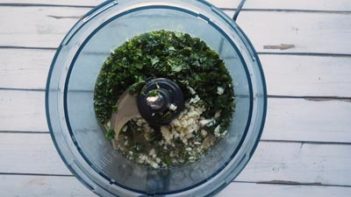
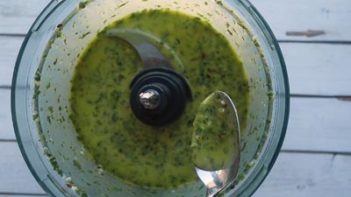
Add all ingredients: parsley, cilantro, oregano, garlic, red pepper flakes, salt, red wine vinegar and avocado oil to a food processor or blender.
2
Pulse
Pulse or blend until smooth and combined. Pour into a mason jar or storage container. Let sit at room temperature for 1 hour to allow the flavors to develop.
Nutrition
Per serving: 1/12 of recipe
Calories
169
Fat
18.7g
Protein
0.2g
Total carbs
0.7g
Net carbs
0.5g
Nutrition is an estimate calculated from the ingredients listed. Brands vary, so check labels if you track closely.
Frequently Asked Questions
Can I freeze chimichurri?
I freeze it in ice cube trays so I can pop out exactly what I need. It thaws well and the flavor holds up, though I've noticed the fresh herbs lose a little brightness after a few weeks in the freezer. I use my frozen batches within 3 months for the best results.
What's the difference between green and red chimichurri?
The version I make here is green chimichurri, which is the classic. It's parsley and cilantro-forward with raw garlic and red wine vinegar. Red chimichurri (chimichurri rojo) adds tomato and sweet red pepper to the base, which gives it a slightly sweeter, smokier flavor. I prefer the green version because it's brighter and more versatile, but I've made the red version for parties and it's a nice change.
Can I make chimichurri without cilantro?
I know cilantro is divisive. If you can't stand it, skip it entirely and double the parsley. I've made a parsley-only version and it still works. You lose a little of the bright, citrusy layer that cilantro brings, but the garlic, vinegar, and red pepper flakes carry the flavor. I've also thrown in a small handful of fresh mint to fill that gap, and it pairs especially well with lamb.
How do I use chimichurri as a marinade?
I use it both ways: as a marinade before cooking and as a finishing sauce after. For marinating, I coat the meat generously and let it sit in the fridge for at least 2 hours, up to overnight. Skirt steak and chicken thighs soak up the flavor the best. The acid in the vinegar tenderizes the meat, so I don't go beyond 12 hours or the texture gets mushy. After grilling, I always spoon more fresh chimichurri on top because the cooked batch loses some brightness.
What cuts of steak go best with chimichurri?
My go-to pairing is skirt steak or flank steak. Both have a slightly loose grain that soaks up the sauce beautifully. I also love it on a thick grilled ribeye and on tomahawk steak when I'm cooking for company. Fattier cuts balance well against the bright acidity of the vinegar and herbs.
Can I use lemon juice instead of red wine vinegar?
I've tested both. Red wine vinegar is my default because it gives you that tangy, slightly earthy bite that defines chimichurri. Lemon juice makes it brighter and cleaner, almost like a different condiment. One of my readers tried lemon juice with extra red pepper flakes over grilled shrimp and said it was the best version he'd made. I tried his combination and he's not wrong. It's a legitimate variation, not just a backup. I'd avoid balsamic entirely because it changes the flavor profile and adds more carbs.
How far ahead can I make chimichurri?
I make mine a full day ahead whenever I can, because the flavor genuinely improves after sitting overnight in the fridge. The garlic and vinegar infuse into the oil and everything mellows into a deeper, more cohesive sauce. I've had batches last 5 days in the fridge with no drop in quality.
Short pulses instead of a full blend, that was my fix after batch one came out like green paste. I keep a jar going in the fridge all week now. Grilled chicken had gotten pretty boring for me a few months into this, and a spoonful of this makes it feel like a real dinner again. The red pepper flakes do more than I expected. Thank you for posting it, your version is the one I finally stopped tinkering with. 😋
Every time I blend this, that smell hits. Right back to my uncle’s cookouts, where there was always a jar of green sauce on the table, gone before the meat came off the grill. Didn’t know until this week it was chimichurri. Or that five minutes is all it takes.
That jar going before the meat even comes off the grill is chimichurri in a sentence, Taylor. Five minutes to make it, ten seconds to disappear. I keep a batch going at all times.
0.5g net carbs for something that matches the chimichurri from the Argentinian place my family went to for every birthday. The red wine vinegar ratio is almost exact. Four stars because I keep adding more red pepper flakes each time, but that’s on me.
I’ve been buying chimichurri from Trader Joe’s for like three years, figured it was one of those things not worth making from scratch. Completely wrong. The red wine vinegar in this has a sharpness the jarred stuff can’t touch, and the garlic is actually present instead of being a whisper. Threw it on grilled flank steak Sunday and I’m done with the store-bought version for good. Four stars because I went too heavy on the red pepper flakes the first time (beginner move), but once I dialed it back the whole thing clicked.
Flank steak was my first test for this too. Red pepper flakes are the one place I always taste as I go, mine usually lands around 3/4 teaspoon. You found your level faster than most, Tiffany.
If you can wait an hour before serving, do it. The vinegar mellows and the garlic opens up in a way that just isn’t there fresh. Rushed it once and noticed the difference immediately.
We did a whole grilling thing last weekend, first nice Saturday we’ve had in weeks, and I made this mostly for myself because my husband has never once touched a chimichurri in his life. He’s the kind of guy who thinks steak is fine with just salt. Watched him dip his fork in ‘just to try it’ and then quietly pour it over everything on his plate without saying a word about it. Something about that garlic with the red wine vinegar, it’s just really alive in a way bottled sauces never are. He asked me the next morning if there was any left. That question told me more than any compliment would have. I made a double batch on Tuesday and it’s already half gone.
The silent pour is the whole review. Nobody asks about leftovers on accident. That garlic and red wine vinegar gets people who think steak doesn’t need sauce every time.
Swapped half the cilantro for fresh basil because I had a bunch sitting out that needed to get used. The result was softer, less sharp, still bright but almost floral. Made a second batch the next day with the original recipe just to compare, and now I’m doing a 50/50 split every time. Something about cutting the cilantro back makes it work on more things.
Basil softens the edges instead of adding another sharp layer. I can see why you’re committing to 50/50. I’d still go full cilantro on skirt steak but for grilled chicken this version probably reads better.
Made this over the weekend to go with some grilled chicken and my husband (who has declared cilantro a personal enemy for years) kept going back for more, like scooping extra onto his plate a third time without saying anything. I waited until dinner was basically over to tell him what was in it. He went quiet for a second and then said ‘okay, fine.’ Which from him is basically a rave review. I think the garlic and red wine vinegar just pull everything together so it tastes like this bright, punchy herb sauce instead of screaming any one ingredient at you. We went through the whole mason jar in three days, on eggs, on leftover steak, on whatever was in the fridge. Already have a second batch going.
‘Okay, fine.’ Five stars from a cilantro hater. The garlic and vinegar meld everything together so nothing screams, cilantro included. On eggs. That’s when I go through it fastest.
My husband is a salt-and-pepper-only person with steak, so I just put this on the table without saying what it was. He poured it over everything and then asked what was in it because he couldn’t place the flavor. When I told him parsley and cilantro he looked genuinely confused, like that wasn’t the answer he expected at all. I’m keeping a jar of this in the fridge from now on.
Tried lemon juice instead of red wine vinegar on a whim and the sauce got way brighter, almost cleaner tasting. Pushed the red pepper flakes up to 1.5 teaspoons too because the heat builds nicely with the lemon. Made it on grilled shrimp this past weekend and can’t stop making it. The lemon version is the one.
Lemon on shrimp makes sense. Vinegar would fight with the seafood. Still vinegar on steak. And 1.5 teaspoons on the flakes if you want heat that actually builds.
Made this on Sunday over grilled chicken and my husband, who grabs bottled stuff without thinking twice, would not stop talking about what was on the meat. It’s the red wine vinegar doing it, that brightness cuts right through. He’s been putting it on eggs, leftover salmon, basically everything in our fridge this week. My only note is the red pepper flakes hit strong so I’ll dial them back a little next time when I’m cooking for the kids too.
Yeah the vinegar is doing real work here. For the kids, half a teaspoon of red pepper flakes gives you that warmth without the heat. My daughter won’t touch the full version either.