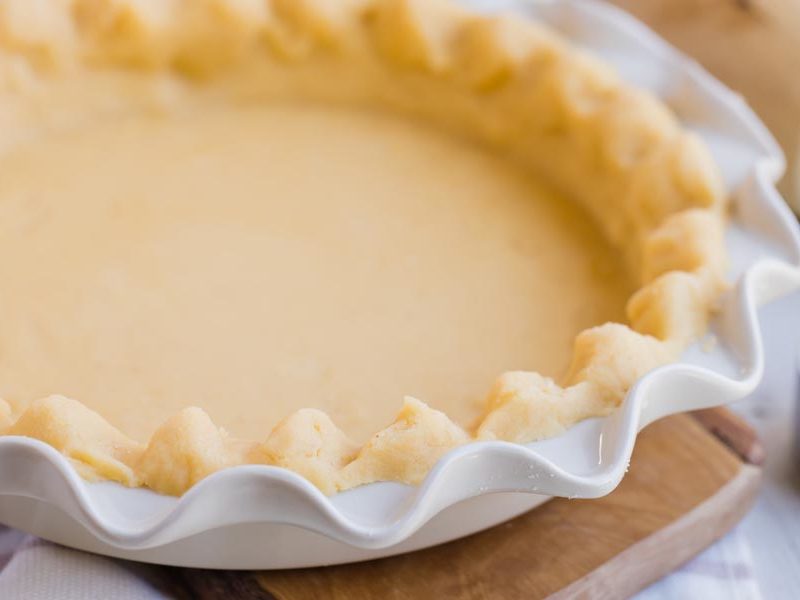
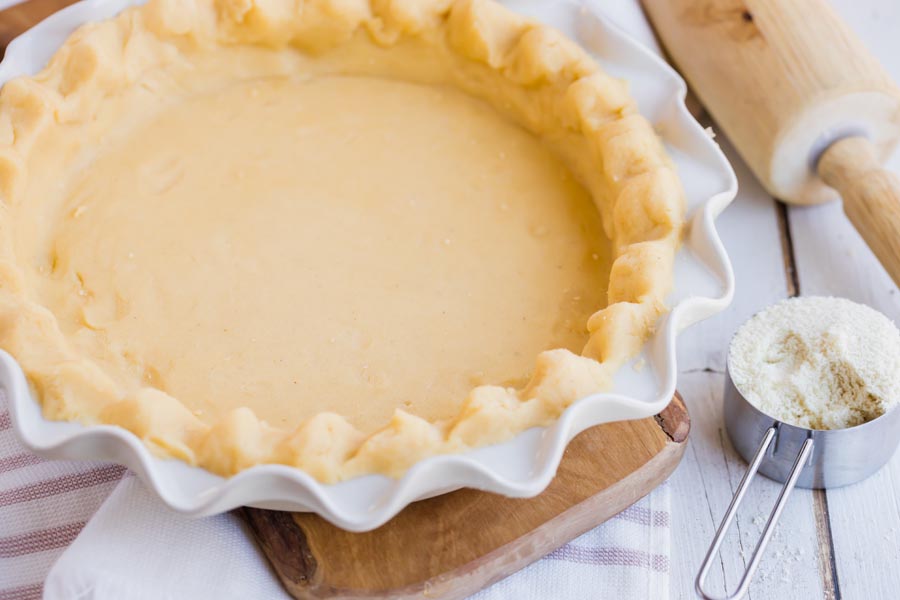
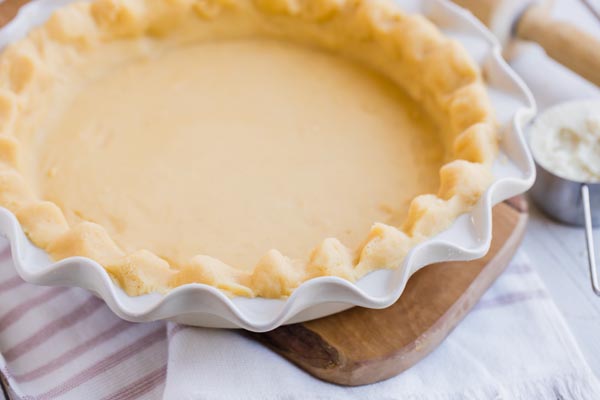
No one will guess this flaky, buttery keto pie crust is grain-free — just 1.5g net carbs. It's almond flour, coconut flour, cold butter, and one secret ingredient — a recipe I've refined since starting keto in 2012.
I've been perfecting this crust since I started keto in 2012, and it took more failed batches than I want to admit to get here. The early versions crumbled apart, came out too dense, or tasted like straight coconut. This version holds together, rolls out cleanly, and bakes up golden without any wheat flour.
The technique that changed everything for me was keeping the butter nearly frozen. I'm talking straight-from-the-freezer cold. When I first started making this dough, I used room-temperature butter because that's what I was used to with regular baking. The result was flat and greasy every time. Once I switched to frozen butter and pulsed it in the food processor, those visible butter pockets started forming, and that's what creates flaky layers in the oven.
Here's something I figured out the hard way: your food processor bowl matters. I pulled mine right out of the dishwasher once (still warm) and the heat melted the butter on contact. The dough turned into a sticky mess before I even added the egg. Now I make sure every bowl, every utensil, and the butter itself are cold before I start.
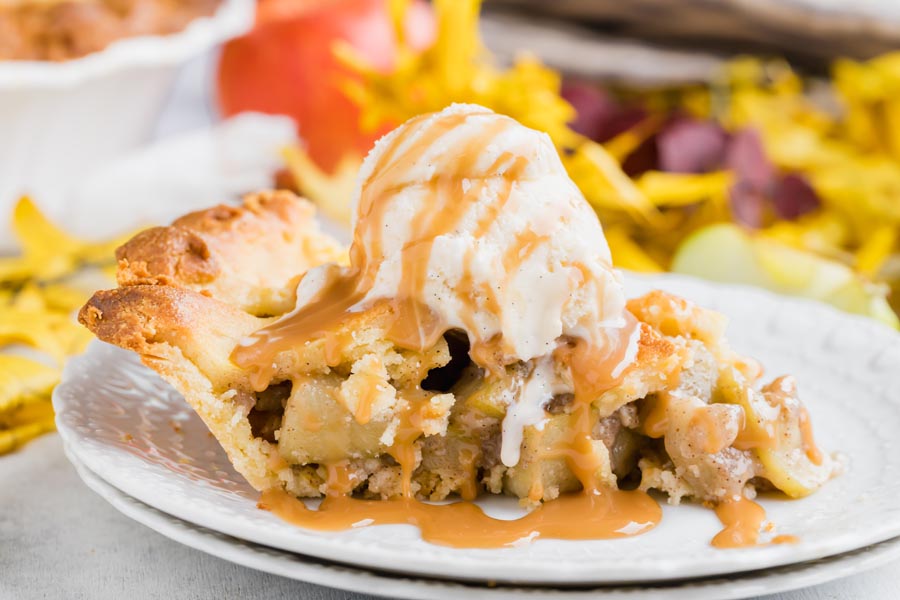
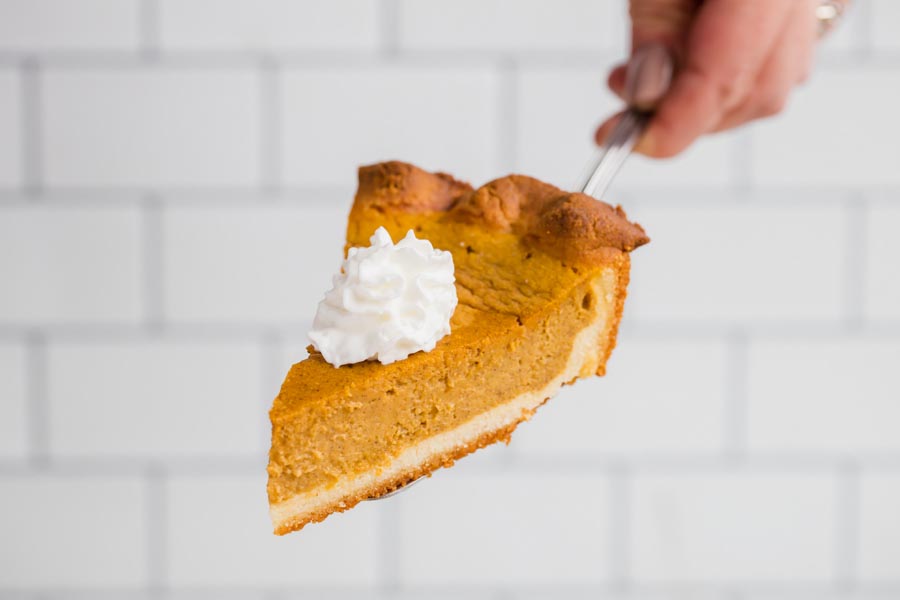
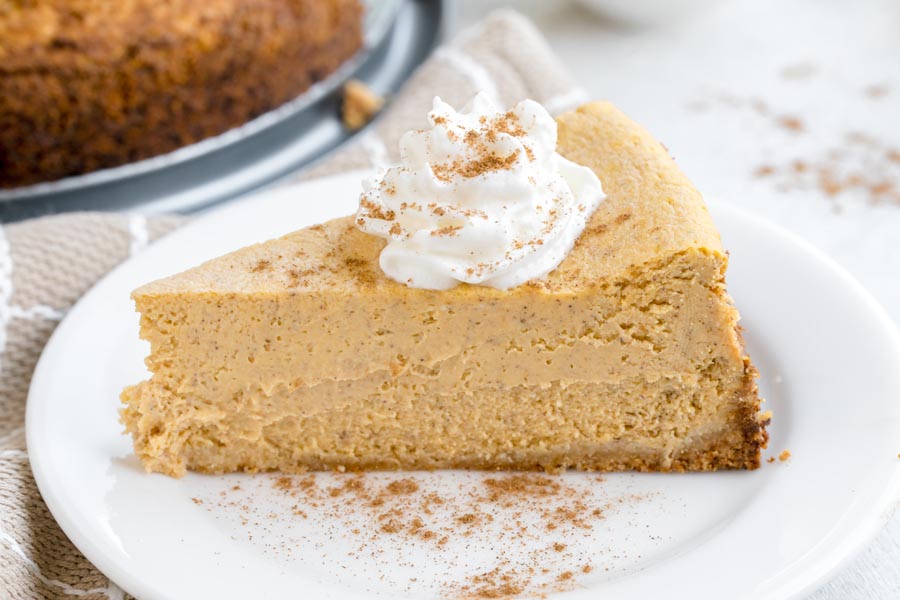
I use this crust for just about everything. It's the base for my keto pumpkin pie every Thanksgiving, and I've used it for keto apple pie, berry pie, and quiche. When I need a pre-baked shell for something like coconut cream pie, I blind bake it first and it holds its shape. Reader Joanna made a pumpkin pie with this dough and told me her husband couldn't tell the difference from a regular crust. That's the kind of feedback that makes all the testing worth it.
The combination of almond flour and coconut flour gives you a texture close to traditional all-purpose flour without the carbs. Each serving comes in around 1.5g net carbs, so you can have a generous slice without blowing your macros. I make the dough in bulk during the holidays and freeze discs in plastic wrap so I always have one ready to pull out of the freezer.
One thing readers ask me all the time: is the vinegar necessary? I've tested it with and without. The vinegar adds a subtle tang (you won't taste it in the finished product) and helps tenderize the dough so it rolls without cracking. Skip it and the dough still works, but I've noticed it's slightly tougher around the edges.
What makes this keto crust so flaky?
Cold butter and a light touch. That’s the real answer. I know it sounds simple, but those two things make the difference between a crust that shatters into flaky layers and one that comes out flat and dense. You want chunks of visible butter in the dough before it goes into the oven. Those butter pieces melt during baking, release steam, and create air pockets that give you that layered texture.
If your butter got too warm or you mixed a bit too long, the crust is still completely edible. It just won’t have that flakiness. I’ve served both versions to my family and they eat either one, but once you nail the flaky version, you’ll keep going back to it.
Why your butter needs to be nearly frozen
I freeze my butter for at least 30 minutes before making the dough. This sounds excessive, but it’s the single biggest factor in getting a flaky result. You don’t want the butter to melt inside the dough before baking. When it melts too early, the fat just absorbs into the flour and you lose all those air pockets.
What I aim for is pea-sized chunks of butter visible throughout the dough after pulsing. When those lumps of cold fat hit a hot oven, they release steam and create gaps between the layers. That’s where the flakiness comes from. Work quickly, keep everything cold, and don’t pulse more than you have to.
Which flours work best for this crust?
My go-to combination is almond flour and coconut flour. I’ve tested just about every keto flour blend, and this ratio gives you the closest texture and flavor to traditional all-purpose flour while keeping the recipe completely gluten-free. Both flours are easy to find at any grocery store, which matters when you’re making this regularly. (If you’ve tried my almond flour cookies, it’s the same base flour that makes those work so well.)
If you have a nut allergy, swap in sunflower seed flour instead. It measures cup for cup, so the quantity stays the same. The flavor changes slightly (a little nuttier, actually) but I’ve had readers make this substitution successfully.
Why xanthan gum matters in this recipe
Xanthan gum is the gluten replacement here. It binds the almond and coconut flours together so the dough holds its shape and doesn’t crumble apart when you roll it out. Without it, you’ll have a hard time getting the pie crust from the parchment paper to the plate in one piece. I use just a small amount (1 teaspoon) because too much makes the dough gummy and chewy, which is the opposite of what we want.
No food processor? Here's what I do instead
A food processor makes this fastest, but I’ve made it plenty of times with just a pastry blender or even a fork. It takes longer to cut the butter into the dry ingredients by hand, but the results are just as good.
My best tip for the manual method: grate frozen butter with a cheese grater before cutting it in. This breaks it into small pieces fast and keeps your hands from warming the butter up too much. I’ve done it both ways and the grated butter method gets you to the right texture in about half the time.
How I prep this ahead for holidays
This is one of my favorite recipes to make ahead because the dough freezes beautifully. I batch up 3-4 discs before Thanksgiving and Christmas so I can pull one out whenever I need it. I use the same dough for everything from strawberry pie to quiche.
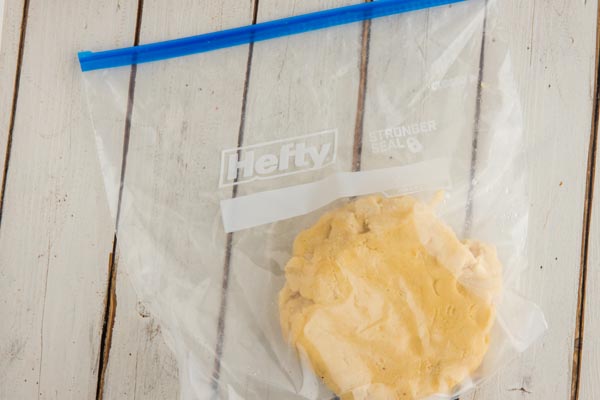
To freeze, wrap the disc in plastic wrap and store flat in a freezer-safe bag. I’ve kept them frozen for up to 3 months with no change in texture. Take it out the night before and thaw in the refrigerator. By morning, it’s ready to roll.
How I roll out the dough
Always chill the dough first. I pull it from the fridge, and if it feels soft at all, I put it back for another 15-20 minutes. Cold dough rolls better and stays flakier after baking.
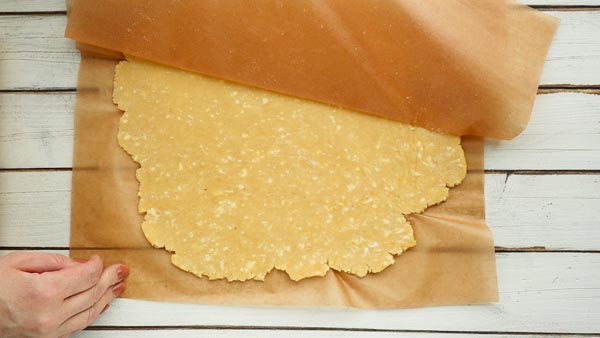
Since we’re working with gluten-free flours, I always roll between two sheets of parchment paper. This keeps the dough from sticking to the counter and the rolling pin. Start from the center of the disc and roll outward in all directions using gentle, even pressure. If the parchment crinkles underneath, flip the whole sandwich over and smooth it out. Keep rolling until the dough is about 1/8 to 1/4 inch thick and at least 1 inch wider than your pie plate on all sides.
Common problems (and how I fix them)
Butter is melting before baking: Freeze your butter for at least 30 minutes before cutting it in. I’ve had this happen when my food processor bowl was warm from the dishwasher. Keep everything cold, including bowls and utensils.
Crust isn’t flaky: You probably over-worked the dough. Pulse just until the ingredients come together. You should still see visible chunks of butter. Those chunks are what create the layers.
Edges burning before the filling is done: Cover the edges with a pie shield or aluminum foil, but leave the center uncovered so the filling bakes instead of steaming. I’ve also found that dropping the oven temperature 25 degrees lower than most recipes suggest helps with this low-carb dough.
Dough crumbles when transferring: Reader Stephanie figured this out. Chill the rolled-out dough for a full 30 minutes on the parchment paper before trying to move it. I tried her method and it works every time.
Dough is too sticky to work with: Your butter got too warm. Wrap it back up, refrigerate for 20 minutes, and try again. Reader Liz has had success reducing the butter from 1/2 cup to 1/4 cup, but I prefer keeping the full amount and just chilling longer for maximum flakiness.
Bottom of crust is soggy: Make sure your oven is fully preheated. Cold dough hitting a hot oven is what triggers those butter pockets to steam and puff. If the oven isn’t hot enough, the butter melts flat instead of creating layers.
How to blind bake this crust
Blind baking means you pre-bake the crust without any filling. I use this method whenever the filling doesn’t need oven time, like my keto peanut butter pie or any cream-based filling that sets up in the fridge.
The biggest challenge with blind baking is the bottom puffing up. Those butter pockets we worked so hard to create? They want to expand. Prick holes all over the bottom with a fork to let steam escape. Then lay a sheet of parchment paper over the crust and fill it with pie weights or dried beans to hold everything flat.
I bake at 350 degrees for 10-15 minutes, or until the edges just start turning golden. Keep an eye on it because every oven runs a little different. I’ve also used a pie shield during blind baking to keep the edges from over-browning while the center catches up.
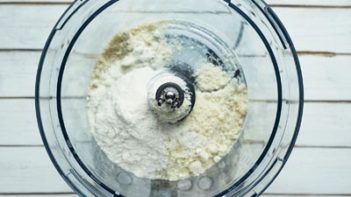
Add almond flour, coconut flour, xanthan gum and salt to a food processor. Give a quick pulse to combine. Add chilled cubed butter and cream cheese. Pulse until coarse crumbles form. (See instructions below if you don’t have a food processor.)
2
Add wet ingredients
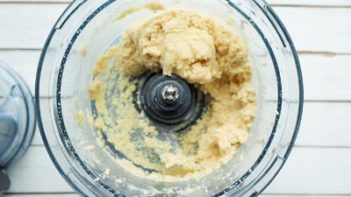
Add egg and vinegar. Pulse until combined and a dough ball forms. Wrap pie crust dough in plastic wrap, flatten into a disc shape and refrigerate for one hour.
3
Roll out pie dough
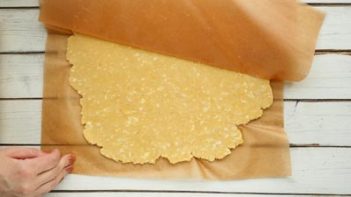
Place the chilled disc of dough in between two sheets of parchment paper and roll out dough to a flat circle. Start from the center of the disc and work your way out in all directions. If the parchment paper crumples beneath the dough, either carefully stretch the paper out or flip the parchment paper sandwich and stretch out the paper. Continue rolling until you are at least an inch wider on all edges than the pie pan you want to use. Crust should be between 1/8 and 1/4 inch thick.
4
Place pie crust in pie plate
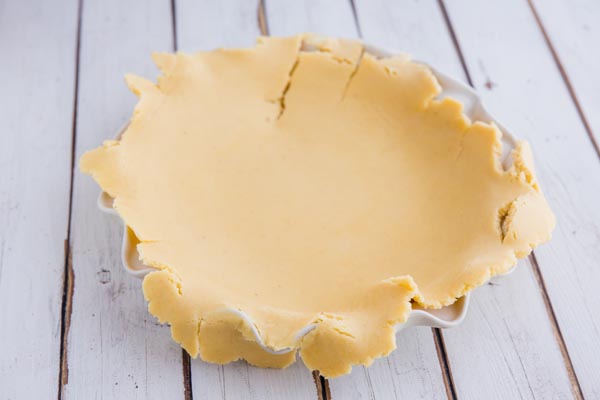
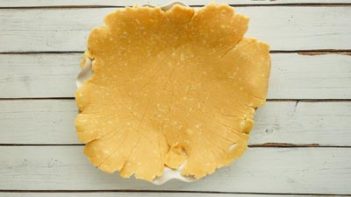
Once your pie crust is at your desired thickness and width, remove top layer of parchment paper. Place pie pan upside down over pie crust. Hold one hand on the pie pan. Slide your hand under the bottom parchment paper and flip so the pie pan is on the bottom and crust is on top. Remove parchment paper.
5
Flute the edges
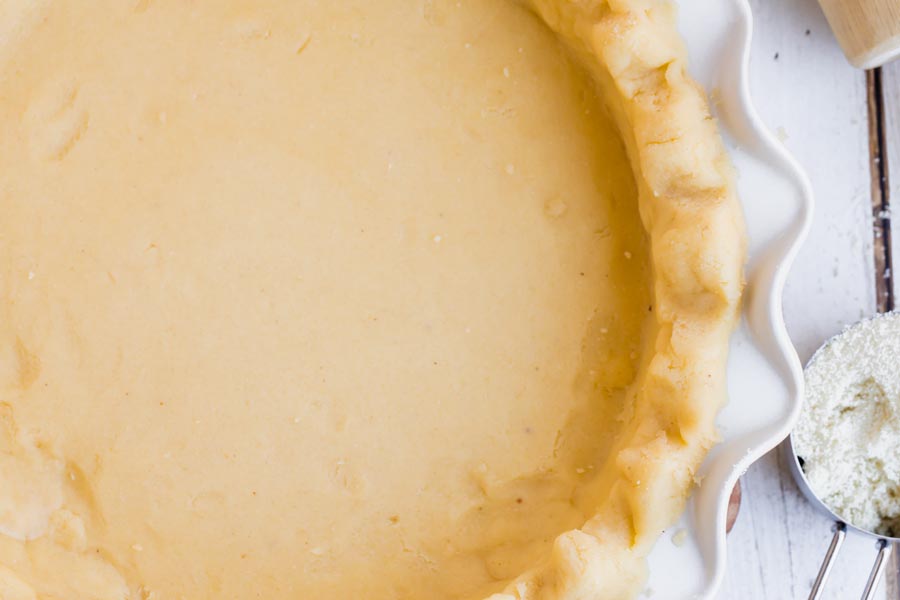
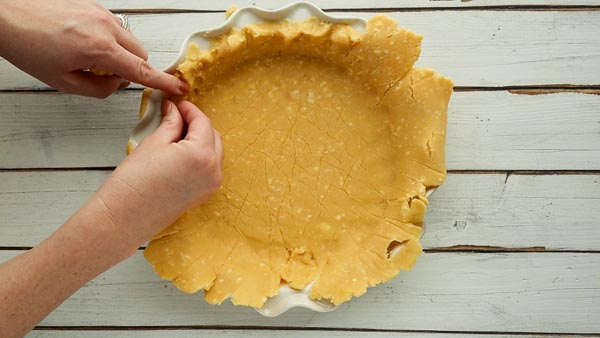
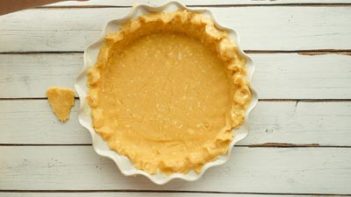
Gently press the pie dough into the pie plate and trim the edges if needed. Flute the edges of the pie dough by pinching dough with your thumb and index finger all around the crust.
6
Blind baking instructions
Proceed with the pie according to your recipe instructions. If your recipe requires a pre-baked pie shell, prick the bottom of the crust all over with a fork. Add a sheet of parchment paper on top of the crust and fill with pie weights. This will keep the crust from puffing up on the bottom. Bake at 350 degrees for 10-15 minutes or until the edges turn golden.
7
Freezer instructions
Prep pie dough through step 2 and freeze disc wrapped in plastic wrap for up to 3 months. Thaw overnight in the refrigerator when ready to use.
Nutrition
Per serving: 1 slice
Calories
142
Fat
13.5g
Protein
2.9g
Total carbs
3.1g
Net carbs
1.5g
Nutrition is an estimate calculated from the ingredients listed. Brands vary, so check labels if you track closely.
Frequently Asked Questions
Can I use plain water instead of vinegar?
I've tested this with water, and the crust still works, but the texture is noticeably different. The vinegar (I use rice vinegar, but apple cider works too) helps tenderize the dough and makes it easier to roll without cracking. You won't taste it at all in the finished crust. If vinegar isn't an option, I'd try lemon juice as a substitute before going with plain water.
What size pie pan works best with this recipe?
I use both 8-inch and 9-inch pie pans with this recipe. A 9-inch gives you a thinner crust with slightly crispier edges, which is how I prefer it. With an 8-inch, the crust is a little thicker and sturdier, which works well for heavier fillings like pumpkin or pecan.
Why do my edges burn even with foil?
I've dealt with this too, and it usually means the oven temperature is too high for this dough. I bake at 350 degrees (or even 325 for filled pies like pumpkin), which is lower than most traditional recipes call for. The almond flour browns faster than wheat flour. I also make sure my foil or pie shield goes on before the edges start coloring, not after.
Can I make this dairy-free?
I've tested this with coconut oil in place of butter and it works, but the texture changes. You lose some of the flaky layering because coconut oil doesn't create the same butter pockets during baking. The result is more of a tender, crumbly keto crust rather than a flaky one. If you go that route, freeze the coconut oil solid and grate it the same way I grate butter. For the cream cheese, I've used the thick part from a chilled can of full-fat coconut cream and it held the dough together fine. Ghee is another option since it behaves like butter in baking, but I haven't tested it in this specific recipe yet.
Is there a keto-friendly pie crust?
Yes, and this is the one I've made since 2012. Almond flour, coconut flour, cold butter, and cream cheese bake into a flaky crust with 1.5g net carbs and 142 calories per slice. It rolls out between parchment like regular pastry dough, and when a recipe needs a finished shell, I blind bake it at 350 degrees for 10 to 15 minutes.
How to get the flakiest pie crust?
Cold butter, and a light touch. I freeze my butter for at least 30 minutes, pulse it in until pieces the size of peas remain, and stop the moment the dough comes together. Those butter chunks release steam in the oven and push the layers apart. Chill the dough for one hour before rolling, and if it softens while you work, put it back in the fridge for 15 to 20 minutes.
This is the crust that finally works for my weekly prep! I make a double batch and keep the second disc in the fridge, and it still rolls out clean a few days later. No cracking!
Annie, your recipes have been what I reach for since I started keto. I’m making this crust for a pumpkin pie this weekend and I already picked up the cream cheese for it.
I was braced for the ‘it’s not the same’ from my daughter when I brought out the test batch. She leaned over to look at where it cut and said ‘that actually flaked.’ That’s the tell with almond flour crusts, the way they crumble instead, so her noticing it was the real review. One thing: the dough needs to be cold. Genuinely cold. I chill it an extra 20 minutes past the recipe now and the rolling goes a lot smoother.
That extra 20 minutes of chilling is a great tip, thank you for sharing it. I go by feel instead, if the disc gives at all it goes back in, but a set time is a lot easier to actually follow. And your daughter clocking the flake instead of the crumble is the review that counts.
Ray, two slices before the reveal is exactly the test. I’ve brought this to people who don’t do keto and watched them go back for more without a word. They never ask.
Rachel, that’s the cold butter creating those pockets. I keep mine cubed until it goes in, same idea as regular pastry. Most almond flour crusts blend it warm, which is how you get crumbs.
Roll it, don’t press it in. Used to press every almond flour dough because rolling always meant crumbling, but the xanthan gum changes the physics here. Got real structure when I peeled back the parchment. Transferred to the plate. No cracks. First keto crust I’ve made that didn’t need damage control before it hit the oven.
142 calories a serving and I’d been overthinking keto pastry for literally months. The parchment paper sandwich kept everything together (first keto crust I’ve gotten into the plate without it crumbling, the almond flour ones I tried before just fell apart on me). Wondering if the vinegar behaves differently for a savory filling or if it just does its thing regardless.
Vinegar is doing structural work here, not flavor work. I’ve used this same crust for quiche a dozen times and you can’t taste it at 1.5 teaspoons. It just tenderizes the dough so it rolls without cracking, savory or sweet.
1.5 and freezer-friendly is hard to beat. I wrap mine double, plastic then foil, and they hold about a month without the texture going off. Hope both crusts behave, Dana.
Thought cream cheese in a pie crust was going to taste like cheesecake crust. It doesn’t. There’s that short almost crumbly edge at the rim, and the flavor is the closest I’ve gotten on keto to the pies my aunt made for every summer cookout growing up (she’d be annoyed I’m using almond flour, but she’d eat it). Edges went a little dark on my first try before the center set, but that’s my oven, not the recipe.
She’d be annoyed but she’d eat it (best endorsement possible). 325 is actually what I use for filled pies. Gives the center time to catch up without the rim going too far.
Been making keto pie crusts for a few years and usually just press them in rather than rolling, but this one looks like it might actually hold with the xanthan gum. My food processor has been packed away since I reorganized a few months back, so I’ve been getting by with my stand mixer on low plus a pastry cutter for the butter. Works fine for most almond flour recipes. What I can’t tell is whether the pulse action does something a mixer on low can’t, especially once the cream cheese goes in. Is the food processor mostly just convenient, or does the stop-and-pulse actually build the flakiness? I tend to chill my butter an extra 20 minutes past what recipes call for (ran into a greasy, crumbly mess with another almond flour crust once and that fixed it), so I’m also wondering if over-chilling is a risk here or if colder is always better.
Pulse matters. A mixer on low keeps going between pulses so you end up breaking the butter down more than you want. I keep the cream cheese at room temp, otherwise it seizes when it hits cold dough.
Extra chill time won’t hurt you. Colder only helps here.
Four times making this, still no clue why the vinegar works, but the dough comes out soft every time. Not a baker at all, and even I can roll it without cracking.
Vinegar here isn’t about gluten (there isn’t any), it just keeps the fat from breaking down too fast so the dough stays pliable. Four times in is about when it stops feeling like luck.
Making a keto quiche for Easter Sunday on top of four sides, so I want as much done ahead as I can. Can the dough be frozen after mixing, or does xanthan gum get weird when it thaws? I’ve had keto crusts go gummy before and really don’t want that with a full house. If freezing works, better as a disc before rolling, or already pressed into the plate? No time for a redo if something goes wrong.
Pressed into the plate. The xanthan gum is fine once frozen, the gummy thing you’re remembering is usually from thawing too fast. Fridge overnight and you’re good.
My grandmother made pie crust from scratch every Thanksgiving, proper cold butter cut in by hand, and I figured that whole feeling was just gone for me after going keto. The xanthan gum + cream cheese combo actually does what cold butter and ice water do in a regular crust, and my first bite got me a little.
Tried grating frozen butter instead of cubing it and the flakiness difference was real. The smaller shreds stay separate in the almond flour before the food processor even runs, so you get actual layers instead of everything blending into paste. Box grater, then back in the freezer a few minutes before adding. Worth it if texture matters to you.
I’ve done this with regular pie dough but not with the almond flour version. The smaller shreds make sense, they’d stay cold longer before the food processor breaks them down. Trying it.
Made a quiche for a spring potluck. My friend, who’s been baking for years, asked if I bought the crust. Told her it was almond flour and coconut flour. She didn’t believe me. First time making pie crust from scratch.
Brought a quiche to my friend’s winter birthday dinner with this as the crust and the pastry chef at the table wouldn’t stop asking how I got it so flaky.