

Keto Beef Pho
Published January 11, 2021 • Updated July 12, 2026
This post may contain affiliate links. See my disclosure policy.
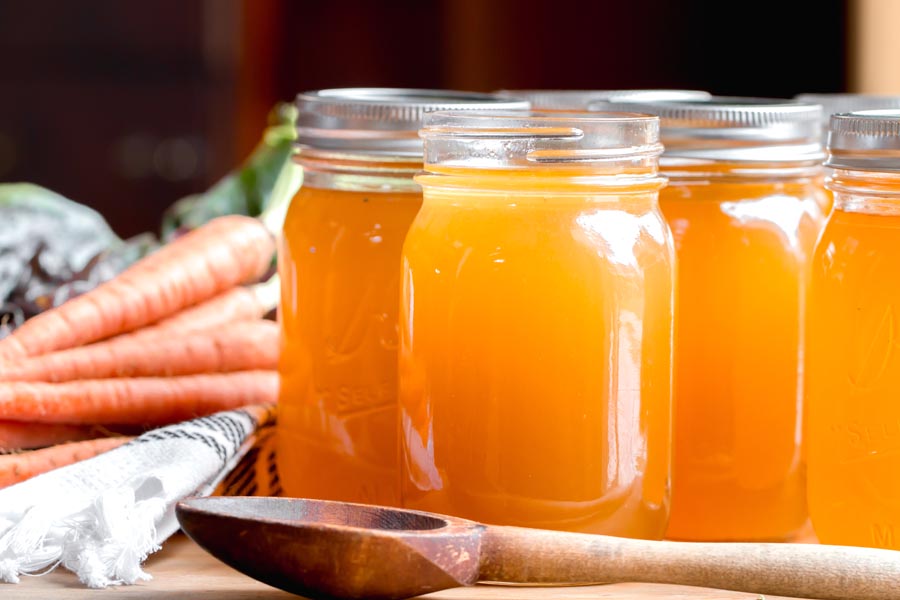
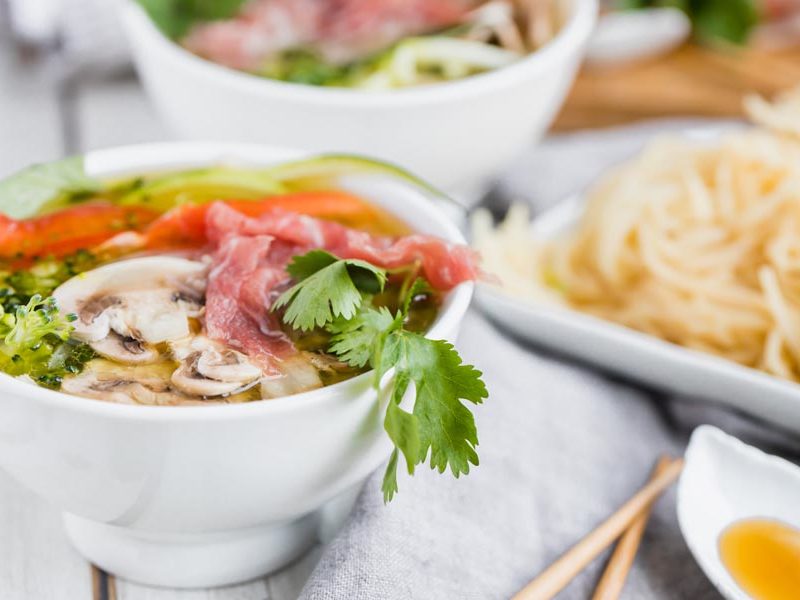
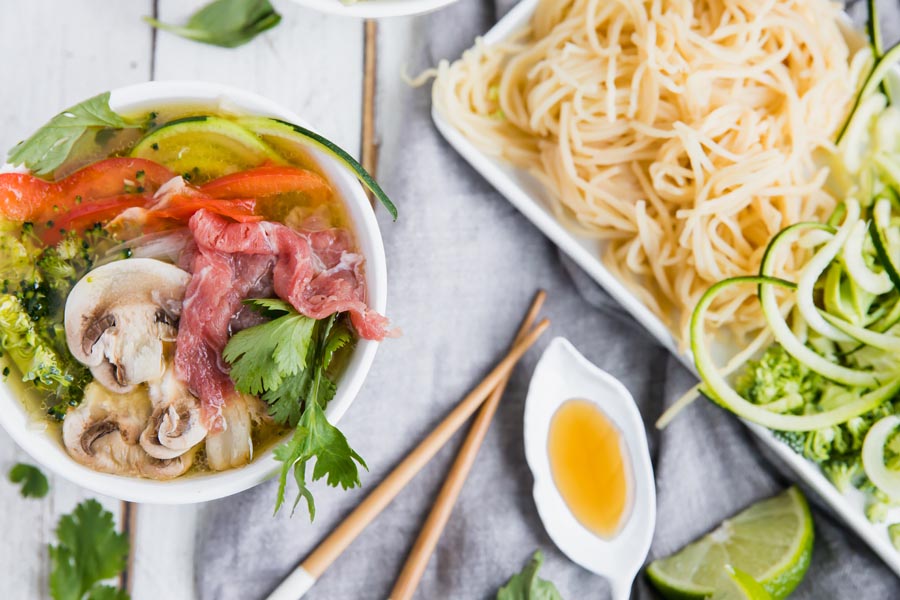
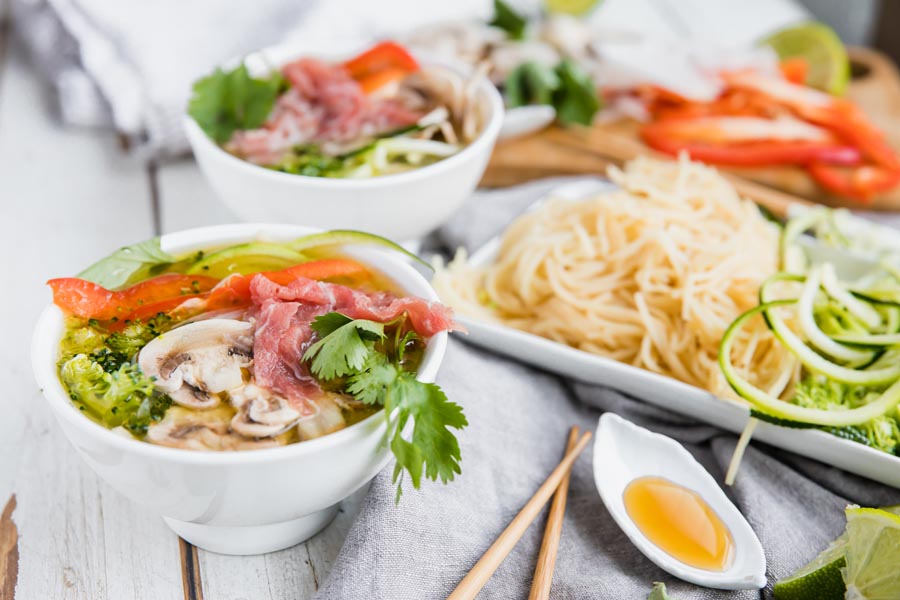
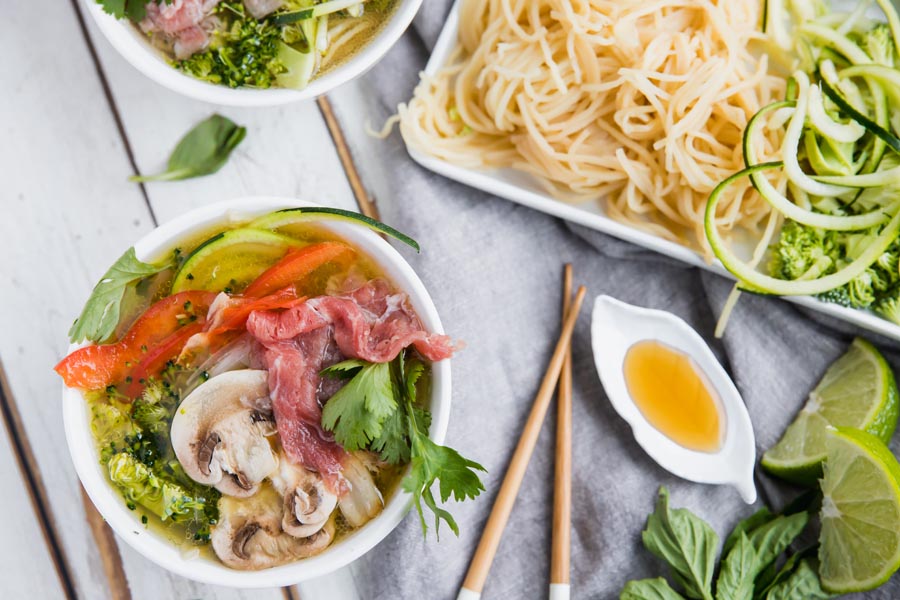
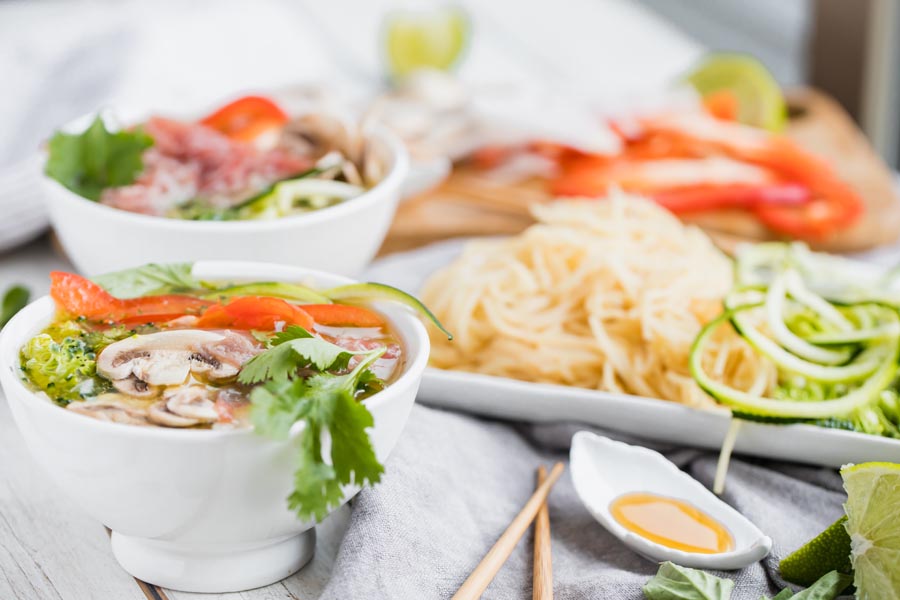
I pressure cook real beef bones with cinnamon, star anise, and ginger until the broth turns thick and gelatinous. This keto beef pho uses hearts of palm noodles to keep the whole bowl at 2.9g net carbs.
Traditional pho takes 6 to 8 hours of patient simmering. The pressure cooker cuts that to about 90 minutes and still extracts that deep, gelatinous body from the bones that makes real pho broth different from anything out of a carton. I blanch the bones first (5-minute boil, drain, rinse) to pull out the impurities that cloud the broth. Then I char the ginger and onion under the broiler until they blister. Those two steps take 10 minutes and produce a noticeably clearer, richer broth.
I tested this recipe with marrow bones, oxtails, and knuckle bones. They all work, but marrow bones gave me the richest broth with the least effort. Oxtails added more meat flavor but needed longer under pressure. Knuckle bones were the most gelatinous but took up too much pot space. For a weeknight-friendly version, marrow bones win.
The warm spice combination (cinnamon stick, star anise, cloves, fresh ginger) is what separates this from plain bone broth. I toasted the dry spices in a hot pan before a few batches and the difference is real, as the cinnamon and star anise open up and release more aroma. One of my readers, Jasmine, said her 10-year-old walked into the kitchen and said ‘it smells like the pho place’ before she even told him what was cooking. That kind of reaction tells me the spice ratio is right.
For the noodle swap in this keto beef pho, I prefer hearts of palm over shirataki. I have tried both in hot broth, and hearts of palm hold a firmer bite that absorbs the surrounding flavors without turning rubbery. Zucchini noodles also work if you want a third option, though they release water into the broth and soften fast. With hearts of palm, the whole bowl stays at 2.9g net carbs.
I include stove top and slow cooker instructions in the recipe card if you do not own an Instant Pot. The stove top version simmers for about 4 hours. The slow cooker runs 8 to 10 hours on low. All three methods produce comparable broth. The only difference is your timeline.
For the beef, I use boneless strip steak sliced paper thin. The trick is to freeze the steak for 25 to 35 minutes before slicing. Too short and the knife drags through the meat; too long and you are cutting through a frozen block. When you pour the 200+ degree broth over the raw slices, the meat cooks through in about 30 seconds. That is the entire point of pho assembly: the broth does the cooking in your bowl.
The broth is the most time-intensive part, so I make a double batch every time and freeze it in quart-sized containers. On a weeknight, all you do is thaw broth, slice steak, and assemble. Total hands-on time drops to about 10 minutes when the broth is already made. This pairs well with beef and broccoli or sesame chicken if you want an Asian-themed dinner. The chicken and rice soup is another make-ahead favorite from my rotation.
How to Make Keto Beef Pho
For the clearest broth, I blanch the bones first. A quick 5-minute boil, drain, and rinse pulls out the blood and impurities that turn broth cloudy. I also char the ginger and half onion under the broiler for about 5 minutes until they blister. That charred edge adds a smoky depth you cannot get from raw aromatics.
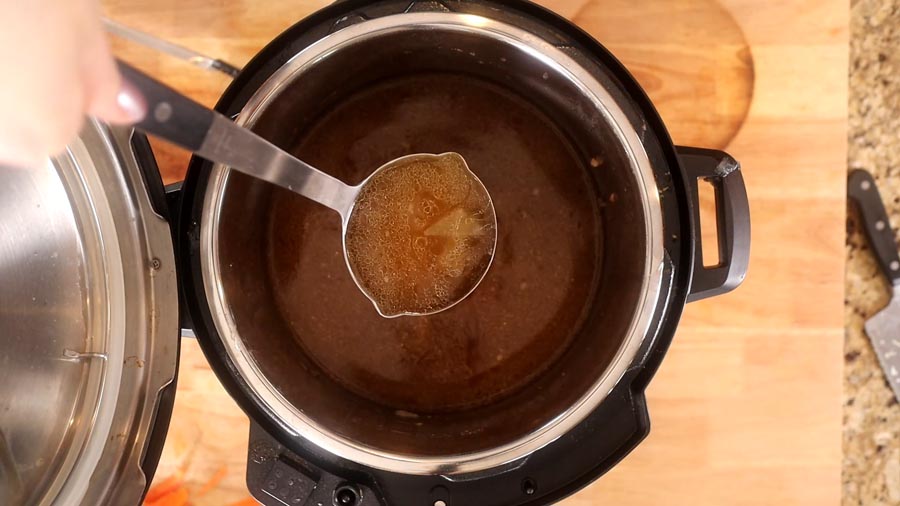
Add blanched bones, charred ginger and onion, fish sauce, cinnamon stick, star anise, cloves, salt, and peppercorns to the pressure cooker with 2 quarts of water. The Instant Pot runs about 90 minutes on high pressure. Stove top simmers covered for 4 hours. Slow cooker runs 8 to 10 hours on low.
Strain through a fine mesh strainer and discard the solids. While the broth cooks, freeze the strip steak for 25 to 35 minutes, then slice as thin as you can. Prep your vegetables thin so they soften when the hot broth hits them.
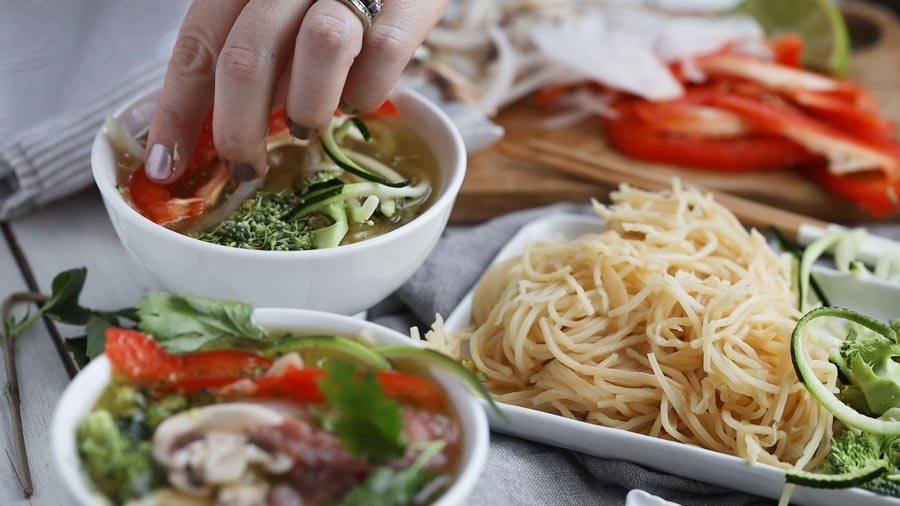
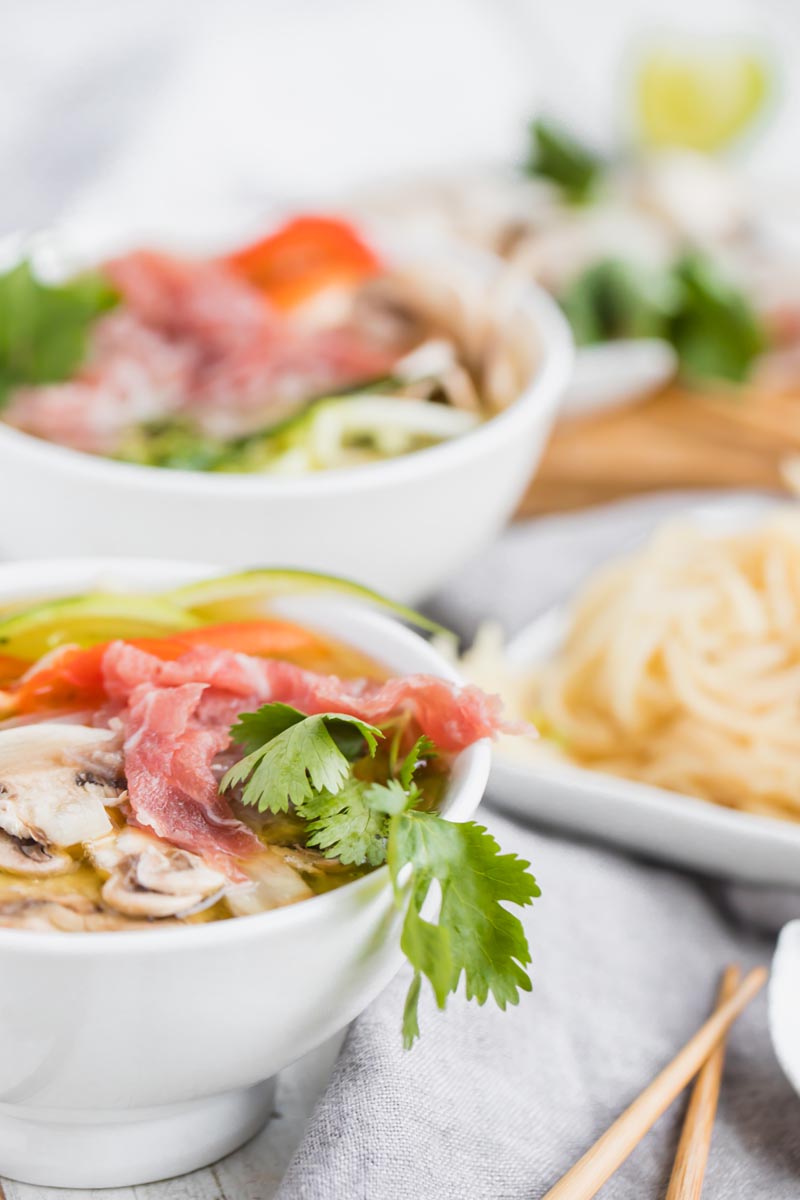
To assemble, place hearts of palm noodles, raw beef, and vegetables in each bowl. Ladle boiling broth over everything. The broth cooks the beef on contact. Top with cilantro, Thai basil, lime wedges, and jalapenos.
Explore hundreds of keto recipe videos with step-by-step instructions, tips, and tricks to make keto easy.
Pho Broth Ingredients
3 pounds beef bones
1/2 onion, quartered
1/4 cup fish sauce
4-inch piece of ginger, peeled and sliced into rounds
1 cinnamon stick
4-6 star anise
4-6 whole cloves
1 tablespoon salt
1 teaspoon whole peppercorns
Pho Components Ingredients
1 pound boneless strip steak, cut into thin slices or shaved
9 oz hearts of palm noodles
1 cup broccoli, chopped
1/4 onion, thinly sliced
1/2 red bell pepper, thinly sliced
4 mushrooms, thinly sliced
Step by Step Instructions
Add ingredients
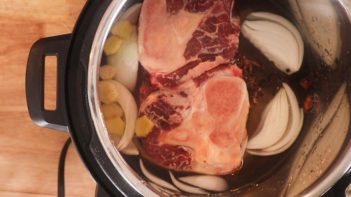
Add beef bones, onion quartered, fish sauce, ginger, cinnamon stick, anise, cloves, salt and peppercorns to a pressure cooker. Fill with 2 quarts of water.
Pressure cook
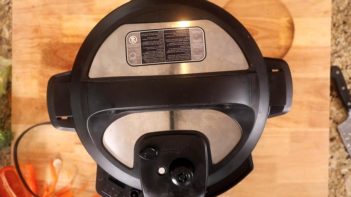
Pressure cook on high for 1 1/2 hours. After the cycle has finished, let pressure release naturally for 15 minutes before turning or pressing the pressure valve to release remaining pressure.
Strain the bones and vegetables
Strain bones and vegetables out of the broth. Keep the broth simmering on high.
Assemble pho
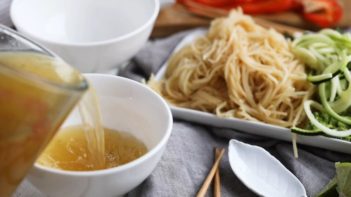
To assemble the beef pho, pour 1 cup of broth into a bowl. Add noodles, vegetables and steak. Top with more fish sauce or cilantro.
Stove top instructions
Add all ingredients for the pho broth in a large stock pot. Bring to boil. Then reduce to a simmer. Let simmer for 6-8 hours. Continue with steps 3 and 4.
Slow cooker instructions
Add all pho broth ingredients to a slow cooker. Cook on low for 8-24 hours.
Nutrition disclaimer
The nutrition information provided is an estimate and is for informational purposes only. I am a Doctor of Pharmacy (Pharm.D.); however, this content is not intended to be a substitute for professional medical advice, diagnosis, or treatment. Always consult your physician or other qualified health provider before making any lifestyle changes or beginning a new nutrition program.
Your Macros. Your Recipes. Calculated in 60 Seconds.
Get personalized keto macros and instantly see which recipes fit your targets. No more guessing what to eat.
Get My Macros + Recipes →Frequently Asked Questions
Should I blanch the bones before pressure cooking?
I blanch every time now. A quick 5-minute boil, drain, and rinse removes the blood and impurities that make broth murky. I skipped this step my first few batches and the broth tasted fine but looked cloudy. Once I started blanching, the difference in clarity was obvious. It adds about 10 minutes to prep but I think it is worth it.
How do I char the ginger and onion for more authentic pho flavor?
I cut the ginger in half lengthwise and quarter the onion, then set them cut-side up under the broiler for about 5 minutes until the edges blister and blacken. Some people use an open gas flame, which works too. The char adds a smoky sweetness to the broth that I cannot get any other way. I started doing this after my third or fourth batch and it made a noticeable difference.
Why is my pho broth cloudy instead of clear?
Two things fixed this for me. First, blanch the bones before the main cook. That initial boil pulls out the proteins that cloud the broth. Second, do not let the broth hit a hard rolling boil during the stove top version. A gentle simmer keeps it clearer. In the pressure cooker, I let pressure release naturally for 15 minutes instead of quick releasing, which also helps.
Can I use zucchini noodles instead of hearts of palm?
I have tried zucchini noodles in this recipe and they work, but with a tradeoff. They release water into the broth and soften fast, so the bowl gets more watery if you do not eat it quickly. Hearts of palm hold their shape better in hot liquid. When I use zucchini noodles, I spiralize them thick and add them right before serving so they keep some bite.
What can I substitute for fish sauce if I don't have it?
I have made this with coconut aminos when I ran out of fish sauce, and it works. Use about 2 tablespoons instead of the 1/4 cup since coconut aminos are saltier. The umami depth is slightly different but the broth still tastes good. Soy sauce works too at the same reduced amount. I prefer coconut aminos because the flavor is closer to fish sauce than soy is.
Can I make chicken pho instead of beef?
I have done a chicken version using a whole chicken carcass and the same spice blend. The technique is identical but I pressure cook for 45 minutes instead of 90. The broth is lighter and less gelatinous, but the star anise and ginger still carry that pho flavor. I use boneless chicken thigh sliced thin instead of strip steak.
How long can I store the leftover pho broth?
I keep broth in the fridge for up to 4 days and it reheats fine. For longer storage, I freeze it in quart-sized containers so each one holds enough for 2 to 3 bowls. Frozen broth lasts about 3 months. I thaw mine overnight in the fridge or in a pot over medium heat. Keep the noodles, beef, and vegetables separate until you are ready to eat.
Is pho keto friendly?
The broth and toppings are naturally low carb. Traditional pho uses rice noodles at about 42g carbs per serving, so the noodle swap is the only real change. I use hearts of palm noodles to keep the whole bowl at 2.9g net carbs and 25.9g protein per serving. That makes this one of my more protein-dense keto dinners.
Is this pho low carb, and how many carbs are in a bowl?
Yes. Each bowl lands at 2.9g net carbs, which still surprises me every time I log it. Traditional pho runs high only because of the rice noodles, which add about 42g carbs per serving. I swap those for hearts of palm noodles, so all the broth, spice, and beef stay while the starch drops out. That swap is the whole reason this low carb pho works without tasting stripped down.


Broth is genuinely good, the pressure cooker does its job. Lost a star on the shaved steak, dropped in raw and unseasoned it comes out flat against all that depth. Salt it first, maybe a quick sear.
Just made this for dinner and I can't believe how much it tastes like real pho!!
Hearts of palm actually hold up in this broth, better than any sub noodle I've tried. I kept waiting for them to go soft once the hot liquid hit, but they held together and let the star anise do its thing. Ninety minutes of pressure cooking on the bones gets you that thick, gelatinous result you'd get at a real pho spot, not the watery shortcut version. Took a few spoonfuls to believe it.
This broth got me. My college roommate and I had a pho place we'd go to every Friday for two years, which I kind of forgot about after going keto. Pressure cooked the bones and when I lifted the lid, ginger and star anise, I was just back in that booth.
That lid moment. Gets me every time too.
Keep broth and noodles separate or the hearts of palm absorb the liquid overnight and the ratio gets off. I batch this weekly, packing broth, sliced beef, and toppings separately so each bowl comes together in under five minutes. Three pounds of bones in the Instant Pot, one run, six servings. Basically a full week at one bowl a day. The broth gels in the fridge, fat cap on top, skims clean before reheating. By day two the cinnamon and star anise have mellowed out and the broth is honestly better than day one. Reheat just the broth, pour it over hearts of palm straight from the package, toppings cold so nothing gets waterlogged.
The broth really is better on day two. I leave it overnight intentionally now.
2.9 net carbs. doubled the cinnamon, broth hit different.
Two cinnamon sticks in a broth this rich probably hits better. I've wanted to push that spice higher for a while, the single stick feels conservative once it pressure cooks down.
Made pho for the first time ever, not just keto pho. It always looked like a multi-day project so I kept putting it off. Pressure cooker got it done in 90 minutes, and when I strained it the broth had already darkened and thickened on its own. Dropping raw steak slices into the hot broth to finish cooking seemed like it wouldn't work. It does. Steak came out tender and the hearts of palm held up through the whole bowl without falling apart. Checked the net carb count three times because 2.9 seemed too low for something that filling.
That broth darkening on its own is the pressure cooker doing the work in 90 minutes that a 12-hour stovetop would normally do. 2.9 is real, I checked that number more times than I'd admit developing this, Dani.
1/4 cup of fish sauce had me nervous. It's fine.
Fish sauce always looks alarming in the measuring cup. The cinnamon and star anise absorb it completely once everything's in the pressure cooker.
That tracks. Couldn't pick out the fish sauce at all once the broth was done.
The cinnamon and star anise had the whole house smelling like a restaurant about an hour into the pressure cook, and my son came downstairs asking what I ordered. Figured out it was mine, pulled up a chair without being asked, which I genuinely did not see coming.
That chair pull without being asked is the review.
Made this on a Saturday afternoon mostly for myself since my husband is suspicious of anything that doesn't look like regular noodles. He walked into the kitchen when the pressure cooker was releasing and said 'what is that smell' in a good way, then sat down and ate the whole bowl before I had a chance to explain what hearts of palm noodles are. Didn't ask, didn't want to know. That felt like a win.
Tried shirataki noodles instead of hearts of palm and the broth still carried everything beautifully. One thing worth knowing: rinse them really well before adding, or the smell competes with the star anise.
The rinse step is real, I found that out the first time I tried them. That smell hits hard against the star anise especially. I've also started doing a quick dry pan toss, 2-3 minutes on medium, before they go in the bowl. Gets rid of even more of it. Texture is blander than hearts of palm but they absorb the broth, so if you're not eating right away they actually taste better.
I charred the ginger and onion in a dry skillet before they went into the pressure cooker (I'd seen it mentioned as a traditional pho thing) and the difference in the broth was wild. Deeper color, smokier, and the star anise actually came through instead of just being background noise. Also found that rinsing the hearts of palm noodles twice and letting them sit on paper towels for a few minutes kept them from making the broth watery. Both of these are permanent now.
Skillet char is easier to control than broiler anyway. And the paper towel rest for the hearts of palm, I've been skipping that step and blaming the broth every time it ran thin.
I've done bone broth on the stovetop plenty of times but never tried pressure cooking it. Does it actually get that thick, gelatinous texture in 1.5 hours? I always figured collagen extraction was the part that needed time.
Yep. Pressure gets the temp above boiling, which is what actually breaks collagen down fast. The stovetop workaround is just time.
Used oxtail instead of beef bones and the broth came out almost silky. Hearts of palm noodles take some getting used to if you're coming from regular pho, but the broth covers for it.
Oxtail is loaded with collagen, makes sense it came out silky. I stay with bones mostly because of cost. But yeah, that broth is what carries the hearts of palm.
Made keto pho from two other recipes and never got the broth right. Pressure cooking the bones actually makes it thick and gelatinous. The others don't come close. Keeping this one.
Three pounds of bones, 90 minutes. Stovetop just doesn't get there.